
Herpes-simplex HSV 1 and 2 test kit
Biomarkers Tested
HSV-1 (Herpes Simplex Virus Type 1), HSV-2 (Herpes Simplex Virus Type 2)
Results ready within 2 working days
UKAS accredited laboratory, ISO 15189.
How it works
Your testing journey
From order to results in four simple steps. Full transparency on where each step happens and what it costs.

Receive your kit by post
Dispatched same working day if ordered before 3pm. Royal Mail Tracked delivery, typically 1–3 working days. 90% of kits arrive within 24 hours.

Collect at home
Everything you need is in the kit. Collect your sample in the privacy of your own home — no appointment needed, no clinic visit.
Included in kit price
Self-swab at home
Gently rub the sterile swab in the area indicated in your instructions, place it back in the tube, and post it back. Takes under a minute.

Return by prepaid envelope
Seal your sample in the biohazard bag provided and drop it in any Royal Mail postbox using the prepaid Tracked 24 envelope. Post Monday–Thursday for best results.
Find out if you have herpes simplex virus (HSV) with a simple self-collected swab test. This test detects both HSV-1 and HSV-2 from active lesions, helping you understand which type of herpes you may have and guiding your treatment options.
Herpes simplex is a very common viral infection. HSV-1 traditionally causes oral herpes (cold sores), while HSV-2 typically causes genital herpes—but either type can infect either location. Once you have herpes, the virus stays in your body for life, though outbreaks can be managed effectively with antiviral medication.
This swab test works by collecting a sample directly from an active sore or blister. It's important to test during an outbreak when lesions are present, as this gives the most accurate results. The test uses a simple self-swab kit you can use at home.
Why Test for Herpes?
- Know which type you have – HSV-1 and HSV-2 have different implications
- Guide treatment decisions – Antiviral medication can reduce outbreaks
- Protect your partners – Understand when you're most contagious
- Peace of mind – Confirm whether symptoms are herpes or something else
- Discreet home testing – Self-collect your sample in private
- Results in 5 working days – From sample arrival at the laboratory
Which Test Should You Choose?
Choose the test based on where your lesion (sore or blister) is located. You need to swab an active lesion for accurate results.
- Sample type: Self-collected swab from genital sore or blister
- Where to swab: Directly on the sore, blister, or ulcer in the genital area
- Best timing: During an active outbreak when lesions are fresh (ideally within the first 48 hours)
- Detects: Both HSV-1 and HSV-2
- Sample type: Self-collected swab from oral sore or blister
- Where to swab: Directly on the cold sore, blister, or ulcer on or around the lips/mouth
- Best timing: During an active outbreak when lesions are fresh (ideally within the first 48 hours)
- Detects: Both HSV-1 and HSV-2
Important: This swab test requires an active lesion (sore, blister, or ulcer) to collect a sample from. If you don't currently have visible symptoms, a swab test may not detect the virus. For testing without active symptoms, a blood test for HSV antibodies may be more appropriate.
HSV-1 vs HSV-2: What's the Difference?
HSV-1 (Herpes Simplex Virus Type 1)
- Traditionally causes oral herpes (cold sores)
- Very common—most people are infected in childhood
- Can also cause genital herpes through oral sex
- Genital HSV-1 typically causes fewer and less severe outbreaks
HSV-2 (Herpes Simplex Virus Type 2)
- Primarily causes genital herpes
- Usually transmitted through sexual contact
- More likely to cause recurrent genital outbreaks
- Can also cause oral herpes, though less common
Knowing which type you have helps predict future outbreaks and guides discussions with partners.
Results are available within 5 working days from the sample arriving at the laboratory.
How It Works
We'll send you a collection kit with a swab, clear instructions, and a prepaid return envelope. When you have an active lesion, use the swab to collect a sample directly from the sore, then post it back to us.
Your kit includes: Sterile swab, collection tube, step-by-step instructions, and prepaid return envelope.
Tips for best results:
- Swab the lesion as soon as possible after it appears (ideally within 48 hours)
- Fresh blisters or sores give the most accurate results
- If the blister has crusted over, results may be less reliable
- Rub the swab firmly over the lesion for 5–10 seconds
Herpes symptoms vary from person to person. Some people have frequent outbreaks, while others may have only one or none at all.
During an Outbreak
- Small blisters that break open and leave painful sores
- Tingling, itching, or burning before blisters appear
- Pain when urinating (genital herpes)
- Flu-like symptoms during first outbreak (fever, body aches, swollen lymph nodes)
Oral Herpes (Cold Sores)
- Blisters or sores on or around the lips
- Tingling or burning sensation before sores appear
- Sores typically heal within 7–10 days
Genital Herpes
- Blisters or sores on genitals, buttocks, or thighs
- Pain or itching in the genital area
- Pain when urinating
- First outbreak is usually the most severe
Herpes is a very common and manageable condition. While there's no cure, many people live normal, healthy lives with few or no symptoms.
Treatment Options
- Antiviral medication – Can shorten outbreaks and reduce severity
- Suppressive therapy – Daily antivirals to prevent outbreaks
- Pain relief – Over-the-counter painkillers for discomfort
Reducing Transmission
- Avoid sexual contact during outbreaks
- Use condoms (though they don't provide complete protection)
- Consider suppressive therapy to reduce viral shedding
- Talk openly with partners about your status
Outbreak Triggers
- Stress and fatigue
- Illness or weakened immune system
- Sun exposure (for oral herpes)
- Hormonal changes (menstruation)
- Friction or skin irritation
Medical Disclaimer
This test is intended for screening purposes only and does not constitute a medical diagnosis. The swab test detects herpes simplex virus from active lesions; a negative result does not rule out herpes infection, particularly if the lesion is healing or crusted.
If you test positive for herpes, you should consult a healthcare professional to discuss treatment options and management strategies. Antiviral medication is available on prescription and can help reduce the frequency and severity of outbreaks.
This test does not replace professional medical advice, diagnosis, or treatment. If you have symptoms or concerns about your sexual health, please consult your GP or visit a sexual health clinic.
Test During Active Lesions: This swab test is most accurate when active sores or blisters are present. Swab the lesion as soon as possible after it appears. If the lesion has already crusted over, detection rates decrease.
Sample Collection: Break the blister gently with the swab if possible, then roll the swab firmly over the base of the lesion for 5-10 seconds to collect cells. Place the swab in the transport tube immediately.
Sample Return: Post your sample the same day as collection. Avoid posting on Fridays or before bank holidays.
No Blood Test Alternative: This is a swab-based PCR test, not a blood test. Blood antibody tests for HSV exist but detect past exposure rather than active infection and cannot identify the location of infection.
You may also be interested in

Chlamydia and Gonorrhoea home test kit
A home PCR test for chlamydia and gonorrhoea with four sample site options — urine, vaginal swab, rectal swab, or throat swab — for targeted screening based on your exposure.
Results estimated in 2 working days
2 biomarkers

Advanced Multisite Complete STI Screen
A 5-biomarker venous blood,urine,swab panel covering blood tests (serology) and pcr tests (urine + swabs) — ideal for investigating relevant symptoms or monitoring health.
Results estimated in 2 working days
5 biomarkers

Syphilis (IgG and IgM Antibodies) Blood Test
A finger-prick blood test detecting both IgG and IgM antibodies against Treponema pallidum, the bacterium that causes syphilis — distinguishing between current and past infection for screening, monitoring, or follow-up after suspected exposure.
Results estimated in 2 working days
1 biomarkers

HIV Blood Test Kit
A 2-biomarker finger-prick blood panel covering immunity — ideal for confidential HIV screening including early-stage detection.
Results estimated in 2 working days
Finger-prick collectionNo clinics, no queues, no hassle
Four steps to clarity

Pick your panel
Browse over 200 clinically designed test kits and choose the one that fits your goals.
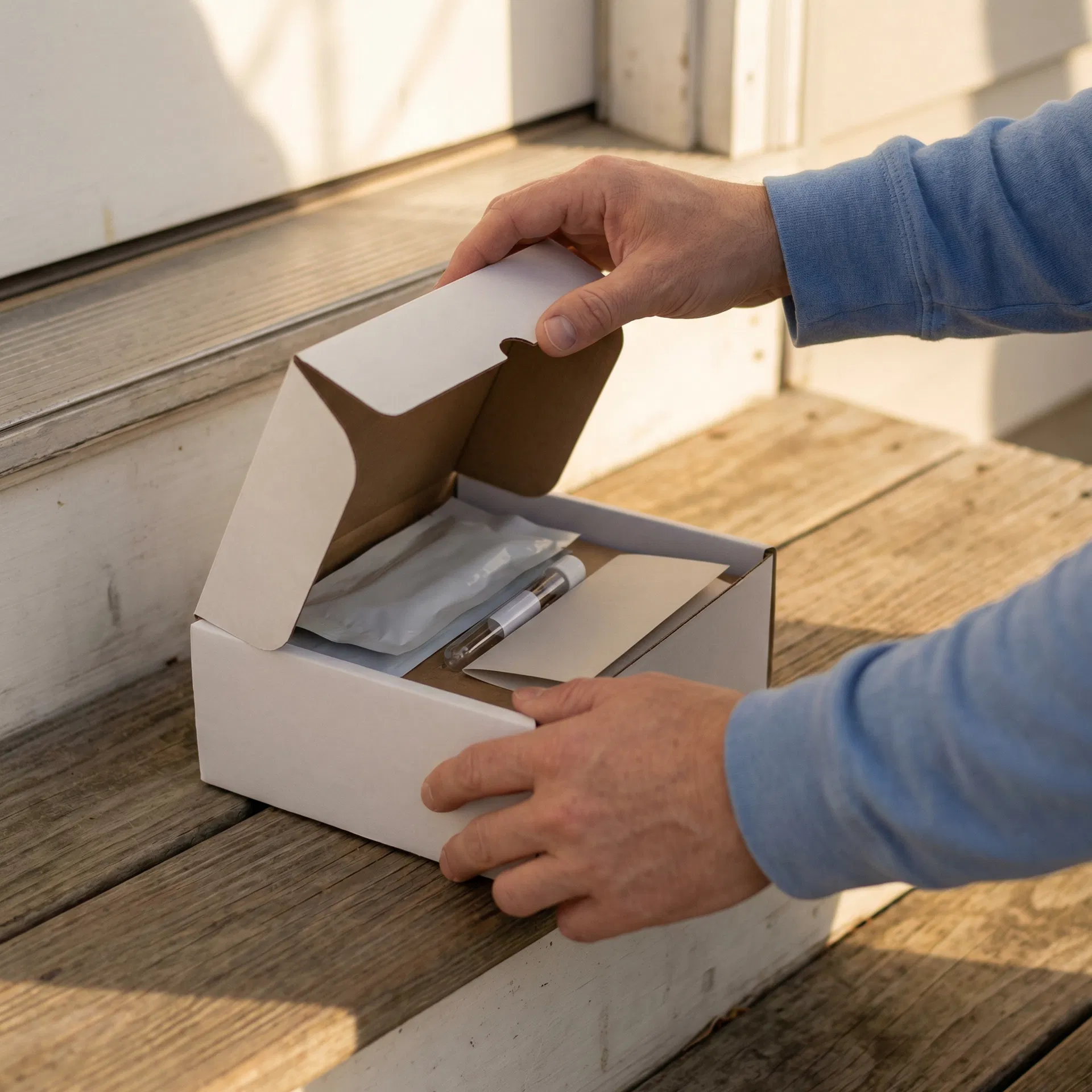
Kit to your door
Everything you need arrives in discreet packaging with step-by-step instructions inside.
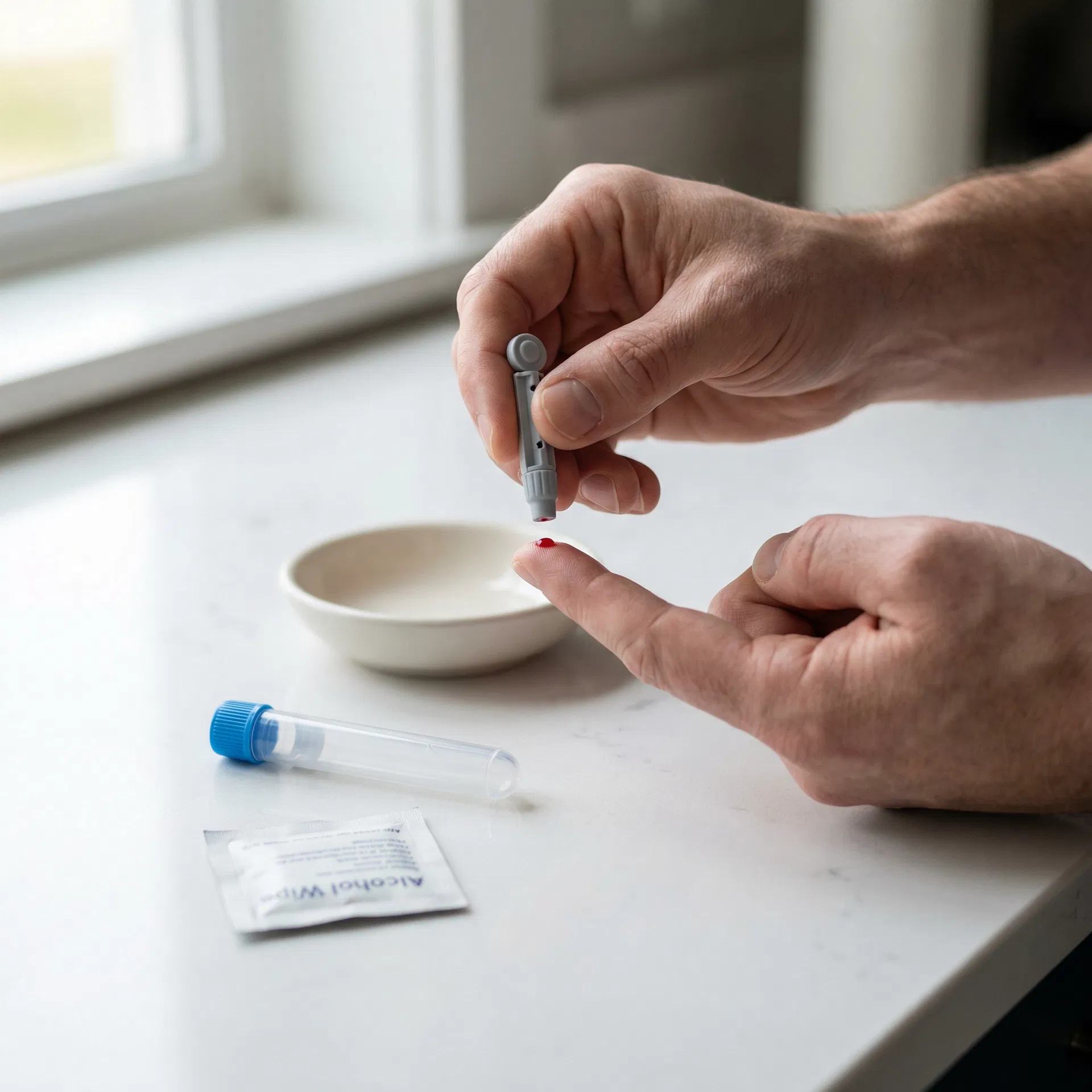
Collect your sample
Follow the simple instructions in your kit - whether it is a finger-prick at home or a venous draw at a partner clinic, your test page will guide you.

Insights delivered
Clear, easy-to-understand results sent to you online with actionable health guidance.