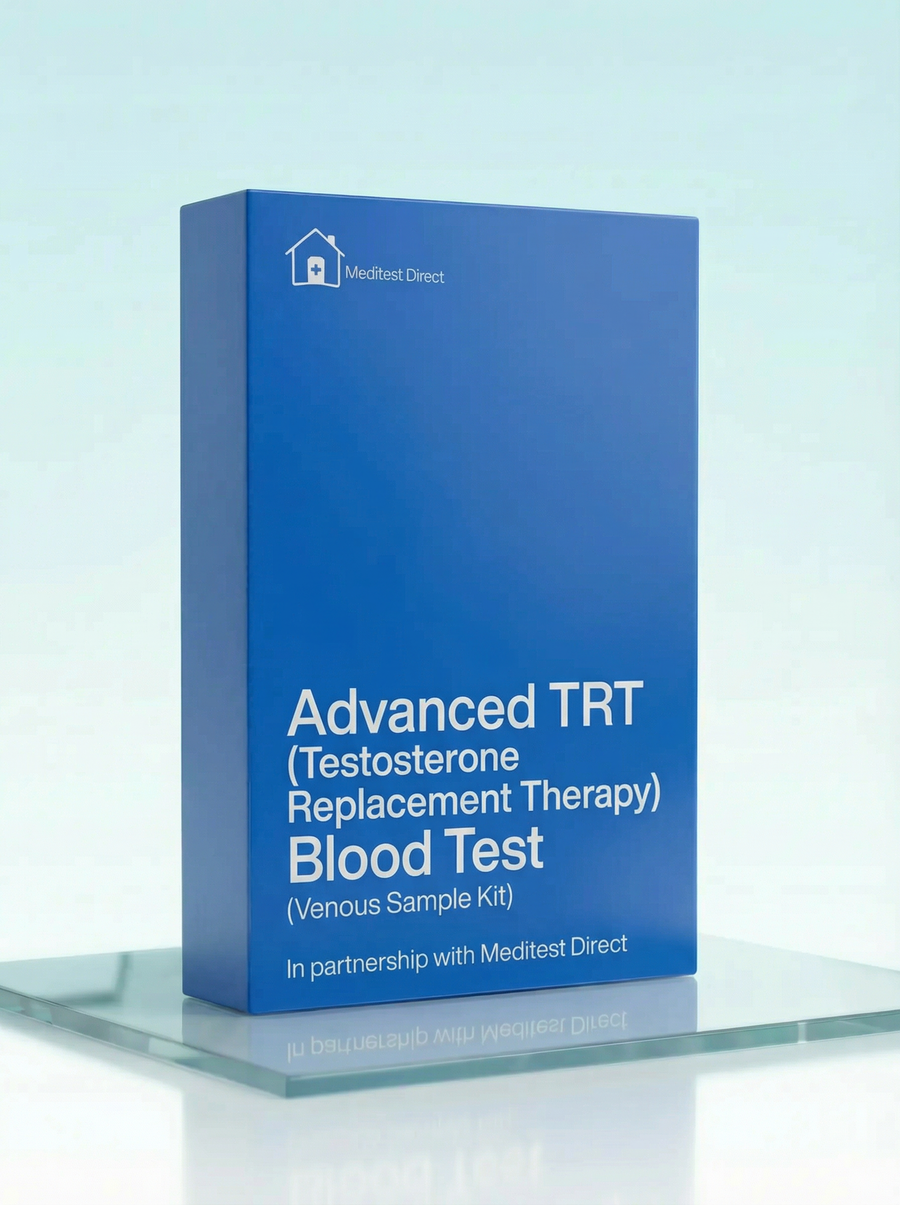
Advanced TRT (Testosterone Replacement Therapy) Blood Test
£148 ✓ In Stock
Your sample goes to a UKAS accredited laboratory meeting ISO 15189 standards.
After you receive your order confirmation email, please reply with your date of birth.
How it works
Your testing journey
From order to results in four simple steps. Full transparency on where each step happens and what it costs.

Receive your kit by post
Dispatched same working day if ordered before 3pm. Royal Mail Tracked delivery, typically 1–3 working days. 90% of kits arrive within 24 hours.

Visit a partner clinic
Book a phlebotomy appointment at one of our 365+ UK partner clinics. Take your kit with you — the phlebotomist will collect your sample using the materials provided.
Phlebotomy fee applies (paid at clinic)
Venous blood draw at a clinic
A trained phlebotomist takes a small blood sample from a vein in your arm using the vacutainers provided in your kit. The appointment takes around 10 minutes.

Return by prepaid envelope
Seal your sample in the biohazard bag provided and drop it in any Royal Mail postbox using the prepaid Tracked 24 envelope. Post Monday–Thursday for best results.
Venous Blood Collection Kit
This kit is sent to you and taken to your chosen clinic. The phlebotomist will collect your sample using the materials provided.
- 1Vacutainer blood collection tubes
- 2Needle and butterfly needle
- 3Tourniquet
- 4Alcohol swab
- 5Cotton wool and gauze
- 6Adhesive plaster
- 7Biohazard specimen bag
- 8Prepaid return envelope (Royal Mail Tracked 24)
- 9Laboratory request form
- 10Instructions for the phlebotomist
Follicle Stimulating Hormone (FSH) is produced by your pituitary gland and stimulates sperm production in the testes. When you take exogenous testosterone (TRT), your body detects the high testosterone levels and reduces its own production by suppressing LH and FSH from the pituitary. Low or suppressed FSH on TRT is expected and confirms the treatment is working—it also explains why TRT typically causes reduced sperm production and can affect fertility. If you're on TRT and your FSH is not suppressed, this may indicate compliance issues with your treatment or unusually fast metabolism of the testosterone. Results should be interpreted in the context of TRT use. Results outside the normal range may need a follow-up with your GP.
Luteinising Hormone (LH) is produced by your pituitary gland and stimulates the testes to produce testosterone. When you take exogenous testosterone (TRT), your pituitary detects the elevated testosterone and stops producing LH—this is normal negative feedback. Low or suppressed LH on TRT is expected and indicates the feedback system is working normally. This suppression is why TRT typically causes testicular shrinkage and reduced fertility—without LH stimulation, the testes become less active. If you're on TRT and your LH is not suppressed, this may suggest compliance issues or other factors affecting testosterone metabolism. Results should be interpreted in the context of TRT use. Results outside the normal range may need a follow-up with your GP.
Oestradiol is the primary oestrogen hormone. Although considered a 'female' hormone, men naturally produce oestradiol—and it's actually essential for bone health, brain function, and libido in men. Some testosterone is converted to oestradiol by the enzyme aromatase, particularly in fat tissue. On TRT, oestradiol levels often rise because more testosterone is available for conversion. Moderately elevated oestradiol on TRT is usually fine, but very high levels can cause symptoms like water retention, mood changes, breast tenderness, and gynecomastia (breast tissue growth). If oestradiol becomes problematic, your prescriber may consider adjusting your TRT dose or adding an aromatase inhibitor. Results outside the normal range may need a follow-up with your GP or TRT prescriber.
Total testosterone measures all testosterone in your blood, including both protein-bound and free testosterone. On TRT, your total testosterone level indicates whether your dose is adequate. The timing of your blood test relative to your last dose matters significantly—levels will be highest shortly after an injection and lowest (trough) just before your next dose. Most clinicians aim to keep trough testosterone in the normal range (typically 12-30 nmol/L) while avoiding excessive peaks. If testosterone is below target at trough, your dose may need increasing; if consistently very high, your dose may be excessive. The British Society for Sexual Medicine uses 12 nmol/L as a lower threshold. Results should be interpreted alongside when you took your last TRT dose. Results outside the normal range may need a follow-up with your GP or TRT prescriber.
Most testosterone in blood is bound to proteins (SHBG and albumin) and is inactive. Only 2-3% is 'free' and biologically active—able to enter cells and exert testosterone's effects. Free testosterone is calculated from total testosterone, SHBG, and albumin using an algorithm. Some men have normal total testosterone but low free testosterone due to high SHBG—they may still experience symptoms of low testosterone. On TRT, both total and free testosterone should ideally be optimised. Free testosterone provides additional information about how much active hormone is available to your tissues. Results should be interpreted alongside total testosterone and SHBG. Results outside the normal range may need a follow-up with your GP or TRT prescriber.
Prolactin is a pituitary hormone primarily known for stimulating milk production, but it affects men too. In men, elevated prolactin can cause low libido, erectile dysfunction, fatigue, and can suppress testosterone production. High prolactin (hyperprolactinaemia) can be caused by pituitary tumours (usually benign prolactinomas), certain medications (particularly antipsychotics and some antidepressants), or stress. Prolactin is included in TRT monitoring because symptoms of high prolactin can mimic or worsen symptoms of low testosterone. If you have symptoms despite adequate testosterone levels on TRT, elevated prolactin could be contributing. Prolactin is highest during sleep and after eating, which is why morning testing and avoiding heavy meals is important. Results outside the normal range may need a follow-up with your GP.
Total protein measures the combined amount of albumin and globulin proteins in your blood. These proteins perform vital functions including maintaining fluid balance, transporting hormones and nutrients, and supporting immune function. Abnormal total protein may indicate dehydration (artificially elevating the result), inadequate protein intake, chronic inflammation, or underlying health issues. Total protein provides general health information as part of your TRT monitoring. Results outside the normal range may need a follow-up with your GP.
Albumin is the most abundant protein in your blood, made by the liver. It maintains fluid balance (keeping fluid inside blood vessels), transports hormones, nutrients, and drugs, and supports tissue healing. Albumin also binds testosterone—some testosterone is bound to albumin (loosely, so it's still somewhat available) and some to SHBG (tightly, making it unavailable). Albumin is used in the calculation of free testosterone. Low albumin can indicate liver problems, kidney problems, malnutrition, or chronic inflammation. Dehydration can artificially elevate albumin. Results outside the normal range may need a follow-up with your GP.
Globulins are a diverse group of proteins including immunoglobulins (antibodies), transport proteins, and enzymes. Globulin is calculated by subtracting albumin from total protein. Elevated globulin can indicate chronic inflammation, chronic infection, or immune system activation. Low globulin can indicate immune deficiency. Globulin provides general health information as part of your TRT monitoring. Results outside the normal range may need a follow-up with your GP.
Sex Hormone Binding Globulin (SHBG) is a protein made by your liver that binds and transports testosterone (and other sex hormones) in your blood. Testosterone bound to SHBG is inactive—only 'free' testosterone can enter cells and exert effects. SHBG levels affect how much of your testosterone is biologically available. High SHBG means less free testosterone even with normal total testosterone—this can cause symptoms of low testosterone despite 'normal' levels. Low SHBG means more free testosterone, which might sound good but can increase oestradiol conversion and other issues. SHBG is used in calculating free testosterone. On TRT, monitoring SHBG helps ensure adequate free testosterone levels. Results outside the normal range may need a follow-up with your GP or TRT prescriber.
TSH is produced by your pituitary gland to regulate thyroid hormone production. It works in a feedback loop—when thyroid hormones are low, TSH rises; when thyroid hormones are high, TSH falls. High TSH indicates hypothyroidism (underactive thyroid)—symptoms include fatigue, weight gain, cold intolerance, low mood, and erectile dysfunction, which can overlap with symptoms of low testosterone. Low TSH indicates hyperthyroidism (overactive thyroid)—symptoms include anxiety, weight loss, tremor, and heat intolerance. Thyroid function is included in TRT monitoring because thyroid disorders can cause or contribute to symptoms similar to low testosterone. If you have persistent symptoms despite adequate testosterone on TRT, thyroid problems could be contributing. Results outside the normal range may need a follow-up with your GP.
Free T3 is the active form of thyroid hormone—it's the hormone that actually works in your cells to regulate metabolism, energy production, and many other functions. Most T3 is produced by conversion from T4 in your tissues rather than directly by the thyroid. Free T3 measures the unbound, active portion. Low T3 can cause fatigue and other symptoms that overlap with low testosterone. Including T3 alongside TSH and T4 provides a complete picture of thyroid function. Results outside the normal range may need a follow-up with your GP.
Free T4 is the unbound, active portion of thyroxine—the main hormone your thyroid produces. T4 circulates in blood and is converted to the more active T3 in tissues as needed. Measuring Free T4 alongside TSH confirms and characterises thyroid dysfunction. High TSH with low Free T4 confirms overt hypothyroidism. High TSH with normal Free T4 is subclinical hypothyroidism. Low TSH with high Free T4 confirms hyperthyroidism. Thyroid function assessment is included in TRT monitoring because thyroid problems can cause symptoms that mimic or worsen low testosterone symptoms. Results outside the normal range may need a follow-up with your GP.
Ferritin is the storage form of iron—it reflects how much iron you have in reserve. Ferritin is included in TRT monitoring because testosterone stimulates red blood cell production, which increases iron demand. If your body doesn't have adequate iron stores, the increased red blood cell production from TRT can deplete iron reserves. Low ferritin can cause fatigue and weakness even before haemoglobin falls into the anaemic range. Men on TRT who donate blood regularly to manage haematocrit levels need to be particularly aware of their iron status. Ferritin is also an acute phase reactant—it rises with inflammation—which can mask underlying iron deficiency. Results outside the normal range may need a follow-up with your GP.
Alkaline phosphatase (ALP) is an enzyme found mainly in the liver and bones. Elevated ALP can indicate liver disease or increased bone turnover. In the context of TRT monitoring, ALP helps assess liver health—some forms of testosterone (particularly oral preparations) can stress the liver, though injectable and topical TRT are generally liver-safe. If ALP is elevated, GGT helps distinguish between liver and bone sources—if GGT is normal, elevated ALP is likely from bone. Results outside the normal range may need a follow-up with your GP.
ALT is a liver enzyme released into the bloodstream when liver cells are damaged or inflamed. Elevated ALT indicates liver stress, which can be caused by alcohol, fatty liver disease, medications, supplements, or viral hepatitis. While injectable and topical TRT formulations are generally liver-safe, oral testosterone and some other oral androgens can cause liver stress. ALT is also present in muscle in smaller amounts, so very intense exercise can cause mild elevation. Monitoring ALT during TRT helps ensure treatment and any associated supplements aren't harming your liver. Results outside the normal range may need a follow-up with your GP.
Gamma GT (gamma-glutamyl transferase, GGT) is a liver enzyme particularly sensitive to alcohol consumption. GGT helps distinguish between liver and bone causes of elevated ALP—if ALP is high and GGT is normal, the source is likely bone; if both are elevated, it suggests liver involvement. Elevated GGT on its own often indicates alcohol consumption, bile duct problems, or liver stress from medications/supplements. For men on TRT, elevated GGT warrants review of alcohol intake and any other substances that might stress the liver. Results outside the normal range may need a follow-up with your GP.
Creatinine is a waste product from normal muscle metabolism that is filtered by the kidneys. Creatinine production is proportional to muscle mass—men with high muscle mass naturally have higher creatinine. TRT can increase muscle mass over time, which may raise creatinine without indicating kidney problems. Creatine supplementation (common in men interested in fitness) also elevates creatinine. Context matters—your creatinine should be interpreted alongside your muscle mass, supplement use, and other kidney markers. Genuinely elevated creatinine may indicate kidney stress. Results outside the normal range may need a follow-up with your GP.
eGFR estimates how well your kidneys are filtering blood, calculated from your creatinine level, age, sex, and ethnicity. Normal eGFR is above 90 mL/min. Because eGFR is calculated from creatinine, muscular men may have a falsely low eGFR due to their higher creatinine from increased muscle mass—this doesn't necessarily indicate kidney problems. However, genuinely reduced eGFR is a concern because kidney disease often has no symptoms until advanced. Monitoring kidney function during TRT helps ensure treatment isn't adversely affecting the kidneys. Results outside the normal range may need a follow-up with your GP.
Total cholesterol measures all cholesterol in your blood. Cholesterol is essential—it's the building block for steroid hormones including testosterone, forms cell membranes, and is needed for vitamin D synthesis. TRT can affect cholesterol levels in various ways depending on the individual, dose, and formulation. While some studies show improvements in cholesterol profile with TRT, others show increases in LDL. Monitoring cholesterol during TRT helps ensure cardiovascular risk isn't increasing. The detailed breakdown (HDL, LDL, ratio) in this panel provides more useful information than total cholesterol alone. Results outside the normal range may need a follow-up with your GP.
LDL (low-density lipoprotein) cholesterol transports cholesterol to tissues throughout your body. While essential for cell function and hormone production, excessively high LDL can accumulate inside artery walls, forming plaques that narrow and stiffen arteries (atherosclerosis). This process increases cardiovascular disease risk. TRT may affect LDL levels—monitoring ensures treatment isn't adversely affecting cardiovascular health. Optimal LDL is below 3 mmol/L for most people, with lower targets for those at higher cardiovascular risk. Results outside the normal range may need a follow-up with your GP.
Non-HDL cholesterol is calculated by subtracting protective HDL from total cholesterol. It includes all potentially harmful cholesterol fractions—not just LDL, but also VLDL and other atherogenic lipoproteins. This makes non-HDL a more comprehensive cardiovascular risk marker than LDL alone because it captures all cholesterol that can contribute to artery plaque formation. The target for non-HDL cholesterol is below 4 mmol/L for most adults. Non-HDL is particularly useful because it doesn't require fasting to measure accurately. Results outside the normal range may need a follow-up with your GP.
HDL (high-density lipoprotein) cholesterol is 'good' cholesterol—it removes excess cholesterol from tissues and artery walls, transporting it back to the liver for disposal. Higher HDL levels are associated with lower cardiovascular risk. Some forms of TRT may reduce HDL cholesterol, which is why monitoring during treatment is important. HDL levels above 1.0 mmol/L in men are generally considered desirable—the higher the better. Low HDL is an independent cardiovascular risk factor. Results outside the normal range may need a follow-up with your GP.
The total cholesterol to HDL ratio indicates what proportion of your total cholesterol is the protective HDL type. A lower ratio is better—it means more of your cholesterol is protective. This ratio is used in cardiovascular risk calculators and provides more useful information than total cholesterol alone. A ratio below 4 is generally considered optimal; above 6 indicates increased cardiovascular risk. Monitoring this ratio during TRT helps assess whether treatment is affecting your cardiovascular risk profile. Results outside the normal range may need a follow-up with your GP.
Triglycerides are fats that circulate in your blood and provide energy. After eating, your body converts excess calories into triglycerides for storage. Elevated fasting triglycerides may indicate excessive calorie intake, poor carbohydrate metabolism, or metabolic issues. Very high triglycerides increase cardiovascular risk. TRT may improve or worsen triglyceride levels depending on the individual and other factors. Fasting triglycerides below 1.7 mmol/L are generally desirable. Results outside the normal range may need a follow-up with your GP.
HbA1c measures the percentage of haemoglobin with glucose attached, reflecting your average blood sugar control over the past 2-3 months. Unlike a fasting glucose test, HbA1c isn't affected by what you ate yesterday—it shows the bigger picture. Men with low testosterone often have insulin resistance and are at higher risk of type 2 diabetes. Some studies suggest TRT may improve insulin sensitivity and glucose metabolism. An HbA1c below 42 mmol/mol is normal; 42-47 indicates prediabetes; 48 or above suggests diabetes. Monitoring HbA1c during TRT helps assess metabolic health. Results outside the normal range may need a follow-up with your GP.
Haemoglobin is the oxygen-carrying protein in red blood cells that gives blood its red colour. Testosterone stimulates red blood cell production (erythropoiesis), which is why haemoglobin typically increases on TRT—this can be beneficial if you were previously borderline anaemic, improving energy and exercise capacity. However, excessively elevated haemoglobin (above approximately 185 g/L) thickens the blood, increasing cardiovascular risk including blood clots, stroke, and heart attack. This is one of the most important markers to monitor on TRT. If haemoglobin becomes too high, options include dose reduction, switching to a different TRT formulation, or therapeutic blood donation (venesection). Results outside the normal range may need a follow-up with your GP or TRT prescriber.
Haematocrit (HCT) measures the percentage of your blood volume that is red blood cells. Along with haemoglobin, this is one of the most critical markers to monitor on TRT because testosterone stimulates red blood cell production. A normal haematocrit is roughly 40-54% in men. On TRT, haematocrit often rises. Excessively elevated haematocrit (above approximately 54%) is called polycythaemia and significantly increases cardiovascular risk—the blood becomes thicker and more prone to clotting, raising the risk of stroke, heart attack, and deep vein thrombosis. If your haematocrit rises too high on TRT, options include dose adjustment, changing formulation, or therapeutic blood donation (venesection) to remove red blood cells and thin the blood. Regular monitoring allows early detection and management. Results outside the normal range may need a follow-up with your GP or TRT prescriber.
Red Blood Cell (RBC) Count measures the number of red blood cells in your blood. Red blood cells carry oxygen from your lungs to tissues throughout your body. Testosterone stimulates red blood cell production, so RBC count typically rises on TRT. This is monitored alongside haemoglobin and haematocrit to assess the overall impact of TRT on your blood. Excessively elevated red blood cell count contributes to thicker blood and increased cardiovascular risk. Results outside the normal range may need a follow-up with your GP or TRT prescriber.
MCV measures the average size of your red blood cells. Normal-sized cells (normocytic) are typical with healthy red blood cell production. Large cells (macrocytic, high MCV) can indicate vitamin B12 or folate deficiency, certain medications, liver disease, or alcohol excess. Small cells (microcytic, low MCV) typically indicate iron deficiency. MCV provides diagnostic information about the cause of any anaemia or blood abnormalities. On TRT, MCV is usually normal unless there's an underlying nutrient deficiency or other condition. Results outside the normal range may need a follow-up with your GP.
MCH measures the average amount of haemoglobin in each red blood cell. Low MCH (hypochromic cells) typically indicates iron deficiency—the cells don't have enough iron to make normal amounts of haemoglobin. High MCH is usually associated with macrocytic cells and conditions like B12 or folate deficiency. MCH provides additional diagnostic information about your red blood cells and helps characterise any abnormalities. Results outside the normal range may need a follow-up with your GP.
MCHC measures the average concentration of haemoglobin within your red blood cells. Low MCHC indicates hypochromic cells (pale due to low haemoglobin concentration), typically seen in iron deficiency. High MCHC is less common but can occur with hereditary spherocytosis or certain haemoglobin abnormalities. MCHC provides additional diagnostic information about red blood cell quality and helps characterise any abnormalities detected in other blood count parameters. Results outside the normal range may need a follow-up with your GP.
RDW measures the variation in size of your red blood cells. Normal blood has cells of fairly uniform size. High RDW (anisocytosis) means there's more variation—a mix of larger and smaller cells—which can indicate nutritional deficiencies (iron, B12, folate), mixed deficiencies, blood transfusion, or bone marrow problems. RDW helps characterise anaemia and blood disorders. On TRT, RDW is usually normal unless there's an underlying issue affecting red blood cell production. Results outside the normal range may need a follow-up with your GP.
White blood cells are your immune system's soldiers, fighting infections and protecting against foreign invaders. Total WBC count measures all white blood cells in your blood. Elevated WBC typically indicates infection, inflammation, or stress. Low WBC can indicate immune suppression. WBC count is included as part of the full blood count for general health monitoring during TRT. TRT doesn't typically significantly affect white blood cell count, so abnormalities warrant investigation for other causes. Results outside the normal range may need a follow-up with your GP.
Neutrophils are the most abundant white blood cell type and your first line of defence against bacterial infections. They rapidly respond to infection sites, engulfing and destroying bacteria. Elevated neutrophils typically indicate bacterial infection or inflammation. Low neutrophils (neutropenia) increase susceptibility to infections. Neutrophils are included as part of the white cell differential for general health monitoring. Results outside the normal range may need a follow-up with your GP.
Lymphocytes include T cells, B cells, and natural killer cells—key players in your adaptive immune system. They fight viral infections, produce antibodies, and develop immunological memory. Elevated lymphocytes often indicate viral infection. Low lymphocytes can occur with HIV, immunosuppressive medications, or severe illness. Lymphocytes are included as part of the white cell differential for general health monitoring. Results outside the normal range may need a follow-up with your GP.
Monocytes are white blood cells that engulf and destroy pathogens, dead cells, and foreign material. They also present antigens to other immune cells. Elevated monocytes can indicate chronic infection, inflammatory conditions, or recovery from acute infection. Monocytes are included as part of the white cell differential for general health monitoring. Results outside the normal range may need a follow-up with your GP.
Eosinophils are white blood cells involved in fighting parasitic infections and allergic responses. Elevated eosinophils can indicate allergies, asthma, parasitic infection, or certain autoimmune conditions. Eosinophils are included as part of the white cell differential for general health monitoring. Results outside the normal range may need a follow-up with your GP.
Basophils are the least common white blood cell type and play a role in allergic reactions and inflammation. They release histamine and other chemicals during allergic responses. Elevated basophils are uncommon but can occur with certain blood disorders or chronic inflammatory conditions. Basophils are included as part of the white cell differential for general health monitoring. Results outside the normal range may need a follow-up with your GP.
Platelets are small cell fragments in your blood that clump together to form clots and stop bleeding when you're injured. Platelet count is included in TRT monitoring because testosterone can affect blood cell production. While TRT primarily increases red blood cells (see haematocrit), platelet levels are also monitored as part of overall blood health assessment. Very low platelets increase bleeding risk; very high platelets can increase clotting risk. Most people on TRT have normal platelet counts. Results outside the normal range may need a follow-up with your GP.
Prostate-Specific Antigen (PSA) is a protein produced by the prostate gland. Elevated PSA can indicate prostate cancer, but it can also be raised by benign conditions including benign prostatic hyperplasia (BPH), prostatitis, recent ejaculation, vigorous exercise, and prostate stimulation. PSA monitoring during TRT is important because testosterone stimulates prostate tissue, and there has been historical concern about TRT and prostate cancer risk. Current evidence suggests TRT doesn't increase prostate cancer risk in men without pre-existing cancer, but monitoring PSA helps detect any prostate issues early. A baseline PSA before starting TRT is recommended. Significant rises in PSA during TRT warrant investigation. If you take finasteride or dutasteride (for hair loss or BPH), these artificially lower PSA by approximately 50%—your 'true' PSA would be roughly double the measured value. Results outside the normal range may need a follow-up with your GP.
This test is for screening and information only — it is not a medical diagnosis or professional advice. Please have your results reviewed by a qualified doctor or healthcare provider who can explain what they mean for your personal health situation. If your results show anything outside the normal range, or if you're worried about your health, see your doctor as soon as you can. Don't change any medications or treatments based on these results alone — always talk to your healthcare provider first.
NO CLINICS, NO QUEUES, NO HASSLE
Four steps to clarity
 01
01
Pick your panel
Browse over 200 clinically designed test kits and choose the one that fits your goals.
 02
02
Kit to your door
Everything you need arrives in discreet packaging with step-by-step instructions inside.
 03
03
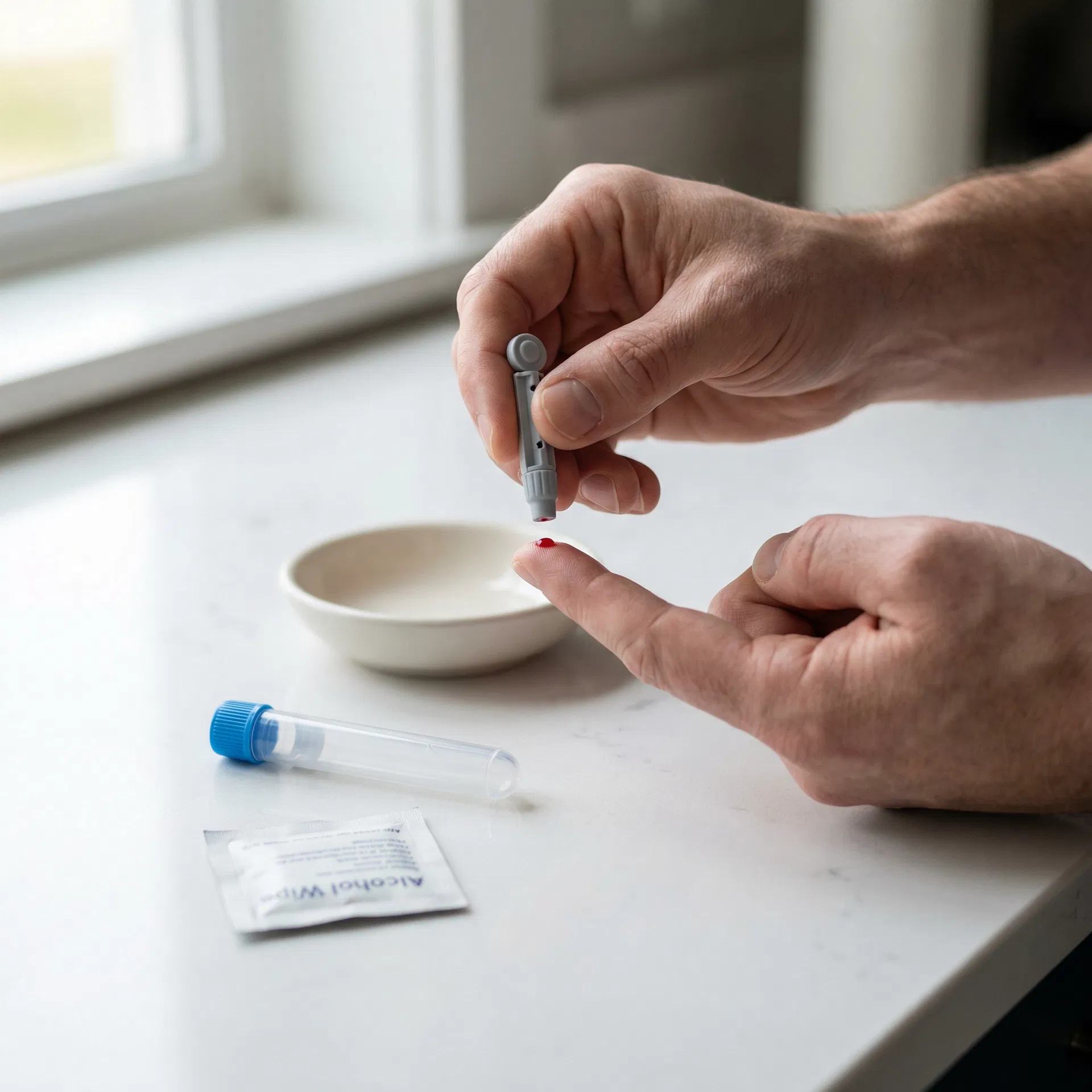
Collect your sample
Follow the simple instructions in your kit — whether it's a finger-prick at home or a venous draw at a partner clinic.
 04
04
Insights delivered
Clear, easy-to-understand results sent to you online with actionable health guidance.
Frequently asked questions
This test measures Total Cholesterol, LDL Cholesterol, Non-HDL Cholesterol, HDL Cholesterol, Total Cholesterol : HDL Ratio. Check the full biomarker list on this page for detailed descriptions.
Check the Special Instructions on this page. General rule: fast 8-12 hours if cholesterol/glucose/insulin included. Most hormone, vitamin, and antibody tests do not require fasting. Morning collection (7-10am) is preferred.
Follow the instructions in your kit. For finger-prick: warm hands, use lancet as directed, fill tube to marked line. For venous: attend a phlebotomy clinic with your lab form. Post same day, avoid Fridays/bank holidays.
Results are typically available within the timeframe shown on this page. You will receive a notification when ready to view online.
You may also be interested in

Female Infertility Check Blood test
A 4-biomarker venous blood panel covering female fertility hormones — ideal for investigating female fertility and reproductive health.
Results estimated in 2 working days
4 biomarkers

Ultimate Performance Blood Test Kit
A 56-biomarker venous blood panel covering cholesterol status, diabetes, liver function and other key health markers — ideal for athletes and active people tracking training adaptation, recovery, and performance.
Results estimated in 3 working days
56 biomarkers