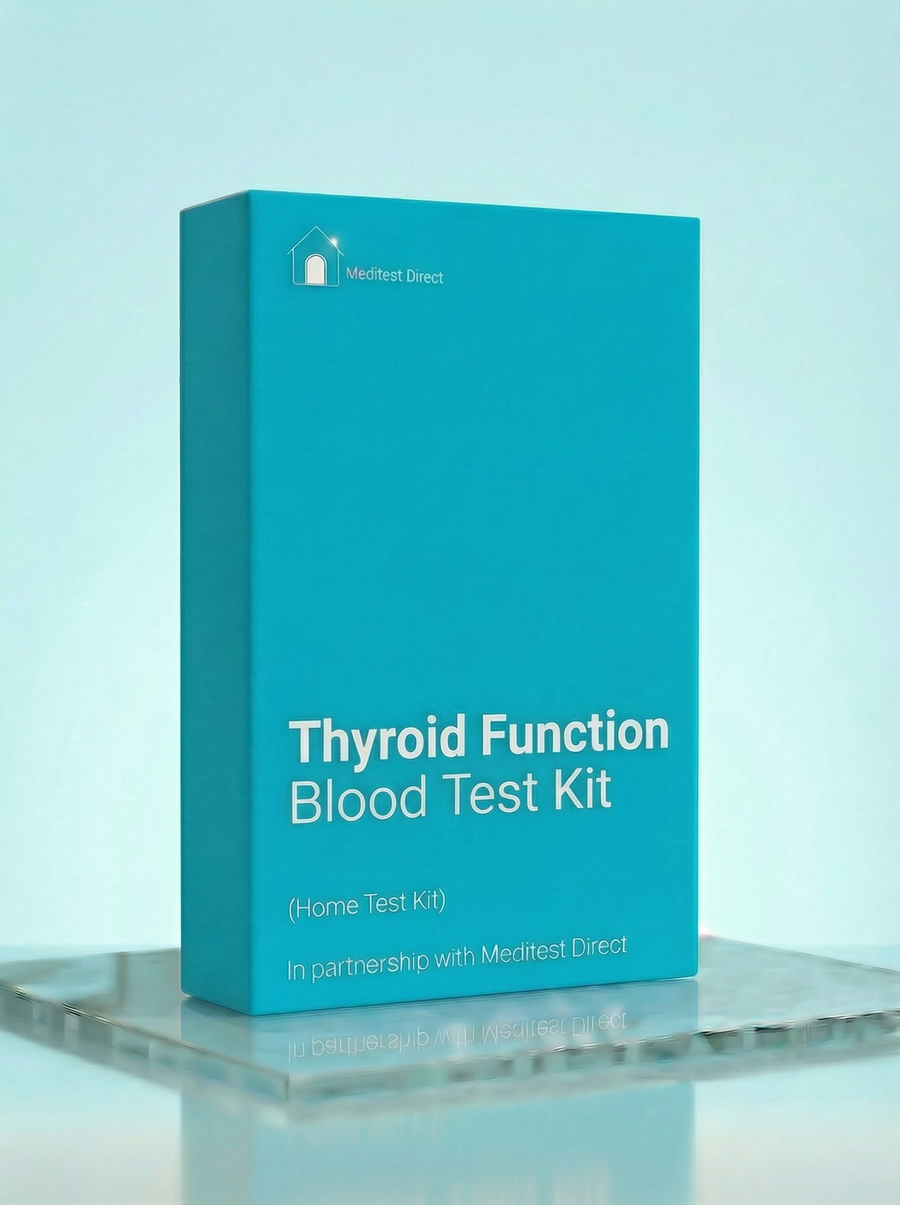
Thyroid Function Blood Test Kit
£43 ✓ In Stock
Your sample goes to a UKAS accredited laboratory meeting ISO 15189 standards.
After you receive your order confirmation email, please reply with your date of birth.
How it works
Your testing journey
From order to results in four simple steps. Full transparency on where each step happens and what it costs.

Receive your kit by post
Dispatched same working day if ordered before 3pm. Royal Mail Tracked delivery, typically 1–3 working days. 90% of kits arrive within 24 hours.

Collect at home
Everything you need is in the kit. Collect your sample in the privacy of your own home — no appointment needed, no clinic visit.
Included in kit price
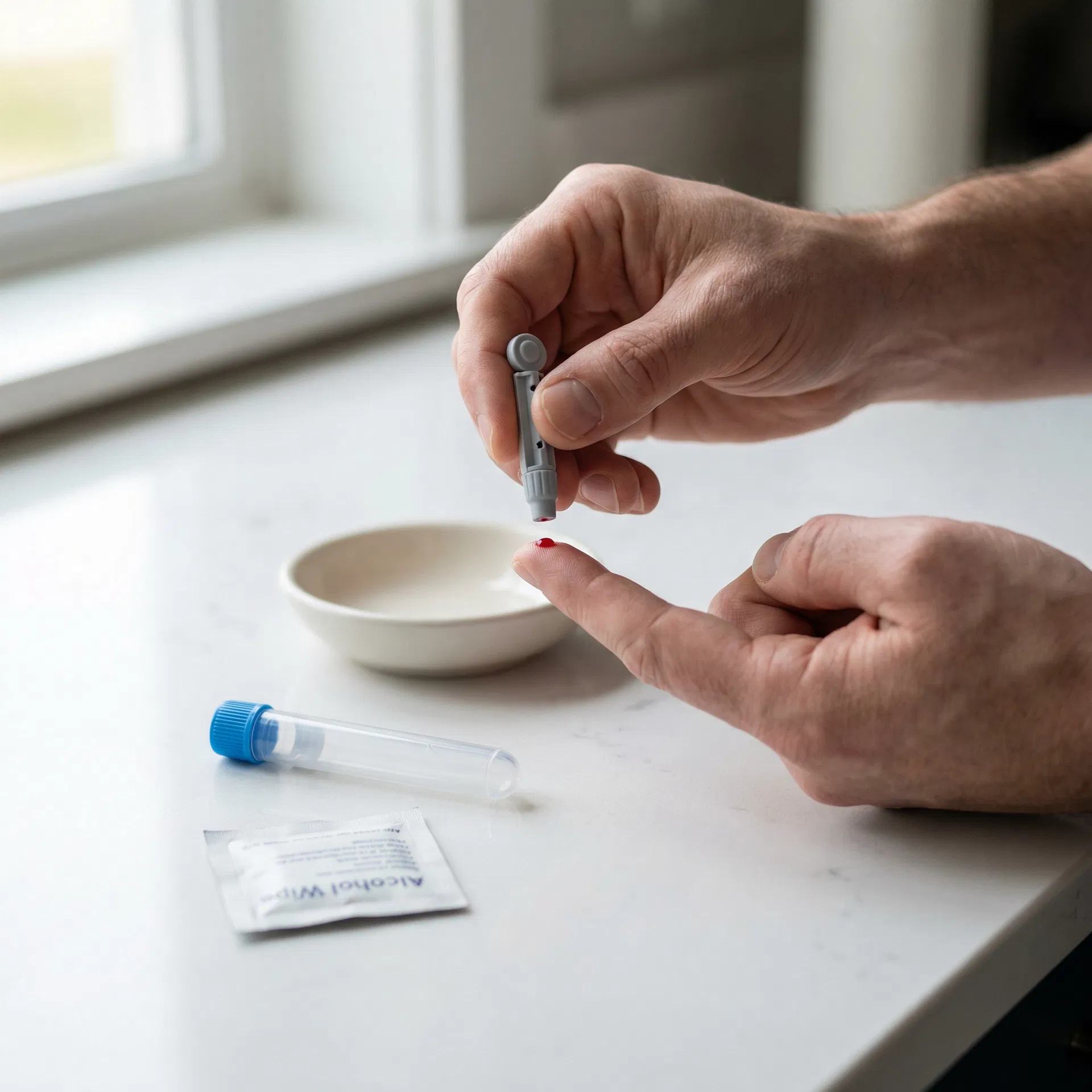
Small finger-prick sample
Use the single-use lancet included in your kit to take a few drops of blood from your fingertip — similar to how diabetics check their blood sugar. Takes about 2 minutes.

Return by prepaid envelope
Seal your sample in the biohazard bag provided and drop it in any Royal Mail postbox using the prepaid Tracked 24 envelope. Post Monday–Thursday for best results.
Home Finger-Prick Blood Collection Kit
- 1Blood collection tube
- 2Single-use lancet device
- 3Sterile gauze pad
- 4Adhesive plaster
- 5Cleansing wipe
- 6Biohazard specimen bag
- 7Prepaid return envelope (Royal Mail Tracked 24)
- 8Step-by-step instructions
Thyroid stimulating hormone (TSH) is produced by the pituitary gland and acts as the master controller of thyroid function. TSH tells the thyroid gland how much hormone to produce. The pituitary constantly monitors thyroid hormone levels in the blood and adjusts TSH output accordingly: when thyroid hormones are low, TSH rises to stimulate the thyroid to produce more; when thyroid hormones are high, TSH falls to slow production. This negative feedback loop makes TSH the most sensitive early indicator of thyroid dysfunction—often the first marker to become abnormal, sometimes before the thyroid hormones themselves move outside normal range. An elevated TSH indicates that the thyroid is underperforming (hypothyroidism). The pituitary is working harder to stimulate a sluggish thyroid. Hypothyroidism is common, affecting approximately 2% of the UK population, with higher rates in women and with increasing age. Symptoms include fatigue, weight gain, feeling cold, dry skin, constipation, hair loss, depression, and difficulty concentrating. A low or suppressed TSH indicates that the thyroid is overactive (hyperthyroidism). The pituitary is backing off because thyroid hormone levels are already too high. Symptoms include weight loss, anxiety, tremor, palpitations, heat intolerance, diarrhoea, and difficulty sleeping. Normal TSH is typically 0.4-4.0 mU/L, though some guidelines suggest 0.4-2.5 mU/L may be more appropriate. TSH between 4-10 mU/L with normal Free T4 is termed "subclinical hypothyroidism"—this may or may not require treatment depending on symptoms, antibody status, and other factors. TSH below 0.1 mU/L with elevated Free T4/T3 indicates overt hyperthyroidism. Results outside the normal range may need a follow-up with your GP.
Free T4 measures the unbound, biologically active fraction of thyroxine circulating in your blood. Thyroxine (T4) is the main hormone produced by the thyroid gland, accounting for about 80% of its hormonal output. Most T4 in blood is bound to carrier proteins (primarily thyroxine-binding globulin, or TBG) and is inactive; only the free fraction (approximately 0.03%) is available to enter cells. This "free" T4 is what we measure because it reflects the hormone actually available to your tissues, unaffected by variations in binding protein levels. T4 is sometimes called a "storage" or "prohormone" because it must be converted to the more active T3 (triiodothyronine) to exert its full effects on cells. This conversion happens in peripheral tissues (liver, kidney, muscles, brain) by enzymes called deiodinases. Free T4 provides a good overall measure of thyroid hormone production. Combined with TSH, it allows classification of thyroid status: high TSH with low Free T4 confirms primary hypothyroidism; low TSH with high Free T4 confirms hyperthyroidism; high TSH with normal Free T4 indicates subclinical hypothyroidism. Normal Free T4 is typically 9-25 pmol/L, though optimal may be in the upper half of this range for many people. When interpreting Free T4, always consider it alongside TSH—the combination tells a clearer story than either alone. Some people feel well with Free T4 at the lower end of normal; others need it in the upper range. Individual variation exists, and clinical symptoms matter as much as laboratory numbers. Results outside the normal range may need a follow-up with your GP.
Free T3 measures the unbound, active fraction of triiodothyronine. T3 is the most metabolically active thyroid hormone—approximately 3-4 times more potent than T4 at the cellular level. T3 is the hormone that actually enters cell nuclei and switches on thyroid-responsive genes, affecting metabolism, energy production, protein synthesis, and countless other cellular functions. Only about 20% of T3 is produced directly by the thyroid gland; the majority (approximately 80%) is produced by conversion of T4 to T3 in peripheral tissues. Including Free T3 in a thyroid panel provides additional information beyond TSH and Free T4 alone. It's particularly useful for detecting hyperthyroidism (where Free T3 may be elevated earlier or more prominently than Free T4, especially in "T3 toxicosis"), assessing T4-to-T3 conversion efficiency (some people convert poorly, leading to low T3 despite adequate T4), and evaluating symptoms in patients on thyroid replacement therapy who feel unwell despite "normal" TSH and Free T4. Some patients feel their T3 levels are important for their wellbeing, though this remains somewhat debated in mainstream endocrinology. Normal Free T3 is typically 3.5-6.5 pmol/L. Low Free T3 with normal TSH and Free T4 often indicates non-thyroidal illness rather than a primary thyroid problem—the body downregulates T3 production during illness, starvation, or severe stress as a protective mechanism. Elevated Free T3 with suppressed TSH is a key finding in hyperthyroidism. In hypothyroid patients on levothyroxine, Free T3 usually remains normal even if Free T4 is at the higher end, due to peripheral regulation of conversion. Results outside the normal range may need a follow-up with your GP.
This test is for screening and information only — it is not a medical diagnosis or professional advice. Please have your results reviewed by a qualified doctor or healthcare provider who can explain what they mean for your personal health situation. If your results show anything outside the normal range, or if you're worried about your health, see your doctor as soon as you can. Don't change any medications or treatments based on these results alone — always talk to your healthcare provider first.
NO CLINICS, NO QUEUES, NO HASSLE
Four steps to clarity
 01
01
Pick your panel
Browse over 200 clinically designed test kits and choose the one that fits your goals.
 02
02
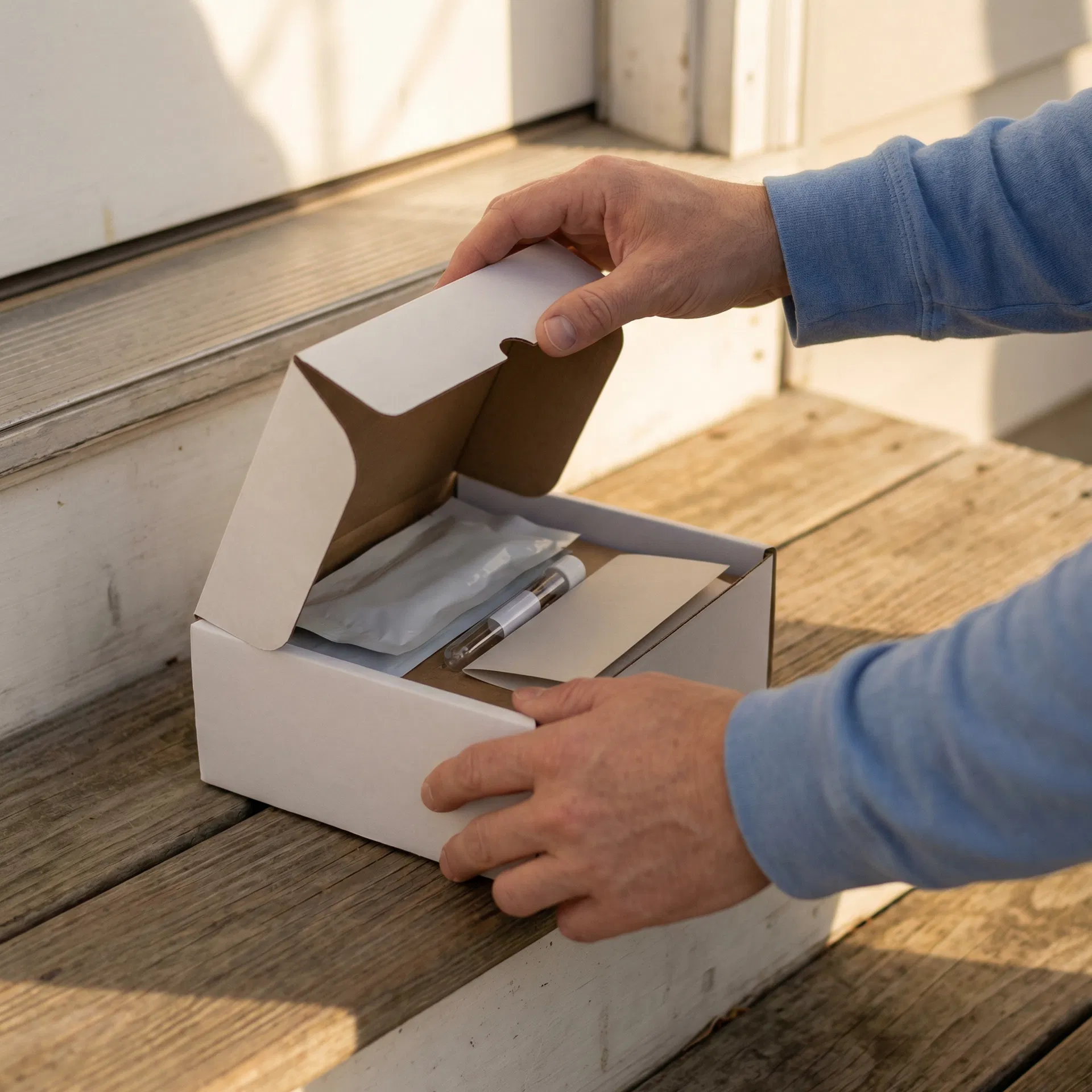
Kit to your door
Everything you need arrives in discreet packaging with step-by-step instructions inside.
 03
03
Collect your sample
Follow the simple instructions in your kit — whether it's a finger-prick at home or a venous draw at a partner clinic.
 04
04
Insights delivered
Clear, easy-to-understand results sent to you online with actionable health guidance.
Frequently asked questions
7-10am, before eating. If on levothyroxine, collect BEFORE your morning dose. TSH is highest in early morning.
Yes. Stop biotin for at least 48 hours before testing. Biotin can cause falsely abnormal results.
Basic: TSH and Free T4. Advanced adds Free T3 (active hormone) and thyroid antibodies (TPO, TG) for autoimmune thyroid disease detection.
No, but morning before food is preferred for consistent results.
You may also be interested in

Advanced Thyroid Function Blood Test Kit
A 10-biomarker venous blood panel covering thyroid hormones, autoimmunity, vitamins and other key health markers — ideal for comprehensive thyroid assessment including antibodies.
Results estimated in 2 working days
10 biomarkers

Underactive Thyroid (Levothyroxine Monitoring) Blood Test
A 2-biomarker finger-prick blood panel covering thyroid hormones — ideal for investigating tiredness, weight changes, or suspected thyroid dysfunction.
Results estimated in 2 working days
2 biomarkers

Thyroid Function with Antibodies Blood Test Kit
A 5-biomarker venous blood panel covering thyroid hormones and thyroid antibodies — ideal for investigating tiredness, weight changes, or suspected thyroid dysfunction.
Results estimated in 2 working days
5 biomarkers

Advanced Well Woman Blood Test
A 47-biomarker venous blood panel covering cholesterol status, clotting status, diabetes and other key health markers — ideal for comprehensive female health screening across multiple body systems.
Results estimated in 3 working days
47 biomarkers