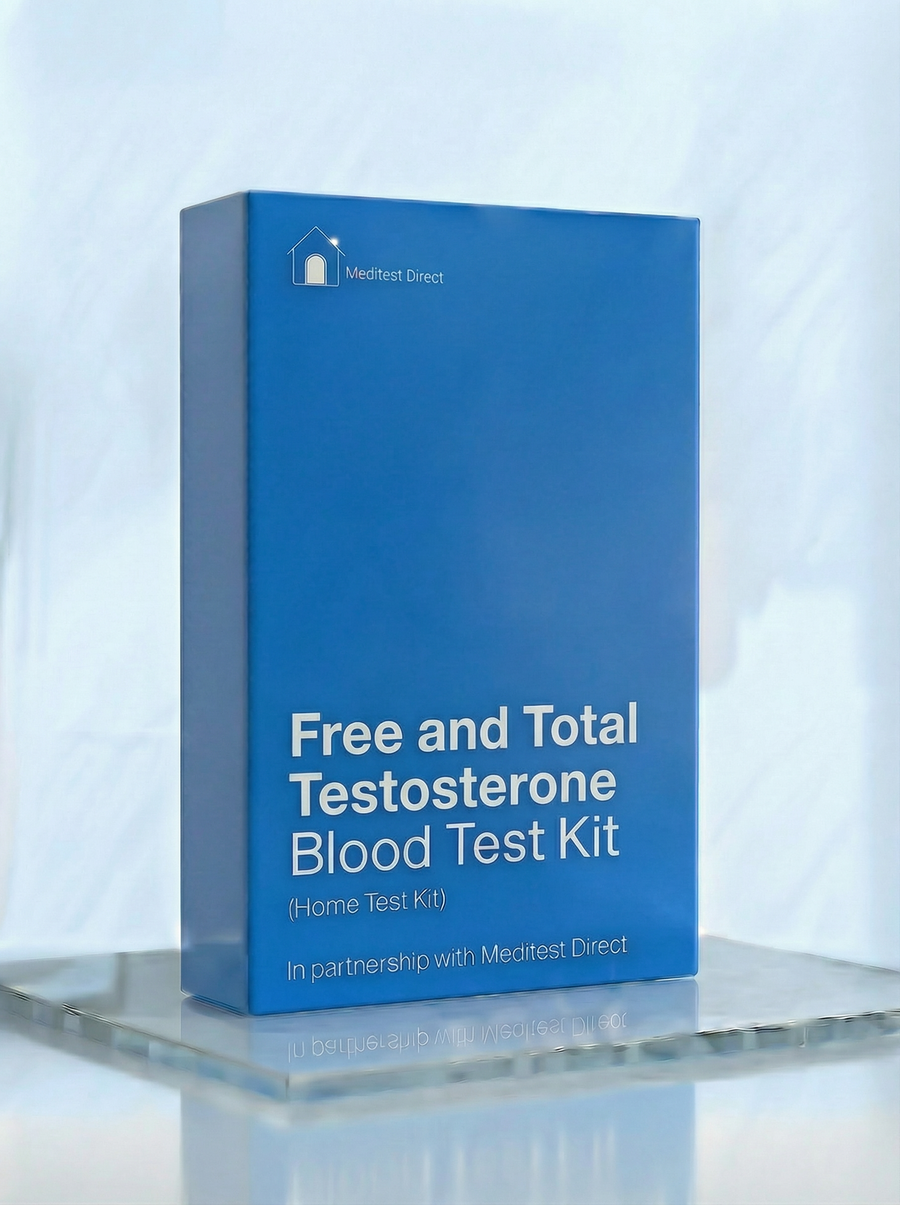
Free and Total Testosterone Blood Test Kit
£55 ✓ In Stock
Your sample goes to a UKAS accredited laboratory meeting ISO 15189 standards.
After you receive your order confirmation email, please reply with your date of birth.
How it works
Your testing journey
From order to results in four simple steps. Full transparency on where each step happens and what it costs.

Receive your kit by post
Dispatched same working day if ordered before 3pm. Royal Mail Tracked delivery, typically 1–3 working days. 90% of kits arrive within 24 hours.

Visit a partner clinic
Book a phlebotomy appointment at one of our 365+ UK partner clinics. Take your kit with you — the phlebotomist will collect your sample using the materials provided.
Phlebotomy fee applies (paid at clinic)
Venous blood draw at a clinic
A trained phlebotomist takes a small blood sample from a vein in your arm using the vacutainers provided in your kit. The appointment takes around 10 minutes.

Return by prepaid envelope
Seal your sample in the biohazard bag provided and drop it in any Royal Mail postbox using the prepaid Tracked 24 envelope. Post Monday–Thursday for best results.
Venous Blood Collection Kit
This kit is sent to you and taken to your chosen clinic. The phlebotomist will collect your sample using the materials provided.
- 1Vacutainer blood collection tubes
- 2Needle and butterfly needle
- 3Tourniquet
- 4Alcohol swab
- 5Cotton wool and gauze
- 6Adhesive plaster
- 7Biohazard specimen bag
- 8Prepaid return envelope (Royal Mail Tracked 24)
- 9Laboratory request form
- 10Instructions for the phlebotomist
Testosterone is the primary male sex hormone, produced mainly in the testes (with small amounts from the adrenal glands). It's responsible for the development of male characteristics during puberty (deepening voice, facial hair, muscle development, genital growth) and continues to play essential roles throughout adult life: maintaining libido and sexual function, supporting muscle mass and bone density, regulating fat distribution, contributing to red blood cell production, and influencing mood and cognitive function. In men, testosterone levels are typically highest in early adulthood (late teens to early 30s), with normal ranges generally considered 8.6-29 nmol/L (though laboratories may vary). After age 30, testosterone naturally declines by approximately 1-2% per year. This gradual decline is normal, but some men experience more significant drops leading to symptoms: fatigue, reduced energy, decreased libido, erectile difficulties, mood changes (irritability, depression), difficulty concentrating, loss of muscle mass, increased body fat (particularly abdominal), and reduced bone density. However, total testosterone alone doesn't tell the complete story. Most testosterone in the blood is bound to proteins—approximately 60-70% to SHBG (very tightly bound and unavailable) and 25-35% to albumin (loosely bound, partially available). Only 2-3% circulates as truly "free" testosterone that can enter cells and exert effects. A man with "normal" total testosterone but high SHBG may actually have low free testosterone and experience symptoms despite the reassuring total level. This is why measuring the binding proteins is essential for accurate assessment. Results outside the normal range may need a follow-up with your GP.
Free testosterone is the portion of total testosterone that is unbound to any protein and therefore immediately available to enter cells and exert biological effects. It represents only 2-3% of total testosterone but is considered the most clinically relevant fraction because it reflects the testosterone actually available to tissues. Free testosterone is calculated using an algorithm that incorporates total testosterone, SHBG, and albumin levels—this calculated free testosterone correlates well with directly measured free testosterone (which is more technically difficult and expensive to measure). Normal free testosterone in adult men is typically 0.2-0.6 nmol/L (or 200-600 pmol/L, depending on units used), though this declines with age. The calculated value accounts for individual variation in binding proteins: a man with high SHBG (which can be caused by ageing, hyperthyroidism, liver disease, or certain medications) will have less free testosterone available than his total testosterone suggests. Conversely, a man with low SHBG (seen with obesity, insulin resistance, hypothyroidism, or androgen use) may have more free testosterone than expected from total testosterone alone. Free testosterone is particularly valuable when total testosterone is in the borderline-low or normal range but symptoms of testosterone deficiency are present. It helps identify men who may benefit from treatment despite "normal" total testosterone—a phenomenon sometimes called "compensated" or "hidden" hypogonadism. It's also useful for monitoring testosterone replacement therapy, as some treatments affect SHBG levels (oral testosterone preparations increase SHBG, potentially reducing the free fraction). For men on TRT, checking that free testosterone is optimised—not just total testosterone—can guide dose adjustments. Results outside the normal range may need a follow-up with your GP.
Albumin is the most abundant protein in blood plasma, produced by the liver. It has many functions: maintaining fluid balance between blood vessels and tissues (oncotic pressure), transporting various substances (hormones, fatty acids, bilirubin, drugs), and acting as an antioxidant. Normal albumin levels are typically 35-50 g/L. In the context of testosterone assessment, albumin is important because it loosely binds approximately 25-35% of circulating testosterone. Unlike SHBG, which binds testosterone very tightly, albumin's binding is weak and readily reversible. Albumin-bound testosterone is sometimes considered "bioavailable" along with free testosterone, as it can dissociate from albumin at tissue sites and become available to cells. This is why some clinicians look at "bioavailable testosterone" (free + albumin-bound) rather than just free testosterone. However, for practical purposes, the calculated free testosterone (which accounts for albumin levels) provides the most useful clinical information. Low albumin levels (seen in liver disease, kidney disease, malnutrition, or chronic inflammation) affect the free testosterone calculation—less albumin means more of the remaining testosterone is either free or bound to SHBG. Conversely, high albumin can slightly reduce calculated free testosterone. By measuring albumin alongside testosterone and SHBG, the laboratory can accurately calculate your true free testosterone level. Results outside the normal range may need a follow-up with your GP.
Sex Hormone Binding Globulin is a protein produced by the liver that tightly binds and transports sex hormones—primarily testosterone and oestradiol—in the bloodstream. Testosterone bound to SHBG is inactive; it cannot enter cells or exert biological effects. SHBG therefore acts as a "buffer" controlling how much active hormone is available at any time. Normal SHBG in men is typically 15-55 nmol/L, though it increases with age. SHBG levels are influenced by many factors, which is why measuring SHBG (not just total testosterone) is essential for accurate testosterone assessment. Factors that INCREASE SHBG (reducing free testosterone): ageing, hyperthyroidism, liver disease (especially cirrhosis), HIV infection, oestrogen use, certain anticonvulsants, and prolonged endurance exercise. Factors that DECREASE SHBG (increasing free testosterone): obesity, insulin resistance/type 2 diabetes, hypothyroidism, high-dose androgen use, and polycystic ovary syndrome (in women). These variations explain why men with similar total testosterone can have very different free testosterone levels and symptoms. Understanding your SHBG level helps interpret your testosterone status. A man with total testosterone at the lower end of normal but low SHBG may have adequate free testosterone and feel fine. A man with total testosterone in the middle of the normal range but high SHBG may have low free testosterone and experience deficiency symptoms—this is the scenario where testing free testosterone is most valuable, as total testosterone alone would be falsely reassuring. Results outside the normal range may need a follow-up with your GP.
This test is for screening and information only — it is not a medical diagnosis or professional advice. Please have your results reviewed by a qualified doctor or healthcare provider who can explain what they mean for your personal health situation. If your results show anything outside the normal range, or if you're worried about your health, see your doctor as soon as you can. Don't change any medications or treatments based on these results alone — always talk to your healthcare provider first.
NO CLINICS, NO QUEUES, NO HASSLE
Four steps to clarity
 01
01
Pick your panel
Browse over 200 clinically designed test kits and choose the one that fits your goals.
 02
02
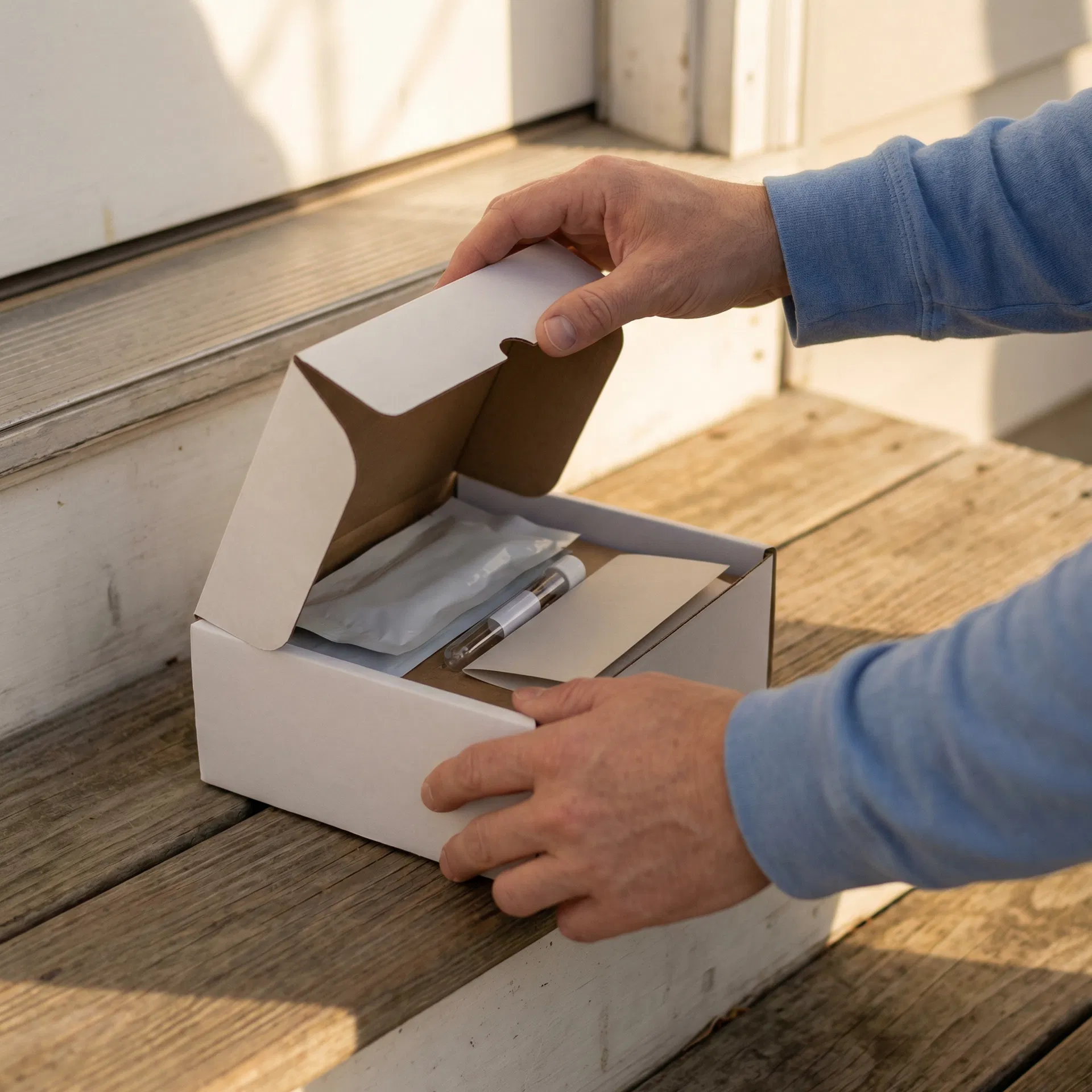
Kit to your door
Everything you need arrives in discreet packaging with step-by-step instructions inside.
 03
03
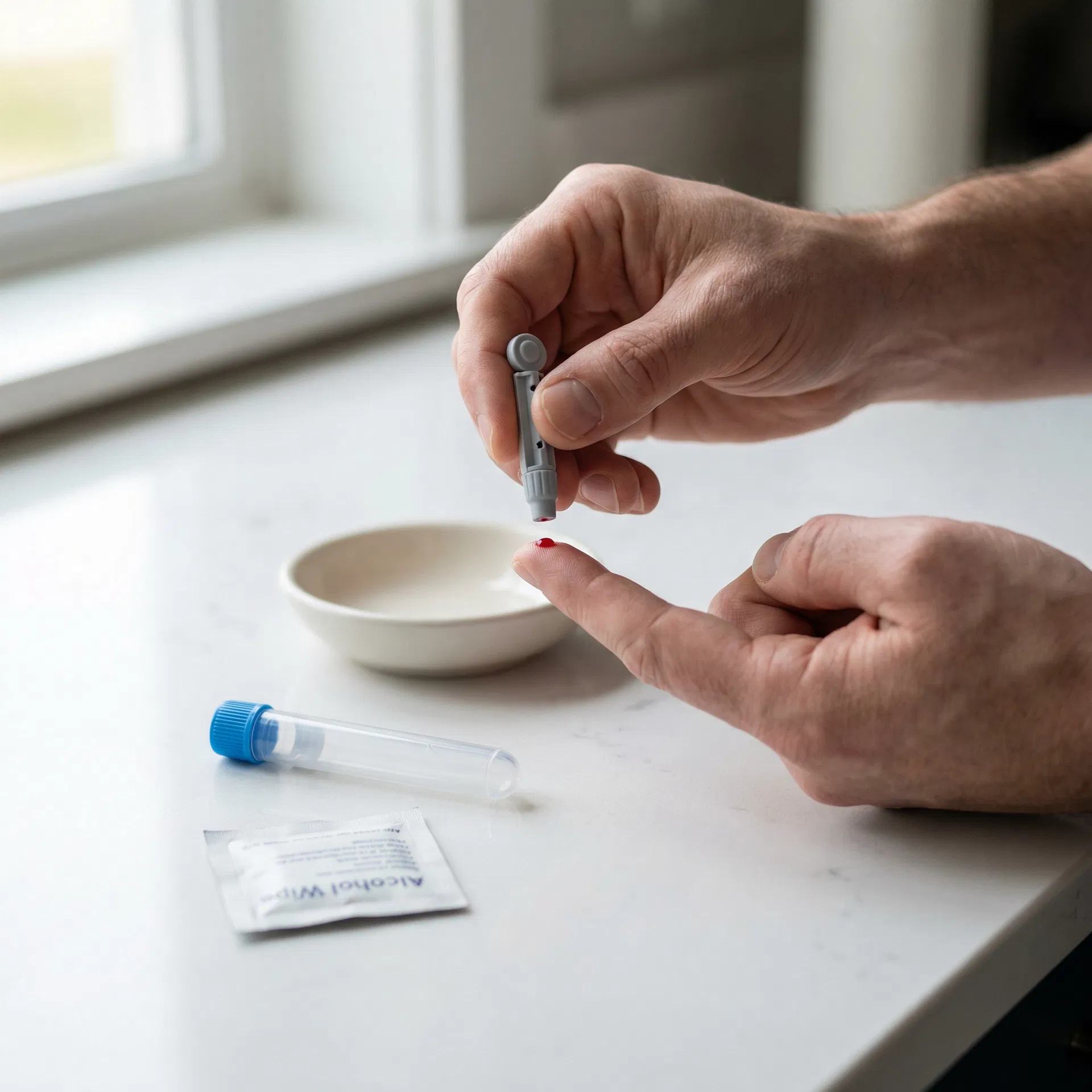
Collect your sample
Follow the simple instructions in your kit — whether it's a finger-prick at home or a venous draw at a partner clinic.
 04
04
Insights delivered
Clear, easy-to-understand results sent to you online with actionable health guidance.
Frequently asked questions
Morning 7-10am when most hormones peak. For female hormone tests, cycle timing also matters — check Special Instructions on this page.
Testosterone peaks early morning and drops 30-50% by afternoon. Testing outside 7-10am may show falsely low results.
Sleep deprivation, obesity, alcohol, chronic stress, opioid medications, and some chronic illnesses. Confirm a low result with a repeat morning test before treatment decisions.
Not usually required for hormone tests unless the panel also includes cholesterol, glucose, or insulin markers. Check kit instructions.
Yes. Hormonal contraceptives, HRT, testosterone therapy, corticosteroids, and antidepressants can all affect hormone levels. Disclose all medications when discussing results.
You may also be interested in

Advanced Female Hormone Blood Test
A 12-biomarker venous blood panel covering hormones, proteins, thyroid hormones and autoimmunity — ideal for investigating relevant symptoms or monitoring health.
Results estimated in 2 working days
12 biomarkers

Advanced Well Man Blood Test Kit
A 44-biomarker venous blood panel covering cholesterol status, clotting status, diabetes and other key health markers — ideal for comprehensive male health screening across multiple body systems.
Results estimated in 3 working days
44 biomarkers

Advanced TRT (Testosterone Replacement Therapy) Blood Test
A 41-biomarker venous blood panel covering cholesterol status, clotting status, diabetes and other key health markers — ideal for investigating low testosterone, libido, energy, or hormone replacement monitoring.
Results estimated in 2 working days
41 biomarkers

Ultimate Performance Blood Test Kit
A 56-biomarker venous blood panel covering cholesterol status, diabetes, liver function and other key health markers — ideal for athletes and active people tracking training adaptation, recovery, and performance.
Results estimated in 3 working days
56 biomarkers