
TRT Monitoring with Free Testosterone Blood Test
£67 ✓ In Stock
Your sample goes to a UKAS accredited laboratory meeting ISO 15189 standards.
After you receive your order confirmation email, please reply with your date of birth.
How it works
Your testing journey
From order to results in four simple steps. Full transparency on where each step happens and what it costs.

Receive your kit by post
Dispatched same working day if ordered before 3pm. Royal Mail Tracked delivery, typically 1–3 working days. 90% of kits arrive within 24 hours.

Visit a partner clinic
Book a phlebotomy appointment at one of our 365+ UK partner clinics. Take your kit with you — the phlebotomist will collect your sample using the materials provided.
Phlebotomy fee applies (paid at clinic)
Venous blood draw at a clinic
A trained phlebotomist takes a small blood sample from a vein in your arm using the vacutainers provided in your kit. The appointment takes around 10 minutes.

Return by prepaid envelope
Seal your sample in the biohazard bag provided and drop it in any Royal Mail postbox using the prepaid Tracked 24 envelope. Post Monday–Thursday for best results.
Venous Blood Collection Kit
This kit is sent to you and taken to your chosen clinic. The phlebotomist will collect your sample using the materials provided.
- 1Vacutainer blood collection tubes
- 2Needle and butterfly needle
- 3Tourniquet
- 4Alcohol swab
- 5Cotton wool and gauze
- 6Adhesive plaster
- 7Biohazard specimen bag
- 8Prepaid return envelope (Royal Mail Tracked 24)
- 9Laboratory request form
- 10Instructions for the phlebotomist
Testosterone is a hormone that causes male characteristics. For men, it helps to regulate sex drive and has a role in controlling bone mass, fat distribution, muscle mass, strength and the production of red blood cells and sperm. Testosterone is produced in the testicles of men and, in much smaller amounts, in the ovaries of women. Testosterone levels in men naturally decline after the age of 30, although lower than normal levels can occur at any age and may be associated with low libido, erectile dysfunction, difficulty in gaining and maintaining muscle mass and lack of energy. During TRT, monitoring total testosterone helps ensure levels are within the therapeutic range—neither too low (ineffective treatment) nor too high (increased risk of side effects).
Most testosterone circulating in the blood is bound to proteins, in particular SHBG and albumin; only 2–3% of testosterone is free and available to cells. This test uses an algorithm to calculate the level of free or unbound testosterone in relation to total testosterone, SHBG and albumin. Free testosterone is considered by many clinicians to be a more accurate reflection of testosterone availability to tissues than total testosterone alone. During TRT, free testosterone levels help assess whether the treatment is effectively delivering bioavailable hormone to your cells, regardless of changes in binding proteins.
Oestradiol is the strongest of the three oestrogens. It's labelled a female hormone but it's made in both the ovaries and testes. It's responsible for the growth of breast tissue, the female reproductive system, and male sexual function. In men, oestradiol levels tend to increase slightly with age as testosterone levels decline. Elevated oestradiol in men may be associated with fertility problems, gynaecomastia (enlarged breast tissue), and erectile dysfunction. During TRT, some testosterone is converted to oestradiol by the aromatase enzyme. Monitoring oestradiol is important because elevated levels can cause side effects such as water retention, mood changes, and gynaecomastia, and may require treatment adjustment or the addition of an aromatase inhibitor.
Prolactin is a hormone produced in the pituitary gland and plays a role in reproductive health. Its primary purpose is to stimulate milk production after childbirth, and in pregnant and breastfeeding women prolactin levels can soar. Elevated prolactin levels in men may be associated with low libido, erectile dysfunction, and reduced testosterone production. During TRT, prolactin is monitored because elevated levels can indicate pituitary problems or can occur as a side effect of certain medications. High prolactin can also suppress testosterone production and reduce the effectiveness of TRT.
SHBG (sex hormone binding globulin) is a protein which transports the sex hormones (testosterone, oestrogen and dihydrotestosterone) in the blood. Hormones which are bound to SHBG are inactive, meaning they are unavailable to your cells. Measuring SHBG gives important information about your levels of free or unbound hormones which are biologically active and available for use. High SHBG reduces the amount of free testosterone available to tissues, while low SHBG increases it. SHBG levels can be affected by age, obesity, liver disease, thyroid conditions, and certain medications. During TRT, SHBG helps interpret whether total testosterone levels are translating into adequate free testosterone.
Albumin is a protein made mainly in the liver. It helps to exert the osmotic pressure which holds water within the blood, carries nutrients and medications through the blood, and is important for tissue growth and healing. Albumin also carries hormones around the body—testosterone binds loosely to albumin, and this albumin-bound testosterone is considered bioavailable (unlike SHBG-bound testosterone). Measuring albumin allows for accurate calculation of free testosterone using established algorithms. Albumin levels can be affected by liver disease, kidney disease, malnutrition, and inflammation.
This test is for screening and information only — it is not a medical diagnosis or professional advice. Please have your results reviewed by a qualified doctor or healthcare provider who can explain what they mean for your personal health situation. If your results show anything outside the normal range, or if you're worried about your health, see your doctor as soon as you can. Don't change any medications or treatments based on these results alone — always talk to your healthcare provider first.
NO CLINICS, NO QUEUES, NO HASSLE
Four steps to clarity
 01
01
Pick your panel
Browse over 200 clinically designed test kits and choose the one that fits your goals.
 02
02
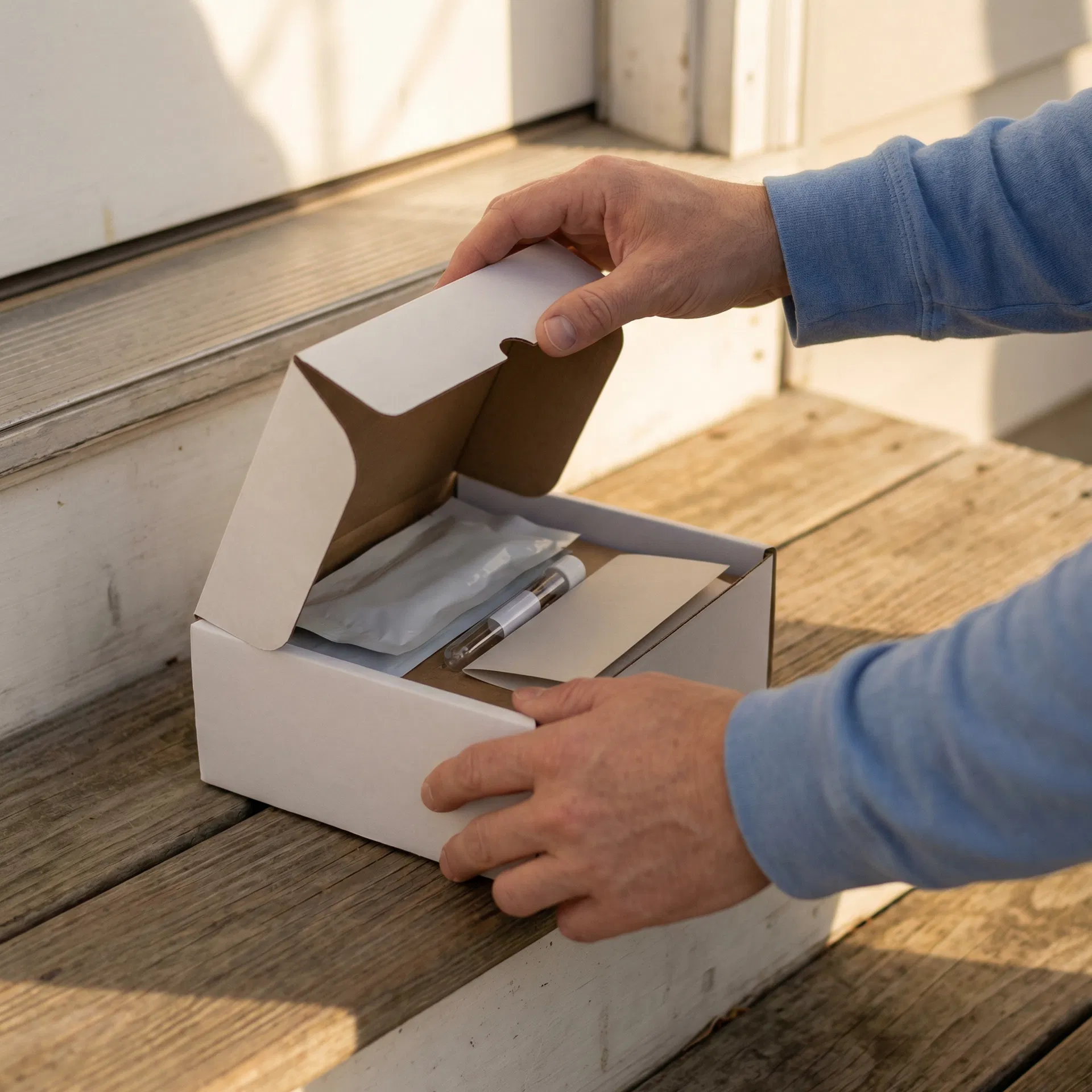
Kit to your door
Everything you need arrives in discreet packaging with step-by-step instructions inside.
 03
03
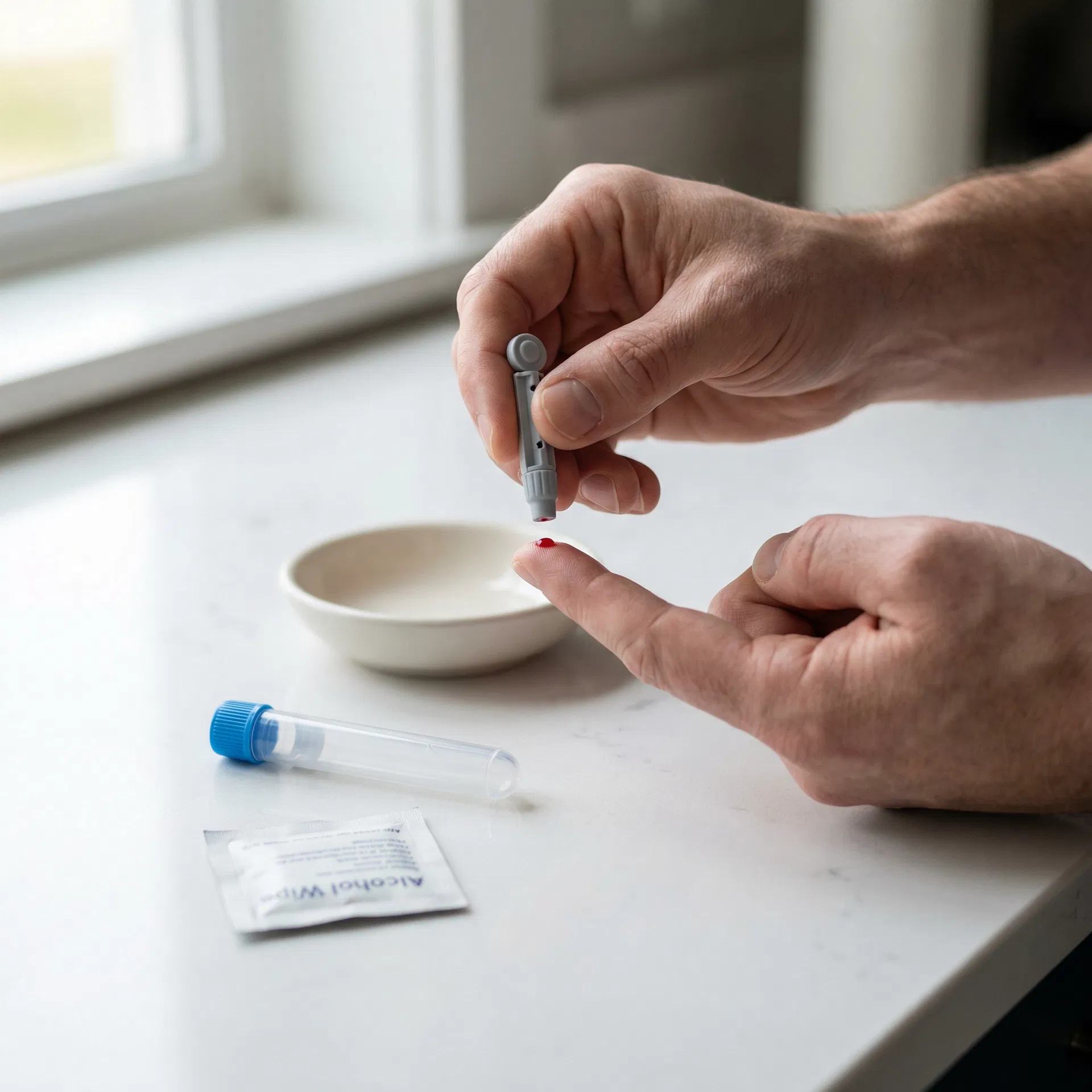
Collect your sample
Follow the simple instructions in your kit — whether it's a finger-prick at home or a venous draw at a partner clinic.
 04
04
Insights delivered
Clear, easy-to-understand results sent to you online with actionable health guidance.
Frequently asked questions
This test measures Testosterone (Total), Free Testosterone (Calculated), Oestradiol (E2), Prolactin, SHBG (Sex Hormone Binding Globulin). Check the full biomarker list on this page for detailed descriptions of each marker and what it tells you about your health.
Check the Special Instructions section on this page. As a general rule, if the panel includes cholesterol, triglycerides, glucose, or insulin, fast for 8-12 hours. For most hormone, vitamin, and antibody tests, fasting is not required. Morning collection (7-10am) is preferred.
Follow the instructions in your kit. For finger-prick tests: warm your hands, use the lancet as directed, fill the tube to the marked line. For venous tests: attend a phlebotomy clinic with your laboratory request form. Post your sample the same day — avoid Fridays and bank holidays.
Results are typically available within the timeframe shown on this page. You will receive a notification when ready to view online. Results include reference ranges and guidance.
You may also be interested in

Advanced Female Hormone Blood Test
A 12-biomarker venous blood panel covering hormones, proteins, thyroid hormones and autoimmunity — ideal for investigating relevant symptoms or monitoring health.
Results estimated in 2 working days
12 biomarkers

Advanced Well Man Blood Test Kit
A 44-biomarker venous blood panel covering cholesterol status, clotting status, diabetes and other key health markers — ideal for comprehensive male health screening across multiple body systems.
Results estimated in 3 working days
44 biomarkers

Advanced TRT (Testosterone Replacement Therapy) Blood Test
A 41-biomarker venous blood panel covering cholesterol status, clotting status, diabetes and other key health markers — ideal for investigating low testosterone, libido, energy, or hormone replacement monitoring.
Results estimated in 2 working days
41 biomarkers

Ultimate Performance Blood Test Kit
A 56-biomarker venous blood panel covering cholesterol status, diabetes, liver function and other key health markers — ideal for athletes and active people tracking training adaptation, recovery, and performance.
Results estimated in 3 working days
56 biomarkers