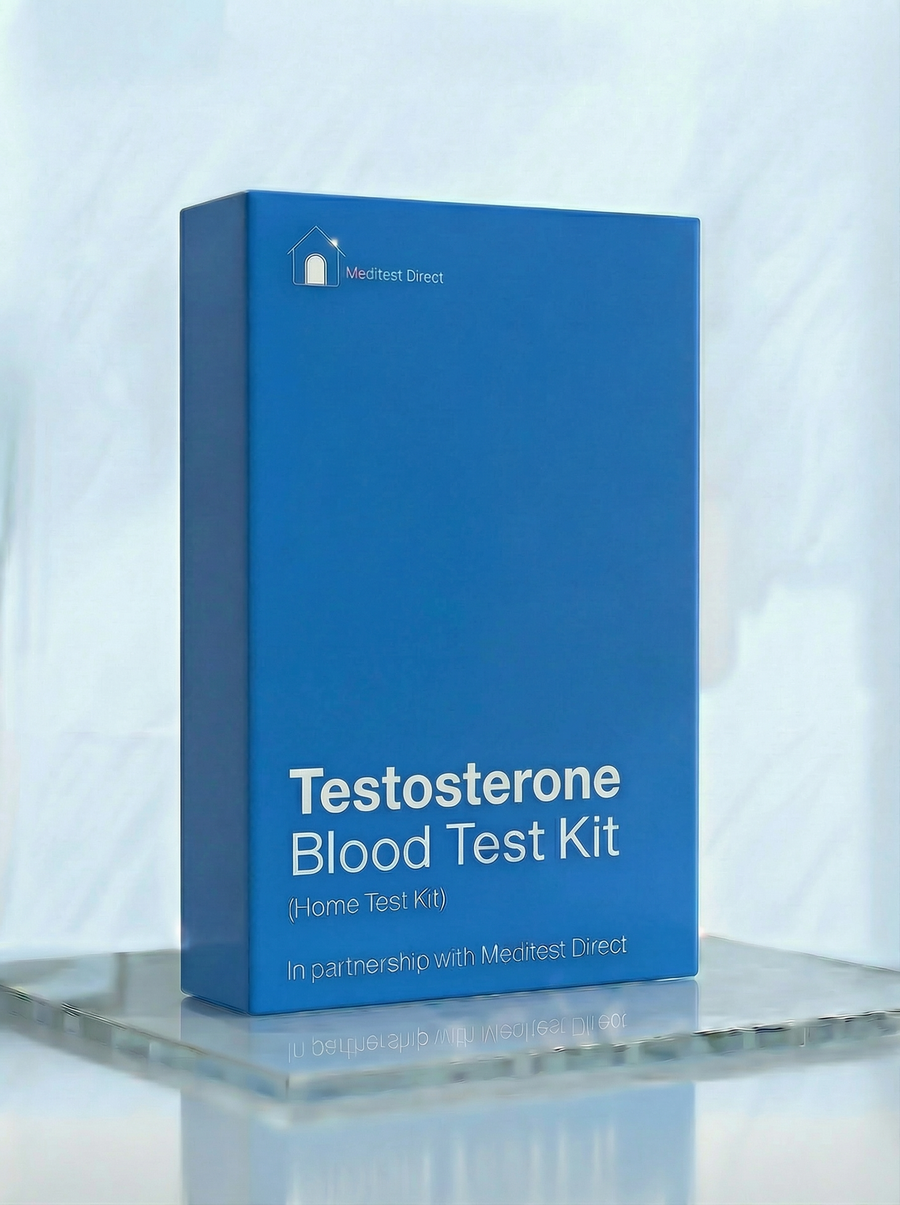
Testosterone Blood Test
£34.99 ✓ In Stock
Your sample goes to a UKAS accredited laboratory meeting ISO 15189 standards.
After you receive your order confirmation email, please reply with your date of birth.
How it works
Your testing journey
From order to results in four simple steps. Full transparency on where each step happens and what it costs.

Receive your kit by post
Dispatched same working day if ordered before 3pm. Royal Mail Tracked delivery, typically 1–3 working days. 90% of kits arrive within 24 hours.

Collect at home
Everything you need is in the kit. Collect your sample in the privacy of your own home — no appointment needed, no clinic visit.
Included in kit price
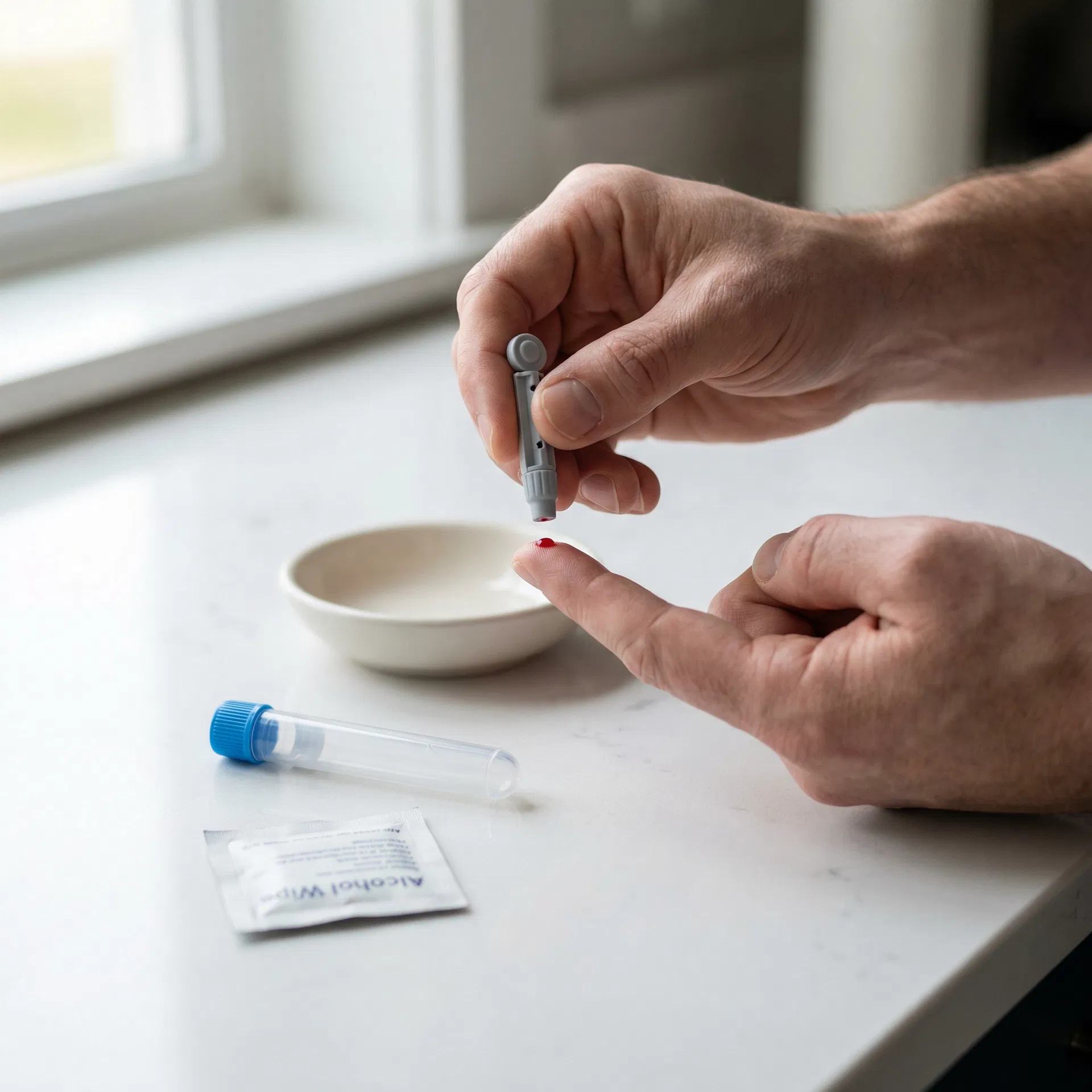
Small finger-prick sample
Use the single-use lancet included in your kit to take a few drops of blood from your fingertip — similar to how diabetics check their blood sugar. Takes about 2 minutes.

Return by prepaid envelope
Seal your sample in the biohazard bag provided and drop it in any Royal Mail postbox using the prepaid Tracked 24 envelope. Post Monday–Thursday for best results.
Home Finger-Prick Blood Collection Kit
- 1Blood collection tube
- 2Single-use lancet device
- 3Sterile gauze pad
- 4Adhesive plaster
- 5Cleansing wipe
- 6Biohazard specimen bag
- 7Prepaid return envelope (Royal Mail Tracked 24)
- 8Step-by-step instructions
Testosterone is the primary androgen (male sex hormone), produced mainly in the testes in men and in smaller amounts by the ovaries and adrenal glands in women. This test measures total testosterone—the sum of testosterone bound to proteins (sex hormone-binding globulin and albumin) plus the small amount that is free (unbound). Total testosterone is the standard first-line test for assessing testosterone status. In men, testosterone is essential for the development of male characteristics during puberty and continues throughout life to regulate libido and sexual function, sperm production, muscle mass and strength, bone density, fat distribution (preventing central obesity), red blood cell production, mood and mental wellbeing, energy and motivation, and cognitive function. Testosterone levels naturally decline gradually after age 30, at approximately 1-2% per year, though this decline varies significantly between individuals. Low testosterone (hypogonadism) can occur at any age and may be due to testicular problems (primary hypogonadism), pituitary/hypothalamic problems (secondary hypogonadism), or age-related decline (late-onset hypogonadism). Normal testosterone in men is typically 8.6-29 nmol/L in the morning. Levels below 8 nmol/L are generally considered low; levels 8-12 nmol/L are borderline and clinical context matters; levels above 12 nmol/L are usually adequate. However, symptoms don't always correlate perfectly with levels, and some men have symptoms despite "normal" total testosterone (possibly due to low free testosterone or individual sensitivity). In women, normal testosterone is approximately 0.5-2.5 nmol/L. Elevated testosterone in women may indicate polycystic ovary syndrome (PCOS), androgen-secreting tumours (rare), or exogenous androgen use. Very high testosterone (>5 nmol/L) in women warrants prompt investigation. Results outside the normal range may need a follow-up with your GP.
This test is for screening and information only — it is not a medical diagnosis or professional advice. Please have your results reviewed by a qualified doctor or healthcare provider who can explain what they mean for your personal health situation. If your results show anything outside the normal range, or if you're worried about your health, see your doctor as soon as you can. Don't change any medications or treatments based on these results alone — always talk to your healthcare provider first.
NO CLINICS, NO QUEUES, NO HASSLE
Four steps to clarity
 01
01
Pick your panel
Browse over 200 clinically designed test kits and choose the one that fits your goals.
 02
02
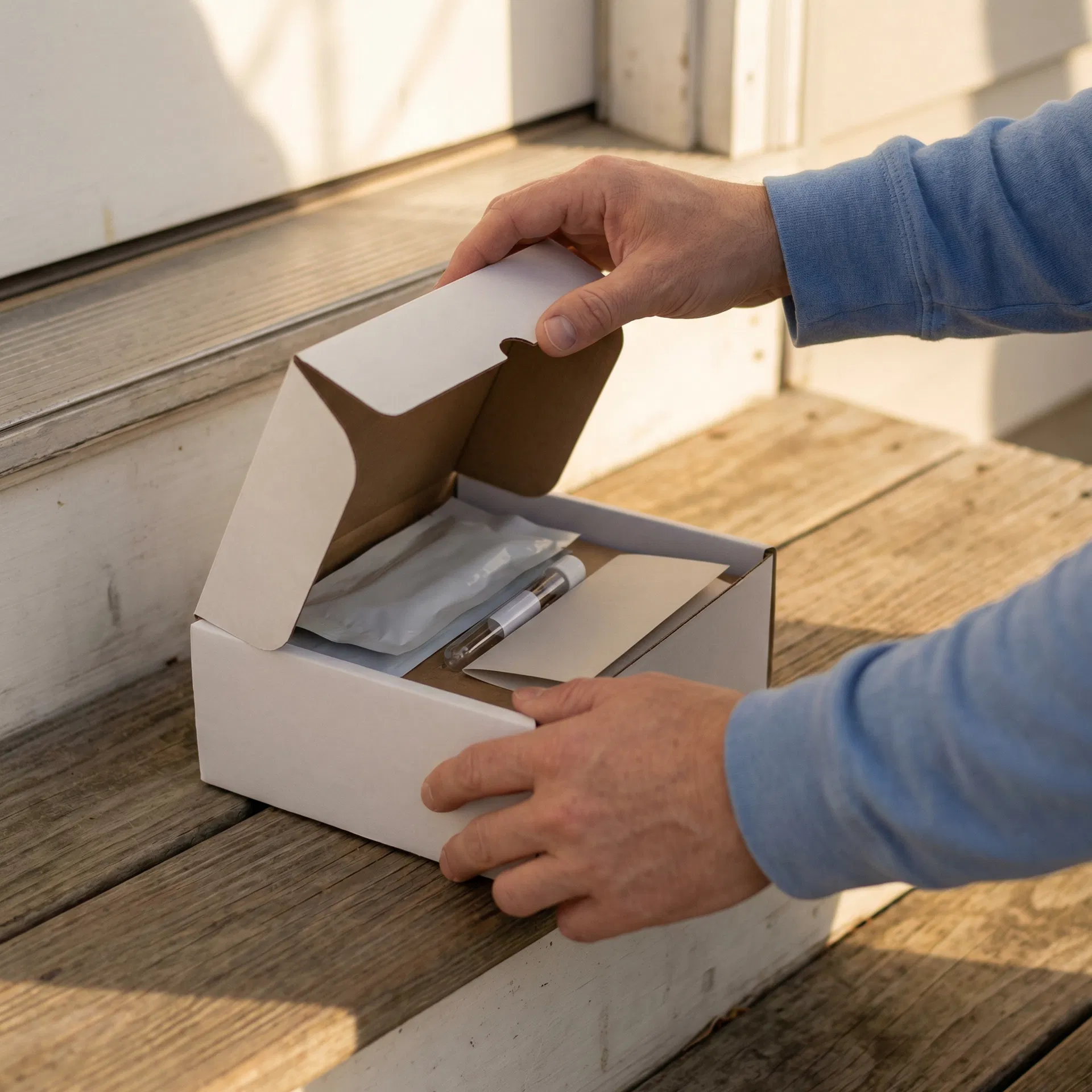
Kit to your door
Everything you need arrives in discreet packaging with step-by-step instructions inside.
 03
03
Collect your sample
Follow the simple instructions in your kit — whether it's a finger-prick at home or a venous draw at a partner clinic.
 04
04
Insights delivered
Clear, easy-to-understand results sent to you online with actionable health guidance.
Frequently asked questions
Morning 7-10am when most hormones peak. For female hormone tests, cycle timing also matters — check Special Instructions on this page.
Testosterone peaks early morning and drops 30-50% by afternoon. Testing outside 7-10am may show falsely low results.
Sleep deprivation, obesity, alcohol, chronic stress, opioid medications, and some chronic illnesses. Confirm a low result with a repeat morning test before treatment decisions.
Not usually required for hormone tests unless the panel also includes cholesterol, glucose, or insulin markers. Check kit instructions.
Yes. Hormonal contraceptives, HRT, testosterone therapy, corticosteroids, and antidepressants can all affect hormone levels. Disclose all medications when discussing results.
You may also be interested in

Advanced Female Hormone Blood Test
A 12-biomarker venous blood panel covering hormones, proteins, thyroid hormones and autoimmunity — ideal for investigating relevant symptoms or monitoring health.
Results estimated in 2 working days
12 biomarkers

Advanced Well Man Blood Test Kit
A 44-biomarker venous blood panel covering cholesterol status, clotting status, diabetes and other key health markers — ideal for comprehensive male health screening across multiple body systems.
Results estimated in 3 working days
44 biomarkers

Advanced TRT (Testosterone Replacement Therapy) Blood Test
A 41-biomarker venous blood panel covering cholesterol status, clotting status, diabetes and other key health markers — ideal for investigating low testosterone, libido, energy, or hormone replacement monitoring.
Results estimated in 2 working days
41 biomarkers

Ultimate Performance Blood Test Kit
A 56-biomarker venous blood panel covering cholesterol status, diabetes, liver function and other key health markers — ideal for athletes and active people tracking training adaptation, recovery, and performance.
Results estimated in 3 working days
56 biomarkers