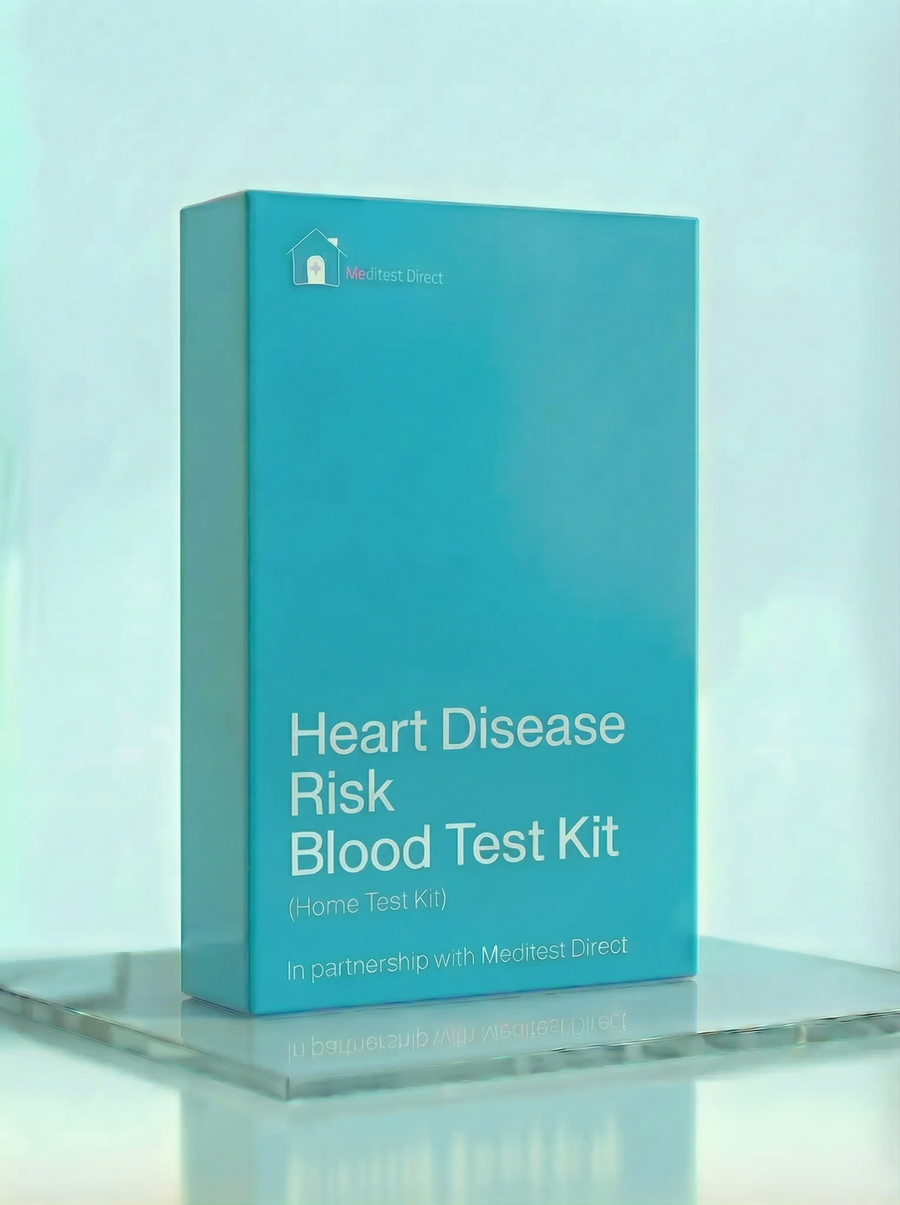
Heart Disease Risk Blood Test Kit
£47 ✓ In Stock
Your sample goes to a UKAS accredited laboratory meeting ISO 15189 standards.
After you receive your order confirmation email, please reply with your date of birth.
How it works
Your testing journey
From order to results in four simple steps. Full transparency on where each step happens and what it costs.

Receive your kit by post
Dispatched same working day if ordered before 3pm. Royal Mail Tracked delivery, typically 1–3 working days. 90% of kits arrive within 24 hours.

Visit a partner clinic
Book a phlebotomy appointment at one of our 365+ UK partner clinics. Take your kit with you — the phlebotomist will collect your sample using the materials provided.
Phlebotomy fee applies (paid at clinic)
Venous blood draw at a clinic
A trained phlebotomist takes a small blood sample from a vein in your arm using the vacutainers provided in your kit. The appointment takes around 10 minutes.

Return by prepaid envelope
Seal your sample in the biohazard bag provided and drop it in any Royal Mail postbox using the prepaid Tracked 24 envelope. Post Monday–Thursday for best results.
Venous Blood Collection Kit
This kit is sent to you and taken to your chosen clinic. The phlebotomist will collect your sample using the materials provided.
- 1Vacutainer blood collection tubes
- 2Needle and butterfly needle
- 3Tourniquet
- 4Alcohol swab
- 5Cotton wool and gauze
- 6Adhesive plaster
- 7Biohazard specimen bag
- 8Prepaid return envelope (Royal Mail Tracked 24)
- 9Laboratory request form
- 10Instructions for the phlebotomist
Cholesterol is an essential fat (lipid) produced primarily by the liver and found in all cells of the body. Despite its reputation, cholesterol is vital for life—it forms an essential component of cell membranes, is the building block for steroid hormones (including oestrogen, testosterone, cortisol, and aldosterone), is necessary for vitamin D synthesis, and is used to produce bile acids that help digest dietary fats. Total cholesterol measures the overall amount of cholesterol in your blood, including both HDL ("good") and LDL ("bad") cholesterol, plus VLDL and other lipoproteins. However, total cholesterol alone has limited value for assessing cardiovascular risk—two people with the same total cholesterol can have very different risk profiles depending on how much is protective HDL versus harmful LDL. For example, someone with high total cholesterol driven by high HDL may actually have lower cardiovascular risk than someone with lower total cholesterol but low HDL. This is why this test includes a complete lipid breakdown. Current UK guidelines recommend total cholesterol below 5 mmol/L for adults, but the pattern of individual components is more informative. Results outside the normal range may need a follow-up with your GP.
Low-density lipoprotein (LDL) cholesterol is often called "bad" cholesterol because elevated levels are directly linked to the development of atherosclerosis—the build-up of fatty plaques in artery walls that underlies most heart attacks and strokes. LDL particles transport cholesterol from the liver to tissues throughout the body. When there's more LDL than cells need, the excess particles can penetrate the artery wall, become oxidised, and trigger an inflammatory cascade that gradually forms plaques. Over decades, these plaques can narrow arteries (causing angina when the heart muscle doesn't get enough blood) or rupture suddenly (triggering a blood clot that causes a heart attack or stroke). The relationship between LDL and cardiovascular disease is so well-established that LDL reduction is the primary target of cholesterol-lowering treatment. LDL is strongly influenced by lifestyle—saturated fat, trans fats, excess weight, and lack of exercise all raise LDL, while replacing saturated fats with unsaturated fats, eating more soluble fibre, losing weight, and exercising can lower it. Genetics also play a role—familial hypercholesterolaemia causes very high LDL regardless of lifestyle. UK guidelines recommend LDL below 3 mmol/L for most adults, with lower targets for those at higher risk. Results outside the normal range may need a follow-up with your GP.
Non-HDL cholesterol is calculated by subtracting HDL cholesterol from total cholesterol. This simple calculation captures all the potentially atherogenic (artery-damaging) cholesterol-carrying particles in your blood—not just LDL, but also VLDL (very low-density lipoprotein, which carries triglycerides), IDL (intermediate-density lipoprotein), lipoprotein(a), and remnant particles. Some of these particles, particularly small dense LDL and remnant lipoproteins, may be even more harmful than typical LDL. Non-HDL cholesterol is increasingly favoured by guidelines as the primary lipid target because it's a better predictor of cardiovascular risk than LDL alone, particularly for people with high triglycerides, diabetes, or metabolic syndrome. It's also more accurate when measured without fasting, making it practical for routine testing. NICE guidelines now emphasise non-HDL cholesterol, recommending levels below 4 mmol/L for the general population and below 2.5 mmol/L for those at higher cardiovascular risk. When tracking response to treatment or lifestyle changes, non-HDL cholesterol is often more informative than LDL. Results outside the normal range may need a follow-up with your GP.
High-density lipoprotein (HDL) cholesterol is known as "good" cholesterol because it performs the opposite function to LDL. HDL particles travel through the bloodstream collecting excess cholesterol from cells and artery walls and transporting it back to the liver for disposal or recycling—a process called reverse cholesterol transport. By removing cholesterol from artery walls, HDL helps protect against the development and progression of atherosclerosis. HDL particles also have anti-inflammatory, antioxidant, and antithrombotic (anti-clotting) properties that contribute to cardiovascular protection. Higher HDL levels are associated with lower cardiovascular risk. HDL below 1.0 mmol/L in men or 1.2 mmol/L in women is considered a cardiovascular risk factor independent of LDL levels. Regular aerobic exercise is one of the most effective ways to raise HDL—even modest increases in physical activity can help. Maintaining a healthy weight, stopping smoking (smoking significantly lowers HDL), moderate alcohol consumption, and eating healthy fats (olive oil, nuts, oily fish) can also raise HDL levels. Unfortunately, while low HDL is clearly associated with higher risk, drug treatments that raise HDL have not consistently reduced cardiovascular events, suggesting HDL's protective effects are complex. Results outside the normal range may need a follow-up with your GP.
The total cholesterol to HDL ratio is calculated by dividing total cholesterol by HDL cholesterol. This ratio provides a quick, intuitive assessment of cardiovascular risk by capturing the balance between total cholesterol (which includes potentially harmful components) and protective HDL cholesterol. It's particularly useful because two people with identical total cholesterol can have very different cardiovascular risk depending on how much of that total is protective HDL. This ratio is used in cardiovascular risk calculators such as QRISK (used by the NHS) to estimate your 10-year risk of a heart attack or stroke. A ratio below 4 is considered ideal, indicating that a good proportion of your cholesterol is protective HDL. A ratio between 4 and 6 represents average risk, while a ratio above 6 indicates elevated cardiovascular risk and warrants attention to lifestyle modification or potentially medical treatment. For example, someone with total cholesterol of 5 mmol/L and HDL of 1.5 mmol/L has a ratio of 3.3 (favourable), while someone with the same total cholesterol but HDL of only 0.8 mmol/L has a ratio of 6.25 (elevated risk). Results outside the normal range may need a follow-up with your GP.
Triglycerides are the most common type of fat in the body and in the food we eat. When you consume more calories than you need immediately, your body converts the excess (whether from carbohydrates, fat, or protein) into triglycerides, which are transported via VLDL particles to fat cells for storage. Between meals or during exercise, hormones trigger the release of triglycerides from fat stores to provide energy. Elevated triglycerides are associated with increased cardiovascular risk, though the relationship is more complex than with LDL cholesterol. High triglycerides often occur alongside other metabolic abnormalities—low HDL, small dense LDL particles, insulin resistance, and central obesity—collectively known as metabolic syndrome. This clustering makes it difficult to determine whether elevated triglycerides directly cause cardiovascular disease or are a marker of these other risk factors. Nonetheless, very high triglycerides (above 10 mmol/L) can cause pancreatitis and require treatment. Triglycerides respond well to lifestyle modification—reducing alcohol, limiting refined carbohydrates and sugars, increasing omega-3 fatty acids (oily fish), losing excess weight, and exercising regularly can all significantly lower levels. Fasting before testing gives the most accurate result. Results outside the normal range may need a follow-up with your GP.
High-sensitivity C-reactive protein (hs-CRP) is a marker of inflammation produced by the liver in response to inflammatory signals from the immune system. The "high-sensitivity" assay can detect the low levels of chronic, smouldering inflammation that standard CRP tests would miss but that are increasingly recognised as a key driver of atherosclerosis and cardiovascular disease. Inflammation is now understood to play a central role at every stage of the atherosclerotic process—from initial damage to the artery wall, through plaque formation, to the final plaque rupture that triggers a heart attack or stroke. When used for cardiovascular risk assessment, hs-CRP adds prognostic information beyond traditional risk factors like cholesterol. Levels below 1 mg/L indicate lower relative cardiovascular risk, 1-3 mg/L indicates average risk, and above 3 mg/L indicates higher risk—approximately doubling cardiovascular risk compared to those with levels below 1 mg/L, independent of cholesterol levels. However, hs-CRP rises dramatically with any acute illness, infection, or injury, so it must be tested when well. Lifestyle factors that elevate hs-CRP include obesity (particularly abdominal fat, which is metabolically active and produces inflammatory signals), smoking, sedentary lifestyle, poor diet, and chronic stress. Losing weight, exercising regularly, eating an anti-inflammatory diet rich in fruits, vegetables, and omega-3 fats, and stopping smoking can all lower hs-CRP. Results outside the normal range may need a follow-up with your GP.
This test is for screening and information only — it is not a medical diagnosis or professional advice. Please have your results reviewed by a qualified doctor or healthcare provider who can explain what they mean for your personal health situation. If your results show anything outside the normal range, or if you're worried about your health, see your doctor as soon as you can. Don't change any medications or treatments based on these results alone — always talk to your healthcare provider first.
NO CLINICS, NO QUEUES, NO HASSLE
Four steps to clarity
 01
01
Pick your panel
Browse over 200 clinically designed test kits and choose the one that fits your goals.
 02
02
Kit to your door
Everything you need arrives in discreet packaging with step-by-step instructions inside.
 03
03
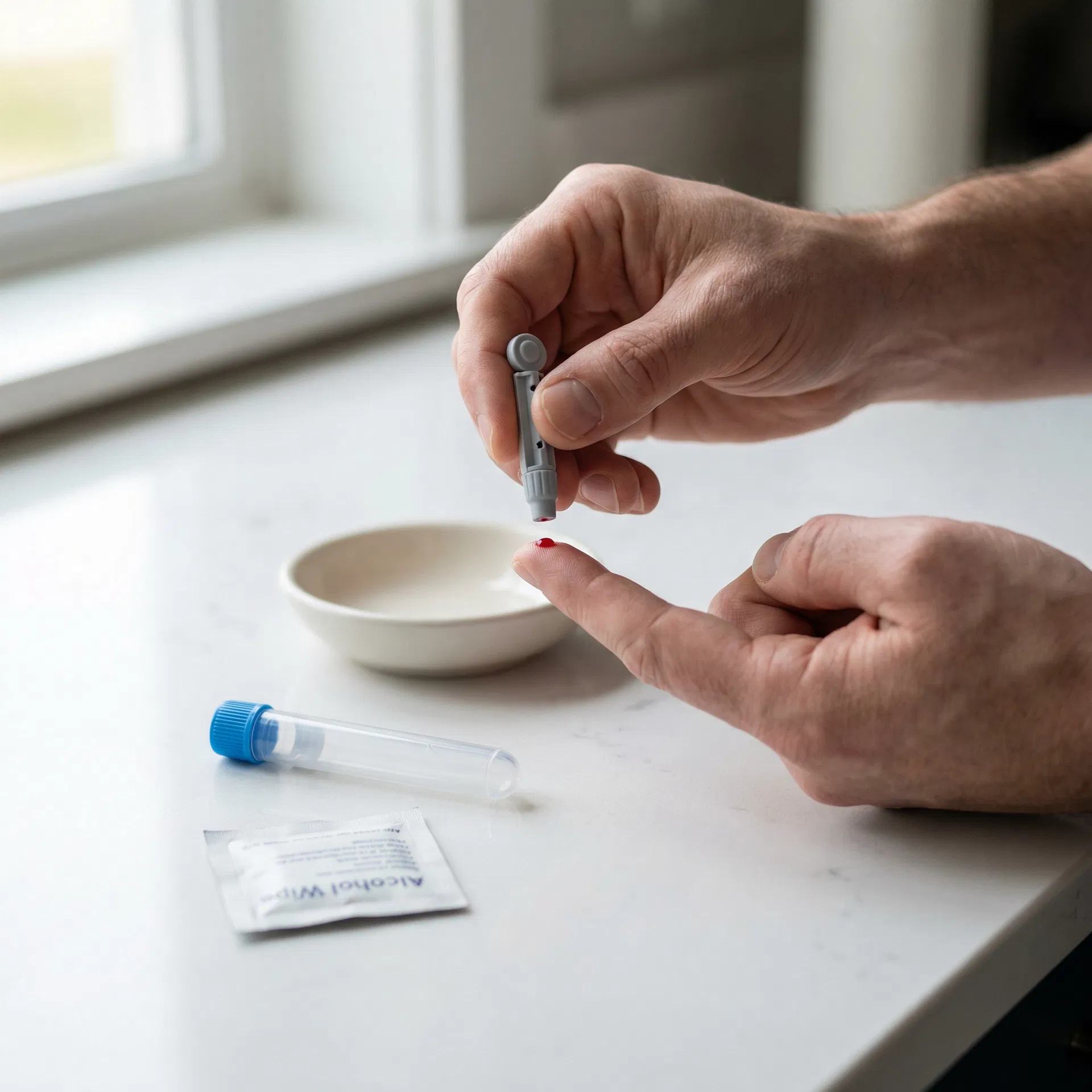
Collect your sample
Follow the simple instructions in your kit — whether it's a finger-prick at home or a venous draw at a partner clinic.
 04
04
Insights delivered
Clear, easy-to-understand results sent to you online with actionable health guidance.
Frequently asked questions
If triglycerides included, fast 8-12 hours. For cardiac markers like BNP or Lp(a), fasting is not required. Drink water normally.
UK NICE: total below 5 mmol/L, HDL above 1 mmol/L (men) or 1.2 (women), LDL below 3 mmol/L, triglycerides below 2.3 (fasting). Targets vary by individual risk.
Yes. Continue medication as normal — the result shows your levels on treatment, which your GP needs to see.
Normal results: every 3-5 years. On statins or with risk factors: every 6-12 months.
You may also be interested in

Advanced Heart Disease Risk Blood Test
A 11-biomarker venous blood panel covering cholesterol status and inflammation — ideal for investigating relevant symptoms or monitoring health.
Results estimated in 2 working days
11 biomarkers

Advanced TRT (Testosterone Replacement Therapy) Blood Test
A 41-biomarker venous blood panel covering cholesterol status, clotting status, diabetes and other key health markers — ideal for investigating low testosterone, libido, energy, or hormone replacement monitoring.
Results estimated in 2 working days
41 biomarkers

Apolipoprotein Profile Blood Test Kit
A 9-biomarker venous blood panel covering cholesterol status — ideal for advanced cardiovascular risk assessment beyond standard cholesterol.
Results estimated in 6 working days
9 biomarkers

Allergy Screen (Essential Foods) Blood Test
An essential food allergy panel testing for the most common food allergens responsible for IgE-mediated reactions — covering the key foods that account for the majority of food allergies in both children and adults.
Results estimated in 2 working days
9 biomarkers