
Women’s Ultimate At Home Blood Test
£97 ✓ In Stock
Your sample goes to a UKAS accredited laboratory meeting ISO 15189 standards.
After you receive your order confirmation email, please reply with your date of birth.
How it works
Your testing journey
From order to results in four simple steps. Full transparency on where each step happens and what it costs.

Receive your kit by post
Dispatched same working day if ordered before 3pm. Royal Mail Tracked delivery, typically 1–3 working days. 90% of kits arrive within 24 hours.

Collect at home
Everything you need is in the kit. Collect your sample in the privacy of your own home — no appointment needed, no clinic visit.
Included in kit price
Small finger-prick sample
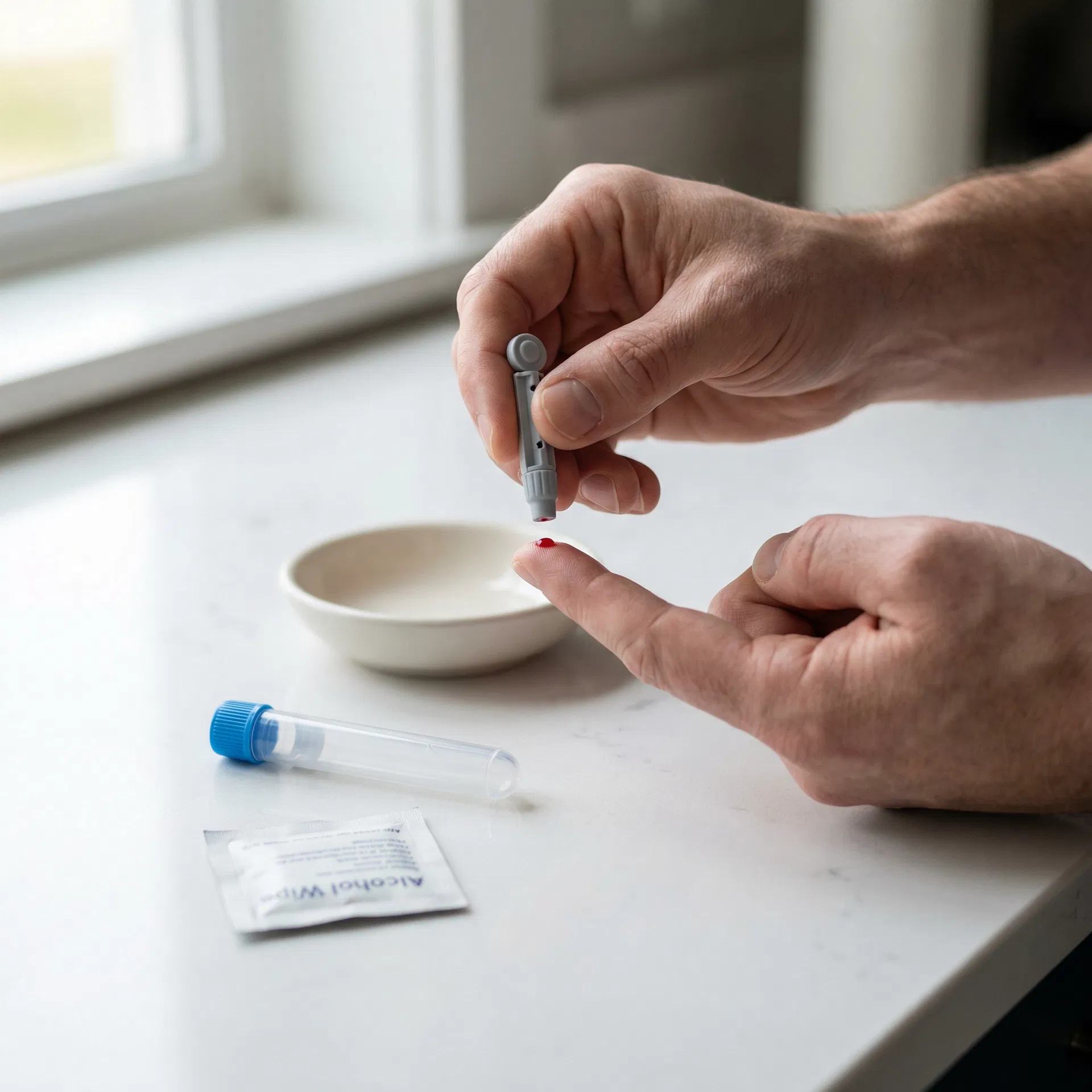
Use the single-use lancet included in your kit to take a few drops of blood from your fingertip — similar to how diabetics check their blood sugar. Takes about 2 minutes.

Return by prepaid envelope
Seal your sample in the biohazard bag provided and drop it in any Royal Mail postbox using the prepaid Tracked 24 envelope. Post Monday–Thursday for best results.
Home Finger-Prick Blood Collection Kit
- 1Blood collection tube
- 2Single-use lancet device
- 3Sterile gauze pad
- 4Adhesive plaster
- 5Cleansing wipe
- 6Biohazard specimen bag
- 7Prepaid return envelope (Royal Mail Tracked 24)
- 8Step-by-step instructions
Thyroid-stimulating hormone (TSH) is produced in the pituitary gland in order to regulate the production of thyroid hormones thyroxine (T4) and triiodothyronine (T3) by the thyroid gland. If thyroid hormones in the blood are low, then more TSH is produced to stimulate the thyroid gland to produce more of them. If thyroid hormone levels are high, then the pituitary produces less TSH to slow the production of thyroid hormones. If TSH is too high or too low, it normally signifies that there is a problem with the thyroid gland which is causing it to under or over produce thyroid hormones. Sometimes a disorder of the pituitary gland can also cause abnormal TSH levels.
Ferritin is a protein which stores iron in your cells and tissues. Usually, the body incorporates iron into haemoglobin to be transported around the body, but when it has a surplus, it stores the remaining iron in ferritin for later use. Measuring ferritin levels gives us a good indication of the amount of iron stored in your body. Low ferritin is common in women and can cause fatigue and low energy.
Bilirubin is a product of the breakdown of haemoglobin from red blood cells. It is removed from the body via the liver, stored and concentrated in the gallbladder and secreted into the bowel. It is removed from your body through urine and faeces. Bilirubin causes the yellowish colour you sometimes see in bruises, due to red blood cells breaking down underneath the skin.
Alkaline phosphatase (ALP) is an enzyme found mainly in the liver and bones. Measuring it can indicate ongoing liver, gallbladder or bone disease.
Alanine transferase (ALT) is an enzyme which is mostly found in the liver, but is also found in smaller amounts in the heart, muscles and the kidneys. If the liver is damaged, ALT is leaked into to bloodstream. As ALT is predominantly found in the liver, it is usually an accurate marker for liver inflammation and can indicate liver damage caused by alcohol, fatty liver, drugs or viruses (hepatitis).
Gamma GT, also known as gamma-glutamyl transferase (GGT), is a liver enzyme which is raised in liver and bile duct diseases. It is used in conjunction with ALP to distinguish between bone or liver disease. Gamma GT is also used to diagnose alcohol abuse as it is raised in 75% of long term drinkers.
Creatinine is a chemical waste molecule that is generated from normal muscle metabolism. Measurement of this is an indicator of the levels of other waste products in the body. Creatinine is also an accurate marker of kidney function, and may help in diagnosing kidney disease.
The estimated glomerular filtration rate (eGFR) assesses how well the kidneys are working by estimating the amount of blood filtered through the kidneys. The glomeruli are tiny filters in the kidneys responsible for removing waste products. If these filters do not do their job properly, kidney function can be impaired. The eGFR calculation is an estimate of actual glomerular filtration rate, calculated using your age, gender, ethnicity, and serum creatinine levels.
Cholesterol is an essential fat (lipid) in the body. Although it has a bad reputation it has some important functions, including building cell membranes and producing a number of essential hormones including testosterone and oestradiol. Cholesterol is manufactured in the liver and also comes from the food we eat. Your total cholesterol result on its own is of limited value in understanding your risk of heart disease; the most important factors are how much HDL and LDL cholesterol you have, and what proportion of your total cholesterol is made up of protective HDL cholesterol.
LDL cholesterol (low-density lipoprotein) is a molecule made of lipids and proteins which transports cholesterol, triglycerides and other fats to various tissues throughout the body. Too much LDL cholesterol, commonly called 'bad cholesterol', can cause fatty deposits to accumulate inside artery walls, potentially leading to atherosclerosis and heart disease.
HDL cholesterol (high-density lipoprotein) is a molecule in the body which removes cholesterol from the bloodstream and transports it to the liver where it is broken down and removed from the body in bile. HDL cholesterol is commonly known as 'good cholesterol'.
Your total cholesterol is broken down into 2 main components; HDL (good) cholesterol and LDL (bad). There are more types of harmful cholesterol in your blood than just LDL—these include VLDL (very low-density lipoproteins) and other lipoproteins which are thought to be even more harmful than LDL cholesterol. Non-HDL cholesterol is calculated by subtracting your HDL cholesterol value from your total cholesterol. It therefore includes all the non-protective and potentially harmful cholesterol in your blood, not just LDL. As such, it is considered to be a better marker for cardiovascular risk than total cholesterol and LDL cholesterol. The recommended level of non-HDL cholesterol is below 4 mmol/L.
The cholesterol/HDL ratio is calculated by dividing your total cholesterol value by your HDL cholesterol level. It is used as a measure of cardiovascular risk because it gives a good insight into the proportion of your total cholesterol which is good (i.e. high-density lipoprotein HDL). Heart disease risk tools (such as QRisk) use the cholesterol/HDL ratio to calculate your risk of having a heart attack.
Triglycerides are a type of fat (lipid) that circulate in the blood. After you eat, your body converts excess calories (whether from fat or carbohydrates) into triglycerides which are then transported to cells to be stored as fat. Your body then releases triglycerides when required for energy.
Vitamin B12 is important for production of red blood cells which carry oxygen around the body. B12 is also involved in metabolism and the nervous system and prolonged lack of vitamin B12 may cause nerve damage. Although Vitamin B12 is almost entirely found in animal-based foods, many vegetarian and vegan products, especially plant milks are now fortified with Vitamin B12. Active B12 measures the biologically available form of vitamin B12, providing a more accurate assessment of B12 status than total B12.
Despite its name, vitamin D is actually a hormone that's produced by your skin when it's exposed to sunshine. Before your body can use vitamin D produced by sun exposure (known as vitamin D3), it must be converted into another form called 25 hydroxycholecalciferol (25 OH). Vitamin D (25 OH) is the major circulating form of vitamin D, and so your vitamin D (25 OH) level is considered the most accurate indicator of vitamin D supply to your body. Vitamin D is essential for healthy bones and teeth, as it helps your body absorb calcium. It also plays a role in muscle health, immune function, and mental health. Low vitamin D symptoms include muscle weakness, mood swings, and fatigue.
This test is for screening and information only — it is not a medical diagnosis or professional advice. Please have your results reviewed by a qualified doctor or healthcare provider who can explain what they mean for your personal health situation. If your results show anything outside the normal range, or if you're worried about your health, see your doctor as soon as you can. Don't change any medications or treatments based on these results alone — always talk to your healthcare provider first.
NO CLINICS, NO QUEUES, NO HASSLE
Four steps to clarity
 01
01
Pick your panel
Browse over 200 clinically designed test kits and choose the one that fits your goals.
 02
02
Kit to your door
Everything you need arrives in discreet packaging with step-by-step instructions inside.
 03
03
Collect your sample
Follow the simple instructions in your kit — whether it's a finger-prick at home or a venous draw at a partner clinic.
 04
04
Insights delivered
Clear, easy-to-understand results sent to you online with actionable health guidance.
Frequently asked questions
A comprehensive men's health panel covering testosterone, PSA, cholesterol, liver/kidney function, thyroid, vitamins, and inflammation markers. Check the full biomarker list on this page.
Yes — fast 8-12 hours (includes cholesterol/glucose). Morning 7-10am for accurate hormone results.
Annual check is sensible for most men over 30. More frequent monitoring if previous abnormalities found. Men over 50 should discuss PSA frequency with GP.
One or two mildly abnormal results are common and not always significant. Discuss with your GP for clinical context.
You may also be interested in

Advanced Well Woman Blood Test
A 47-biomarker venous blood panel covering cholesterol status, clotting status, diabetes and other key health markers — ideal for comprehensive female health screening across multiple body systems.
Results estimated in 3 working days
47 biomarkers

Female Hormone Blood Test Kit
A 9-biomarker venous blood panel covering female hormones, proteins and thyroid hormones — ideal for investigating relevant symptoms or monitoring health.
Results estimated in 2 working days
9 biomarkers

Advanced Female Fertility Blood Test Kit
A 12-biomarker venous blood panel covering hormones and proteins — ideal for investigating female fertility and reproductive health.
Results estimated in 2 working days
12 biomarkers

Thyroid Function Blood Test Kit
A 3-biomarker venous blood panel covering thyroid hormones — ideal for investigating tiredness, weight changes, or suspected thyroid dysfunction.
Results estimated in 2 working days
3 biomarkers