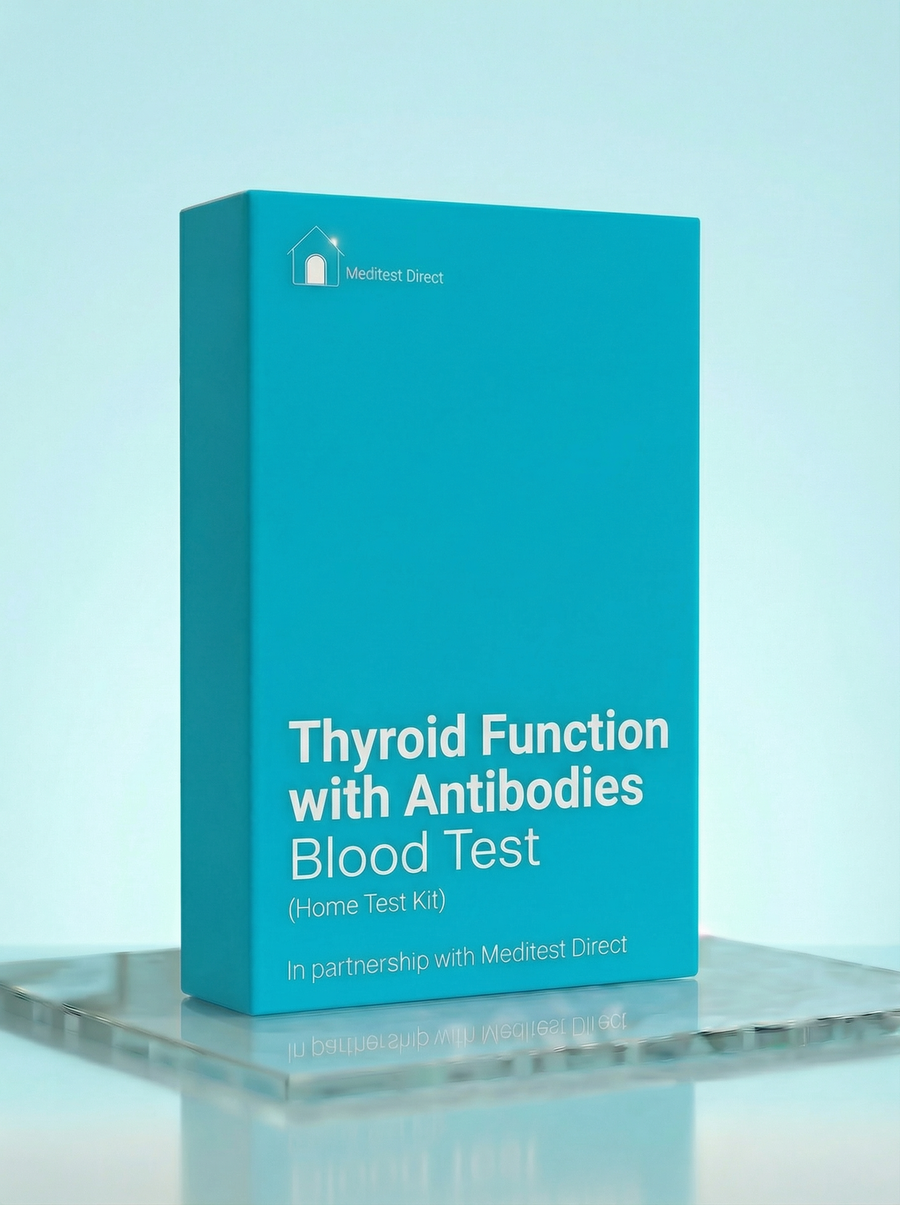
Thyroid Function with Antibodies Blood Test Kit
£63 ✓ In Stock
Your sample goes to a UKAS accredited laboratory meeting ISO 15189 standards.
After you receive your order confirmation email, please reply with your date of birth.
How it works
Your testing journey
From order to results in four simple steps. Full transparency on where each step happens and what it costs.

Receive your kit by post
Dispatched same working day if ordered before 3pm. Royal Mail Tracked delivery, typically 1–3 working days. 90% of kits arrive within 24 hours.

Visit a partner clinic
Book a phlebotomy appointment at one of our 365+ UK partner clinics. Take your kit with you — the phlebotomist will collect your sample using the materials provided.
Phlebotomy fee applies (paid at clinic)
Venous blood draw at a clinic
A trained phlebotomist takes a small blood sample from a vein in your arm using the vacutainers provided in your kit. The appointment takes around 10 minutes.

Return by prepaid envelope
Seal your sample in the biohazard bag provided and drop it in any Royal Mail postbox using the prepaid Tracked 24 envelope. Post Monday–Thursday for best results.
Venous Blood Collection Kit
This kit is sent to you and taken to your chosen clinic. The phlebotomist will collect your sample using the materials provided.
- 1Vacutainer blood collection tubes
- 2Needle and butterfly needle
- 3Tourniquet
- 4Alcohol swab
- 5Cotton wool and gauze
- 6Adhesive plaster
- 7Biohazard specimen bag
- 8Prepaid return envelope (Royal Mail Tracked 24)
- 9Laboratory request form
- 10Instructions for the phlebotomist
Thyroid peroxidase (TPO) is an enzyme in the thyroid gland that is essential for producing thyroid hormones—it helps attach iodine to thyroglobulin to make T4 and T3. Anti-TPO antibodies are autoantibodies that attack this enzyme, causing inflammation and gradual destruction of thyroid tissue. This autoimmune attack is the underlying mechanism in Hashimoto's thyroiditis, the most common cause of hypothyroidism in the UK and other iodine-sufficient countries. Anti-TPO antibodies are found in approximately 90% of people with Hashimoto's thyroiditis and about 70% of people with Graves' disease (autoimmune hyperthyroidism). However, approximately 10-15% of the general population have detectable anti-TPO antibodies without currently having thyroid dysfunction—this is called "thyroid autoimmunity" or "positive antibodies with euthyroidism." People with positive anti-TPO antibodies and normal thyroid function have an increased risk (about 2-4% per year) of developing thyroid dysfunction over time, particularly hypothyroidism. Normal is typically <35 IU/mL (or <60 kU/L depending on the assay), with significant elevation usually above 100-500 IU/mL. The level of antibodies doesn't necessarily correlate with the severity of thyroid dysfunction—some people have very high antibodies with mild disease, while others have lower levels but significant problems. Positive anti-TPO antibodies in someone with subclinical hypothyroidism (mildly elevated TSH, normal Free T4) increases the likelihood of progression to overt hypothyroidism. Results outside the normal range may need a follow-up with your GP.
Thyroglobulin (Tg) is a large protein produced by thyroid cells that serves as the scaffold for making thyroid hormones. Iodine is attached to thyroglobulin to produce T4 and T3, which are then released from the thyroglobulin molecule. Anti-thyroglobulin antibodies (anti-Tg or TgAb) are autoantibodies that target this protein. Like anti-TPO antibodies, they indicate autoimmune thyroid disease. Anti-Tg antibodies are found in approximately 60-85% of people with Hashimoto's thyroiditis and 30-60% of people with Graves' disease. They are generally considered less sensitive and specific than anti-TPO antibodies for diagnosing autoimmune thyroid disease. However, about 3-5% of people with autoimmune thyroiditis have only anti-Tg antibodies without anti-TPO antibodies, so testing both increases diagnostic sensitivity. Anti-Tg antibodies are also important in thyroid cancer follow-up, where they can interfere with thyroglobulin tumour marker measurements. Normal is typically <40 IU/mL (or <115 kU/L depending on the assay). Like anti-TPO, the presence of anti-Tg antibodies in someone with normal thyroid function indicates increased risk of future thyroid dysfunction and warrants periodic monitoring. If both antibody tests are positive, this strongly suggests autoimmune thyroid disease. If both are negative in someone with abnormal thyroid function, the cause is likely not autoimmune (for example, iodine deficiency, medication-induced, or nodular thyroid disease). Results outside the normal range may need a follow-up with your GP.
Free T3 measures the unbound, active fraction of triiodothyronine. T3 is the most metabolically active thyroid hormone—about 3-4 times more potent than T4. Most T3 in the body (approximately 80%) is produced by conversion of T4 to T3 in peripheral tissues (liver, kidney, muscles, brain) by deiodinase enzymes, rather than being directly secreted by the thyroid. T3 is the hormone that actually enters cells and exerts thyroid effects on metabolism. Free T3 provides additional information beyond TSH and Free T4. It can be particularly useful in hyperthyroidism (where Free T3 may be elevated earlier or more prominently than Free T4), in assessing T4-to-T3 conversion (some people convert poorly), and in monitoring patients on T3-containing thyroid preparations. In hypothyroidism, Free T3 often remains normal until the condition is quite advanced because the body prioritises T3 production. Normal Free T3 is typically 3.5-6.5 pmol/L. Low Free T3 with normal TSH and Free T4 can occur in non-thyroidal illness ("sick euthyroid syndrome"), starvation, or certain medications—this is usually not a primary thyroid problem. Elevated Free T3 with suppressed TSH is seen in hyperthyroidism. Some patients feel T3 levels are important for their wellbeing, though this is debated in medical literature. Results outside the normal range may need a follow-up with your GP.
This test is for screening and information only — it is not a medical diagnosis or professional advice. Please have your results reviewed by a qualified doctor or healthcare provider who can explain what they mean for your personal health situation. If your results show anything outside the normal range, or if you're worried about your health, see your doctor as soon as you can. Don't change any medications or treatments based on these results alone — always talk to your healthcare provider first.
NO CLINICS, NO QUEUES, NO HASSLE
Four steps to clarity
 01
01
Pick your panel
Browse over 200 clinically designed test kits and choose the one that fits your goals.
 02
02
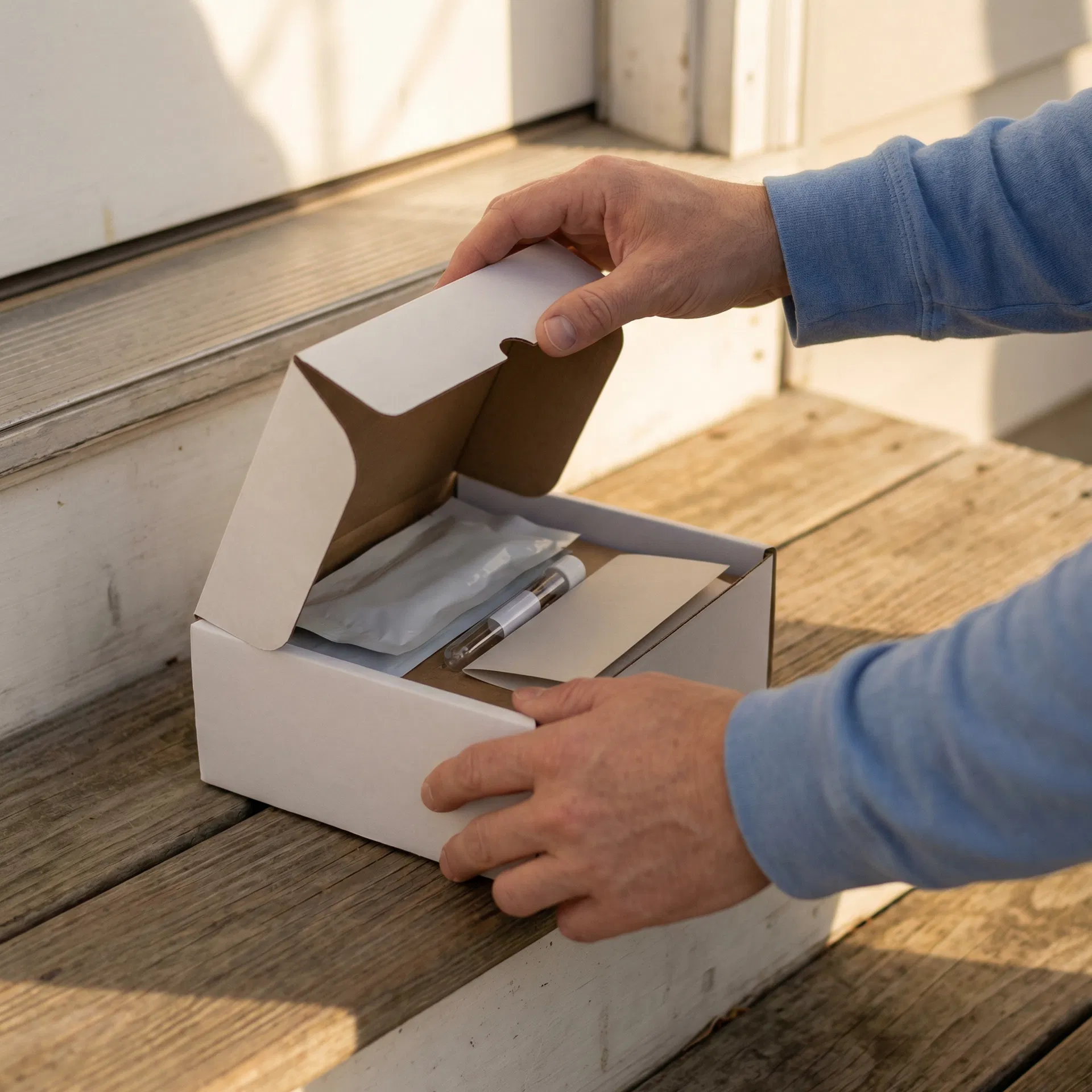
Kit to your door
Everything you need arrives in discreet packaging with step-by-step instructions inside.
 03
03
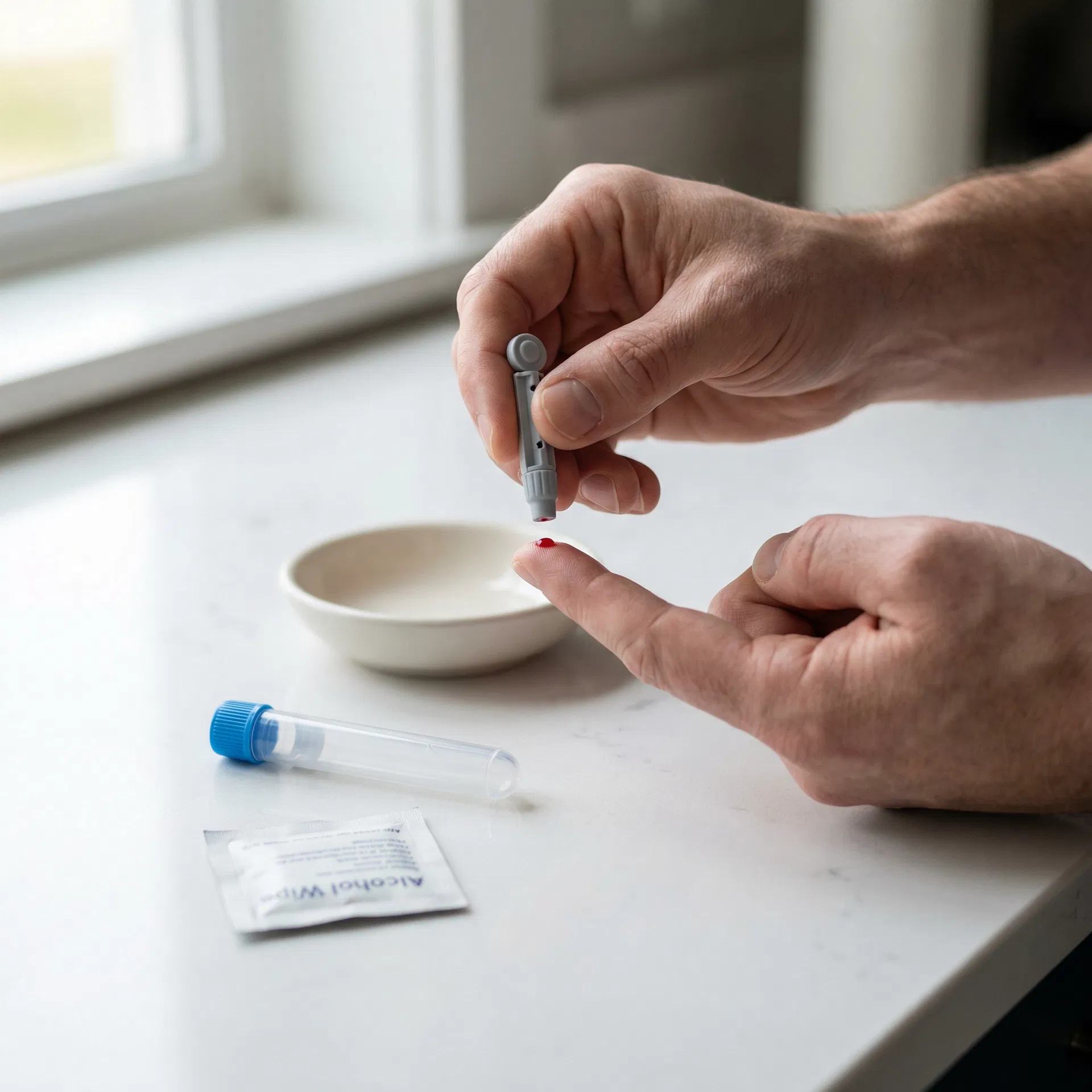
Collect your sample
Follow the simple instructions in your kit — whether it's a finger-prick at home or a venous draw at a partner clinic.
 04
04
Insights delivered
Clear, easy-to-understand results sent to you online with actionable health guidance.
Frequently asked questions
7-10am, before eating. If on levothyroxine, collect BEFORE your morning dose. TSH is highest in early morning.
Yes. Stop biotin for at least 48 hours before testing. Biotin can cause falsely abnormal results.
Basic: TSH and Free T4. Advanced adds Free T3 (active hormone) and thyroid antibodies (TPO, TG) for autoimmune thyroid disease detection.
No, but morning before food is preferred for consistent results.
Positive TPO/TG antibodies indicate your immune system is attacking your thyroid — the hallmark of Hashimoto's (underactive) or Graves' (overactive) disease. Some people have positive antibodies with normal function but are at increased risk of developing thyroid problems.
You may also be interested in

Advanced Thyroid Function Blood Test Kit
A 10-biomarker venous blood panel covering thyroid hormones, autoimmunity, vitamins and other key health markers — ideal for comprehensive thyroid assessment including antibodies.
Results estimated in 2 working days
10 biomarkers

Underactive Thyroid (Levothyroxine Monitoring) Blood Test
A 2-biomarker finger-prick blood panel covering thyroid hormones — ideal for investigating tiredness, weight changes, or suspected thyroid dysfunction.
Results estimated in 2 working days
2 biomarkers

Thyroid Function Blood Test Kit
A 3-biomarker venous blood panel covering thyroid hormones — ideal for investigating tiredness, weight changes, or suspected thyroid dysfunction.
Results estimated in 2 working days
3 biomarkers

Advanced Well Woman Blood Test
A 47-biomarker venous blood panel covering cholesterol status, clotting status, diabetes and other key health markers — ideal for comprehensive female health screening across multiple body systems.
Results estimated in 3 working days
47 biomarkers