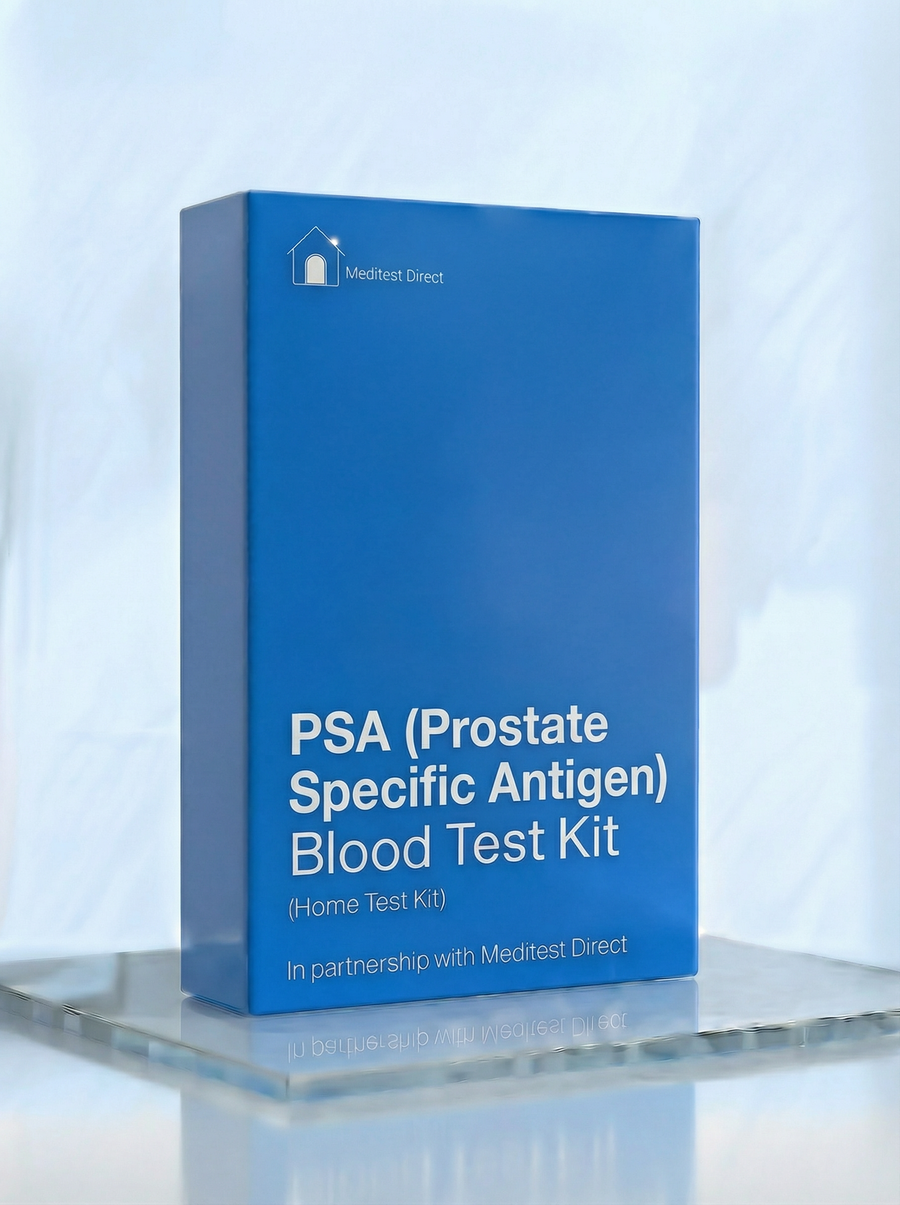
PSA (Prostate Specific Antigen) Blood Test Kit
£44 ✓ In Stock
Your sample goes to a UKAS accredited laboratory meeting ISO 15189 standards.
After you receive your order confirmation email, please reply with your date of birth.
How it works
Your testing journey
From order to results in four simple steps. Full transparency on where each step happens and what it costs.

Receive your kit by post
Dispatched same working day if ordered before 3pm. Royal Mail Tracked delivery, typically 1–3 working days. 90% of kits arrive within 24 hours.

Collect at home
Everything you need is in the kit. Collect your sample in the privacy of your own home — no appointment needed, no clinic visit.
Included in kit price
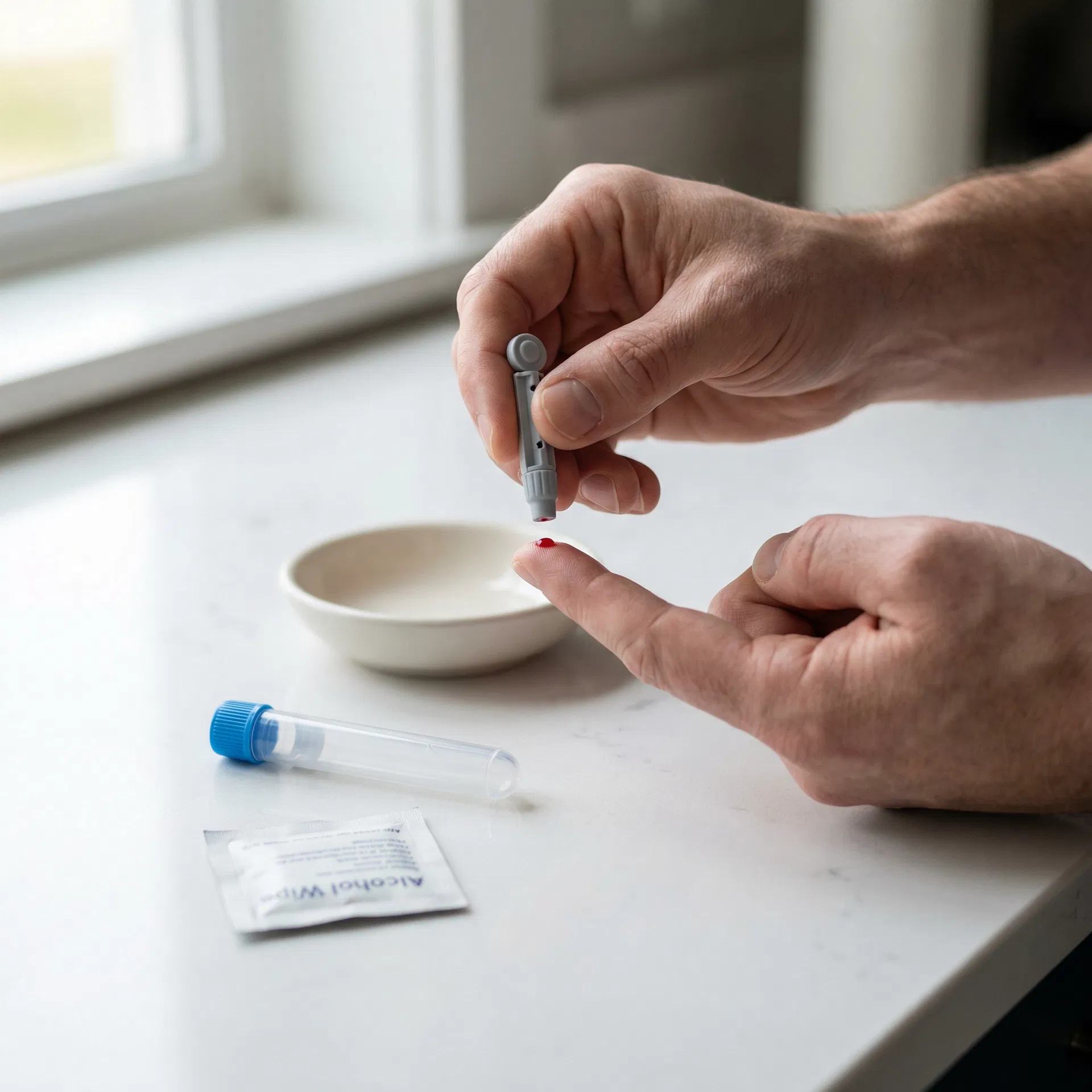
Small finger-prick sample
Use the single-use lancet included in your kit to take a few drops of blood from your fingertip — similar to how diabetics check their blood sugar. Takes about 2 minutes.

Return by prepaid envelope
Seal your sample in the biohazard bag provided and drop it in any Royal Mail postbox using the prepaid Tracked 24 envelope. Post Monday–Thursday for best results.
Home Finger-Prick Blood Collection Kit
- 1Blood collection tube
- 2Single-use lancet device
- 3Sterile gauze pad
- 4Adhesive plaster
- 5Cleansing wipe
- 6Biohazard specimen bag
- 7Prepaid return envelope (Royal Mail Tracked 24)
- 8Step-by-step instructions
Prostate Specific Antigen is a glycoprotein enzyme produced almost exclusively by prostate epithelial cells. Its normal function is to liquefy semen after ejaculation, allowing sperm to swim freely. A small amount of PSA leaks into the bloodstream, and measuring this provides a window into prostate health. PSA exists in two forms in blood: "free" PSA (unbound) and "complexed" PSA (bound to proteins). This test measures total PSA (both forms combined). PSA is organ-specific but NOT cancer-specific—any condition affecting the prostate can elevate PSA. Benign prostatic hyperplasia (BPH), the non-cancerous prostate enlargement affecting most men over 50, commonly elevates PSA because a larger prostate simply produces more PSA. Prostatitis (prostate infection or inflammation) can dramatically elevate PSA, sometimes to levels that would be very concerning for cancer—but which normalise after treatment. Urinary tract infections, urinary retention, recent ejaculation, vigorous exercise (especially cycling), and prostate manipulation (digital rectal exam, biopsy) all temporarily raise PSA. PSA levels also rise naturally with age as the prostate grows. Age-adjusted reference ranges are sometimes used: broadly, PSA below 2.5 ng/mL is generally considered normal for men under 50, below 3.5 ng/mL for men 50-59, below 4.5 ng/mL for men 60-69, and below 6.5 ng/mL for men over 70. However, there's no absolute "safe" cutoff—some men with prostate cancer have PSA below 4 ng/mL (about 15% of cases), while many men with elevated PSA have benign conditions. This is the fundamental limitation of PSA as a screening test. The value of PSA testing lies not just in single measurements but in tracking changes over time. PSA velocity (how quickly PSA rises over months to years) and PSA density (PSA relative to prostate volume on ultrasound) can help distinguish concerning rises from benign causes. A rapidly rising PSA is more worrying than a stable elevated PSA. This is why establishing a baseline PSA and monitoring trends over time is valuable—it's not just the number, but the pattern. If your PSA is elevated, it does NOT mean you have prostate cancer—most men with elevated PSA do not have cancer. Your GP may recommend: repeat testing (PSA can fluctuate, and a single elevated reading should be confirmed), digital rectal examination (feeling the prostate for abnormalities), multiparametric MRI (mpMRI, which can visualise suspicious areas in the prostate), and potentially prostate biopsy if MRI shows concerning lesions. The modern approach using MRI before biopsy has significantly improved the accuracy of prostate cancer diagnosis and reduced unnecessary biopsies. Results outside age-appropriate ranges, or significant changes from previous results, should be discussed with your GP.
This test is for screening and information only — it is not a medical diagnosis or professional advice. Please have your results reviewed by a qualified doctor or healthcare provider who can explain what they mean for your personal health situation. If your results show anything outside the normal range, or if you're worried about your health, see your doctor as soon as you can. Don't change any medications or treatments based on these results alone — always talk to your healthcare provider first.
NO CLINICS, NO QUEUES, NO HASSLE
Four steps to clarity
 01
01
Pick your panel
Browse over 200 clinically designed test kits and choose the one that fits your goals.
 02
02
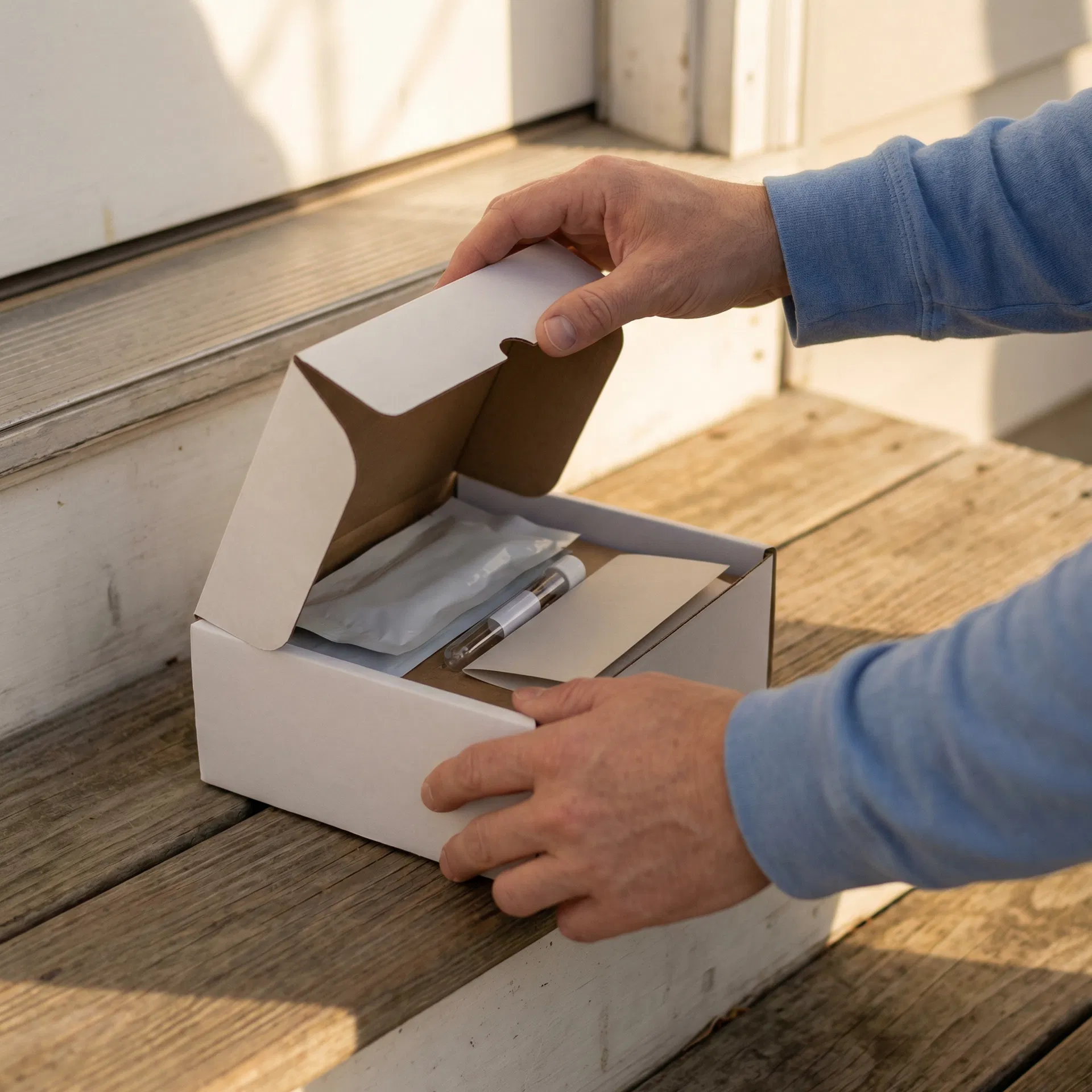
Kit to your door
Everything you need arrives in discreet packaging with step-by-step instructions inside.
 03
03
Collect your sample
Follow the simple instructions in your kit — whether it's a finger-prick at home or a venous draw at a partner clinic.
 04
04
Insights delivered
Clear, easy-to-understand results sent to you online with actionable health guidance.
Frequently asked questions
Avoid ejaculation for 48 hours. Avoid vigorous exercise (especially cycling) for 48 hours. Wait 4-6 weeks after any UTI, prostate exam, or catheter. Avoid testing if you have current urinary symptoms.
Raised PSA does not necessarily mean cancer. BPH, prostatitis, UTI, and recent ejaculation/exercise can all elevate PSA. However, raised PSA warrants further investigation per NICE guidelines.
No.
You may also be interested in

Advanced Female Hormone Blood Test
A 12-biomarker venous blood panel covering hormones, proteins, thyroid hormones and autoimmunity — ideal for investigating relevant symptoms or monitoring health.
Results estimated in 2 working days
12 biomarkers

Advanced Well Man Blood Test Kit
A 44-biomarker venous blood panel covering cholesterol status, clotting status, diabetes and other key health markers — ideal for comprehensive male health screening across multiple body systems.
Results estimated in 3 working days
44 biomarkers

Advanced TRT (Testosterone Replacement Therapy) Blood Test
A 41-biomarker venous blood panel covering cholesterol status, clotting status, diabetes and other key health markers — ideal for investigating low testosterone, libido, energy, or hormone replacement monitoring.
Results estimated in 2 working days
41 biomarkers

Ultimate Performance Blood Test Kit
A 56-biomarker venous blood panel covering cholesterol status, diabetes, liver function and other key health markers — ideal for athletes and active people tracking training adaptation, recovery, and performance.
Results estimated in 3 working days
56 biomarkers