
Diabetes (HbA1c) Blood Test Kit
£45 ✓ In Stock
Your sample goes to a UKAS accredited laboratory meeting ISO 15189 standards.
After you receive your order confirmation email, please reply with your date of birth.
How it works
Your testing journey
From order to results in four simple steps. Full transparency on where each step happens and what it costs.

Receive your kit by post
Dispatched same working day if ordered before 3pm. Royal Mail Tracked delivery, typically 1–3 working days. 90% of kits arrive within 24 hours.

Visit a partner clinic
Book a phlebotomy appointment at one of our 365+ UK partner clinics. Take your kit with you — the phlebotomist will collect your sample using the materials provided.
Phlebotomy fee applies (paid at clinic)
Venous blood draw at a clinic
A trained phlebotomist takes a small blood sample from a vein in your arm using the vacutainers provided in your kit. The appointment takes around 10 minutes.

Return by prepaid envelope
Seal your sample in the biohazard bag provided and drop it in any Royal Mail postbox using the prepaid Tracked 24 envelope. Post Monday–Thursday for best results.
Venous Blood Collection Kit
This kit is sent to you and taken to your chosen clinic. The phlebotomist will collect your sample using the materials provided.
- 1Vacutainer blood collection tubes
- 2Needle and butterfly needle
- 3Tourniquet
- 4Alcohol swab
- 5Cotton wool and gauze
- 6Adhesive plaster
- 7Biohazard specimen bag
- 8Prepaid return envelope (Royal Mail Tracked 24)
- 9Laboratory request form
- 10Instructions for the phlebotomist
HbA1c (haemoglobin A1c, also called glycated haemoglobin or glycosylated haemoglobin) measures the percentage of haemoglobin in your red blood cells that has glucose permanently attached to it. Haemoglobin is the protein inside red blood cells that carries oxygen around your body. When blood glucose levels are elevated, glucose molecules attach to haemoglobin through a process called glycation—the higher your average blood sugar, the more haemoglobin becomes glycated. Because red blood cells have a lifespan of approximately 2-3 months (around 120 days), measuring HbA1c gives a weighted average of your blood glucose levels over this period, with more recent weeks having greater influence on the result. HbA1c is the primary test used for screening for and monitoring diabetes. The diagnostic thresholds are well-established: a level below 42 mmol/mol (or 6.0% in the older percentage units) is considered normal; 42-47 mmol/mol (6.0-6.4%) indicates prediabetes (also called impaired glucose regulation or non-diabetic hyperglycaemia); and 48 mmol/mol (6.5%) or above indicates diabetes. Prediabetes is an important finding—it means your blood sugar is higher than normal but not yet in the diabetic range. At this stage, lifestyle interventions including weight loss, increased physical activity, and dietary modifications can often prevent or significantly delay progression to type 2 diabetes. Studies have shown that intensive lifestyle intervention can reduce the risk of developing diabetes by over 50% in people with prediabetes. For people with established diabetes, HbA1c is used to monitor blood sugar control over time. Most people with diabetes aim for an HbA1c target below 48-58 mmol/mol (6.5-7.5%), though individual targets vary based on factors including age, duration of diabetes, other health conditions, and risk of hypoglycaemia. Persistently elevated HbA1c indicates poor blood sugar control and significantly increases the risk of diabetes-related complications including cardiovascular disease (heart attack, stroke), diabetic kidney disease (nephropathy), diabetic eye disease (retinopathy), and nerve damage (neuropathy). Bringing HbA1c down reduces these risks—each 1% (11 mmol/mol) reduction in HbA1c is associated with meaningful reductions in complication risk. Results outside the normal range may need a follow-up with your GP.
This test is for screening and information only — it is not a medical diagnosis or professional advice. Please have your results reviewed by a qualified doctor or healthcare provider who can explain what they mean for your personal health situation. If your results show anything outside the normal range, or if you're worried about your health, see your doctor as soon as you can. Don't change any medications or treatments based on these results alone — always talk to your healthcare provider first.
NO CLINICS, NO QUEUES, NO HASSLE
Four steps to clarity
 01
01
Pick your panel
Browse over 200 clinically designed test kits and choose the one that fits your goals.
 02
02
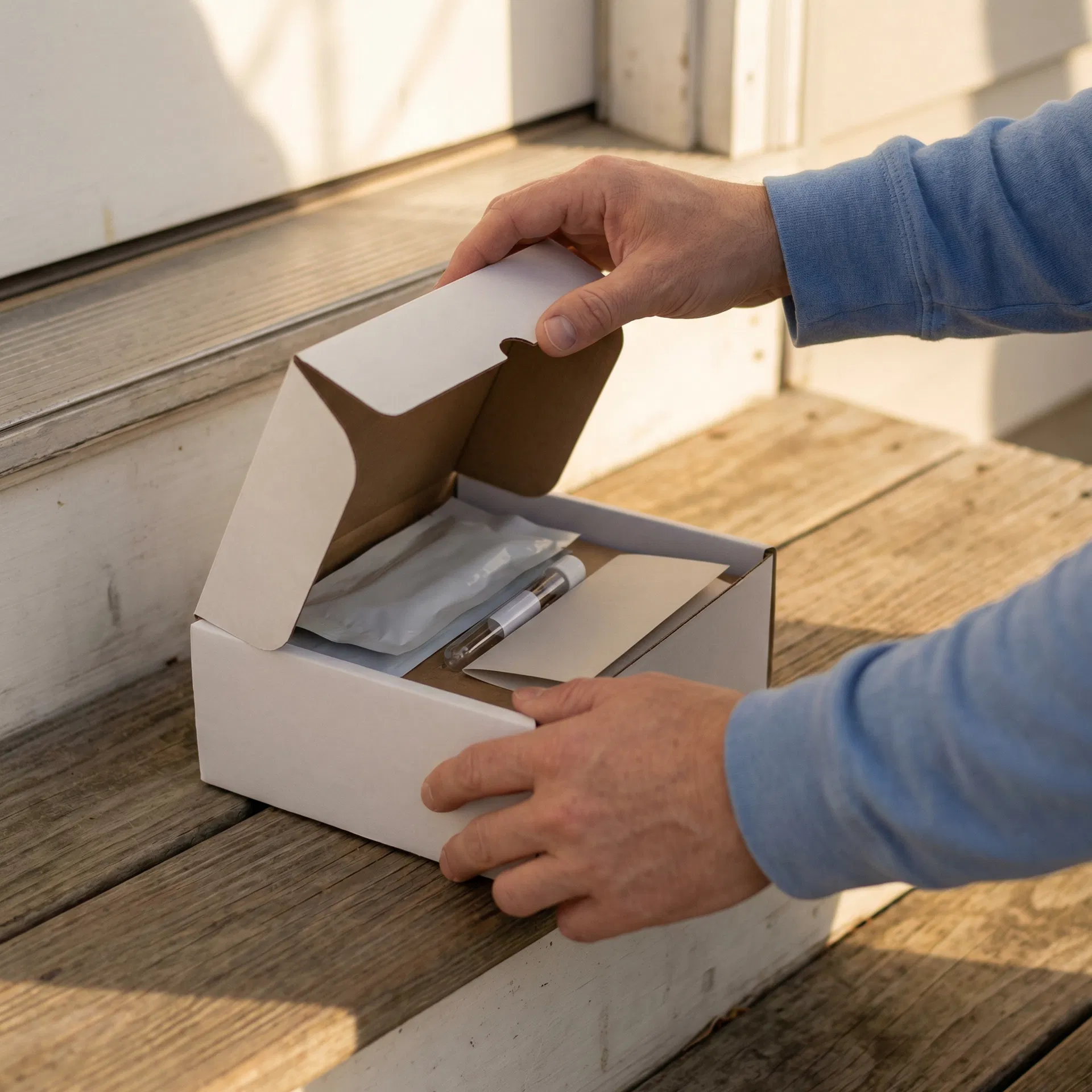
Kit to your door
Everything you need arrives in discreet packaging with step-by-step instructions inside.
 03
03
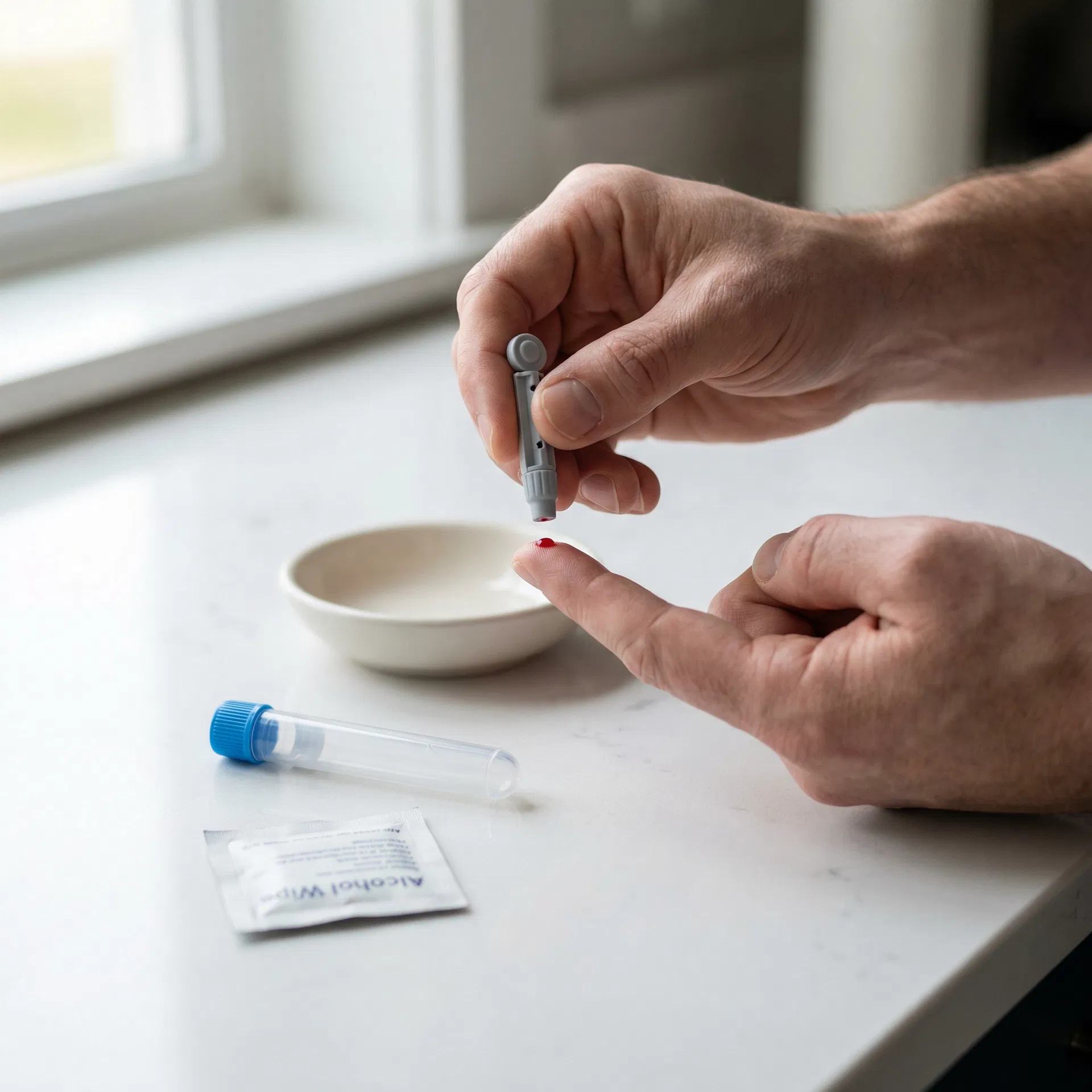
Collect your sample
Follow the simple instructions in your kit — whether it's a finger-prick at home or a venous draw at a partner clinic.
 04
04
Insights delivered
Clear, easy-to-understand results sent to you online with actionable health guidance.
Frequently asked questions
No. HbA1c measures the percentage of your haemoglobin that has glucose attached, reflecting your average blood sugar over the past 2-3 months. It is completely unaffected by what you ate yesterday or this morning. You can eat and drink normally, and collect your sample at any time of day.
The World Health Organization diagnostic thresholds are: below 42 mmol/mol (6.0%) is normal, 42-47 mmol/mol (6.0-6.4%) indicates pre-diabetes (increased risk), and 48 mmol/mol (6.5%) or above indicates diabetes. A single result at or above 48 mmol/mol should typically be confirmed with a repeat test before a formal diagnosis is made. These thresholds apply to screening — if you already have diabetes, your target HbA1c will be set by your doctor based on your individual circumstances.
Yes. Conditions that affect red blood cell lifespan can influence HbA1c accuracy. Iron deficiency anaemia can falsely raise HbA1c, while recent blood loss, blood transfusion, or haemolytic anaemia can falsely lower it. Certain haemoglobin variants (common in people of African, Caribbean, or Mediterranean descent) can also affect some assay methods. If you have any of these conditions, mention them when discussing results with your GP.
For screening purposes, if your result is normal, retesting every 1-3 years is reasonable depending on your risk factors (family history, weight, ethnicity, previous gestational diabetes). If you have pre-diabetes, testing every 6-12 months helps monitor whether you are progressing towards diabetes. If you have diagnosed diabetes, NICE recommends HbA1c testing every 3-6 months to monitor glucose control.
Fasting glucose measures your blood sugar at one moment in time (after an overnight fast), while HbA1c reflects your average blood sugar over 2-3 months. HbA1c is more stable and reliable for screening because it is not affected by short-term factors like stress, illness, or what you ate yesterday. However, both tests have their place — fasting glucose can detect acute hyperglycaemia that HbA1c may average out.
You may also be interested in

Advanced Diabetes Blood Test
A 9-biomarker venous blood panel covering diabetes, cholesterol status and kidney health — ideal for diabetes screening or monitoring blood sugar control.
Results estimated in 3 working days
9 biomarkers

Allergy Screen (Essential Foods) Blood Test
An essential food allergy panel testing for the most common food allergens responsible for IgE-mediated reactions — covering the key foods that account for the majority of food allergies in both children and adults.
Results estimated in 2 working days
9 biomarkers

Weight Loss Blood Test
A 23-biomarker venous blood panel covering thyroid hormones, hormones, adrenal hormones and other key health markers — ideal for investigating unexplained weight changes or metabolic imbalance.
Results estimated in 4 working days
23 biomarkers