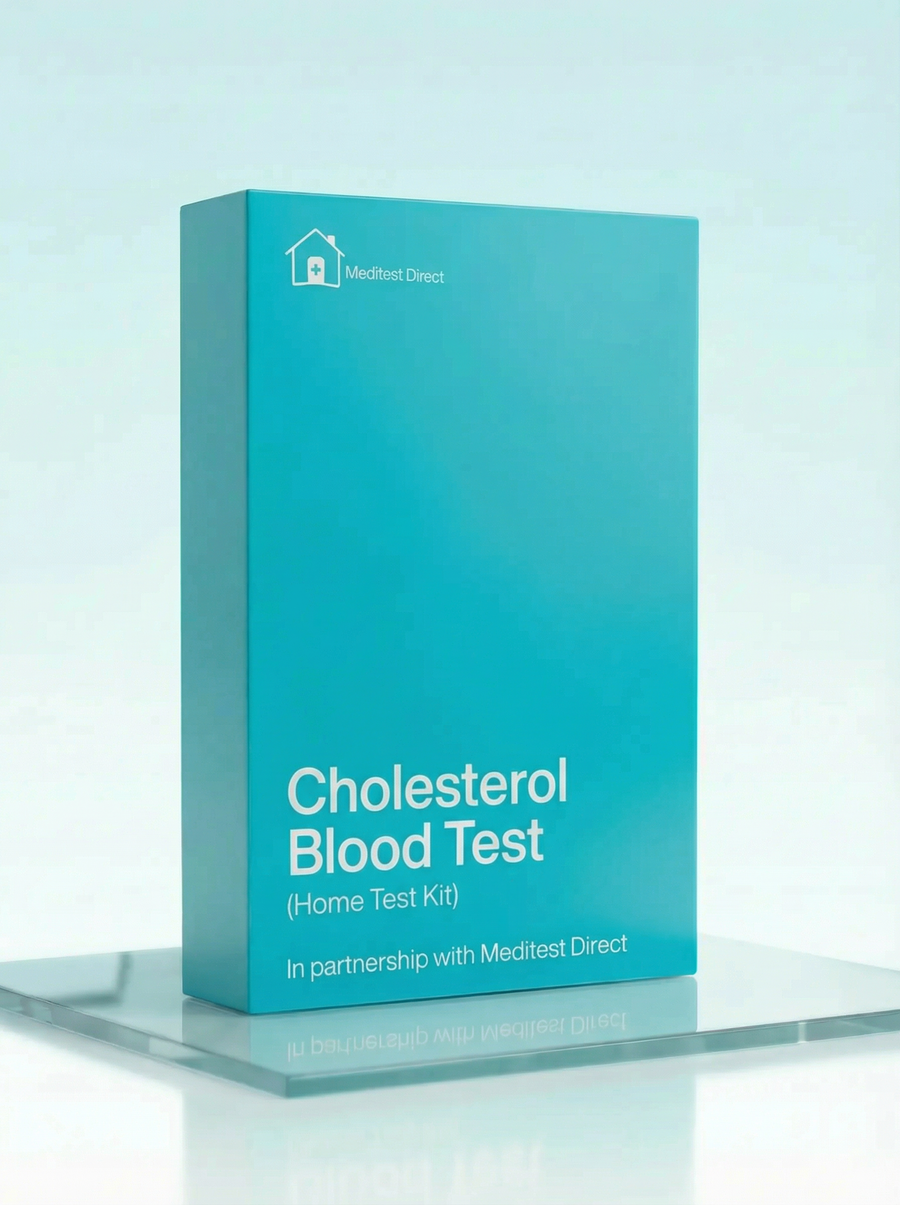
Cholesterol Blood Test Kit
£38 ✓ In Stock
Your sample goes to a UKAS accredited laboratory meeting ISO 15189 standards.
After you receive your order confirmation email, please reply with your date of birth.
How it works
Your testing journey
From order to results in four simple steps. Full transparency on where each step happens and what it costs.

Receive your kit by post
Dispatched same working day if ordered before 3pm. Royal Mail Tracked delivery, typically 1–3 working days. 90% of kits arrive within 24 hours.

Visit a partner clinic
Book a phlebotomy appointment at one of our 365+ UK partner clinics. Take your kit with you — the phlebotomist will collect your sample using the materials provided.
Phlebotomy fee applies (paid at clinic)
Venous blood draw at a clinic
A trained phlebotomist takes a small blood sample from a vein in your arm using the vacutainers provided in your kit. The appointment takes around 10 minutes.

Return by prepaid envelope
Seal your sample in the biohazard bag provided and drop it in any Royal Mail postbox using the prepaid Tracked 24 envelope. Post Monday–Thursday for best results.
Venous Blood Collection Kit
This kit is sent to you and taken to your chosen clinic. The phlebotomist will collect your sample using the materials provided.
- 1Vacutainer blood collection tubes
- 2Needle and butterfly needle
- 3Tourniquet
- 4Alcohol swab
- 5Cotton wool and gauze
- 6Adhesive plaster
- 7Biohazard specimen bag
- 8Prepaid return envelope (Royal Mail Tracked 24)
- 9Laboratory request form
- 10Instructions for the phlebotomist
Total cholesterol measures the combined amount of all cholesterol types circulating in your blood—including HDL, LDL, and other lipoprotein fractions. Despite cholesterol's poor reputation, it's actually essential for life: your body uses it to build cell membranes, produce steroid hormones (including testosterone, oestrogen, and cortisol), synthesise vitamin D in the skin, and make bile acids for fat digestion. About 80% of your cholesterol is manufactured by your liver, with dietary cholesterol contributing a smaller proportion. Total cholesterol on its own has significant limitations for assessing cardiovascular risk—a high total cholesterol could be driven by high protective HDL (which is actually beneficial) or high harmful LDL (which is concerning). Similarly, a 'normal' total cholesterol can mask dangerously low HDL. This is why the complete lipid panel breakdown is far more informative than total cholesterol alone. Results outside the normal range may need a follow-up with your GP.
LDL (low-density lipoprotein) cholesterol is commonly called 'bad cholesterol' because elevated levels are strongly associated with atherosclerosis—the progressive build-up of fatty plaques inside artery walls that underlies most heart attacks and strokes. LDL particles carry cholesterol from the liver to tissues throughout the body. While this transport function is necessary, excess LDL particles can penetrate and become trapped in artery walls, where they trigger an inflammatory response and the formation of atherosclerotic plaques. Over time, these plaques narrow arteries and can rupture, causing blood clots that block blood flow. LDL cholesterol is the primary target for cardiovascular risk reduction in clinical guidelines—lowering LDL has been consistently shown to reduce heart attack and stroke risk. Targets vary depending on overall cardiovascular risk, but lower is generally better. Lifestyle factors that reduce LDL include reducing saturated fat intake, increasing soluble fibre, regular exercise, and maintaining healthy weight. Results outside the normal range may need a follow-up with your GP.
Non-HDL cholesterol is calculated by subtracting your protective HDL cholesterol from your total cholesterol. It represents all the potentially atherogenic (artery-clogging) cholesterol in your blood—not just LDL, but also VLDL, IDL, and lipoprotein remnant particles, all of which can contribute to plaque formation in arteries. Many cardiovascular experts now consider non-HDL cholesterol a better risk marker than LDL alone because it captures the full atherogenic burden. This is particularly important for people with elevated triglycerides, who often have significant cholesterol carried in VLDL particles that standard LDL testing doesn't fully capture. Non-HDL also has the practical advantage of remaining accurate regardless of whether you've fasted—it's not affected by recent food intake the way triglycerides are. The recommended target for non-HDL cholesterol is below 4.0 mmol/L for most people, with lower targets (below 2.5 mmol/L) recommended for those at higher cardiovascular risk. Results outside the normal range may need a follow-up with your GP.
HDL (high-density lipoprotein) cholesterol is often called 'good cholesterol' because it helps protect against cardiovascular disease. HDL particles perform a crucial function known as 'reverse cholesterol transport'—they travel through the bloodstream collecting excess cholesterol from tissues and artery walls and carrying it back to the liver, where it can be broken down and excreted in bile. This process helps prevent cholesterol from accumulating in artery walls and forming plaques. Higher HDL levels are associated with lower cardiovascular risk—HDL above 1.0 mmol/L in men and 1.2 mmol/L in women is generally considered desirable, with higher levels offering greater protection. Low HDL is an independent cardiovascular risk factor even when LDL is within normal limits. Factors that increase HDL include regular aerobic exercise (one of the most effective interventions), moderate alcohol consumption, weight loss if overweight, and not smoking. Factors that decrease HDL include smoking, obesity, sedentary lifestyle, type 2 diabetes, and very high carbohydrate diets (particularly refined carbohydrates). Results outside the normal range may need a follow-up with your GP.
The total cholesterol to HDL ratio is calculated by dividing your total cholesterol by your HDL cholesterol. This ratio is more informative than total cholesterol alone because it reflects the balance between all cholesterol and protective HDL—essentially capturing whether your cholesterol is predominantly the helpful or harmful type. A lower ratio is better, indicating that a higher proportion of your total cholesterol is the protective HDL type. A ratio below 4 is generally considered optimal for cardiovascular health; a ratio of 4-6 indicates moderate risk; above 6 suggests increased cardiovascular risk. This ratio is used in cardiovascular risk calculators such as QRISK (used in UK general practice) to estimate your 10-year risk of heart attack or stroke and to guide decisions about preventive treatments. Improving this ratio involves either lowering total cholesterol (through diet, lifestyle, or medication) or raising HDL (through exercise, weight loss, and not smoking)—ideally both. Results outside the normal range may need a follow-up with your GP.
Triglycerides are the main form of fat that circulates in your blood and the most common type of fat stored in your body. After eating, your body converts excess calories—whether from fats, carbohydrates, or protein—into triglycerides, which are packaged into lipoprotein particles (mainly VLDL) and transported to fat cells (adipocytes) for storage. Between meals, hormones trigger the release of triglycerides from fat stores to provide energy. Elevated fasting triglycerides indicate that your body is taking in more calories than it's burning, or that there's impaired clearance of triglyceride-rich particles from the blood. This is commonly associated with excessive calorie intake (particularly from refined carbohydrates, sugars, and alcohol), obesity, insulin resistance, metabolic syndrome, and type 2 diabetes. Very high triglycerides (above 10 mmol/L) can cause pancreatitis. Moderately elevated triglycerides are associated with increased cardiovascular risk, partly because they're linked to small, dense LDL particles (which are particularly atherogenic) and low HDL. Fasting triglycerides below 1.7 mmol/L are generally desirable. Triglycerides are the lipid marker most dramatically affected by recent food intake, which is why fasting for 8-12 hours is essential for accurate measurement. Results outside the normal range may need a follow-up with your GP.
This test is for screening and information only — it is not a medical diagnosis or professional advice. Please have your results reviewed by a qualified doctor or healthcare provider who can explain what they mean for your personal health situation. If your results show anything outside the normal range, or if you're worried about your health, see your doctor as soon as you can. Don't change any medications or treatments based on these results alone — always talk to your healthcare provider first.
NO CLINICS, NO QUEUES, NO HASSLE
Four steps to clarity
 01
01
Pick your panel
Browse over 200 clinically designed test kits and choose the one that fits your goals.
 02
02
Kit to your door
Everything you need arrives in discreet packaging with step-by-step instructions inside.
 03
03
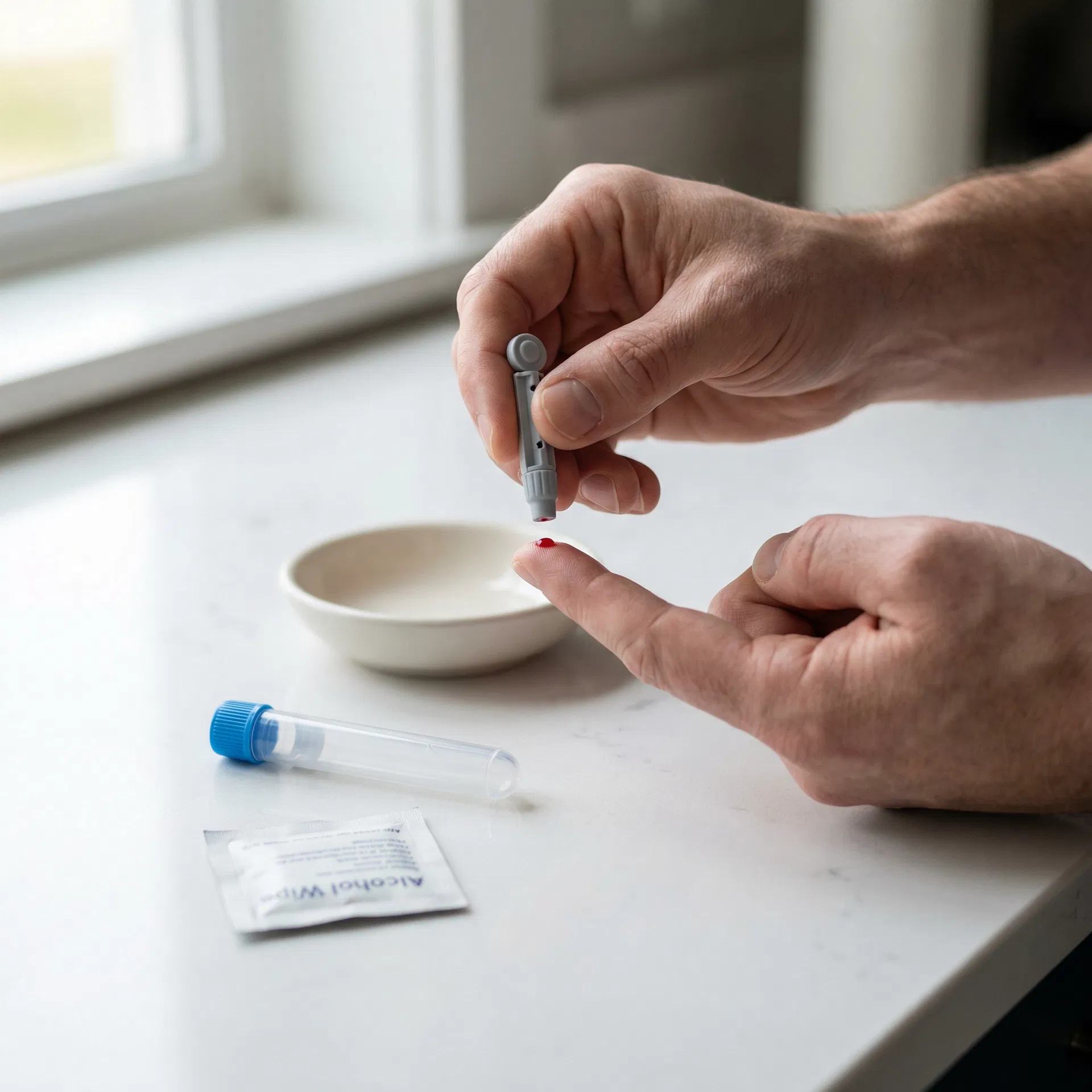
Collect your sample
Follow the simple instructions in your kit — whether it's a finger-prick at home or a venous draw at a partner clinic.
 04
04
Insights delivered
Clear, easy-to-understand results sent to you online with actionable health guidance.
Frequently asked questions
Yes — fast for 8-12 hours before collecting your sample. This is essential for accurate triglyceride measurement, as triglycerides rise significantly after eating and take several hours to return to baseline. Drink water as normal during the fasting period. Only food, sugary drinks, and alcohol need to be avoided. A morning sample after an overnight fast is ideal.
HDL (high-density lipoprotein) is often called 'good' cholesterol because it carries cholesterol away from your arteries back to the liver for removal. LDL (low-density lipoprotein) is often called 'bad' cholesterol because it deposits cholesterol in your artery walls, contributing to plaque buildup. Your total cholesterol to HDL ratio is one of the most useful numbers for assessing cardiovascular risk.
UK NICE guidance recommends: total cholesterol below 5 mmol/L, HDL above 1 mmol/L (men) or 1.2 mmol/L (women), LDL below 3 mmol/L, and triglycerides below 2.3 mmol/L (fasting). However, optimal targets vary based on your individual cardiovascular risk — your GP can use the QRISK calculator to assess whether treatment is needed. People already on statins usually have lower targets.
Yes. If you are monitoring the effectiveness of your statin therapy, continue taking your medication as normal — the test will show your cholesterol levels while on treatment, which is exactly what your GP needs to see. If you want to check your baseline cholesterol without medication, you would need to discuss stopping statins with your GP first (do not stop without medical advice).
The NHS recommends adults over 40 have a cholesterol check at least every 5 years through the NHS Health Check programme. If you have elevated cholesterol, are on statins, or have other cardiovascular risk factors (family history, diabetes, high blood pressure, smoking), more frequent testing every 6-12 months is sensible to monitor trends and treatment response.
You may also be interested in

Advanced Heart Disease Risk Blood Test
A 11-biomarker venous blood panel covering cholesterol status and inflammation — ideal for investigating relevant symptoms or monitoring health.
Results estimated in 2 working days
11 biomarkers

Advanced TRT (Testosterone Replacement Therapy) Blood Test
A 41-biomarker venous blood panel covering cholesterol status, clotting status, diabetes and other key health markers — ideal for investigating low testosterone, libido, energy, or hormone replacement monitoring.
Results estimated in 2 working days
41 biomarkers

Apolipoprotein Profile Blood Test Kit
A 9-biomarker venous blood panel covering cholesterol status — ideal for advanced cardiovascular risk assessment beyond standard cholesterol.
Results estimated in 6 working days
9 biomarkers

Allergy Screen (Essential Foods) Blood Test
An essential food allergy panel testing for the most common food allergens responsible for IgE-mediated reactions — covering the key foods that account for the majority of food allergies in both children and adults.
Results estimated in 2 working days
9 biomarkers