
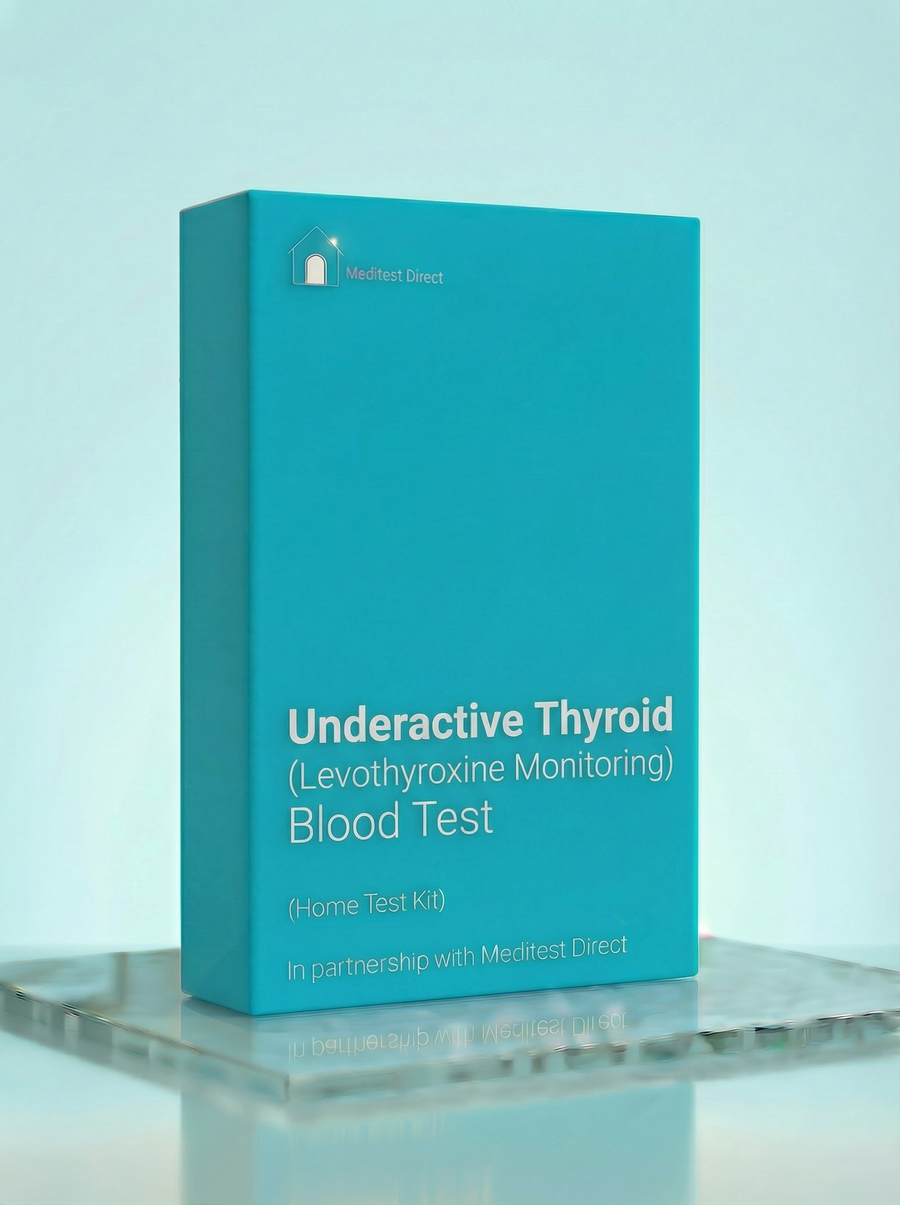
Underactive Thyroid (Levothyroxine Monitoring) Blood Test
£34 ✓ In Stock
Your sample goes to a UKAS accredited laboratory meeting ISO 15189 standards.
After you receive your order confirmation email, please reply with your date of birth.
How it works
Your testing journey
From order to results in four simple steps. Full transparency on where each step happens and what it costs.

Receive your kit by post
Dispatched same working day if ordered before 3pm. Royal Mail Tracked delivery, typically 1–3 working days. 90% of kits arrive within 24 hours.

Collect at home
Everything you need is in the kit. Collect your sample in the privacy of your own home — no appointment needed, no clinic visit.
Included in kit price
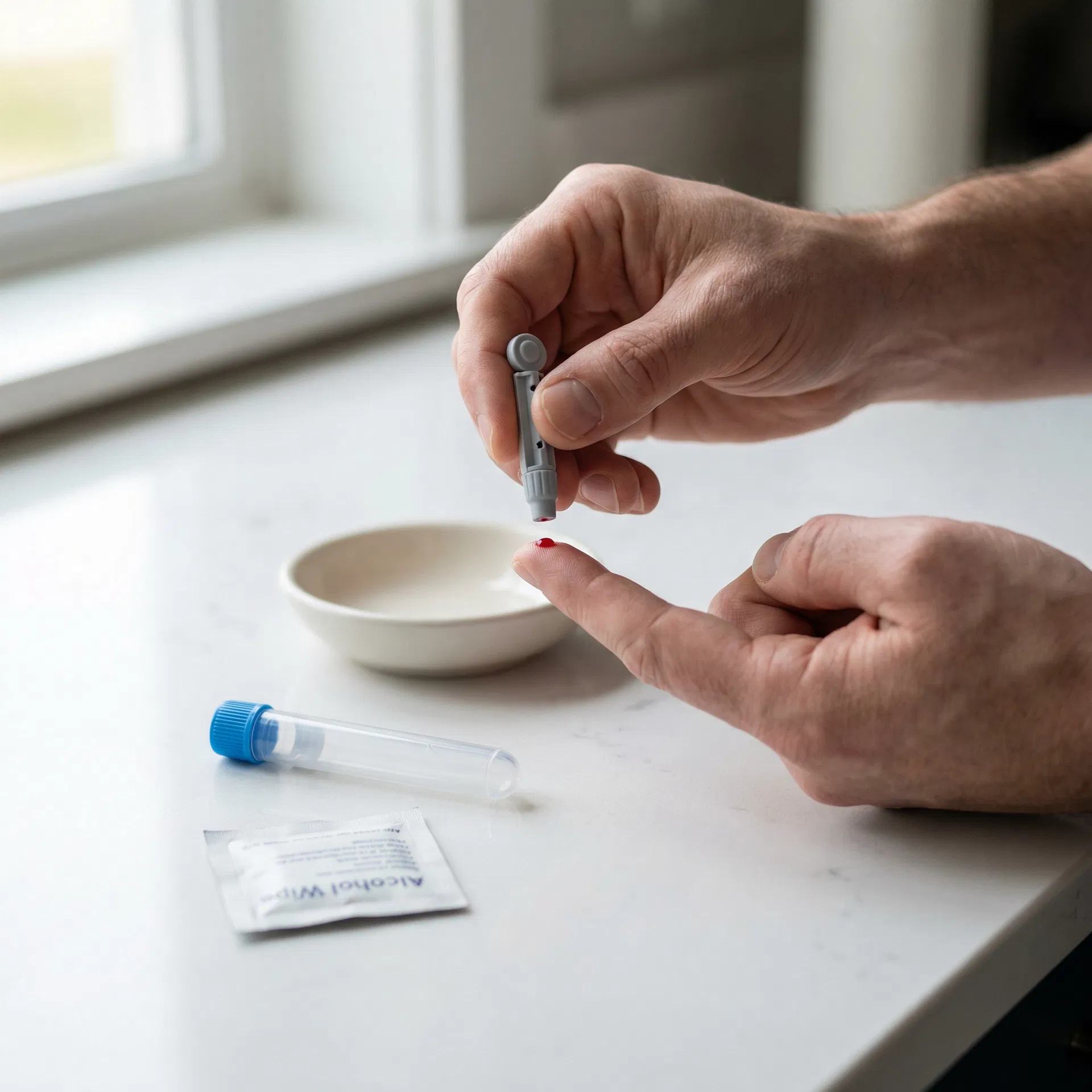
Small finger-prick sample
Use the single-use lancet included in your kit to take a few drops of blood from your fingertip — similar to how diabetics check their blood sugar. Takes about 2 minutes.

Return by prepaid envelope
Seal your sample in the biohazard bag provided and drop it in any Royal Mail postbox using the prepaid Tracked 24 envelope. Post Monday–Thursday for best results.
Home Finger-Prick Blood Collection Kit
- 1Blood collection tube
- 2Single-use lancet device
- 3Sterile gauze pad
- 4Adhesive plaster
- 5Cleansing wipe
- 6Biohazard specimen bag
- 7Prepaid return envelope (Royal Mail Tracked 24)
- 8Step-by-step instructions
Thyroid stimulating hormone (TSH) is produced by the pituitary gland to regulate the production of thyroid hormones thyroxine (T4) and triiodothyronine (T3) by the thyroid gland. When thyroid hormones in the blood are low, the pituitary releases more TSH to stimulate the thyroid gland to produce more. When thyroid hormone levels are high, the pituitary produces less TSH to slow production. For people taking levothyroxine, TSH is the primary marker used to assess whether the medication dose is correct. A high TSH suggests the dose may be too low (underreplacement), while a suppressed TSH may indicate the dose is too high (overreplacement). Most people on levothyroxine aim for a TSH somewhere between 0.5 and 2.5 mU/L, though your target may differ based on individual circumstances. Results should be discussed with your prescribing doctor.
Free thyroxine (FT4) measures the unbound, biologically active portion of thyroxine—the main hormone produced by the thyroid gland and the hormone you're replacing with levothyroxine medication. Most T4 in the blood is bound to proteins; only the "free" portion is available to enter cells and exert metabolic effects. For people on levothyroxine, FT4 levels help confirm adequate replacement alongside TSH. Ideally, FT4 should sit in the upper half of the reference range when TSH is well-controlled. Low FT4 with high TSH confirms underreplacement; high FT4 with suppressed TSH suggests overreplacement. Some people feel best with FT4 toward the top of the range, while others do well mid-range—optimal levels vary between individuals. Results should be interpreted by your prescribing doctor alongside your symptoms.
This test is for screening and information only — it is not a medical diagnosis or professional advice. Please have your results reviewed by a qualified doctor or healthcare provider who can explain what they mean for your personal health situation. If your results show anything outside the normal range, or if you're worried about your health, see your doctor as soon as you can. Don't change any medications or treatments based on these results alone — always talk to your healthcare provider first.
NO CLINICS, NO QUEUES, NO HASSLE
Four steps to clarity
 01
01
Pick your panel
Browse over 200 clinically designed test kits and choose the one that fits your goals.
 02
02
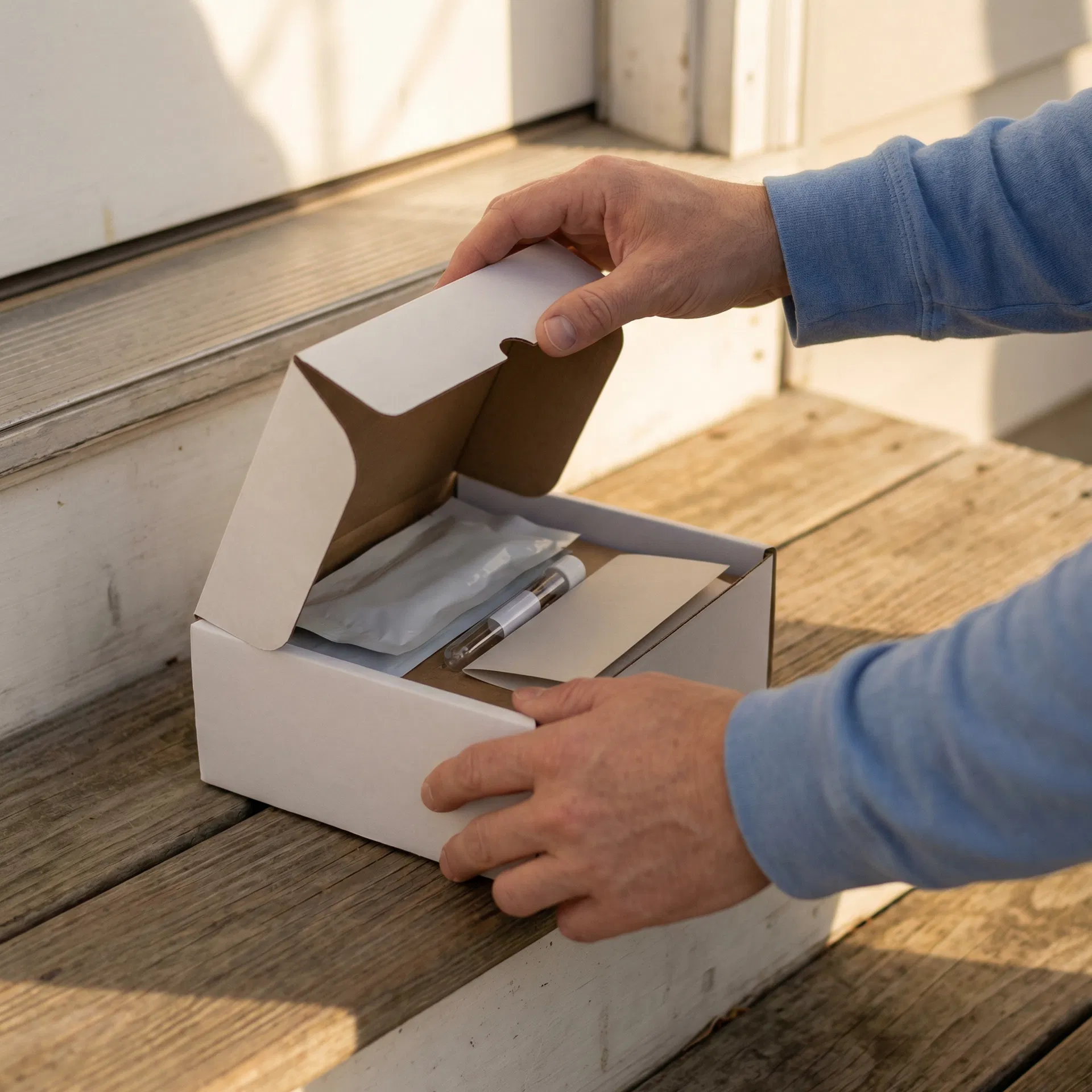
Kit to your door
Everything you need arrives in discreet packaging with step-by-step instructions inside.
 03
03
Collect your sample
Follow the simple instructions in your kit — whether it's a finger-prick at home or a venous draw at a partner clinic.
 04
04
Insights delivered
Clear, easy-to-understand results sent to you online with actionable health guidance.
Frequently asked questions
No. Collect your blood sample BEFORE taking your morning levothyroxine dose. Testing after taking your medication can artificially raise your Free T4 level and give a misleading picture of how well your dose is working. If you accidentally take your medication first, wait until the next morning and collect before your dose then.
Between 6am and 10am, ideally before eating breakfast. TSH follows a circadian rhythm and is highest in the early morning. Testing at a consistent time each time you retest gives the most reliable comparison for your GP to assess whether your dose needs adjusting.
Yes. Biotin (vitamin B7), commonly found in hair, skin and nail supplements, can interfere with the laboratory assay and produce falsely elevated or lowered results. Stop biotin supplements for at least 48 hours before collecting your sample. If biotin has been prescribed by your doctor, discuss the timing with them before stopping.
After starting levothyroxine or changing your dose, retest after 6-8 weeks to allow levels to stabilise. Once your dose is stable and your TSH is within the target range, most GPs recommend testing every 6-12 months. More frequent monitoring may be needed during pregnancy, after significant weight changes, or if symptoms change.
This test measures TSH (Thyroid Stimulating Hormone) and Free T4 (Free Thyroxine). TSH tells you whether your pituitary gland thinks you need more or less thyroid hormone, while Free T4 measures the active hormone available to your cells. Together, they show whether your levothyroxine dose is keeping your thyroid levels in the optimal range.
A persistently high TSH while on levothyroxine may mean your dose needs increasing, you are not absorbing the medication properly, or there is an interaction with other medications or supplements. Common absorption issues include taking levothyroxine with food, coffee, or calcium/iron supplements. Discuss the result with your GP — do not adjust your dose without medical advice.
You may also be interested in

Advanced Thyroid Function Blood Test Kit
A 10-biomarker venous blood panel covering thyroid hormones, autoimmunity, vitamins and other key health markers — ideal for comprehensive thyroid assessment including antibodies.
Results estimated in 2 working days
10 biomarkers

Thyroid Function with Antibodies Blood Test Kit
A 5-biomarker venous blood panel covering thyroid hormones and thyroid antibodies — ideal for investigating tiredness, weight changes, or suspected thyroid dysfunction.
Results estimated in 2 working days
5 biomarkers

Thyroid Function Blood Test Kit
A 3-biomarker venous blood panel covering thyroid hormones — ideal for investigating tiredness, weight changes, or suspected thyroid dysfunction.
Results estimated in 2 working days
3 biomarkers

Advanced Well Woman Blood Test
A 47-biomarker venous blood panel covering cholesterol status, clotting status, diabetes and other key health markers — ideal for comprehensive female health screening across multiple body systems.
Results estimated in 3 working days
47 biomarkers