All Tests

Sperm DNA Fragmentation Test

Biomarkers Tested

DNA Fragmentation Index (DFI)

£260.00 ✓ In Stock

Results ready within 7 working days

UKAS accredited laboratory, ISO 15189.

7 working days Semen sample
Lab visit — Central London
CQC registered Accredited UK labs ISO 15189

How it works

Your semen analysis journey

Semen analyses are performed at our partner andrology laboratory in Central London. Here's what to expect from order to results.

1
Order confirmation by email

Purchase your test

Order online and you'll receive a confirmation email with your test reference and full booking instructions within minutes.

2
Book your appointment online or by phone

Book your appointment

Book directly with The Doctors Laboratory online or by phone. Appointments available Mon–Fri 7am–7pm and Saturday 7am–1pm.

Book online at TDL Call 020 7025 7940
3
Prepare at home before your appointment

Prepare at home

Abstain from ejaculation for 2–5 days before your appointment. Avoid alcohol, saunas, and hot baths for 3 days. Stay hydrated and try to relax — stress can affect your sample quality.

4
Attend the laboratory in central London

Attend the laboratory

Visit TDL at 76 Wimpole Street, London W1G 9RT. You'll be shown to a private, comfortable room to produce your sample. The laboratory staff are professional and discreet — this is routine for them.

£50 attendance fee paid at lab
5
Receive your results securely by email

Receive your results

Results are ready within 2 working days and delivered securely to your email. Your full report includes all parameters tested with WHO 2021 reference ranges.

Address
The Doctors Laboratory
76 Wimpole Street
London W1G 9RT
Opening hours
Mon–Fri: 7am–7pm
Saturday: 7am–1pm
Nearest tube
Oxford Circus (5 min)
Bond Street (7 min)
Contact
£50 attendance fee: A £50 fee is payable directly to The Doctors Laboratory when you arrive. This covers the use of their facilities and is separate from the test price shown above.
Tip: Parking meters are free until 8:30am. For later appointments, use Q-Park at Cavendish Square (5 min walk). The laboratory is in the central London congestion charge zone.

Sperm DNA Fragmentation Test

SCSA analysis to assess DNA damage that standard semen analysis doesn't detect

Sperm DNA fragmentation testing goes beyond standard semen analysis to examine the genetic material inside your sperm cells. While a routine semen analysis checks sperm count, motility, and shape, it doesn't assess DNA integrity—and damaged DNA can significantly impact fertility even when other parameters appear normal.

This test uses the Sperm Chromatin Structure Assay (SCSA), one of the most validated and widely used methods for measuring DNA fragmentation. SCSA analyses thousands of sperm cells to determine the percentage with fragmented (broken) DNA strands. High levels of DNA fragmentation are associated with reduced natural conception rates, increased miscarriage risk, and lower IVF/ICSI success rates.

👤 Who Should Consider This Test?

Unexplained Infertility Normal semen analysis but still not conceiving after 12+ months
💔
Recurrent Miscarriage Two or more pregnancy losses, especially early miscarriages
🔬
Failed IVF/ICSI Poor embryo development or repeated failed cycles
📅
Age Over 40 DNA fragmentation increases with age
🚬
Lifestyle Risk Factors Smoking, obesity, toxin exposure, high stress
🩺
Medical Conditions Varicocele, infections, or history of cancer treatment
🔄
Pre-IVF Assessment Optimising treatment approach before starting a cycle
📊
Monitoring Improvement Tracking progress after lifestyle changes or treatment

⚠️ Minimum Sperm Count Required: This test requires a sperm concentration of at least 100,000 per mL to provide accurate results. If you have very low sperm counts, please contact your fertility specialist or GP to discuss whether this test is suitable or if an alternative method would be more appropriate.

📊 Understanding Your Results: DNA Fragmentation Index (DFI)

Your result will show a DFI percentage—the proportion of sperm with fragmented DNA. Lower is better:

DFI <15% Excellent / Normal Low DNA fragmentation. Good fertility potential with natural conception or assisted reproduction.
DFI 15–25% Moderate / Borderline Some DNA damage present. Natural conception possible but may take longer. IVF/ICSI success rates may be slightly reduced.
DFI >25% High Significant DNA damage. Associated with reduced fertility, increased miscarriage risk, and lower IVF success. Lifestyle changes and treatment may help reduce DFI.

Note: These are general guidelines. Your fertility specialist can interpret your results in the context of your overall situation and recommend appropriate next steps.

⚡ Common Causes of DNA Fragmentation

🔥 Oxidative stress
🚬 Smoking
🍺 Alcohol excess
⚖️ Obesity
🌡️ Testicular heat exposure
🩺 Varicocele
🦠 Genital infections
💊 Certain medications
☢️ Cancer treatments
📅 Advanced age
🏭 Environmental toxins
😰 Chronic stress

Good news: Many causes are modifiable. Lifestyle changes, antioxidant supplements, and treatment of underlying conditions can often reduce DNA fragmentation within 2–3 months.

Abstinence: Avoid ejaculation for 2–5 days before your test. Longer abstinence periods can increase DNA fragmentation, so don't exceed 5 days.

Lifestyle: For the most accurate baseline result, avoid alcohol, smoking, recreational drugs, hot baths, saunas, and steam rooms for at least 3–7 days before your test. These factors can temporarily increase DNA fragmentation.

Fever or illness: If you've had a fever or significant illness in the past 3 months, this can temporarily affect DNA integrity. Consider waiting until you've been well for at least 3 months for the most accurate result.

On the day: When you arrive, you'll be shown to a private room. Wash your hands and genitals with soap and water before producing your sample. Do not use lubricants, saliva, or condoms.

Collect everything: It's important to collect the entire ejaculate. If any of the sample is lost, please inform the laboratory staff.

Sample processing: Your sample will be snap-frozen within 1 hour of production and sent to a specialist laboratory for SCSA analysis. This is why the test must be done on-site.

What is DNA fragmentation?
DNA fragmentation refers to breaks or damage in the genetic material (DNA) inside sperm cells. While the sperm may look normal and swim well, if the DNA is damaged, it may fail to fertilise an egg properly or lead to problems with embryo development and pregnancy.

Why doesn't standard semen analysis detect this?
Standard semen analysis only examines sperm count, motility (movement), and morphology (shape)—the external characteristics. It doesn't look at the DNA inside the sperm. A man can have normal semen analysis results but still have high DNA fragmentation.

What is SCSA?
SCSA (Sperm Chromatin Structure Assay) is a laboratory technique that uses a special dye and flow cytometry to measure DNA integrity across thousands of sperm cells. It produces a DNA Fragmentation Index (DFI) showing the percentage of sperm with damaged DNA.

Can DNA fragmentation be reduced?
Yes, in many cases. Lifestyle changes (quitting smoking, reducing alcohol, losing weight, avoiding heat exposure), antioxidant supplements (vitamins C, E, zinc, selenium), and treating underlying conditions (such as varicocele or infections) can reduce DNA fragmentation. Improvement typically takes 2–3 months as new sperm are produced.

Should I repeat the test?
If your initial result is high and you've made lifestyle changes or received treatment, repeating the test after 3 months can show whether your DFI has improved. Your fertility specialist can advise on timing.

Does high DFI mean I can't have children?
No. High DNA fragmentation reduces the chances of natural conception and may affect IVF outcomes, but many men with elevated DFI do achieve successful pregnancies, especially with assisted reproduction techniques like ICSI. Your fertility specialist can advise on the best approach.

What's the difference between SCSA and Comet assay?
Both measure DNA fragmentation but use different methods. SCSA analyses many thousands of cells rapidly and is well-validated for predicting fertility outcomes. Comet assay examines individual cells in more detail and can work with lower sperm counts. Your situation will determine which test is most appropriate.

Important Information

This test provides laboratory results only—not a medical diagnosis. Your DNA Fragmentation Index (DFI) should be interpreted alongside your standard semen analysis, medical history, and your partner's fertility status. A single elevated result does not determine your fertility outcome.

Results are delivered without clinical interpretation. We recommend discussing your results with a fertility specialist or urologist who can explain what they mean for your specific situation and recommend appropriate next steps, whether that's lifestyle changes, treatment, or assisted reproduction techniques.

Abstinence: 2-5 days before collection.

Sample Collection: Collect by masturbation into the sterile container provided.

Sample Delivery: Within 1 hour, kept at body temperature.

No clinics, no queues, no hassle

Four steps to clarity

Pick your panel
01

Pick your panel

Browse over 200 clinically designed test kits and choose the one that fits your goals.

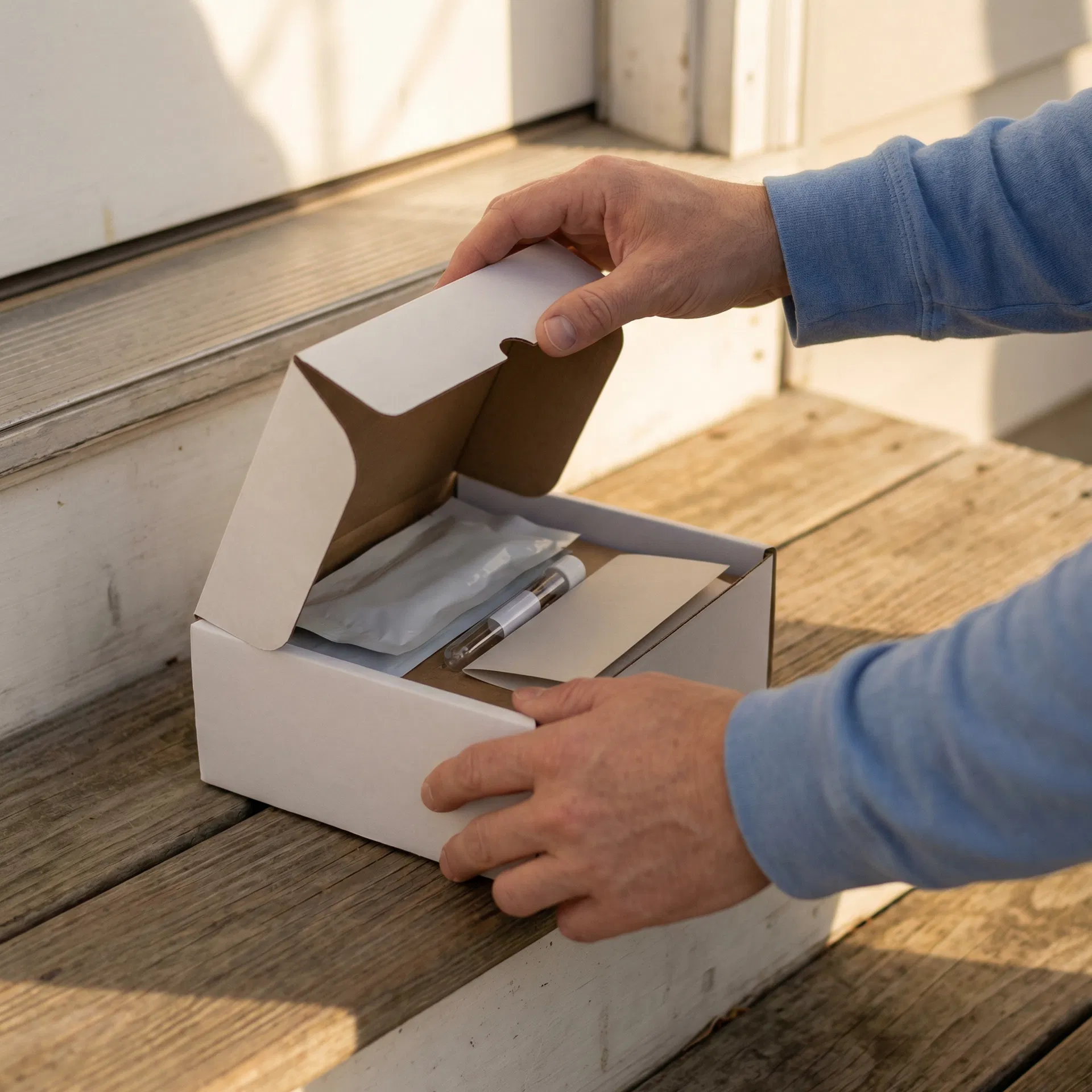
Kit to your door
02

Kit to your door

Everything you need arrives in discreet packaging with step-by-step instructions inside.

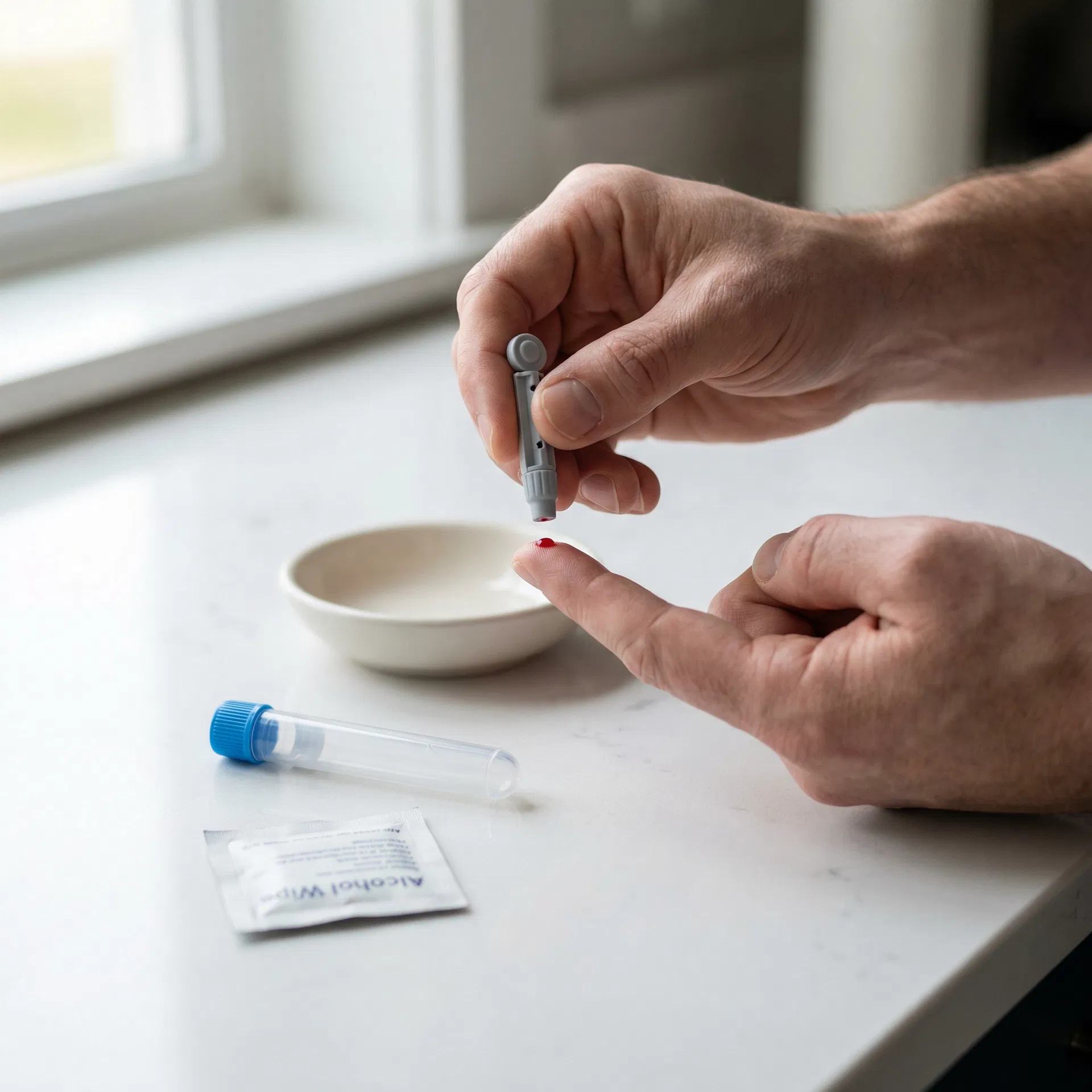
Collect your sample
03

Collect your sample

Follow the simple instructions in your kit - whether it is a finger-prick at home or a venous draw at a partner clinic, your test page will guide you.

Insights delivered
04

Insights delivered

Clear, easy-to-understand results sent to you online with actionable health guidance.