All Tests

Oxidative Stress in Semen

Biomarkers Tested

Reactive Oxygen Species (ROS), Total Antioxidant Capacity (TAC), Oxidative Stress Index (OSI)

£260.00 ✓ In Stock

Results ready within 5 working days

UKAS accredited laboratory, ISO 15189.

5 working days Semen sample
Lab visit — Central London
CQC registered Accredited UK labs ISO 15189

How it works

Your semen analysis journey

Semen analyses are performed at our partner andrology laboratory in Central London. Here's what to expect from order to results.

1
Order confirmation by email

Purchase your test

Order online and you'll receive a confirmation email with your test reference and full booking instructions within minutes.

2
Book your appointment online or by phone

Book your appointment

Book directly with The Doctors Laboratory online or by phone. Appointments available Mon–Fri 7am–7pm and Saturday 7am–1pm.

Book online at TDL Call 020 7025 7940
3
Prepare at home before your appointment

Prepare at home

Abstain from ejaculation for 2–5 days before your appointment. Avoid alcohol, saunas, and hot baths for 3 days. Stay hydrated and try to relax — stress can affect your sample quality.

4
Attend the laboratory in central London

Attend the laboratory

Visit TDL at 76 Wimpole Street, London W1G 9RT. You'll be shown to a private, comfortable room to produce your sample. The laboratory staff are professional and discreet — this is routine for them.

£50 attendance fee paid at lab
5
Receive your results securely by email

Receive your results

Results are ready within 2 working days and delivered securely to your email. Your full report includes all parameters tested with WHO 2021 reference ranges.

Address
The Doctors Laboratory
76 Wimpole Street
London W1G 9RT
Opening hours
Mon–Fri: 7am–7pm
Saturday: 7am–1pm
Nearest tube
Oxford Circus (5 min)
Bond Street (7 min)
Contact
£50 attendance fee: A £50 fee is payable directly to The Doctors Laboratory when you arrive. This covers the use of their facilities and is separate from the test price shown above.
Tip: Parking meters are free until 8:30am. For later appointments, use Q-Park at Cavendish Square (5 min walk). The laboratory is in the central London congestion charge zone.

Oxidative Stress in Semen (ROS + MIOXSYS)

Measure reactive oxygen species and redox potential affecting sperm health

Oxidative stress is now recognised as a major underlying cause of sperm DNA damage and male infertility. This advanced test measures both reactive oxygen species (ROS) levels and the overall redox potential in your semen, providing a comprehensive assessment of oxidative balance that standard semen analysis cannot detect.

When free radicals (ROS) overwhelm the body's antioxidant defences, they damage sperm cell membranes, impair motility, and cause DNA fragmentation. High oxidative stress is associated with reduced natural conception rates, increased miscarriage risk, and lower IVF success. Identifying oxidative stress allows targeted treatment with lifestyle changes and antioxidants.

🔬 What This Test Includes

Chemiluminescence Assay for ROS

Measures the level of reactive oxygen species (free radicals) in your semen using a highly sensitive chemiluminescence technique. Elevated ROS indicates oxidative damage is occurring.

MIOXSYS Electrochemical Assay

Measures the overall oxidation-reduction potential (ORP) in semen—the balance between oxidants and antioxidants. This provides a comprehensive picture of your semen's oxidative state.

👤 Who Should Consider This Test?

Unexplained Infertility Normal semen analysis but difficulty conceiving
🧬
High DNA Fragmentation Investigating the cause of elevated DFI
🚬
Smokers Smoking significantly increases oxidative stress
⚖️
Obesity Excess weight linked to higher ROS levels
🩺
Varicocele Varicocele is a common cause of oxidative stress
🦠
Genital Infections Current or past infections increase ROS
🏭
Environmental Exposure Toxins, pesticides, heavy metals, radiation
💊
Pre-Antioxidant Treatment Baseline before starting supplements

⚡ Common Causes of Elevated ROS Levels

🦠 Genito-urinary infection
🩺 Prostatitis
🔄 Vasectomy reversal
🩸 Varicocele
⬇️ Cryptorchidism
🏥 Chronic disease
🏭 Chemical pollutants
⚗️ Heavy metal exposure
💊 Certain drugs
🚬 Smoking
🏃 Excessive exercise
🌡️ Heat exposure
⚖️ Obesity
📅 Age

Good news: High ROS levels can often be reduced through lifestyle changes, treating underlying conditions, and antioxidant supplementation. Improvement is typically seen within 2–3 months.

Abstinence: Avoid ejaculation for 2–5 days before your test. This ensures adequate sample volume and standardised conditions.

Antioxidant supplements: If you're taking antioxidant supplements (vitamin C, E, zinc, selenium, CoQ10, etc.), consider stopping them 1 week before testing if you want a true baseline measurement. Otherwise, the test will reflect your current supplemented state.

Lifestyle: Avoid alcohol, smoking, and excessive exercise for at least 3 days before your test, as these can acutely affect ROS levels.

On the day: When you arrive, you'll be shown to a private room. Wash your hands and genitals with soap and water before producing your sample. Do not use lubricants, saliva, or condoms.

Timing: The sample must be analysed fresh, which is why this test must be performed on-site at the laboratory.

What are reactive oxygen species (ROS)?
ROS are highly reactive molecules (free radicals) produced as a normal byproduct of metabolism. In small amounts, they're necessary for sperm function. However, excessive ROS causes oxidative stress, damaging sperm membranes, impairing motility, and fragmenting DNA.

What is redox potential?
Redox potential (measured by MIOXSYS) reflects the overall balance between oxidants and antioxidants in your semen. A high redox potential indicates oxidative stress—meaning oxidants are overwhelming your body's antioxidant defences.

How does oxidative stress affect fertility?
Oxidative stress can damage sperm cell membranes (reducing motility), cause DNA fragmentation (affecting fertilisation and embryo development), and impair the sperm's ability to penetrate the egg. High ROS is linked to reduced natural conception, increased miscarriage, and lower IVF success.

Can oxidative stress be treated?
Yes. Treatment depends on the underlying cause but typically includes lifestyle modifications (quitting smoking, weight loss, reducing alcohol), treating infections or varicocele, and antioxidant supplementation. Your fertility specialist or GP can recommend an appropriate treatment plan.

Should I stop antioxidants before testing?
If you want a true baseline measurement, stop antioxidant supplements 1 week before testing. If you want to assess your current oxidative status while on supplements, continue taking them as normal.

How long does it take to see improvement?
Sperm take approximately 2–3 months to develop. If you make lifestyle changes or start treatment, repeating the test after 3 months can show whether oxidative stress has reduced.
Important Information

This test provides laboratory results only—not a medical diagnosis. Elevated ROS or redox potential indicates oxidative stress but does not diagnose the underlying cause. Results should be interpreted alongside your standard semen analysis and medical history.

Results are delivered without clinical interpretation. We recommend discussing your results with a fertility specialist, urologist, or GP who can identify potential causes and recommend appropriate treatment.

Abstinence: 2-5 days before collection.

Sample Collection: Collect by masturbation into the sterile container provided.

Sample Delivery: Within 1 hour, kept at body temperature. Rapid delivery is particularly important for oxidative stress measurement.

No clinics, no queues, no hassle

Four steps to clarity

Pick your panel
01

Pick your panel

Browse over 200 clinically designed test kits and choose the one that fits your goals.

Kit to your door
02

Kit to your door

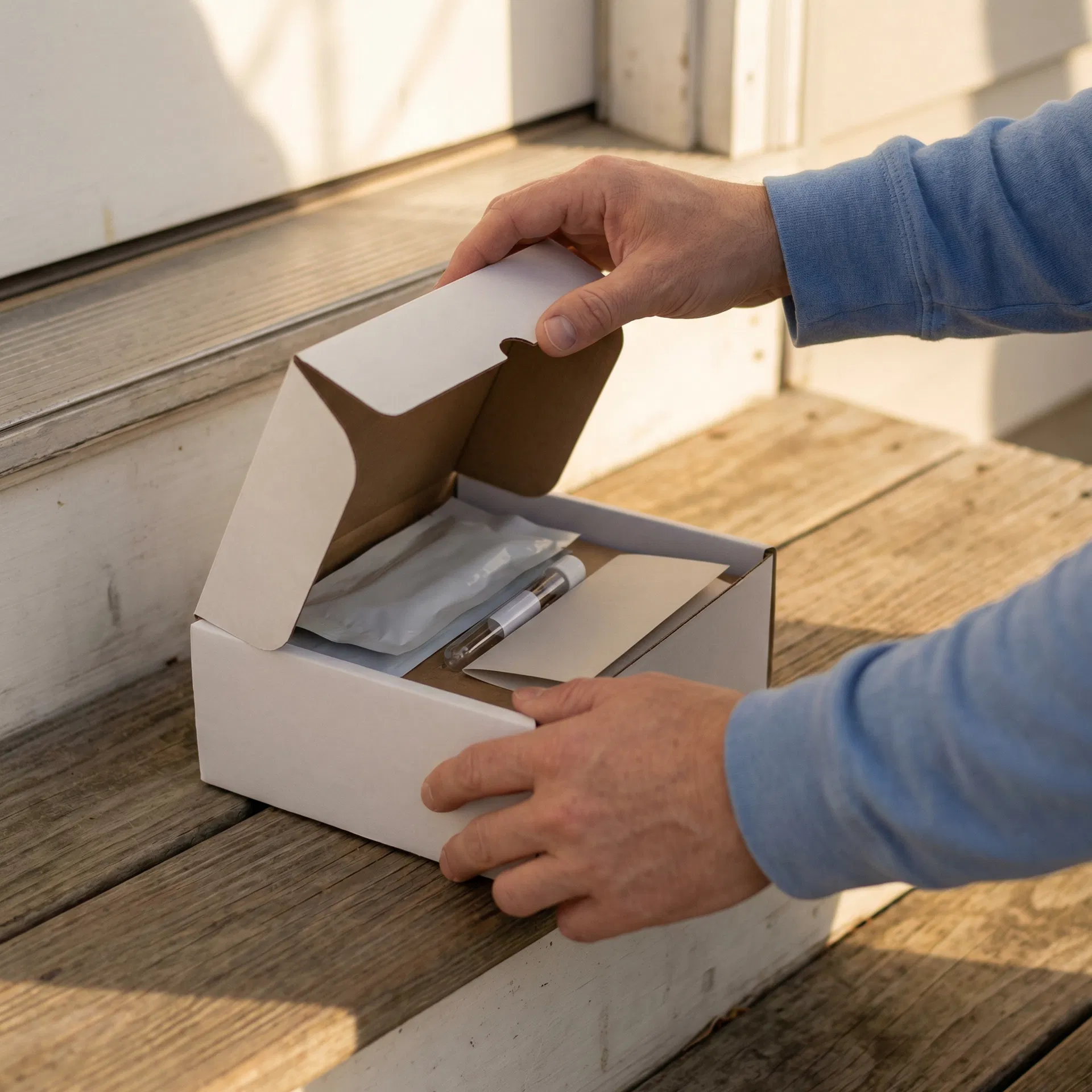
Everything you need arrives in discreet packaging with step-by-step instructions inside.

Collect your sample
03

Collect your sample

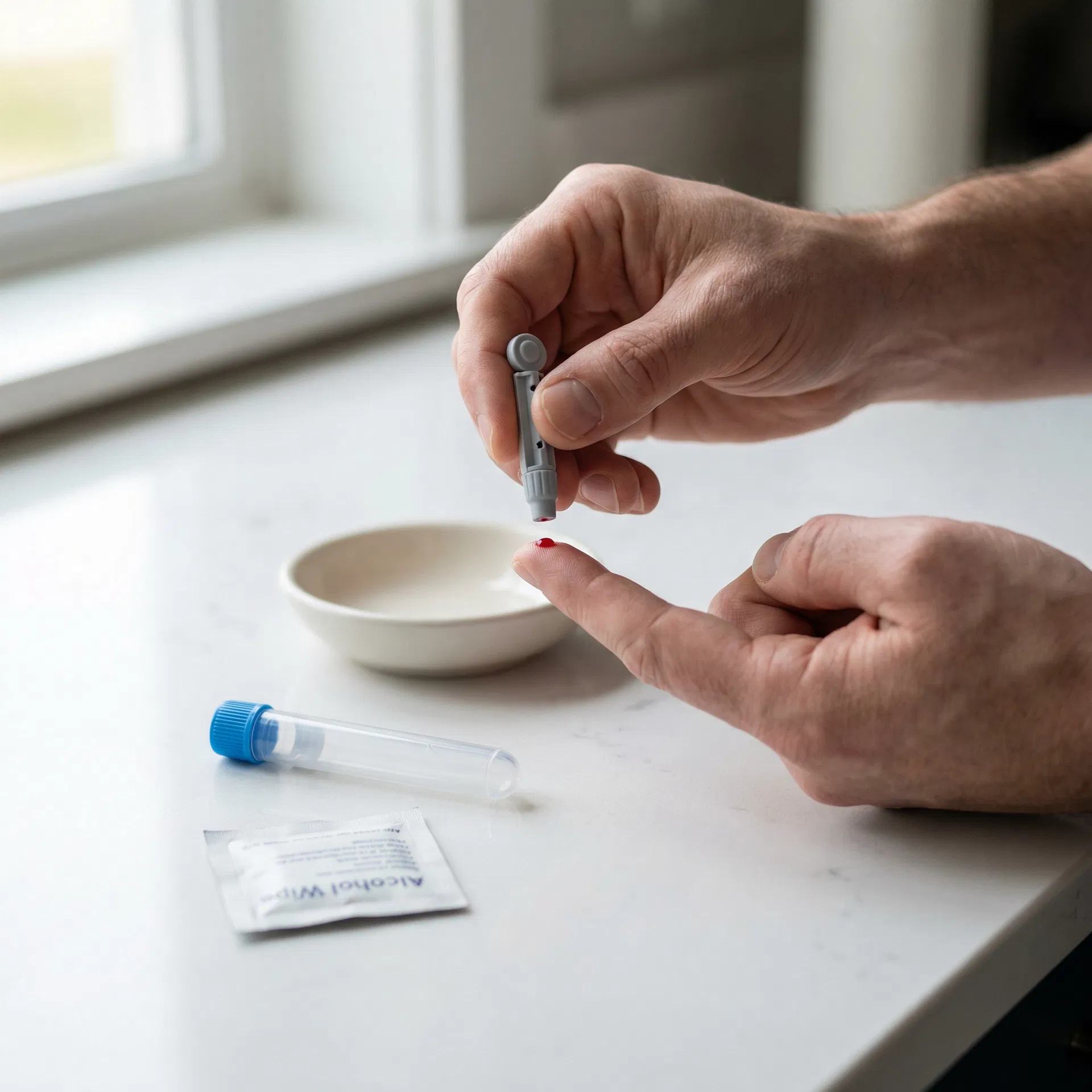
Follow the simple instructions in your kit - whether it is a finger-prick at home or a venous draw at a partner clinic, your test page will guide you.

Insights delivered
04

Insights delivered

Clear, easy-to-understand results sent to you online with actionable health guidance.