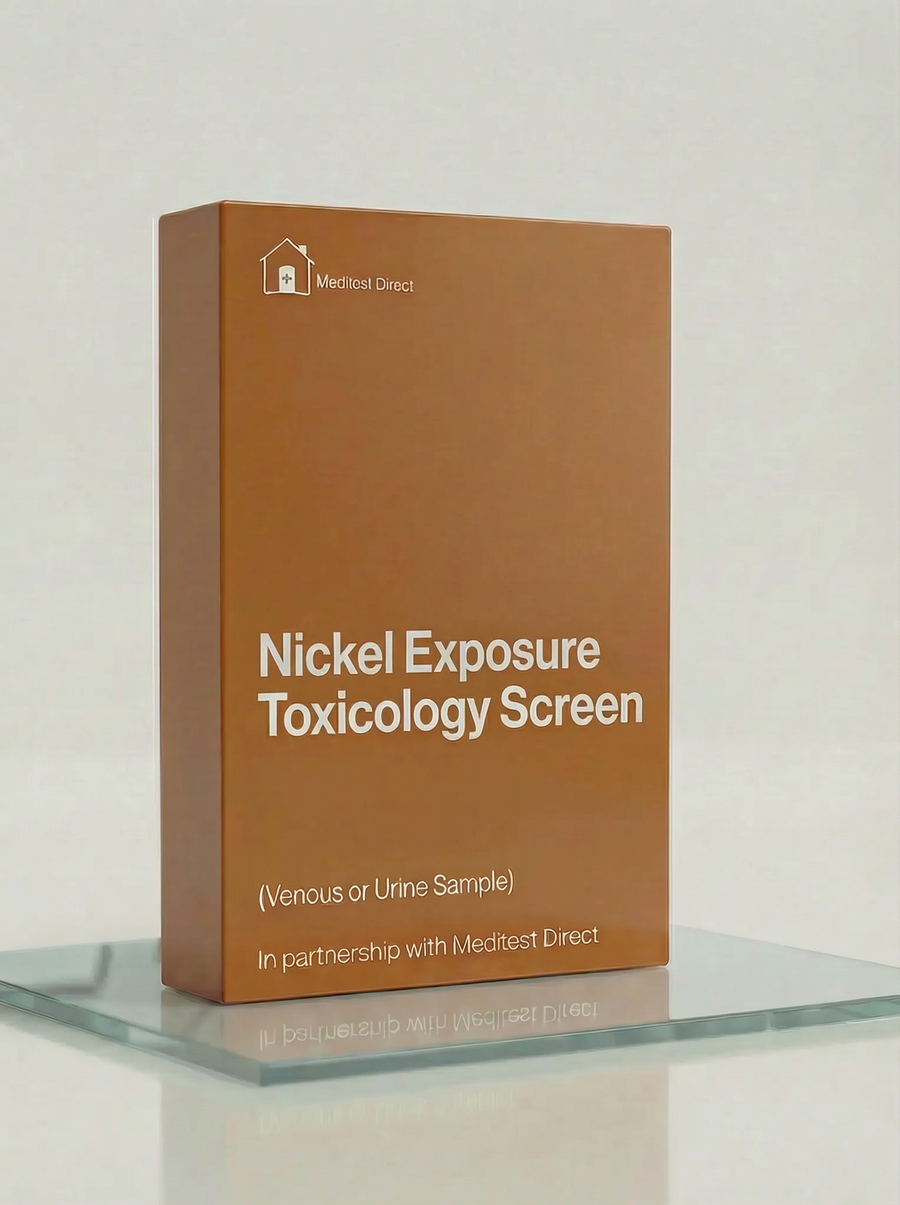
Nickel Exposure Toxicology Screen
£80 ✓ In Stock
Choose your sample type:
Your sample goes to a UKAS accredited laboratory meeting ISO 15189 standards.
After you receive your order confirmation email, please reply with your date of birth.
How it works
Your testing journey
From order to results in four simple steps. Full transparency on where each step happens and what it costs.

Receive your kit by post
Dispatched same working day if ordered before 3pm. Royal Mail Tracked delivery, typically 1–3 working days. 90% of kits arrive within 24 hours.


Depends on the sample you choose


Urine or blood — your choice

Return by prepaid envelope
Seal your sample in the biohazard bag provided and drop it in any Royal Mail postbox using the prepaid Tracked 24 envelope. Post Monday–Thursday for best results.
If you choose to test at home:
- 1Blood collection tube
- 2Single-use lancet device
- 3Sterile gauze pad
- 4Adhesive plaster
- 5Cleansing wipe
- 6Biohazard specimen bag
- 7Prepaid return envelope (Royal Mail Tracked 24)
- 8Step-by-step instructions
If you choose to visit a clinic:
This kit is sent to you and taken to your chosen clinic. The phlebotomist will collect your sample using the materials provided.
- 1Vacutainer blood collection tubes
- 2Needle and butterfly needle
- 3Tourniquet
- 4Alcohol swab
- 5Cotton wool and gauze
- 6Adhesive plaster
- 7Biohazard specimen bag
- 8Prepaid return envelope (Royal Mail Tracked 24)
- 9Laboratory request form
- 10Instructions for the phlebotomist
Urine Collection Kit
- 1Urine collection container
- 2Biohazard specimen bag
- 3Prepaid return envelope (Royal Mail Tracked 24)
- 4Chain of custody form (if applicable)
- 5Step-by-step instructions
This test is for screening and information only — it is not a medical diagnosis or professional advice. Please have your results reviewed by a qualified doctor or healthcare provider who can explain what they mean for your personal health situation. If your results show anything outside the normal range, or if you're worried about your health, see your doctor as soon as you can. Don't change any medications or treatments based on these results alone — always talk to your healthcare provider first.
NO CLINICS, NO QUEUES, NO HASSLE
Four steps to clarity
 01
01
Pick your panel
Browse over 200 clinically designed test kits and choose the one that fits your goals.
 02
02
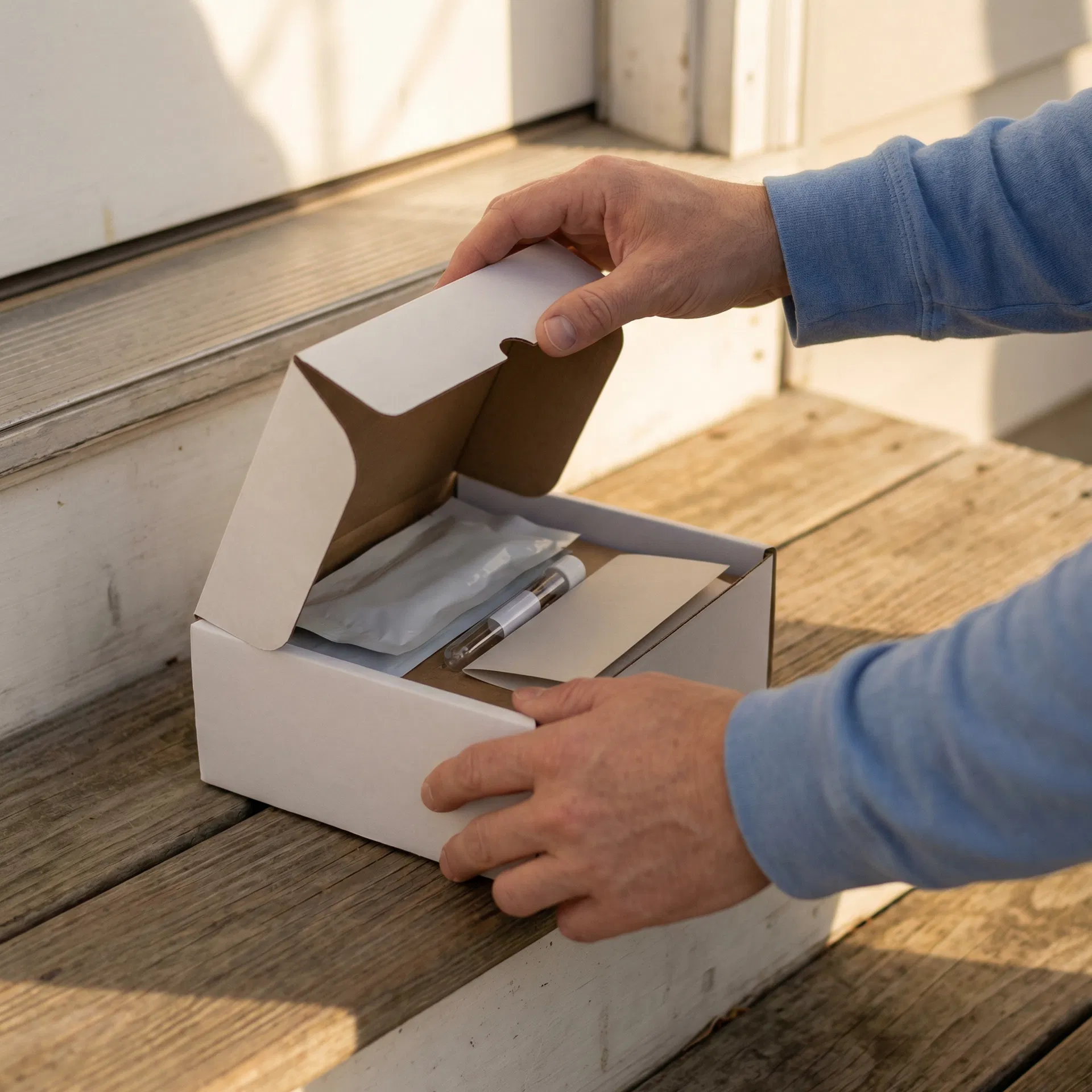
Kit to your door
Everything you need arrives in discreet packaging with step-by-step instructions inside.
 03
03
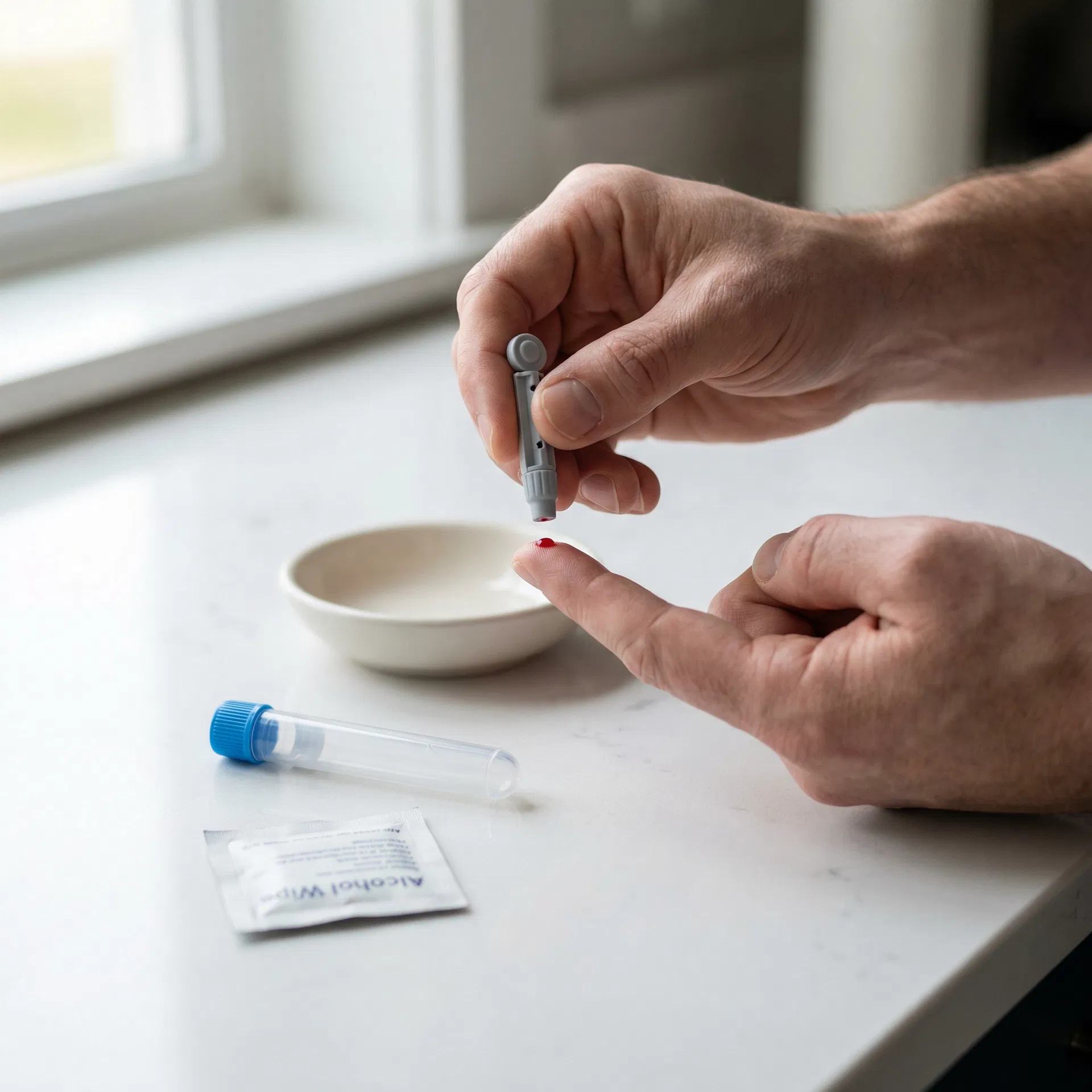
Collect your sample
Follow the simple instructions in your kit — whether it's a finger-prick at home or a venous draw at a partner clinic.
 04
04
Insights delivered
Clear, easy-to-understand results sent to you online with actionable health guidance.
Frequently asked questions
Nickel exposure can cause allergic contact dermatitis (the most common metal allergy), respiratory problems, and at high occupational levels, increased cancer risk. Sources include jewellery, coins, occupational exposure (electroplating, welding), and some foods.
No.
You may also be interested in

Cobalt Exposure Toxicology Screen
A single-metal toxicology screen measuring systemic cobalt exposure — useful for occupational monitoring, dietary concerns, or investigating symptoms related to cobalt exposure.
Results estimated in 5 working days
1 biomarkers

Chromium Exposure Toxicology Screen
A single-metal toxicology screen measuring systemic chromium exposure — useful for occupational monitoring, dietary concerns, or investigating symptoms related to chromium exposure.
Results estimated in 5 working days
1 biomarkers

Lead Exposure Toxicology Screen
A single-metal toxicology screen measuring systemic lead exposure — useful for occupational monitoring, dietary concerns, or investigating symptoms related to lead exposure.
Results estimated in 5 working days
1 biomarkers

Manganese Toxicology Screen
A urine-based toxicology screen measuring manganese exposure levels — suitable for occupational health monitoring, environmental exposure assessment, and clinical investigation.
Results estimated in 5 working days
1 biomarkers