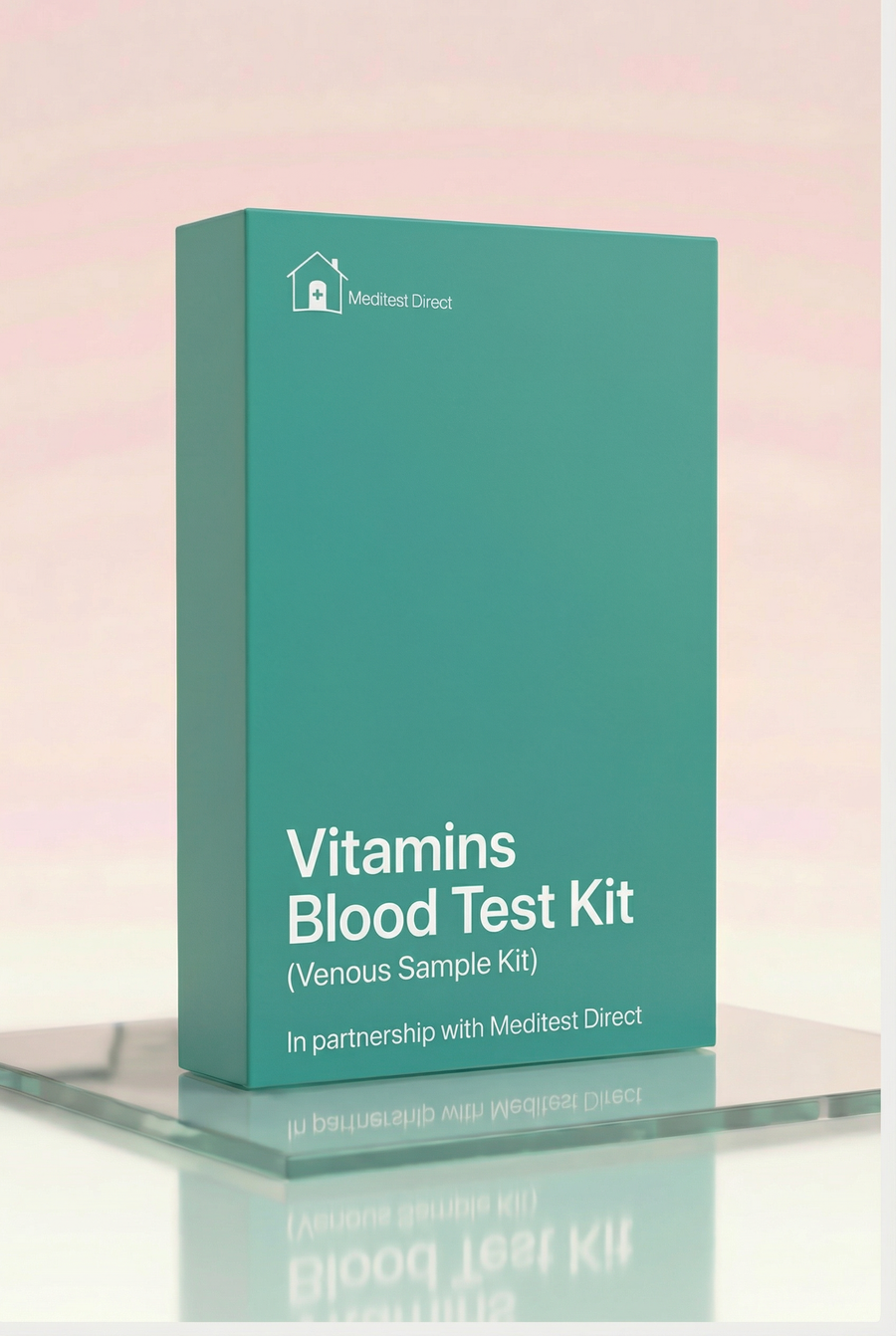
Vitamins Blood Test Kit
£330 ✓ In Stock
Your sample goes to a UKAS accredited laboratory meeting ISO 15189 standards.
After you receive your order confirmation email, please reply with your date of birth.
How it works
Your testing journey
This test is performed at The Doctors Laboratory in Central London. Walk-in service available.

Purchase your test
Order online. You will receive confirmation with your test reference and everything you need to know about attending The Doctors Laboratory in London.

Walk in to TDL London
No appointment needed. Walk in during opening hours at 76 Wimpole Street, London W1G 9RT. Call 020 7025 7940 if you need to check before travelling.
Call TDL: 020 7025 7940
Venous blood draw
A trained phlebotomist at TDL takes a small venous blood sample from your arm. The whole process takes around 10 minutes.
£50 attendance fee payable at lab
Results in 3 working days
Your results are processed by the specialist laboratory and delivered securely to your email within 3 working days of your visit.
76 Wimpole Street
London W1G 9RT
Saturday: 7am–1pm
Bond Street (7 min walk)
Home Finger-Prick Blood Collection Kit
- 1Blood collection tube
- 2Single-use lancet device
- 3Sterile gauze pad
- 4Adhesive plaster
- 5Cleansing wipe
- 6Biohazard specimen bag
- 7Prepaid return envelope (Royal Mail Tracked 24)
- 8Step-by-step instructions
Vitamin B1 (thiamine) is essential for converting carbohydrates into energy and plays a vital role in nerve, muscle, and heart function. It is found in whole grains, pork, legumes, nuts, and fortified cereals. Deficiency can cause fatigue, irritability, poor memory, loss of appetite, muscle weakness, and in severe cases, beriberi or Wernicke-Korsakoff syndrome. Those at higher risk include heavy alcohol users, people with malabsorption conditions, and those on very restrictive diets.
Vitamin B2 (riboflavin) is crucial for energy production, cellular function, and the metabolism of fats and drugs. It also helps convert other B vitamins into their active forms. Riboflavin is found in dairy products, eggs, lean meats, and green vegetables. Deficiency symptoms include cracked lips, sore throat, inflammation of the mouth and tongue, skin rashes, and anaemia. Riboflavin is highly sensitive to light, which is why blood samples must be protected from light immediately after collection.
Vitamin B6 (pyridoxine) is involved in over 100 enzyme reactions, primarily related to protein metabolism. It plays essential roles in brain development, immune function, and neurotransmitter production. B6 is found in poultry, fish, potatoes, chickpeas, and bananas. Deficiency can cause peripheral neuropathy, anaemia, confusion, depression, and weakened immune function. Very high doses from supplements can also cause nerve damage.
Vitamin E (alpha-tocopherol) is a fat-soluble antioxidant that protects cell membranes from oxidative damage. It supports immune function, skin health, and may help reduce the risk of chronic diseases. Good sources include vegetable oils, nuts, seeds, avocados, and green leafy vegetables. Deficiency is rare in healthy individuals but can occur with conditions affecting fat absorption. Symptoms include muscle weakness, peripheral neuropathy, vision problems, and impaired immune function. Very high doses from supplements may increase bleeding risk.
This test is for screening and information only — it is not a medical diagnosis or professional advice. Please have your results reviewed by a qualified doctor or healthcare provider who can explain what they mean for your personal health situation. If your results show anything outside the normal range, or if you're worried about your health, see your doctor as soon as you can. Don't change any medications or treatments based on these results alone — always talk to your healthcare provider first.
NO CLINICS, NO QUEUES, NO HASSLE
Four steps to clarity
 01
01
Pick your panel
Browse over 200 clinically designed test kits and choose the one that fits your goals.
 02
02
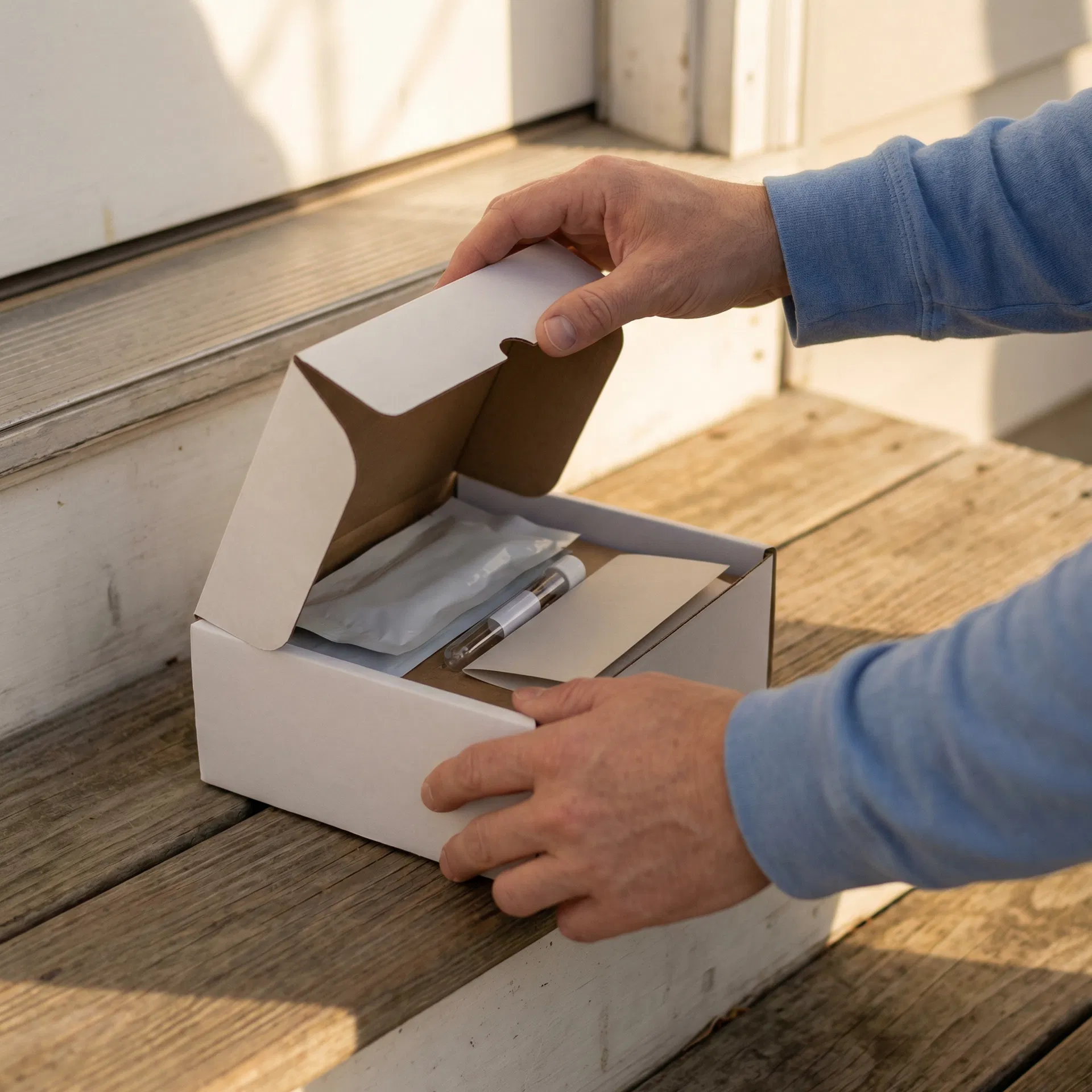
Kit to your door
Everything you need arrives in discreet packaging with step-by-step instructions inside.
 03
03
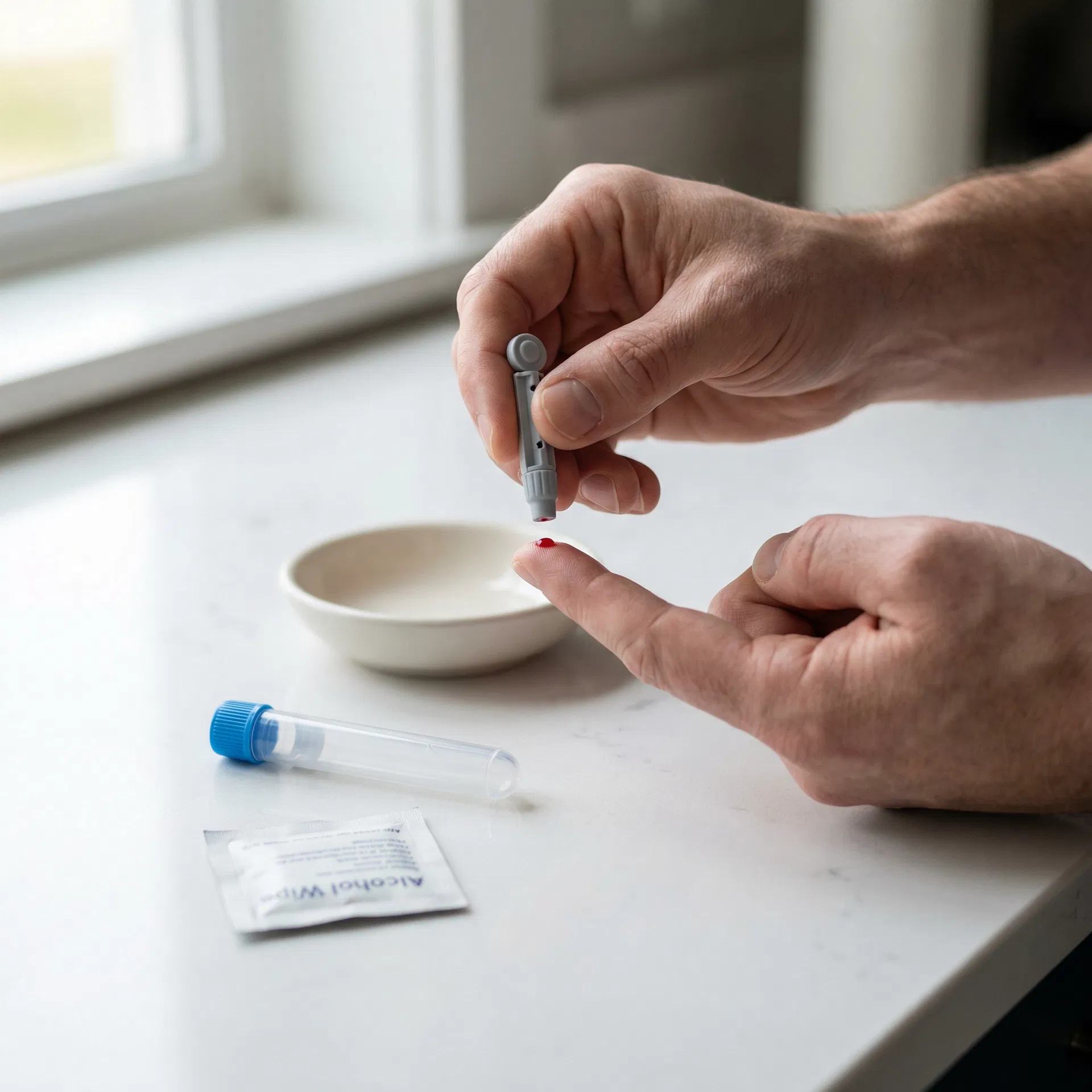
Collect your sample
Follow the simple instructions in your kit — whether it's a finger-prick at home or a venous draw at a partner clinic.
 04
04
Insights delivered
Clear, easy-to-understand results sent to you online with actionable health guidance.
Frequently asked questions
No. Vitamin levels are not significantly affected by recent food intake.
Yes. Recent supplementation (within 24-48 hours) can significantly affect results for water-soluble vitamins. For a baseline measurement, stop supplements 48 hours before testing. To check if supplementation is working, continue as normal.
Common signs include fatigue, weakness, poor immune function, and impaired wound healing. Specific deficiencies have specific symptoms — your results report will explain what low levels may mean for each vitamin tested.
If supplementing for a confirmed deficiency, retest every 3-6 months. For screening, annual testing is reasonable, especially during winter (for vitamin D) or if on a restricted diet.
You may also be interested in

Free and Total Testosterone Blood Test Kit
A 4-biomarker venous blood panel covering hormones and proteins — ideal for investigating low testosterone, libido, energy, or hormone replacement monitoring.
Results estimated in 2 working days
4 biomarkers

Testosterone Blood Test
A single-biomarker venous blood test covering hormones — ideal for investigating low testosterone, libido, energy, or hormone replacement monitoring.
Results estimated in 2 working days
1 biomarkers

Vitamin D (25-OH) Blood Test Kit
A finger-prick blood test measuring your vitamin D (25-hydroxyvitamin D) level — the essential nutrient for bone health, immune function, and overall wellbeing, commonly deficient in the UK.
Results estimated in 2 working days
1 biomarkers

Advanced Male Fertility Hormone Blood Test Kit
A 7-biomarker venous blood,semen panel covering hormones and proteins — ideal for investigating male fertility and reproductive hormones.
Results estimated in 2 working days
7 biomarkers