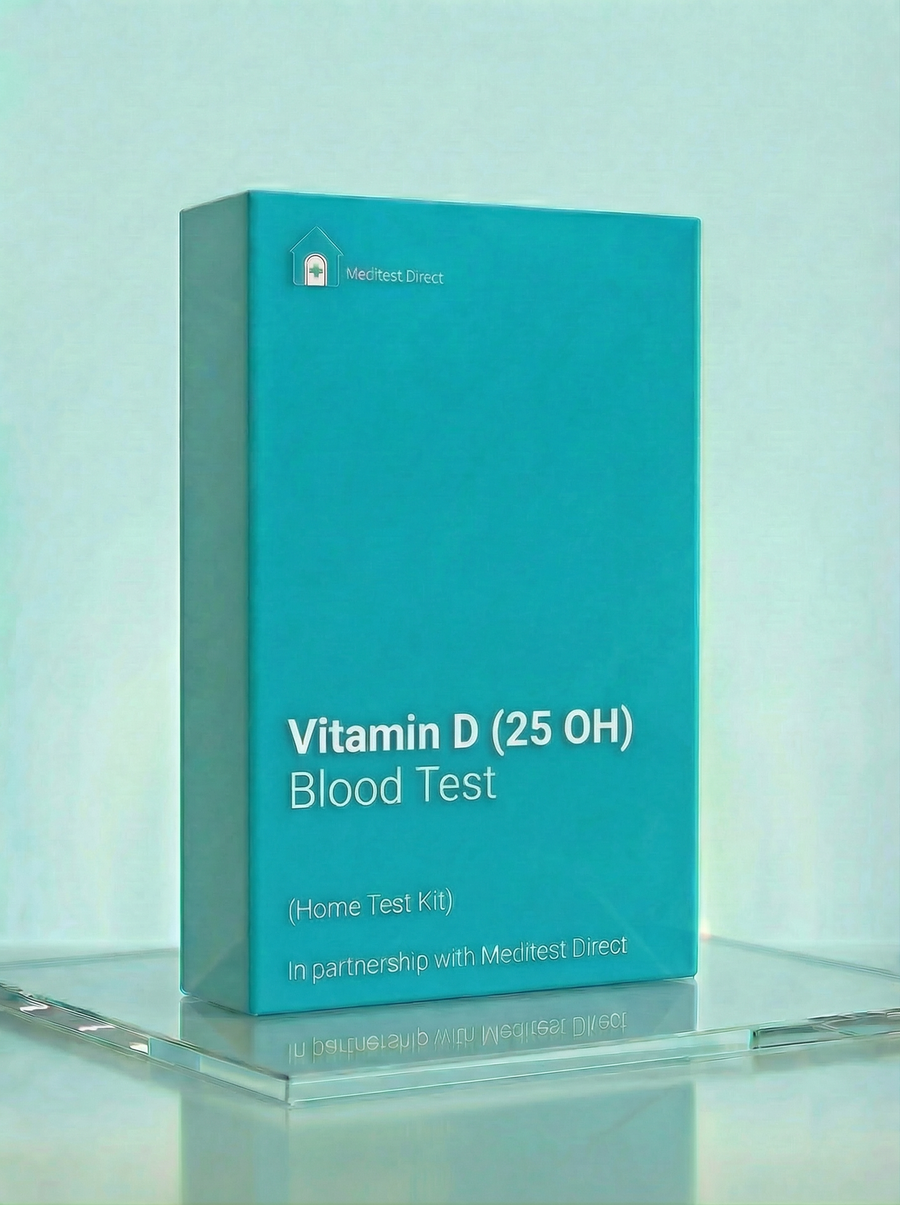
Vitamin D (25-OH) Blood Test Kit
£45 ✓ In Stock
Your sample goes to a UKAS accredited laboratory meeting ISO 15189 standards.
After you receive your order confirmation email, please reply with your date of birth.
How it works
Your testing journey
From order to results in four simple steps. Full transparency on where each step happens and what it costs.

Receive your kit by post
Dispatched same working day if ordered before 3pm. Royal Mail Tracked delivery, typically 1–3 working days. 90% of kits arrive within 24 hours.

Collect at home
Everything you need is in the kit. Collect your sample in the privacy of your own home — no appointment needed, no clinic visit.
Included in kit price
Small finger-prick sample
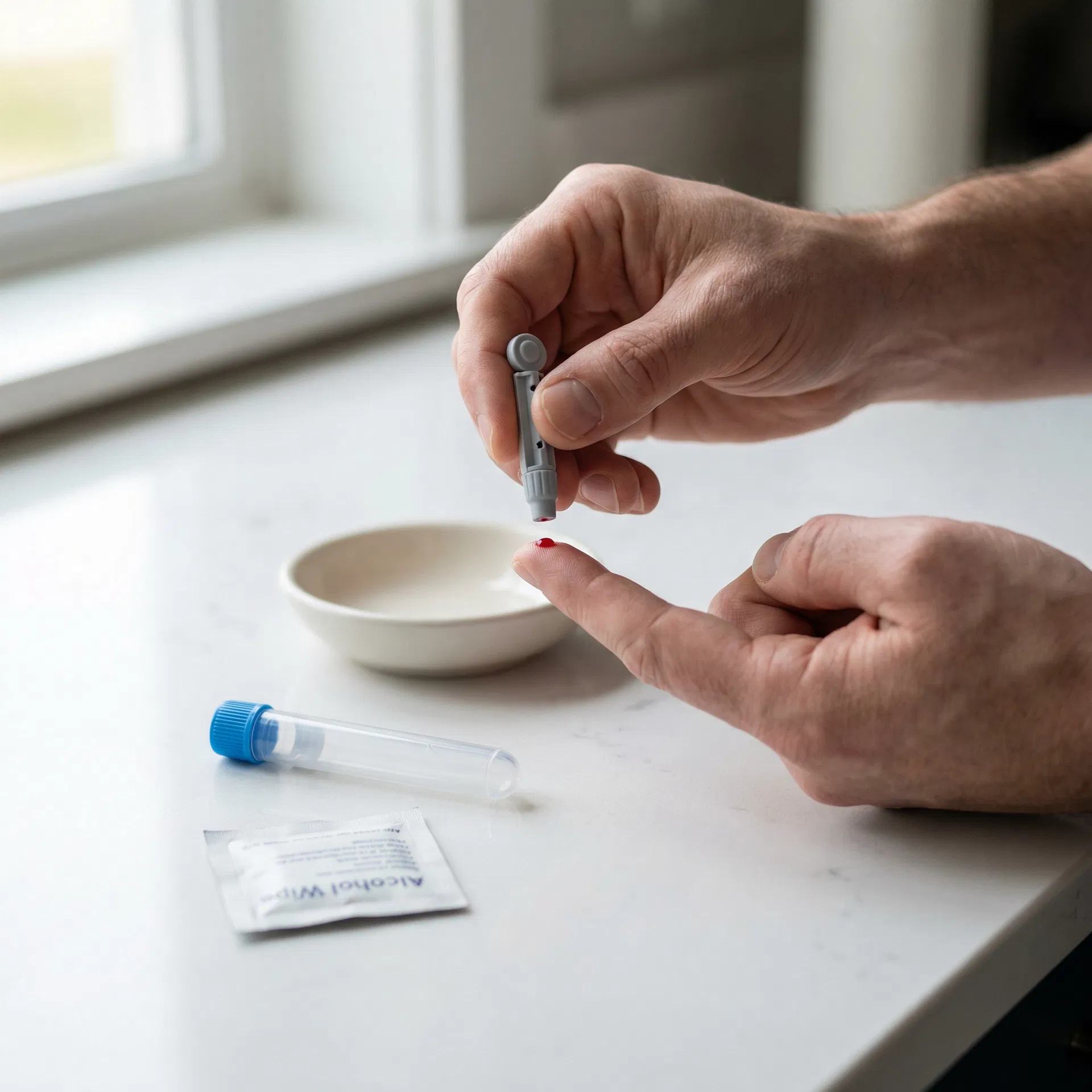
Use the single-use lancet included in your kit to take a few drops of blood from your fingertip — similar to how diabetics check their blood sugar. Takes about 2 minutes.

Return by prepaid envelope
Seal your sample in the biohazard bag provided and drop it in any Royal Mail postbox using the prepaid Tracked 24 envelope. Post Monday–Thursday for best results.
Home Finger-Prick Blood Collection Kit
- 1Blood collection tube
- 2Single-use lancet device
- 3Sterile gauze pad
- 4Adhesive plaster
- 5Cleansing wipe
- 6Biohazard specimen bag
- 7Prepaid return envelope (Royal Mail Tracked 24)
- 8Step-by-step instructions
Despite its name, vitamin D is actually a hormone produced by your skin when exposed to sunlight. It must be converted into 25-hydroxyvitamin D (25 OH), the major circulating form, which is the most accurate indicator of vitamin D supply to your body. Vitamin D is essential for healthy bones and teeth (it helps your body absorb calcium), muscle function, immune system regulation, and mental health. Low vitamin D symptoms include muscle weakness, bone pain, mood changes, fatigue, and increased susceptibility to infections. Many people in the UK have low levels, particularly those with darker skin, people who spend limited time outdoors, older adults, those who cover their skin for religious or cultural reasons, and people who are overweight (vitamin D is stored in fat tissue). Small amounts can be obtained from dietary sources such as oily fish (salmon, mackerel, sardines), egg yolks, and fortified foods, but most people in the UK cannot get enough from diet alone. Supplementation is often needed to achieve and maintain optimal levels, particularly during autumn and winter. Low levels should be discussed with your GP, who may recommend supplementation.
This test is for screening and information only — it is not a medical diagnosis or professional advice. Please have your results reviewed by a qualified doctor or healthcare provider who can explain what they mean for your personal health situation. If your results show anything outside the normal range, or if you're worried about your health, see your doctor as soon as you can. Don't change any medications or treatments based on these results alone — always talk to your healthcare provider first.
NO CLINICS, NO QUEUES, NO HASSLE
Four steps to clarity
 01
01
Pick your panel
Browse over 200 clinically designed test kits and choose the one that fits your goals.
 02
02
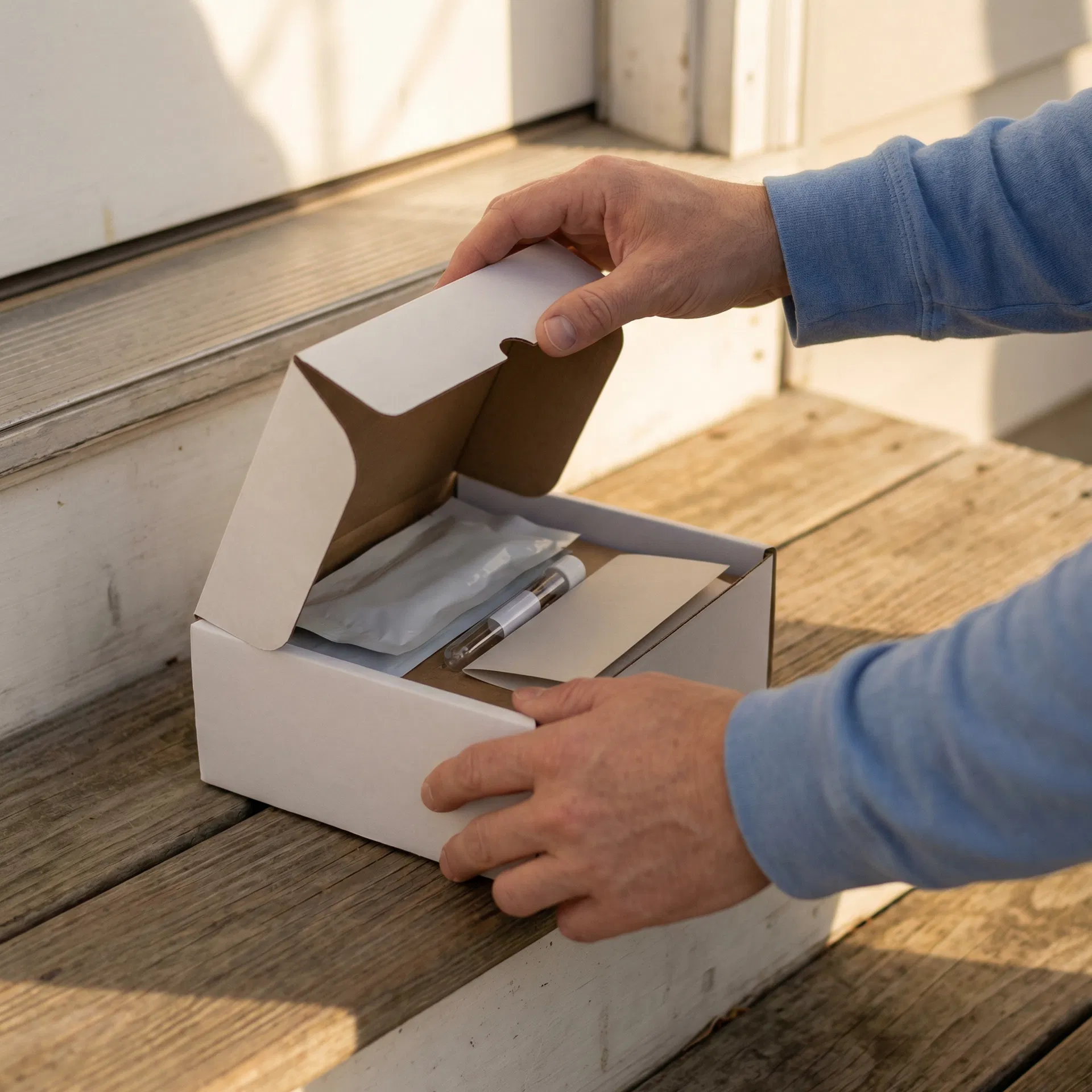
Kit to your door
Everything you need arrives in discreet packaging with step-by-step instructions inside.
 03
03
Collect your sample
Follow the simple instructions in your kit — whether it's a finger-prick at home or a venous draw at a partner clinic.
 04
04
Insights delivered
Clear, easy-to-understand results sent to you online with actionable health guidance.
Frequently asked questions
For baseline: stop for 7 days. To check if your dose is adequate: continue as normal.
Winter (February-April) shows your worst-case level. Summer (August-September) shows your peak. Winter testing is more clinically useful for identifying deficiency.
NHS minimum: 25 nmol/L. Adequate: 50 nmol/L. Optimal: 75+ nmol/L. Above 220 nmol/L is potentially excessive.
No. Vitamin D is not affected by food intake.
You may also be interested in

Vitamins Blood Test Kit
A 7-biomarker venous blood panel covering fat-soluble vitamins and b vitamins — ideal for investigating relevant symptoms or monitoring health.
Results estimated in 3 working days
Finger-prick collection
Advanced Vitamins Blood Test
A 10-biomarker venous blood panel covering fat-soluble vitamins and b vitamins — ideal for investigating relevant symptoms or monitoring health.
Results estimated in 3 working days
10 biomarkers
Venous collection
Nutrition Blood Test Kit
A 11-biomarker venous blood panel covering cholesterol status, inflammation, iron status and other key health markers — ideal for investigating relevant symptoms or monitoring health.
Results estimated in 2 working days
11 biomarkers

Advanced Diet and Lifestyle with Omega 3 and 6 Blood Test Kit
A 32-biomarker venous blood panel covering cholesterol status, diabetes, liver function and other key health markers — ideal for optimising omega-3 intake and cardiovascular protection.
Results estimated in 3 working days
32 biomarkers