

Advanced Vitamin B12 Blood Test
£89 ✓ In Stock
Your sample goes to a UKAS accredited laboratory meeting ISO 15189 standards.
After you receive your order confirmation email, please reply with your date of birth.
How it works
Your testing journey
From order to results in four simple steps. Full transparency on where each step happens and what it costs.

Receive your kit by post
Dispatched same working day if ordered before 3pm. Royal Mail Tracked delivery, typically 1–3 working days. 90% of kits arrive within 24 hours.

Visit a partner clinic
Book a phlebotomy appointment at one of our 365+ UK partner clinics. Take your kit with you — the phlebotomist will collect your sample using the materials provided.
Phlebotomy fee applies (paid at clinic)
Venous blood draw at a clinic
A trained phlebotomist takes a small blood sample from a vein in your arm using the vacutainers provided in your kit. The appointment takes around 10 minutes.

Return by prepaid envelope
Seal your sample in the biohazard bag provided and drop it in any Royal Mail postbox using the prepaid Tracked 24 envelope. Post Monday–Thursday for best results.
Venous Blood Collection Kit
This kit is sent to you and taken to your chosen clinic. The phlebotomist will collect your sample using the materials provided.
- 1Vacutainer blood collection tubes
- 2Needle and butterfly needle
- 3Tourniquet
- 4Alcohol swab
- 5Cotton wool and gauze
- 6Adhesive plaster
- 7Biohazard specimen bag
- 8Prepaid return envelope (Royal Mail Tracked 24)
- 9Laboratory request form
- 10Instructions for the phlebotomist
Ferritin is the storage form of iron—it reflects how much iron you have in reserve. Iron deficiency causes symptoms that overlap significantly with B12 deficiency: fatigue, weakness, difficulty concentrating, and shortness of breath on exertion. Iron is essential for making haemoglobin, which carries oxygen in your red blood cells. Low ferritin indicates depleted iron stores and can cause fatigue even before haemoglobin drops into the anaemic range. Because iron deficiency is common and presents similarly to B12 deficiency, testing ferritin alongside B12 helps ensure you identify the actual cause of your symptoms—or identify if you have both deficiencies, which is not uncommon. Results outside the normal range may need a follow-up with your GP.
Folate (vitamin B9) works closely with vitamin B12—both are essential for DNA synthesis and red blood cell production. Folate deficiency causes the same type of macrocytic anaemia as B12 deficiency (high MCV, large red cells), and the symptoms are similar: fatigue, weakness, and cognitive difficulties. Testing folate alongside B12 is important because you need to know which is deficient—the treatments are different, and taking high-dose folic acid when B12 is the real problem can mask the B12 deficiency on blood tests while allowing neurological damage to progress silently. Folate deficiency can occur with poor dietary intake (folate is found in leafy greens, legumes, and fortified foods), alcohol excess, and certain medications. Results outside the normal range may need a follow-up with your GP.
Active B12 (holotranscobalamin) measures the portion of vitamin B12 that's actually available to your cells—it's the B12 bound to transcobalamin II, the protein that delivers B12 into cells. This is more accurate than total B12 because about 80% of total B12 in your blood is bound to haptocorrin (inactive) and can't be used by your cells. You can have 'normal' total B12 but low active B12 and still be functionally deficient. B12 is essential for DNA synthesis, red blood cell production, and maintaining the myelin sheath around nerves. Deficiency causes fatigue, weakness, macrocytic anaemia, neurological symptoms (numbness, tingling, balance problems), cognitive impairment, and mood changes. B12 is only found naturally in animal products, so vegetarians and vegans are at higher risk. Absorption also decreases with age. Results outside the normal range may need a follow-up with your GP.
Haemoglobin is the iron-containing protein inside red blood cells that carries oxygen from your lungs to every tissue in your body. It gives blood its red colour. Low haemoglobin (anaemia) directly causes fatigue, weakness, shortness of breath on exertion, and pale skin—your tissues aren't getting enough oxygen. B12 deficiency can cause anaemia because B12 is essential for making new red blood cells in your bone marrow. Without adequate B12, red cell production is impaired, and the cells that are made are abnormally large (macrocytic) and less effective. Haemoglobin tells you whether anaemia is present; the other markers help determine why. Results outside the normal range may need a follow-up with your GP.
Haematocrit measures what percentage of your blood volume is occupied by red blood cells—the rest is plasma (the liquid portion). Normal haematocrit is roughly 40-50% in men and 36-44% in women. Low haematocrit indicates anaemia—your blood has fewer oxygen-carrying cells relative to its volume. In B12 deficiency, haematocrit drops as red cell production is impaired. Haematocrit and haemoglobin generally move together and tell a similar story about your red cell status. Haematocrit can also be affected by hydration—dehydration concentrates the blood and raises haematocrit, while overhydration dilutes it. Results outside the normal range may need a follow-up with your GP.
Red blood cell count measures the actual number of red blood cells per litre of blood. Red cells are produced in your bone marrow and live for about 120 days before being recycled by your spleen and liver. In B12 deficiency, the bone marrow's ability to produce red cells is impaired because B12 is essential for DNA synthesis during cell division. Fewer red cells are produced, and those that are made are often abnormally large. A low red cell count contributes to anaemia—fewer cells mean less oxygen-carrying capacity. The count, combined with haemoglobin and the red cell indices, helps characterise the type of anaemia and point toward its cause. Results outside the normal range may need a follow-up with your GP.
MCV measures the average size of your red blood cells in femtolitres (fL). This is one of the most important markers for identifying B12 deficiency. Normal MCV is approximately 80-100 fL. B12 and folate deficiency cause macrocytic anaemia—red cells that are larger than normal (high MCV, typically above 100 fL). This happens because B12 is needed for DNA synthesis; without it, red cell precursors can't divide properly and instead grow larger without dividing. High MCV is a classic sign of B12 or folate deficiency. In contrast, iron deficiency causes microcytic anaemia (low MCV, small cells). MCV is key to distinguishing between these different causes of anaemia and fatigue. Results outside the normal range may need a follow-up with your GP.
MCH measures the average amount of haemoglobin in each red blood cell, expressed in picograms. Normal MCH is approximately 27-32 pg. MCH generally tracks with MCV—large cells (high MCV) contain more haemoglobin (high MCH), and small cells (low MCV) contain less haemoglobin (low MCH). In B12 deficiency, MCH is typically elevated alongside MCV because the abnormally large cells contain more haemoglobin than normal-sized cells would. In iron deficiency, MCH is low because the cells are small and poorly filled with haemoglobin. MCH helps confirm the pattern seen with MCV and contributes to classifying the type of anaemia. Results outside the normal range may need a follow-up with your GP.
MCHC measures the concentration of haemoglobin within red blood cells—essentially how 'packed' with haemoglobin each cell is relative to its size. It's calculated by dividing haemoglobin by haematocrit. Normal MCHC is approximately 320-360 g/L. In B12 deficiency, MCHC is usually normal or slightly low—the cells are larger but the haemoglobin concentration within them is relatively normal. In iron deficiency, MCHC is low (hypochromic cells)—the cells appear pale because they don't have enough haemoglobin relative to their volume. MCHC adds another dimension to characterising your red cells and helps distinguish between different types of anaemia. Results outside the normal range may need a follow-up with your GP.
RDW measures the variation in size among your red blood cells—how much they differ from one another. Normal RDW is approximately 11-15%. A high RDW (anisocytosis) means your red cells vary significantly in size. In B12 deficiency, RDW is often elevated because there's a mix of old normal-sized cells and newly produced abnormally large cells. As treatment takes effect, you may see even more variation as new healthy cells are produced alongside the remaining abnormal ones. RDW can also be high in iron deficiency and mixed deficiencies. A high RDW with high MCV is particularly suggestive of B12 or folate deficiency. Results outside the normal range may need a follow-up with your GP.
White blood cells (leukocytes) are your immune system's army, fighting infection and responding to inflammation. Total white cell count measures all types combined. Severe B12 deficiency can cause low white cell counts because, like red cells and platelets, white cells are produced in the bone marrow and require B12 for proper DNA synthesis during their production. Low white cells (leucopenia) can increase susceptibility to infections. The white cell count and differential help assess whether B12 deficiency is affecting your bone marrow's ability to produce immune cells, not just red cells. Results outside the normal range may need a follow-up with your GP.
Neutrophils are the most abundant white blood cells, typically comprising 50-70% of your total white count. They're your first-line defence against bacterial infections—when bacteria invade, neutrophils are the first cells to respond, engulfing and destroying the pathogens. Severe B12 deficiency can cause neutropenia (low neutrophils) because neutrophil production in the bone marrow requires adequate B12 for DNA synthesis. In B12 deficiency, neutrophils may also appear abnormal on a blood film—they can be hypersegmented (nuclei with more lobes than normal), which is a characteristic finding. Low neutrophils increase infection risk. Results outside the normal range may need a follow-up with your GP.
Lymphocytes are white blood cells responsible for adaptive immunity—they include B cells (which make antibodies), T cells (which kill infected cells and coordinate immune responses), and NK cells (which destroy abnormal cells). Lymphocytes typically comprise 20-40% of white blood cells. They're involved in the more specific, targeted immune response that recognises and remembers particular pathogens. Lymphocyte count can be affected by various conditions, and in severe B12 deficiency affecting the bone marrow, all cell lines including lymphocytes may be reduced. The differential white count helps characterise the nature of any white cell abnormality. Results outside the normal range may need a follow-up with your GP.
Monocytes are large white blood cells that circulate in blood before migrating into tissues where they become macrophages. Macrophages engulf and digest pathogens, dead cells, and debris—they're the cleanup crew of your immune system. The heat and swelling you feel with inflammation is partly caused by monocyte/macrophage activity. Monocytes typically comprise 2-8% of white blood cells. As part of the complete white cell differential, monocytes help characterise your immune cell populations and can indicate chronic inflammation or infection if elevated. Results outside the normal range may need a follow-up with your GP.
Eosinophils are white blood cells involved in fighting parasitic infections and in allergic/inflammatory responses. They typically comprise 1-4% of white blood cells. Elevated eosinophils occur with allergies (hay fever, asthma, eczema), parasitic infections, and certain autoimmune conditions. In the context of B12 testing, eosinophils are part of the complete blood count that provides an overall picture of your bone marrow function and immune status. They're not directly affected by B12 deficiency but complete the differential count. Results outside the normal range may need a follow-up with your GP.
Basophils are the least common white blood cells, typically comprising less than 1% of the total count. They play a role in allergic reactions and inflammatory responses by releasing histamine and other chemicals. Basophils help protect against certain parasites and contribute to the inflammatory response. As the final component of the complete white cell differential, basophils help complete the picture of your immune cell populations. They're not directly affected by B12 deficiency but are included as part of the standard full blood count. Results outside the normal range may need a follow-up with your GP.
Platelets are cell fragments produced by your bone marrow that form clots to stop bleeding when you're injured. They're formed in the bone marrow and circulate in your blood for about 8-10 days before being recycled. The normal range is 150-400 × 10⁹/L. Severe vitamin B12 deficiency can cause low platelet counts because B12 is needed for proper bone marrow function—the same process that produces abnormal red cells also affects platelet production. Low platelets (thrombocytopenia) can cause easy bruising and prolonged bleeding. Platelet count helps complete the picture of how B12 deficiency might be affecting your bone marrow. Results outside the normal range may need a follow-up with your GP.
Mean platelet volume measures the average size of your platelets. Larger platelets are typically younger and more recently released from the bone marrow. MPV provides an indication of platelet production—it helps distinguish between different causes of abnormal platelet counts. A low platelet count with high MPV suggests platelets are being destroyed or consumed faster than normal, prompting the bone marrow to release larger, younger platelets. A low platelet count with low MPV might suggest the bone marrow isn't producing platelets effectively. In the context of B12 investigation, MPV helps characterise any bone marrow effects. Results outside the normal range may need a follow-up with your GP.
This test is for screening and information only — it is not a medical diagnosis or professional advice. Please have your results reviewed by a qualified doctor or healthcare provider who can explain what they mean for your personal health situation. If your results show anything outside the normal range, or if you're worried about your health, see your doctor as soon as you can. Don't change any medications or treatments based on these results alone — always talk to your healthcare provider first.
NO CLINICS, NO QUEUES, NO HASSLE
Four steps to clarity
 01
01
Pick your panel
Browse over 200 clinically designed test kits and choose the one that fits your goals.
 02
02
Kit to your door
Everything you need arrives in discreet packaging with step-by-step instructions inside.
 03
03
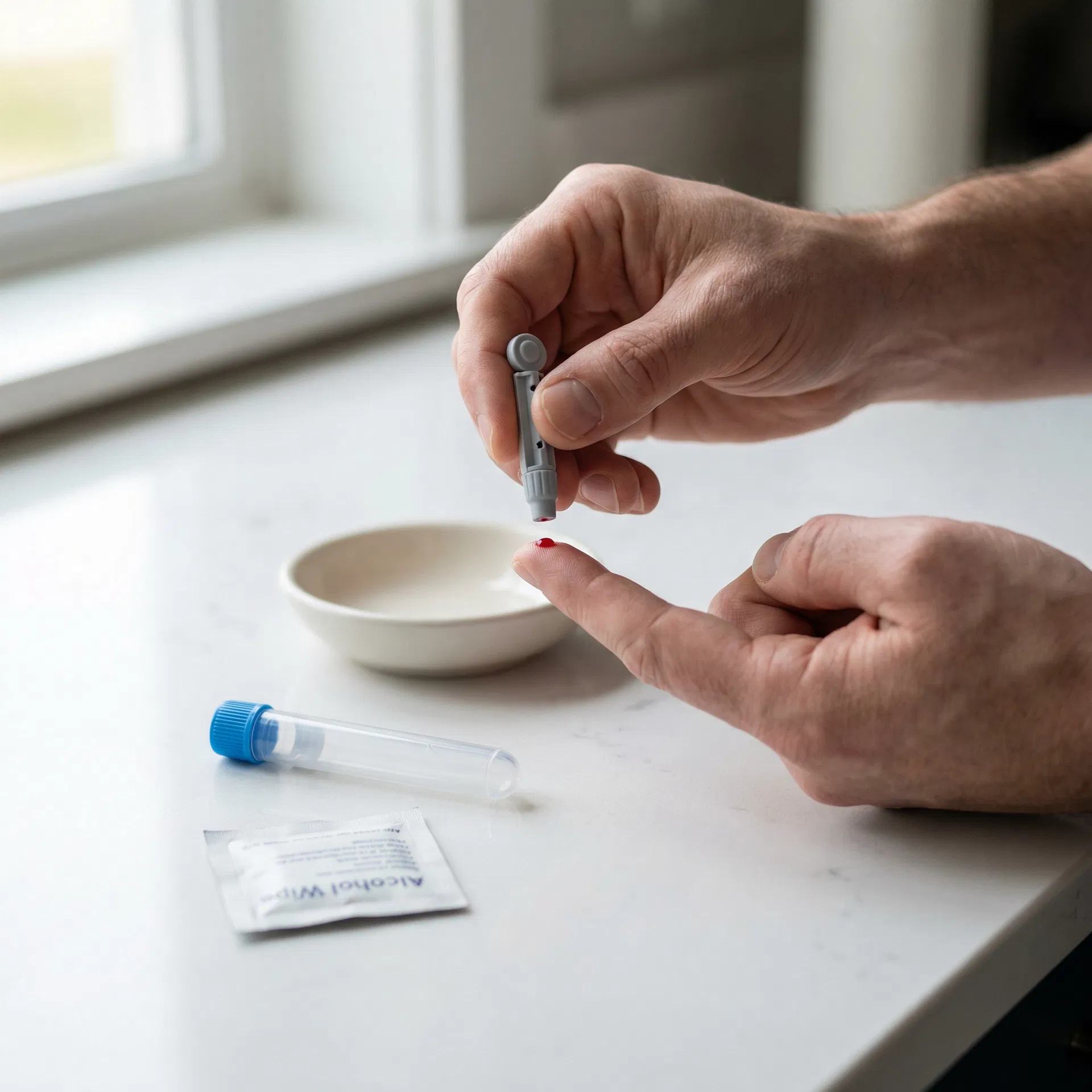
Collect your sample
Follow the simple instructions in your kit — whether it's a finger-prick at home or a venous draw at a partner clinic.
 04
04
Insights delivered
Clear, easy-to-understand results sent to you online with actionable health guidance.
Frequently asked questions
This test measures Platelet Count, MPV (Mean Platelet Volume), Ferritin, Haemoglobin, Haematocrit. Check the full biomarker list on this page for detailed descriptions of each marker and what it tells you about your health.
Check the Special Instructions section on this page. As a general rule, if the panel includes cholesterol, triglycerides, glucose, or insulin, fast for 8-12 hours. For most hormone, vitamin, and antibody tests, fasting is not required. Morning collection (7-10am) is preferred.
Follow the instructions in your kit. For finger-prick tests: warm your hands, use the lancet as directed, fill the tube to the marked line. For venous tests: attend a phlebotomy clinic with your laboratory request form. Post your sample the same day — avoid Fridays and bank holidays.
Results are typically available within the timeframe shown on this page. You will receive a notification when ready to view online. Results include reference ranges and guidance.
You may also be interested in

NAD+ Blood Test
A 2-biomarker venous blood panel covering cellular energy & longevity — ideal for optimising cellular energy production and longevity.
Results estimated in 7–10 working days
2 biomarkers

Vitamin B2 (riboflavin) Blood Test
A single-biomarker venous blood test covering vitamins — ideal for investigating B vitamin deficiency or nervous system symptoms.
Results estimated in 9 working days
1 biomarkers

Vitamin B9 (folic acid) Blood Test Kit
A single-biomarker venous blood test covering vitamins — ideal for investigating folate deficiency, fatigue, or pre-conception health.
Results estimated in 2 working days
1 biomarkers

Driver's Tiredness Blood Test
A 6-biomarker venous blood panel covering inflammation, iron status, thyroid hormones and vitamins — ideal for investigating ongoing tiredness, low energy, or suspected medical causes.
Results estimated in 5 working days
6 biomarkers