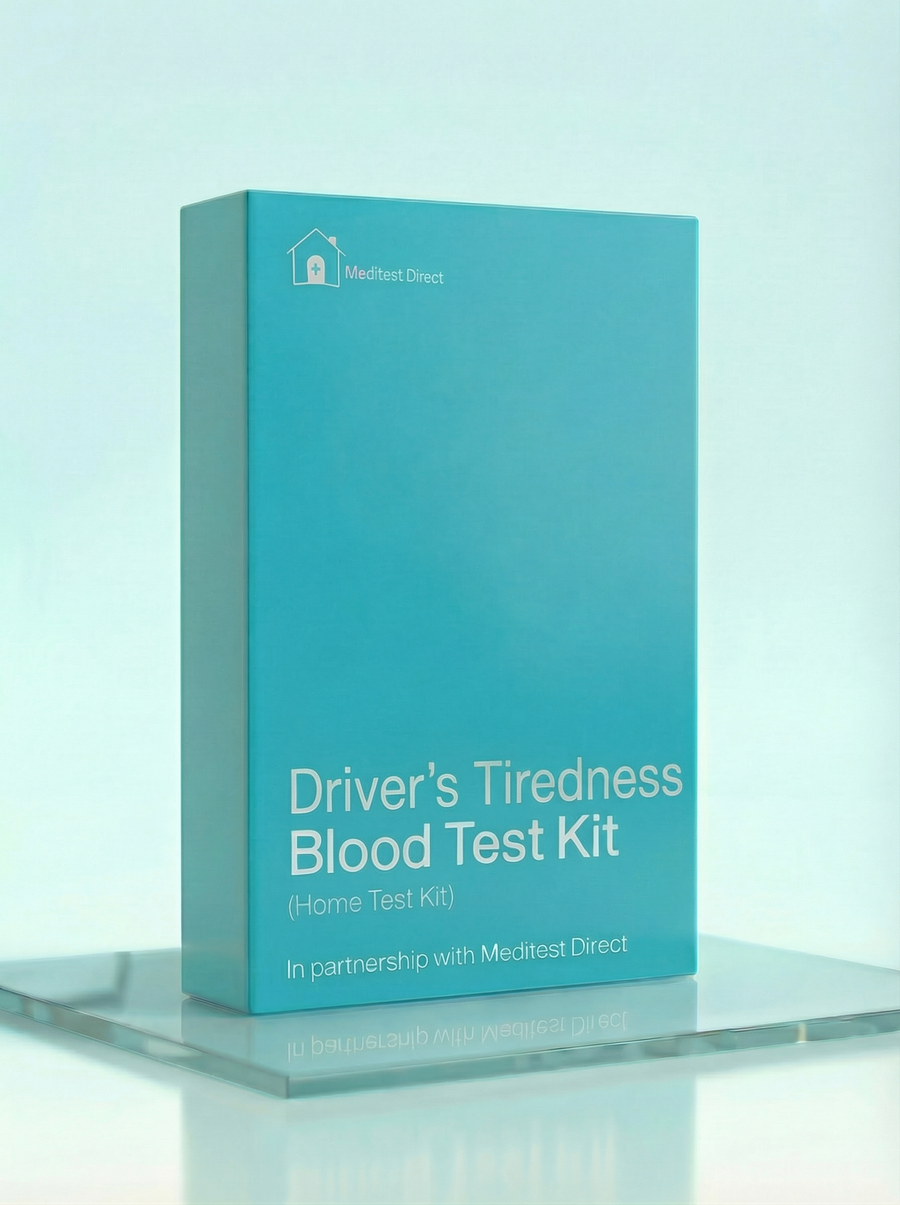
Driver's Tiredness Blood Test
£68 ✓ In Stock
Your sample goes to a UKAS accredited laboratory meeting ISO 15189 standards.
After you receive your order confirmation email, please reply with your date of birth.
How it works
Your testing journey
From order to results in four simple steps. Full transparency on where each step happens and what it costs.

Receive your kit by post
Dispatched same working day if ordered before 3pm. Royal Mail Tracked delivery, typically 1–3 working days. 90% of kits arrive within 24 hours.

Visit a partner clinic
Book a phlebotomy appointment at one of our 365+ UK partner clinics. Take your kit with you — the phlebotomist will collect your sample using the materials provided.
Phlebotomy fee applies (paid at clinic)
Venous blood draw at a clinic
A trained phlebotomist takes a small blood sample from a vein in your arm using the vacutainers provided in your kit. The appointment takes around 10 minutes.

Return by prepaid envelope
Seal your sample in the biohazard bag provided and drop it in any Royal Mail postbox using the prepaid Tracked 24 envelope. Post Monday–Thursday for best results.
Venous Blood Collection Kit
This kit is sent to you and taken to your chosen clinic. The phlebotomist will collect your sample using the materials provided.
- 1Vacutainer blood collection tubes
- 2Needle and butterfly needle
- 3Tourniquet
- 4Alcohol swab
- 5Cotton wool and gauze
- 6Adhesive plaster
- 7Biohazard specimen bag
- 8Prepaid return envelope (Royal Mail Tracked 24)
- 9Laboratory request form
- 10Instructions for the phlebotomist
TSH is produced by the pituitary gland in the brain to control the thyroid gland. It works as part of a feedback loop: when thyroid hormone levels are low, the pituitary releases more TSH to stimulate the thyroid to produce more; when thyroid levels are high, TSH production decreases. TSH is therefore the most sensitive initial marker of thyroid dysfunction—it often becomes abnormal before the thyroid hormones themselves move out of range. High TSH indicates the pituitary is working harder because thyroid hormone levels are low (hypothyroidism, or underactive thyroid). Hypothyroidism is a classic cause of fatigue, along with other symptoms such as weight gain, feeling cold, constipation, dry skin, and mental sluggishness. It's common (affecting about 2% of the UK population, more in women and with age) and readily treatable with thyroid hormone replacement. Low TSH indicates thyroid hormone levels are too high (hyperthyroidism)—though this typically causes different symptoms including anxiety, tremor, and weight loss, fatigue can also occur. TSH is best measured in the morning when levels are highest. Results outside the normal range may need a follow-up with your GP.
Free T4 (free thyroxine) measures the unbound, active portion of the main thyroid hormone circulating in your blood. Most T4 is bound to carrier proteins and inactive; only the 'free' T4 is available to enter cells and affect metabolism. T4 is produced directly by the thyroid gland and is converted to the more active T3 in tissues when needed. Measuring free T4 alongside TSH helps confirm and characterise thyroid dysfunction. In primary hypothyroidism (underactive thyroid), TSH is elevated and free T4 is low—the pituitary is trying hard but the thyroid can't respond adequately. In 'subclinical' hypothyroidism, TSH is elevated but free T4 remains in the normal range—this can still cause symptoms in some people and may progress to overt hypothyroidism. In hyperthyroidism, TSH is suppressed and free T4 is elevated. The combination of TSH and free T4 gives a clear picture of thyroid status and helps determine whether treatment is needed. For drivers experiencing fatigue, identifying even mild thyroid dysfunction can be the key to restoring normal energy levels. Results outside the normal range may need a follow-up with your GP.
Ferritin is the protein that stores iron in your body, making it the best single marker of total iron stores. Iron is essential for oxygen transport (via haemoglobin), energy production in cells, and brain function. Low ferritin is one of the most common and easily treatable causes of fatigue—yet it's frequently missed because people can have depleted iron stores and significant fatigue before they become formally anaemic (before haemoglobin drops). This means you can feel exhausted but be told your blood count is 'normal.' Symptoms of low iron include fatigue, difficulty concentrating, brain fog, breathlessness on exertion, restless legs, and feeling cold. Many experts recommend ferritin levels above 50-70 µg/L for optimal energy, though laboratory 'normal' ranges often start much lower. Women who menstruate are at higher risk of iron deficiency, but men can also become deficient, particularly if diet is poor or there's unrecognised blood loss (such as from gastrointestinal conditions). However, ferritin is also an acute phase reactant—it rises with inflammation, infection, or liver disease—so elevated ferritin doesn't always mean good iron stores. It can mask underlying deficiency or indicate other conditions. Results outside the normal range may need a follow-up with your GP.
Active B12 (holotranscobalamin) measures the biologically available form of vitamin B12 that your cells can actually use, making it a more sensitive and earlier marker of B12 deficiency than total B12. Vitamin B12 is essential for nerve function, red blood cell formation, DNA synthesis, and energy production at the cellular level. It's one of the most common vitamin deficiencies and is frequently under-diagnosed. B12 deficiency causes fatigue that can be profound—along with other symptoms including weakness, breathlessness, pins and needles or numbness in hands and feet, balance problems, cognitive changes ('brain fog'), mood changes, and a sore tongue. If left untreated, B12 deficiency can cause permanent nerve damage. Risk factors include vegetarian/vegan diet (B12 is found almost exclusively in animal products), older age (reduced absorption), pernicious anaemia (an autoimmune condition destroying intrinsic factor needed for B12 absorption), metformin use, and certain gastrointestinal conditions (Crohn's, coeliac, gastric surgery). For drivers, the fatigue and concentration difficulties caused by B12 deficiency can significantly affect alertness and safety. The good news is that B12 deficiency is easily treated with supplements or injections. Results outside the normal range may need a follow-up with your GP.
Vitamin D is essential for calcium absorption, bone health, muscle function, immune system regulation, and increasingly recognised as important for energy and mood. Despite being called a vitamin, it functions as a hormone and the body produces it when skin is exposed to UVB sunlight. However, in the UK, sun exposure is insufficient during autumn and winter to produce adequate vitamin D, and vehicle glass blocks UVB rays entirely—meaning professional drivers are at high risk of deficiency regardless of season. Vitamin D deficiency commonly causes fatigue, muscle weakness and aches, bone pain, and low mood—symptoms that are easily attributed to 'just being tired' but actually have a treatable cause. Studies have shown that correcting vitamin D deficiency can significantly improve fatigue and quality of life. Levels below 25 nmol/L indicate deficiency; 25-50 nmol/L is insufficient; above 50 nmol/L is adequate; and above 75 nmol/L is considered optimal by many experts. Dietary sources provide only small amounts. For most UK adults, particularly those with limited sun exposure (which includes drivers spending hours behind glass), regular supplementation is needed—typically 1000-4000 IU daily depending on current levels. Results outside the normal range may need a follow-up with your GP.
High-sensitivity CRP (hs-CRP) measures low levels of C-reactive protein, an inflammation marker produced by the liver in response to inflammation anywhere in the body. Chronic low-grade inflammation can cause persistent fatigue even when there's no obvious illness—your body is constantly in a mild 'fight mode' that drains energy. Elevated hs-CRP in someone experiencing fatigue can point toward underlying inflammatory conditions that warrant investigation. Beyond fatigue, hs-CRP is also a marker of cardiovascular risk. The low-grade chronic inflammation detected by hs-CRP is thought to damage blood vessels and contribute to atherosclerosis. Risk categories: below 1 mg/L is lower cardiovascular risk; 1-3 mg/L is intermediate risk; above 3 mg/L is higher risk. Values above 10 mg/L usually indicate acute inflammation (recent infection, injury) rather than chronic inflammation—if you've been unwell recently, the test should be repeated when you've recovered. Factors that can elevate hs-CRP include obesity, smoking, chronic conditions, and poor sleep—many of which are relevant to professional drivers. Results outside the normal range may need a follow-up with your GP.
This test is for screening and information only — it is not a medical diagnosis or professional advice. Please have your results reviewed by a qualified doctor or healthcare provider who can explain what they mean for your personal health situation. If your results show anything outside the normal range, or if you're worried about your health, see your doctor as soon as you can. Don't change any medications or treatments based on these results alone — always talk to your healthcare provider first.
NO CLINICS, NO QUEUES, NO HASSLE
Four steps to clarity
 01
01
Pick your panel
Browse over 200 clinically designed test kits and choose the one that fits your goals.
 02
02
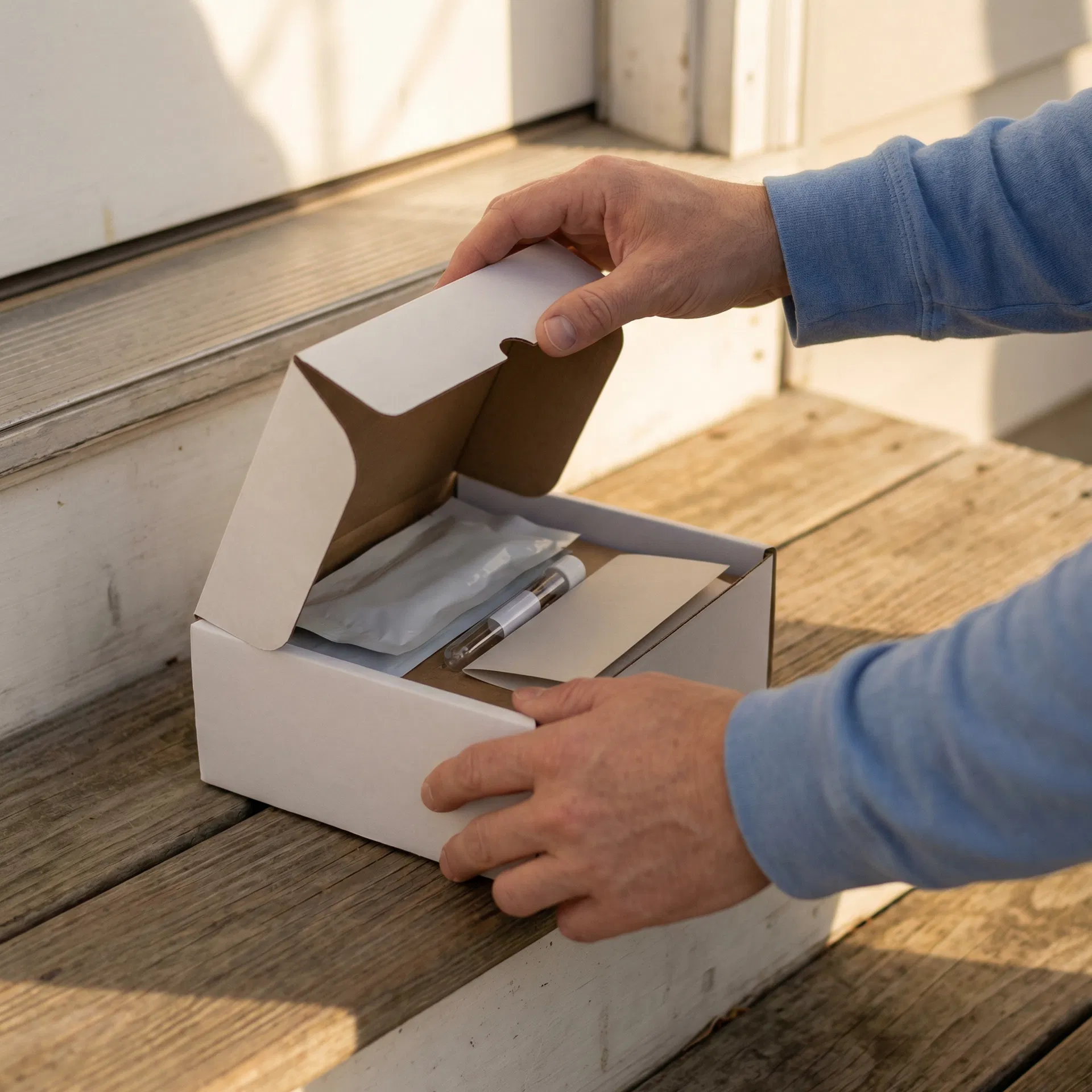
Kit to your door
Everything you need arrives in discreet packaging with step-by-step instructions inside.
 03
03
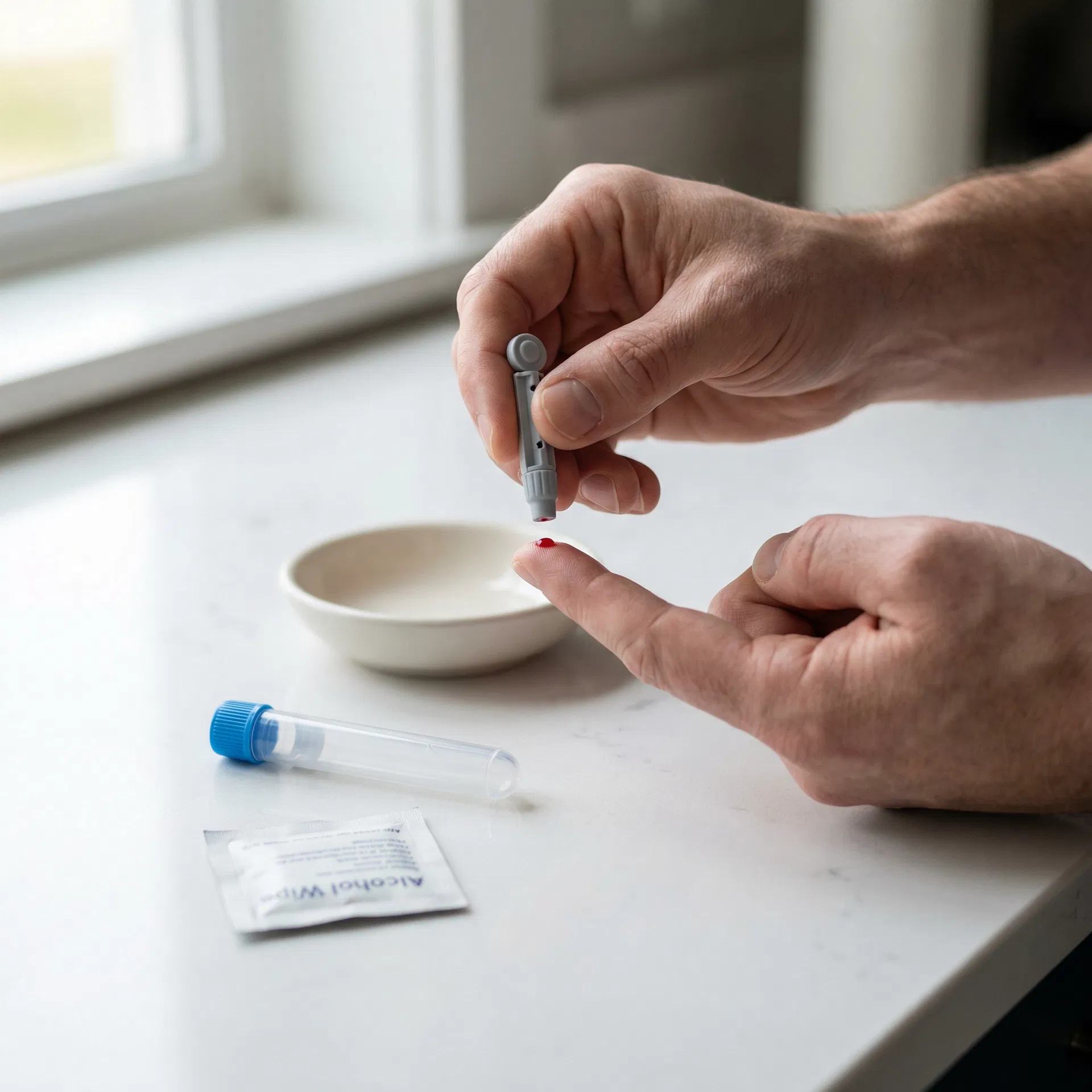
Collect your sample
Follow the simple instructions in your kit — whether it's a finger-prick at home or a venous draw at a partner clinic.
 04
04
Insights delivered
Clear, easy-to-understand results sent to you online with actionable health guidance.
Frequently asked questions
This test measures hs-CRP (High-Sensitivity C-Reactive Protein), Ferritin, TSH (Thyroid Stimulating Hormone), Free Thyroxine (Free T4), Vitamin B12 (Active). Check the full biomarker list on this page for detailed descriptions of each marker and what it tells you about your health.
Check the Special Instructions section on this page. As a general rule, if the panel includes cholesterol, triglycerides, glucose, or insulin, fast for 8-12 hours. For most hormone, vitamin, and antibody tests, fasting is not required. Morning collection (7-10am) is preferred.
Follow the instructions in your kit. For finger-prick tests: warm your hands, use the lancet as directed, fill the tube to the marked line. For venous tests: attend a phlebotomy clinic with your laboratory request form. Post your sample the same day — avoid Fridays and bank holidays.
Results are typically available within the timeframe shown on this page. You will receive a notification when ready to view online. Results include reference ranges and guidance.
You may also be interested in

Anaemia Profile Blood Test
A 21-biomarker venous blood panel covering red blood cells, white blood cells, clotting status and other key health markers — ideal for investigating fatigue, brain fog, tingling, or pernicious anaemia.
Results estimated in 2 working days
21 biomarkers

Advanced Tiredness and Fatigue Blood Test Kit
A 26-biomarker venous blood panel covering clotting status, diabetes, inflammation and other key health markers — ideal for investigating ongoing tiredness, low energy, or suspected medical causes.
Results estimated in 3 working days
26 biomarkers

Advanced Thyroid Function Blood Test Kit
A 10-biomarker venous blood panel covering thyroid hormones, autoimmunity, vitamins and other key health markers — ideal for comprehensive thyroid assessment including antibodies.
Results estimated in 2 working days
10 biomarkers

Ultimate Performance Blood Test Kit
A 56-biomarker venous blood panel covering cholesterol status, diabetes, liver function and other key health markers — ideal for athletes and active people tracking training adaptation, recovery, and performance.
Results estimated in 3 working days
56 biomarkers