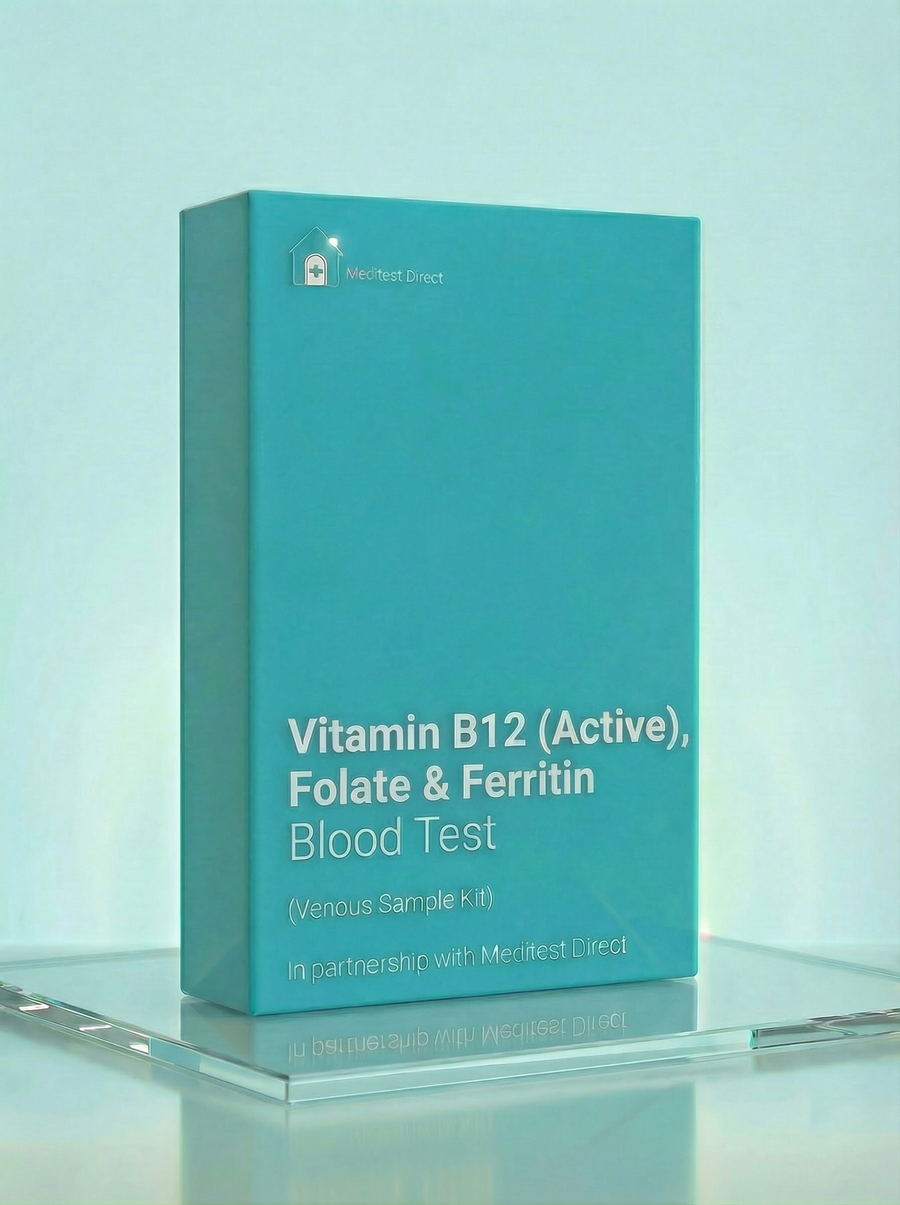
Vitamin B12 (Active), Folate & Ferritin Blood Test
£78 ✓ In Stock
Your sample goes to a UKAS accredited laboratory meeting ISO 15189 standards.
After you receive your order confirmation email, please reply with your date of birth.
How it works
Your testing journey
From order to results in four simple steps. Full transparency on where each step happens and what it costs.

Receive your kit by post
Dispatched same working day if ordered before 3pm. Royal Mail Tracked delivery, typically 1–3 working days. 90% of kits arrive within 24 hours.

Visit a partner clinic
Book a phlebotomy appointment at one of our 365+ UK partner clinics. Take your kit with you — the phlebotomist will collect your sample using the materials provided.
Phlebotomy fee applies (paid at clinic)
Venous blood draw at a clinic
A trained phlebotomist takes a small blood sample from a vein in your arm using the vacutainers provided in your kit. The appointment takes around 10 minutes.

Return by prepaid envelope
Seal your sample in the biohazard bag provided and drop it in any Royal Mail postbox using the prepaid Tracked 24 envelope. Post Monday–Thursday for best results.
Venous Blood Collection Kit
This kit is sent to you and taken to your chosen clinic. The phlebotomist will collect your sample using the materials provided.
- 1Vacutainer blood collection tubes
- 2Needle and butterfly needle
- 3Tourniquet
- 4Alcohol swab
- 5Cotton wool and gauze
- 6Adhesive plaster
- 7Biohazard specimen bag
- 8Prepaid return envelope (Royal Mail Tracked 24)
- 9Laboratory request form
- 10Instructions for the phlebotomist
Ferritin is a protein that stores iron in your body and serves as the most reliable indicator of your total iron reserves. It reflects how much iron is available for producing haemoglobin—the protein in red blood cells that carries oxygen throughout your body. Low ferritin levels indicate depleted iron stores, which can occur before anaemia develops, causing symptoms such as fatigue, weakness, shortness of breath, pale skin, and reduced immune function. Women of reproductive age, pregnant women, vegetarians, vegans, and endurance athletes are at higher risk of iron deficiency. Elevated ferritin can indicate iron overload (haemochromatosis), inflammation, infection, or liver disease—ferritin rises as part of the body's acute phase response. Because ferritin is affected by inflammation, your GP may request additional tests (such as CRP) if your ferritin is unexpectedly high. Results outside the normal range should be discussed with your healthcare provider.
Active vitamin B12, also known as holotranscobalamin, is the biologically available form of vitamin B12 that your cells can actually use. Unlike total B12 tests (which measure both active and inactive forms), active B12 provides a more accurate picture of your true vitamin B12 status. Vitamin B12 plays a crucial role in red blood cell formation, DNA synthesis, and maintaining healthy nerve function. Deficiency can lead to megaloblastic anaemia (where red blood cells become abnormally large), fatigue, weakness, numbness or tingling in the hands and feet, memory problems, and mood changes. People at higher risk of deficiency include vegans, vegetarians, older adults, those with digestive conditions (such as coeliac disease, Crohn's disease, or atrophic gastritis), and people taking certain medications including metformin and proton pump inhibitors. Low levels should be discussed with your GP, who may recommend further testing or supplementation.
Folate (vitamin B9) is an essential water-soluble vitamin that your body cannot produce on its own and must obtain from food or supplements. It is vital for DNA synthesis, cell division, and red blood cell formation. Folate works closely with vitamin B12, and deficiency in either can cause similar symptoms including fatigue, weakness, and megaloblastic anaemia. Folate is particularly important during pregnancy, where adequate levels help prevent neural tube defects such as spina bifida in the developing baby—this is why women planning pregnancy are advised to take folic acid supplements. Good dietary sources include leafy green vegetables, legumes, fortified cereals, and citrus fruits. Low folate levels can result from inadequate dietary intake, malabsorption conditions, certain medications (including some anticonvulsants and methotrexate), or increased requirements during pregnancy. If your folate is low, your GP may recommend dietary changes or supplementation.
This test is for screening and information only — it is not a medical diagnosis or professional advice. Please have your results reviewed by a qualified doctor or healthcare provider who can explain what they mean for your personal health situation. If your results show anything outside the normal range, or if you're worried about your health, see your doctor as soon as you can. Don't change any medications or treatments based on these results alone — always talk to your healthcare provider first.
NO CLINICS, NO QUEUES, NO HASSLE
Four steps to clarity
 01
01
Pick your panel
Browse over 200 clinically designed test kits and choose the one that fits your goals.
 02
02
Kit to your door
Everything you need arrives in discreet packaging with step-by-step instructions inside.
 03
03
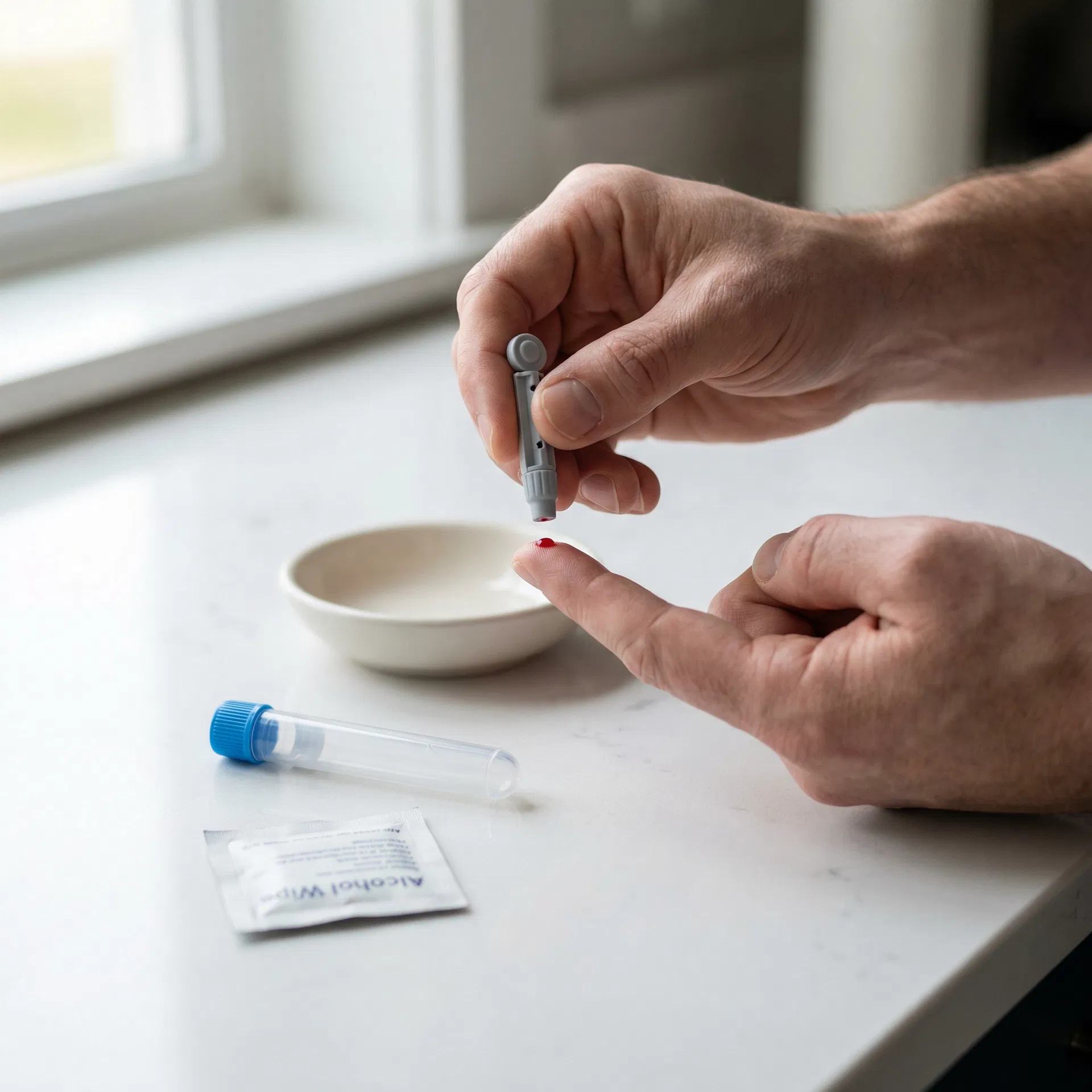
Collect your sample
Follow the simple instructions in your kit — whether it's a finger-prick at home or a venous draw at a partner clinic.
 04
04
Insights delivered
Clear, easy-to-understand results sent to you online with actionable health guidance.
Frequently asked questions
No. Vitamin levels are not significantly affected by recent food intake.
Total B12 includes forms your cells cannot use. Active B12 (holotranscobalamin) measures only B12 available for cellular use — a more sensitive marker of true deficiency.
Yes. B12 supplements taken within 24-48 hours can significantly elevate results. For a baseline, stop supplements 48 hours before testing.
Fatigue, weakness, tingling or numbness in hands/feet, balance problems, cognitive difficulties, mouth ulcers, and sore red tongue. Deficiency is more common in vegans, over-50s, and people taking metformin or PPIs.
Both are needed for red blood cell production. Deficiency of either causes similar anaemia. Testing both simultaneously distinguishes between them, which matters because treating folate without correcting B12 can mask neurological damage.
Iron deficiency is the most common cause of anaemia worldwide and shares symptoms with B12/folate deficiency. Testing all three together identifies the most common nutritional causes of anaemia in one test.
You may also be interested in

Advanced Vitamins Blood Test
A 10-biomarker venous blood panel covering fat-soluble vitamins and b vitamins — ideal for investigating relevant symptoms or monitoring health.
Results estimated in 3 working days
10 biomarkers
Venous collection
Ultimate Performance Blood Test Kit
A 56-biomarker venous blood panel covering cholesterol status, diabetes, liver function and other key health markers — ideal for athletes and active people tracking training adaptation, recovery, and performance.
Results estimated in 3 working days
56 biomarkers

Driver's Tiredness Blood Test
A 6-biomarker venous blood panel covering inflammation, iron status, thyroid hormones and vitamins — ideal for investigating ongoing tiredness, low energy, or suspected medical causes.
Results estimated in 5 working days
6 biomarkers