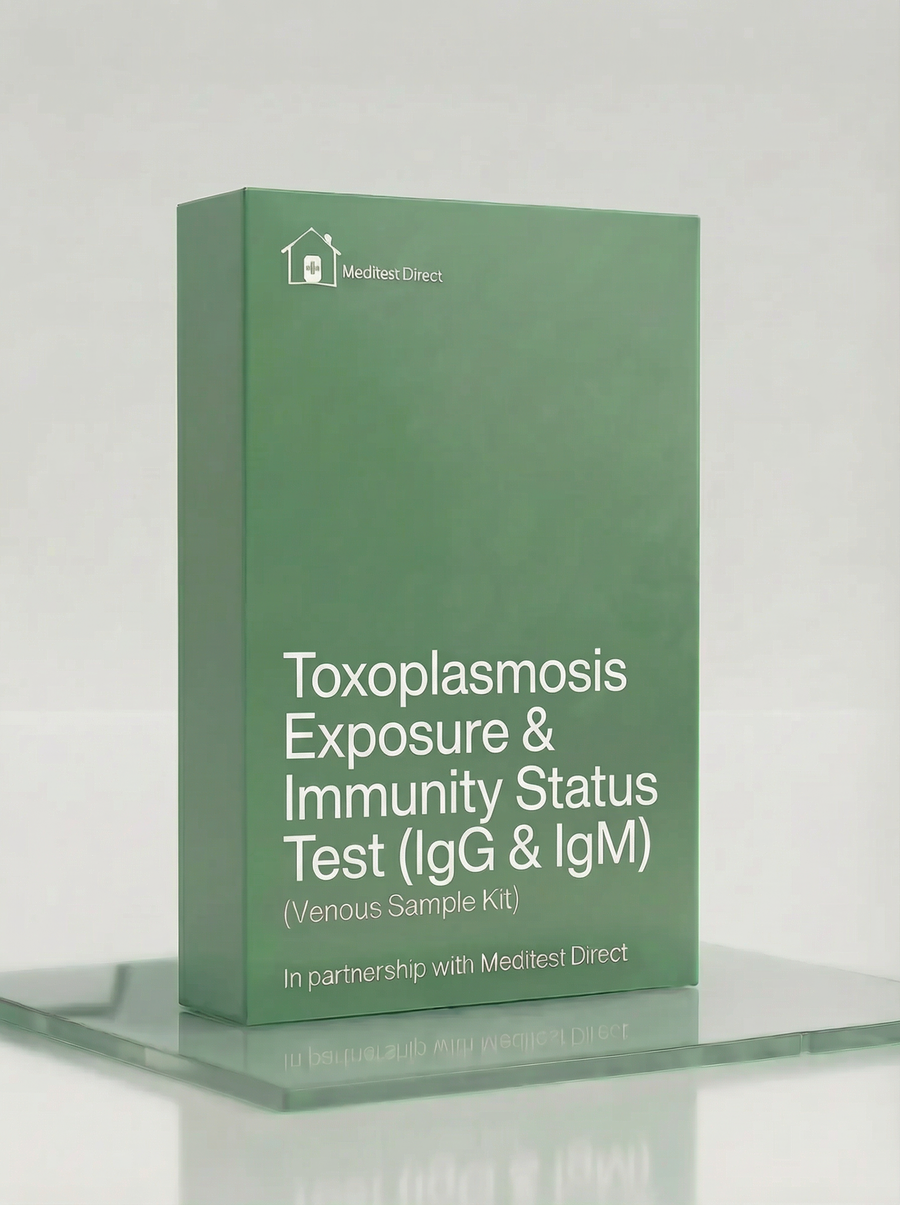
Toxoplasmosis Exposure & Immunity Status Test (IgG & IgM)
£98 ✓ In Stock
Your sample goes to a UKAS accredited laboratory meeting ISO 15189 standards.
After you receive your order confirmation email, please reply with your date of birth.
How it works
Your testing journey
From order to results in four simple steps. Full transparency on where each step happens and what it costs.

Receive your kit by post
Dispatched same working day if ordered before 3pm. Royal Mail Tracked delivery, typically 1–3 working days. 90% of kits arrive within 24 hours.

Visit a partner clinic
Book a phlebotomy appointment at one of our 365+ UK partner clinics. Take your kit with you — the phlebotomist will collect your sample using the materials provided.
Phlebotomy fee applies (paid at clinic)
Venous blood draw at a clinic
A trained phlebotomist takes a small blood sample from a vein in your arm using the vacutainers provided in your kit. The appointment takes around 10 minutes.

Return by prepaid envelope
Seal your sample in the biohazard bag provided and drop it in any Royal Mail postbox using the prepaid Tracked 24 envelope. Post Monday–Thursday for best results.
Venous Blood Collection Kit
This kit is sent to you and taken to your chosen clinic. The phlebotomist will collect your sample using the materials provided.
- 1Vacutainer blood collection tubes
- 2Needle and butterfly needle
- 3Tourniquet
- 4Alcohol swab
- 5Cotton wool and gauze
- 6Adhesive plaster
- 7Biohazard specimen bag
- 8Prepaid return envelope (Royal Mail Tracked 24)
- 9Laboratory request form
- 10Instructions for the phlebotomist
Toxoplasma IgM antibodies are produced by your immune system during an active or recent infection with Toxoplasma gondii, a parasite commonly found in cat faeces, contaminated soil, and undercooked meat. These IgM antibodies typically appear within the first week or two of infection and usually decline over several months, though they can occasionally persist longer. What Positive Means: A positive Toxoplasma IgM result indicates recent or current toxoplasma infection. In a pregnant woman, this is a serious finding that requires immediate medical attention, as toxoplasmosis during pregnancy can cause miscarriage, stillbirth, or severe birth defects including brain damage, eye problems, and organ abnormalities. What Negative Means: A negative Toxoplasma IgM result suggests no recent toxoplasma infection. However, if tested very early after exposure, antibodies may not yet have developed. If clinical suspicion remains high, repeat testing may be recommended. Pregnancy and Toxoplasmosis: Toxoplasma infection during pregnancy can be transmitted to the developing baby (congenital toxoplasmosis). The risk and severity depend on when during pregnancy the infection occurs—infection earlier in pregnancy tends to be more severe but less likely to transmit, while later infection transmits more easily but may cause less damage. Early detection allows for antibiotic treatment that may reduce transmission risk. False Positives: Occasionally, IgM tests may produce false-positive results. Positive results are typically confirmed with additional testing, including IgG avidity testing, to determine the timing of infection more precisely.
Toxoplasma IgG antibodies develop a few weeks after infection with Toxoplasma gondii and remain detectable for life, indicating past infection and immunity. Unlike IgM antibodies which signal recent infection, IgG antibodies show that your immune system has encountered the parasite before and has developed lasting protection against it. What Positive Means: A positive Toxoplasma IgG result indicates that you have been infected with Toxoplasma gondii at some point in the past. If IgM is negative, this typically represents old infection and immunity. For women planning pregnancy or who are pregnant, the presence of Toxoplasma IgG without IgM is reassuring—it indicates you're already immune and a new infection won't pose a risk to your baby. What Negative Means: A negative Toxoplasma IgG result means you have no evidence of past toxoplasma infection and are not immune. If you are pregnant or planning pregnancy, you should take precautions to avoid infection: avoid handling cat litter, wear gloves when gardening, wash hands thoroughly after handling raw meat, and ensure all meat is cooked thoroughly. IgG with IgM Positive: The presence of both IgG and IgM antibodies suggests a recent infection. In this case, IgG avidity testing is typically performed to help determine when the infection occurred. Low avidity IgG suggests infection within the past 3–4 months, while high avidity IgG suggests infection occurred more than 4 months ago. Immunocompromised Patients: In individuals with weakened immune systems, past toxoplasma infection (indicated by positive IgG) can reactivate and cause serious illness, including brain abscesses (toxoplasmic encephalitis). Regular monitoring may be recommended for immunocompromised patients with positive IgG.
This test is for screening and information only — it is not a medical diagnosis or professional advice. Please have your results reviewed by a qualified doctor or healthcare provider who can explain what they mean for your personal health situation. If your results show anything outside the normal range, or if you're worried about your health, see your doctor as soon as you can. Don't change any medications or treatments based on these results alone — always talk to your healthcare provider first.
NO CLINICS, NO QUEUES, NO HASSLE
Four steps to clarity
 01
01
Pick your panel
Browse over 200 clinically designed test kits and choose the one that fits your goals.
 02
02
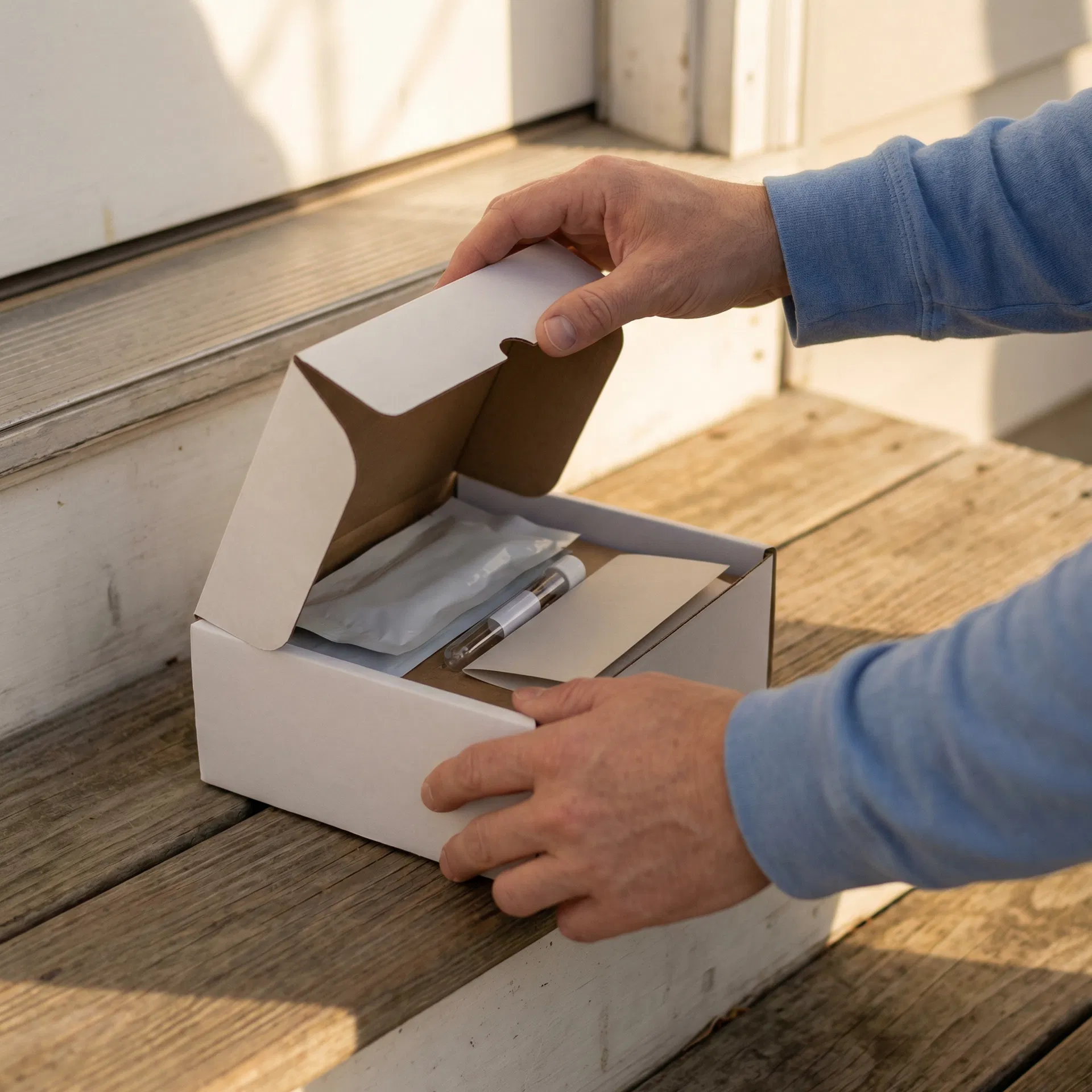
Kit to your door
Everything you need arrives in discreet packaging with step-by-step instructions inside.
 03
03
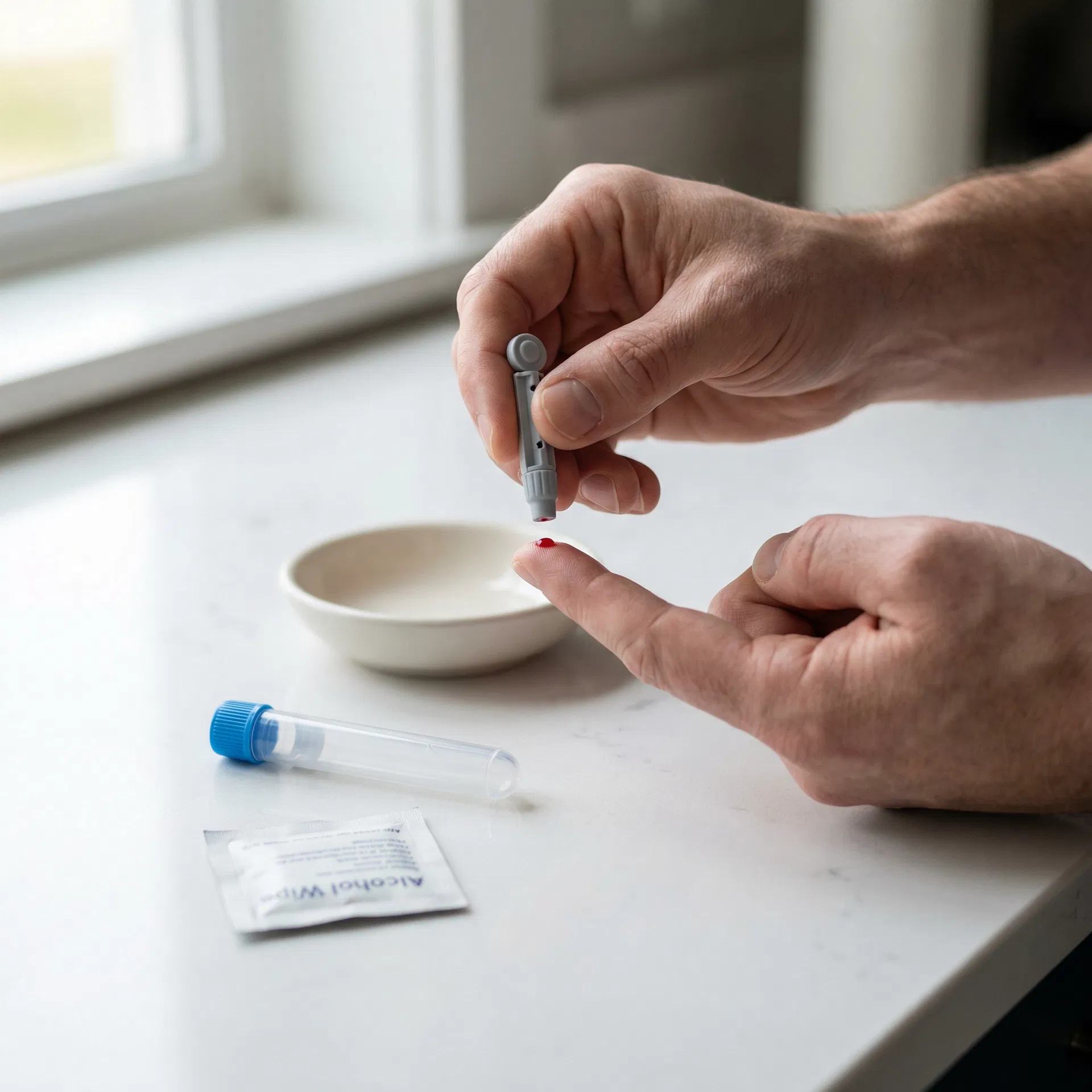
Collect your sample
Follow the simple instructions in your kit — whether it's a finger-prick at home or a venous draw at a partner clinic.
 04
04
Insights delivered
Clear, easy-to-understand results sent to you online with actionable health guidance.
Frequently asked questions
This test measures Toxoplasma IgM Antibodies, Toxoplasma IgG Antibodies. Check the full biomarker list on this page for details.
Check Special Instructions on this page. General rule: fast 8-12 hours if cholesterol/glucose/insulin included. Most hormone, vitamin, and antibody tests do not require fasting. Morning collection (7-10am) preferred.
Follow kit instructions. Finger-prick: warm hands, use lancet as directed, fill tube to marked line. Venous: attend phlebotomy with lab form. Post same day, avoid Fridays/bank holidays.
Within the timeframe shown on this page. Notification sent when ready to view online.
You may also be interested in

Ultra Advanced Multisite STI Screen with Hepatitis B & C
A 13-biomarker venous blood,urine,swab panel covering blood tests (serology), 7 sti pcr panel and additional multisite testing — ideal for screening for current or past infection, vaccine response, or pre-treatment monitoring.
Results estimated in 3 working days
13 biomarkers

Hepatitis B Profile Blood Test
A 3-biomarker venous blood panel covering hepatitis b serology — ideal for screening for current or past infection, vaccine response, or pre-treatment monitoring.
Results estimated in 3 working days
3 biomarkers

Autoantibodies Profile 2 Blood Test
A 5-biomarker venous blood panel covering autoimmunity — ideal for investigating suspected autoimmune conditions.
Results estimated in 10 working days
5 biomarkers

Allergy Screen (Essential Foods) Blood Test
An essential food allergy panel testing for the most common food allergens responsible for IgE-mediated reactions — covering the key foods that account for the majority of food allergies in both children and adults.
Results estimated in 2 working days
9 biomarkers