
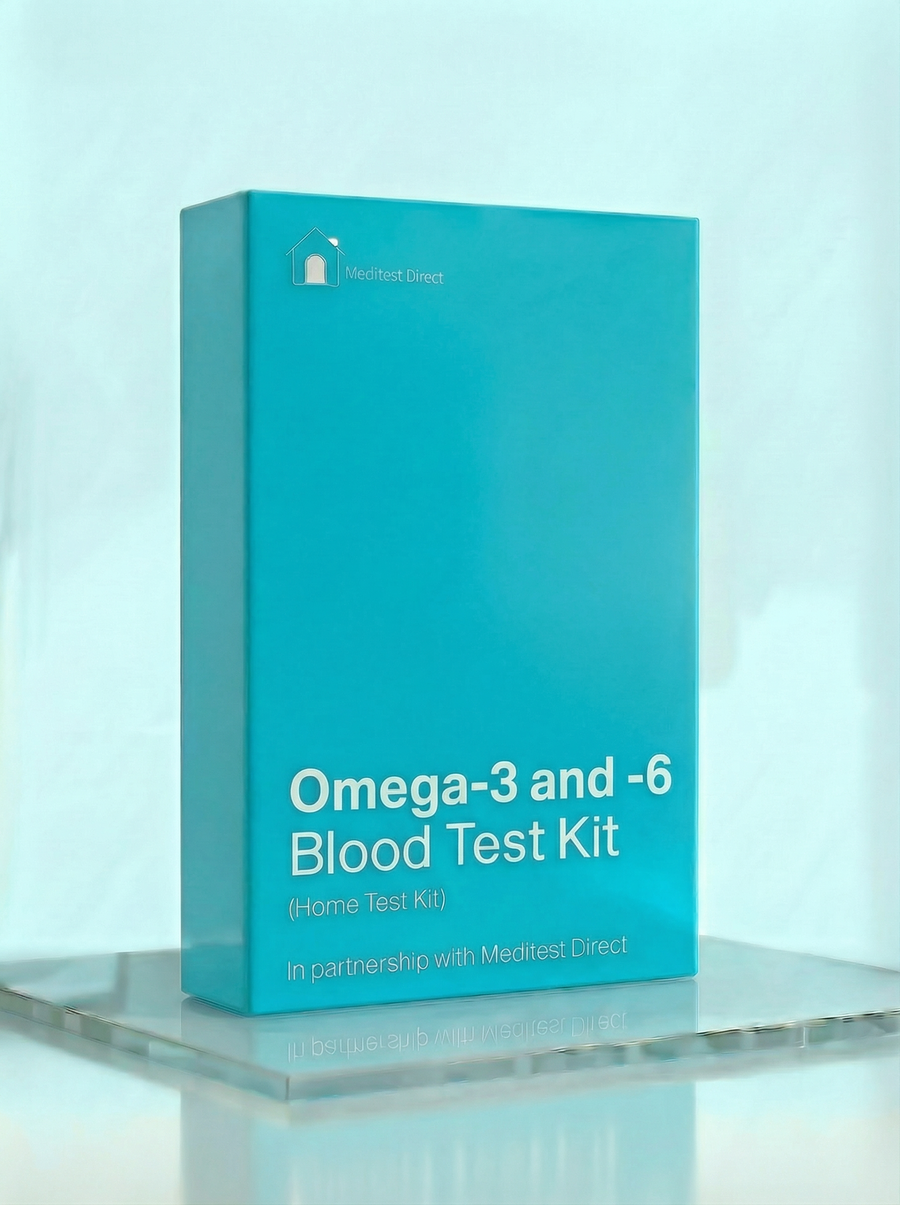
Omega-3 and -6 Blood Test Kit
£98 ✓ In Stock
Your sample goes to a UKAS accredited laboratory meeting ISO 15189 standards.
After you receive your order confirmation email, please reply with your date of birth.
How it works
Your testing journey
From order to results in four simple steps. Full transparency on where each step happens and what it costs.

Receive your kit by post
Dispatched same working day if ordered before 3pm. Royal Mail Tracked delivery, typically 1–3 working days. 90% of kits arrive within 24 hours.

Visit a partner clinic
Book a phlebotomy appointment at one of our 365+ UK partner clinics. Take your kit with you — the phlebotomist will collect your sample using the materials provided.
Phlebotomy fee applies (paid at clinic)
Venous blood draw at a clinic
A trained phlebotomist takes a small blood sample from a vein in your arm using the vacutainers provided in your kit. The appointment takes around 10 minutes.

Return by prepaid envelope
Seal your sample in the biohazard bag provided and drop it in any Royal Mail postbox using the prepaid Tracked 24 envelope. Post Monday–Thursday for best results.
Venous Blood Collection Kit
This kit is sent to you and taken to your chosen clinic. The phlebotomist will collect your sample using the materials provided.
- 1Vacutainer blood collection tubes
- 2Needle and butterfly needle
- 3Tourniquet
- 4Alcohol swab
- 5Cotton wool and gauze
- 6Adhesive plaster
- 7Biohazard specimen bag
- 8Prepaid return envelope (Royal Mail Tracked 24)
- 9Laboratory request form
- 10Instructions for the phlebotomist
The Omega-3 Index measures the percentage of EPA (eicosapentaenoic acid) and DHA (docosahexaenoic acid) as a proportion of total fatty acids in your red blood cell membranes. These long-chain omega-3 fatty acids are the biologically active forms that provide the cardiovascular, neurological, and anti-inflammatory benefits associated with omega-3 consumption. The Omega-3 Index reflects your average omega-3 intake over the past 2-3 months—the lifespan of red blood cells—making it a stable and reliable marker that isn't affected by your most recent meal. EPA and DHA are found primarily in oily fish (salmon, mackerel, sardines, anchovies, herring), and to a lesser extent in seafood, grass-fed meat, and omega-3 enriched eggs. The body can convert the plant-based omega-3 ALA (alpha-linolenic acid, found in flaxseed, chia seeds, and walnuts) into EPA and DHA, but this conversion is inefficient—typically only 5-10% of ALA is converted to EPA and even less to DHA. This is why vegetarians and vegans often have lower Omega-3 Index levels unless they supplement with algae-derived omega-3s (algae oil contains both EPA and DHA and is the original source from which fish obtain their omega-3s). The Omega-3 Index has been extensively researched as a marker of cardiovascular risk. Studies suggest that an Omega-3 Index above 8% is associated with significantly reduced risk of sudden cardiac death and coronary heart disease compared to levels below 4%. It has been proposed as a cardiovascular risk factor alongside cholesterol, blood pressure, and smoking. Beyond heart health, adequate EPA and DHA support brain function, mood, eye health, joint health, and healthy inflammatory responses throughout the body. Optimal Omega-3 Index is 8% or higher—this is the target zone associated with lowest cardiovascular risk. Levels of 4-8% indicate moderate risk and suggest room for improvement. Levels below 4% are considered high risk and indicate significant omega-3 deficiency. Unfortunately, the average Omega-3 Index in Western populations is around 4-5%—well below optimal. Increasing oily fish consumption to 2-3 portions per week, or taking a quality omega-3 supplement providing at least 500-1000mg combined EPA/DHA daily, can improve your Omega-3 Index over 2-3 months. Results outside the optimal range may benefit from dietary adjustments.
The ARA: EPA ratio compares levels of arachidonic acid (ARA), an omega-6 fatty acid, to EPA, an omega-3 fatty acid. This ratio provides insight into the balance between pro-inflammatory and anti-inflammatory fatty acids in your body. Both omega-6 and omega-3 fatty acids are essential—the body cannot make them and must obtain them from diet—but the ratio between them matters significantly for health and inflammation. Arachidonic acid (ARA) is an omega-6 fatty acid found in meat, eggs, and dairy products. It's also produced in the body from linoleic acid, the omega-6 found abundantly in vegetable oils (corn, soybean, sunflower, safflower). ARA is a precursor to pro-inflammatory eicosanoids (signalling molecules including prostaglandins and leukotrienes) that play important roles in immune response and tissue repair but, when chronically elevated, contribute to inflammation-related diseases. EPA, by contrast, is a precursor to anti-inflammatory eicosanoids (resolvins) that help resolve inflammation and return tissues to homeostasis. In ancestral diets, the omega-6 to omega-3 ratio was approximately 1:1 to 4:1. Modern Western diets, with their high intake of vegetable oils and low intake of oily fish, often have ratios of 15:1 to 20:1 or higher. This dramatic shift toward omega-6 dominance is thought to contribute to the chronic low-grade inflammation associated with cardiovascular disease, metabolic syndrome, autoimmune conditions, and other inflammatory diseases. Rebalancing this ratio by increasing omega-3 intake and moderating omega-6 intake may help reduce inflammatory burden. An optimal ARA: EPA ratio is generally considered to be below 3:1, with some researchers suggesting below 1.5:1 as ideal. Ratios of 3:1 to 10:1 indicate room for improvement, while ratios above 10:1 suggest significant omega-3 deficiency relative to omega-6. To improve your ratio, increase EPA intake (oily fish, fish oil supplements, algae oil) and consider reducing omega-6-rich vegetable oils in favour of olive oil or other cooking methods. The ratio typically improves within 2-3 months of dietary change or supplementation. Results should be interpreted alongside the Omega-3 Index for a complete picture of your essential fatty acid status.
This test is for screening and information only — it is not a medical diagnosis or professional advice. Please have your results reviewed by a qualified doctor or healthcare provider who can explain what they mean for your personal health situation. If your results show anything outside the normal range, or if you're worried about your health, see your doctor as soon as you can. Don't change any medications or treatments based on these results alone — always talk to your healthcare provider first.
NO CLINICS, NO QUEUES, NO HASSLE
Four steps to clarity
 01
01
Pick your panel
Browse over 200 clinically designed test kits and choose the one that fits your goals.
 02
02
Kit to your door
Everything you need arrives in discreet packaging with step-by-step instructions inside.
 03
03
Collect your sample
Follow the simple instructions in your kit — whether it's a finger-prick at home or a venous draw at a partner clinic.
 04
04
Insights delivered
Clear, easy-to-understand results sent to you online with actionable health guidance.
Frequently asked questions
The ratio of omega-3 to omega-6 fatty acids. The modern Western diet is skewed toward omega-6. An imbalanced ratio is associated with increased inflammation and cardiovascular risk.
Increase omega-3 (oily fish 2-3x/week or supplements). Reduce omega-6 (limit processed foods, cook with olive oil instead of sunflower oil). Retest after 3 months.
Fasting is not usually required. Recent meals do not significantly alter the long-term fatty acid profile.
You may also be interested in

Advanced Vitamins Blood Test
A 10-biomarker venous blood panel covering fat-soluble vitamins and b vitamins — ideal for investigating relevant symptoms or monitoring health.
Results estimated in 3 working days
10 biomarkers
Venous collection
Ultimate Performance Blood Test Kit
A 56-biomarker venous blood panel covering cholesterol status, diabetes, liver function and other key health markers — ideal for athletes and active people tracking training adaptation, recovery, and performance.
Results estimated in 3 working days
56 biomarkers

Driver's Tiredness Blood Test
A 6-biomarker venous blood panel covering inflammation, iron status, thyroid hormones and vitamins — ideal for investigating ongoing tiredness, low energy, or suspected medical causes.
Results estimated in 5 working days
6 biomarkers