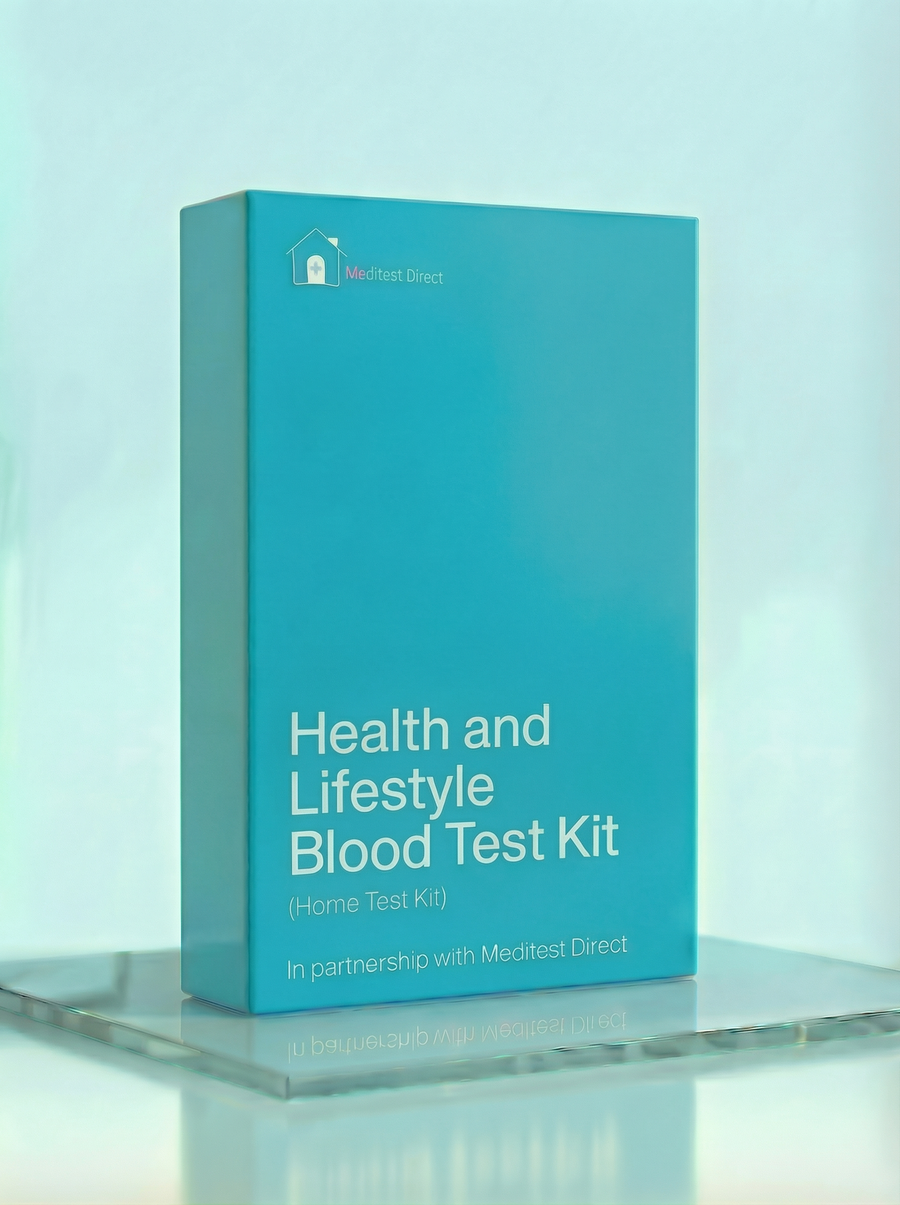
Health and Lifestyle Blood Test Kit
£88 ✓ In Stock
Your sample goes to a UKAS accredited laboratory meeting ISO 15189 standards.
After you receive your order confirmation email, please reply with your date of birth.
How it works
Your testing journey
From order to results in four simple steps. Full transparency on where each step happens and what it costs.

Receive your kit by post
Dispatched same working day if ordered before 3pm. Royal Mail Tracked delivery, typically 1–3 working days. 90% of kits arrive within 24 hours.

Visit a partner clinic
Book a phlebotomy appointment at one of our 365+ UK partner clinics. Take your kit with you — the phlebotomist will collect your sample using the materials provided.
Phlebotomy fee applies (paid at clinic)
Venous blood draw at a clinic
A trained phlebotomist takes a small blood sample from a vein in your arm using the vacutainers provided in your kit. The appointment takes around 10 minutes.

Return by prepaid envelope
Seal your sample in the biohazard bag provided and drop it in any Royal Mail postbox using the prepaid Tracked 24 envelope. Post Monday–Thursday for best results.
Venous Blood Collection Kit
This kit is sent to you and taken to your chosen clinic. The phlebotomist will collect your sample using the materials provided.
- 1Vacutainer blood collection tubes
- 2Needle and butterfly needle
- 3Tourniquet
- 4Alcohol swab
- 5Cotton wool and gauze
- 6Adhesive plaster
- 7Biohazard specimen bag
- 8Prepaid return envelope (Royal Mail Tracked 24)
- 9Laboratory request form
- 10Instructions for the phlebotomist
Total protein measures the combined amount of the two main protein groups in your blood: albumin (produced by the liver) and globulins (including antibodies produced by the immune system and transport proteins). Blood proteins perform numerous essential functions including maintaining fluid balance, transporting nutrients and hormones, supporting immune function, and enabling blood clotting. Low total protein can indicate liver disease (reduced albumin production), kidney disease (protein loss in urine), malnutrition, malabsorption, or conditions causing protein loss. High total protein can occur with dehydration (concentrating proteins), chronic infections, or conditions causing increased globulin production such as multiple myeloma or chronic inflammatory diseases. Total protein is usually interpreted alongside albumin and globulin levels to understand which component is abnormal. Results outside the normal range may need a follow-up with your GP.
Albumin is the most abundant protein in blood, comprising about 60% of total plasma protein. It's synthesised exclusively by the liver and has a half-life of about 20 days. Albumin serves multiple critical functions: maintaining oncotic pressure (keeping fluid within blood vessels rather than leaking into tissues), transporting hormones, fatty acids, drugs, and other substances, and acting as an antioxidant. Low albumin (hypoalbuminaemia) can cause fluid accumulation in tissues (oedema) and has multiple potential causes. Reduced production occurs with liver disease and malnutrition. Increased loss occurs with kidney disease (nephrotic syndrome), severe burns, and protein-losing enteropathy. Albumin also falls during acute illness and inflammation as a negative acute phase response—the liver prioritises producing inflammatory proteins instead. This is why low albumin during illness doesn't necessarily indicate liver disease or malnutrition. Very low albumin (below 25 g/L) is clinically significant and requires investigation. Results outside the normal range may need a follow-up with your GP.
Globulin is calculated by subtracting albumin from total protein. It represents a diverse group of proteins including immunoglobulins (antibodies produced by B cells), complement proteins, transport proteins (such as transferrin for iron and ceruloplasmin for copper), and clotting factors. These proteins are produced by the liver (most transport proteins) and the immune system (immunoglobulins). Elevated globulin can indicate chronic inflammation, chronic infections, autoimmune diseases, or immunoglobulin-producing conditions including multiple myeloma and other plasma cell disorders. Low globulin may occur with immunodeficiency states, malnutrition, or certain kidney and liver conditions. The albumin to globulin ratio (A/G ratio) is sometimes calculated—normally albumin exceeds globulin (ratio above 1), and a reversed ratio (globulin exceeding albumin) can indicate overproduction of immunoglobulins or reduced albumin production. Results outside the normal range may need a follow-up with your GP.
Ferritin is a protein that stores iron inside cells throughout the body, particularly in the liver, spleen, and bone marrow. Measuring blood ferritin provides the most accurate single assessment of your body's iron stores. Iron is essential for haemoglobin production (oxygen transport), energy metabolism, immune function, and cognitive performance. Low ferritin indicates depleted iron stores and is the earliest marker of developing iron deficiency—it often falls before haemoglobin drops, providing an early warning before anaemia develops. While laboratory reference ranges often start at 15-20 µg/L, optimal ferritin for energy and wellbeing is generally considered to be 50-70 µg/L or above. Common causes of low ferritin include inadequate dietary intake (particularly in vegetarians/vegans), heavy menstrual periods, blood loss, and malabsorption. However, ferritin is also an acute phase reactant—it rises with inflammation, infection, and liver disease—so it can appear falsely normal or elevated despite underlying iron deficiency if there's concurrent inflammation. Very high ferritin (above 300-500 µg/L) may indicate iron overload (haemochromatosis), liver disease, or inflammation. Results outside the normal range may need a follow-up with your GP.
Bilirubin is a yellow-orange pigment produced when red blood cells break down at the end of their approximately 120-day lifespan. Haemoglobin from old red blood cells is converted to bilirubin, which is transported to the liver, processed (conjugated), and excreted in bile into the intestines. It gives faeces their brown colour and, when excreted by the kidneys, contributes to urine colour. Elevated bilirubin can indicate liver dysfunction (the liver can't process bilirubin properly), bile duct obstruction (bilirubin can't reach the intestines), or excessive red blood cell breakdown (haemolysis producing more bilirubin than the liver can handle). Visible jaundice (yellowing of skin and eyes) typically occurs when bilirubin exceeds 35-50 µmol/L. Mildly elevated bilirubin is common in Gilbert's syndrome, a benign genetic condition affecting 5-10% of the population that causes intermittent mild jaundice, especially during fasting or illness. Results outside the normal range may need a follow-up with your GP.
Alkaline phosphatase (ALP) is an enzyme found throughout the body, with highest concentrations in the liver, bile ducts, and bones. It plays a role in breaking down proteins and is involved in bone mineralisation. Because ALP comes from multiple sources, elevated levels can indicate problems in different organ systems. Elevated ALP from the liver typically indicates bile duct obstruction or cholestatic liver disease (where bile flow is impaired). Elevated ALP from bone sources occurs during normal bone growth (children and adolescents have higher levels), bone healing, Paget's disease, bone metastases, and other bone disorders. Pregnancy also elevates ALP (from the placenta). Low ALP is uncommon but can occur in hypothyroidism, anaemia, and rare genetic conditions. When ALP is elevated, GGT can help determine the source—if GGT is also elevated, the liver/bile ducts are likely involved; if GGT is normal, the source is more likely bone. Results outside the normal range may need a follow-up with your GP.
Alanine aminotransferase (ALT) is an enzyme found predominantly in the liver, with smaller amounts in the kidneys, heart, and muscles. It plays a role in amino acid metabolism. Because ALT is so concentrated in liver cells, it's released into the bloodstream when liver cells are damaged, making it the most specific marker of liver injury. Elevated ALT indicates liver cell damage (hepatocellular injury). Common causes include non-alcoholic fatty liver disease (NAFLD)—now the most common cause of elevated ALT in developed countries—alcohol-related liver damage, viral hepatitis, medications (including paracetamol, statins, and some antibiotics), autoimmune hepatitis, and less commonly, inherited conditions like haemochromatosis. ALT can also be elevated temporarily after strenuous exercise. The degree of elevation provides information about severity—mildly elevated (less than 3× normal) is common in fatty liver disease, while markedly elevated (more than 10× normal) suggests acute hepatitis or severe liver injury. Results outside the normal range may need a follow-up with your GP.
Gamma-glutamyl transferase (GGT) is an enzyme found in the liver, bile ducts, kidneys, and other organs. It's involved in the metabolism of glutathione, the body's main antioxidant. GGT is particularly sensitive to alcohol consumption and bile duct problems, making it useful alongside other liver enzymes. GGT is the most sensitive marker of alcohol-related liver effects—it typically rises with regular alcohol consumption even before other liver enzymes become abnormal. It's often used to monitor alcohol intake and can take several weeks to normalise after stopping drinking. GGT is also elevated in bile duct obstruction, fatty liver disease, and with certain medications including anticonvulsants. When both GGT and ALP are elevated, the source is likely the liver/bile ducts rather than bone. Importantly, GGT is not elevated by muscle damage, so if ALT is high but GGT is normal, the ALT elevation may be from muscle rather than liver (relevant for athletes or after intense exercise). Results outside the normal range may need a follow-up with your GP.
Creatinine is a waste product produced by normal muscle metabolism—specifically, from the breakdown of creatine phosphate, which muscles use for energy. Creatinine is produced at a fairly constant rate (proportional to muscle mass) and is filtered out of the blood by the kidneys and excreted in urine. Because production is relatively stable, measuring blood creatinine provides a useful indicator of kidney function. Elevated creatinine indicates that the kidneys are not filtering as efficiently as they should, though levels can also be elevated in people with high muscle mass, after intense exercise, with high meat consumption, or with dehydration. Low creatinine may occur in people with low muscle mass, during pregnancy, or with severe liver disease. Creatinine is used to calculate eGFR (below), which provides a more accurate assessment of kidney function by accounting for age, sex, and ethnicity. Results outside the normal range may need a follow-up with your GP.
Estimated Glomerular Filtration Rate is calculated from creatinine levels using a formula that accounts for age and sex. It provides an estimate of how much blood your kidneys filter per minute—essentially measuring how well your kidneys are performing their primary job of removing waste products from the blood. eGFR is the best overall indicator of kidney function and is used to diagnose and stage chronic kidney disease (CKD). Normal eGFR is above 90 mL/min/1.73m². Values between 60-89 may indicate mild kidney impairment but are often normal for age in older adults. eGFR below 60 sustained for three or more months indicates chronic kidney disease and requires further investigation. Severe reduction (below 30) may eventually require dialysis or transplant. Common causes of reduced eGFR include diabetes, high blood pressure, glomerulonephritis, polycystic kidney disease, and certain medications. Lifestyle factors including maintaining healthy blood pressure, controlling blood sugar, staying hydrated, and avoiding excessive NSAID use help protect kidney function. Results outside the normal range may need a follow-up with your GP.
Cholesterol is an essential fat (lipid) produced primarily by the liver and found in all cells of the body. Despite its reputation, cholesterol is vital for life—it forms an essential component of cell membranes, is the building block for steroid hormones (including oestrogen, testosterone, and cortisol), is necessary for vitamin D synthesis, and is used to produce bile acids for fat digestion. Total cholesterol measures the overall amount of cholesterol in your blood, including both HDL ("good") and LDL ("bad") cholesterol, plus VLDL and other lipoproteins. While total cholesterol provides useful information, it doesn't distinguish between protective HDL and harmful LDL—which is why this test includes a full lipid breakdown. Current UK guidelines recommend total cholesterol below 5 mmol/L for adults, though the pattern of HDL, LDL, and their ratio is more informative than total cholesterol alone. Results outside the normal range may need a follow-up with your GP.
Low-density lipoprotein (LDL) cholesterol is often called "bad" cholesterol because elevated levels contribute to the formation of atherosclerotic plaque in artery walls. LDL particles transport cholesterol from the liver to tissues throughout the body. When there's more LDL than the body needs, the excess can accumulate in artery walls, triggering inflammation and gradually narrowing the arteries—a process that increases the risk of heart attack and stroke. LDL cholesterol is strongly influenced by lifestyle factors including diet (particularly saturated and trans fats), body weight, physical activity, and smoking. It's also affected by genetics—some people have familial hypercholesterolaemia, which causes very high LDL levels regardless of lifestyle. Current UK guidelines recommend LDL below 3 mmol/L for the general population, and lower targets (below 2 mmol/L or even 1.8 mmol/L) for those at higher cardiovascular risk. Results outside the normal range may need a follow-up with your GP.
Non-HDL cholesterol is calculated by subtracting HDL cholesterol from total cholesterol. This measurement represents all the potentially atherogenic (artery-damaging) cholesterol-carrying particles in your blood, including LDL, VLDL (very low-density lipoprotein), IDL (intermediate-density lipoprotein), and lipoprotein(a). Non-HDL cholesterol is increasingly considered a better predictor of cardiovascular risk than LDL cholesterol alone, particularly for people with high triglycerides, diabetes, or metabolic syndrome. It can be measured without fasting (unlike some LDL calculations) and captures a broader range of harmful particles. NICE guidelines now emphasise non-HDL cholesterol as a primary target, recommending levels below 4 mmol/L for the general population and below 2.5 mmol/L for those at higher risk. Results outside the normal range may need a follow-up with your GP.
High-density lipoprotein (HDL) cholesterol is known as "good" cholesterol because it performs the opposite function to LDL—it helps remove excess cholesterol from the bloodstream and artery walls and transports it back to the liver for disposal or recycling. This process, called reverse cholesterol transport, helps protect against atherosclerosis. HDL particles also have anti-inflammatory and antioxidant properties. Higher HDL levels are associated with lower cardiovascular risk. HDL below 1.0 mmol/L in men or 1.2 mmol/L in women is considered a cardiovascular risk factor. Regular aerobic exercise is one of the most effective ways to raise HDL, along with maintaining a healthy weight, moderate alcohol consumption, and eating healthy fats (olive oil, nuts, oily fish). Smoking lowers HDL, providing another reason to quit. Very high HDL (above 2.3 mmol/L) was once thought always beneficial, but recent research suggests extremely high levels may not provide additional protection. Results outside the normal range may need a follow-up with your GP.
The total cholesterol to HDL ratio is calculated by dividing total cholesterol by HDL cholesterol. This ratio provides a quick assessment of cardiovascular risk by capturing the balance between total cholesterol (which includes harmful components) and protective HDL cholesterol. It's useful because two people with the same total cholesterol can have very different risk profiles depending on how much of that total is protective HDL. A ratio below 4 is considered ideal, indicating a good balance of cholesterol types. A ratio between 4 and 6 represents average risk, while a ratio above 6 indicates elevated cardiovascular risk. For example, someone with total cholesterol of 5 mmol/L and HDL of 1.5 mmol/L has a ratio of 3.3 (good), while someone with the same total cholesterol but HDL of only 0.8 mmol/L has a ratio of 6.25 (elevated risk). Results outside the normal range may need a follow-up with your GP.
Triglycerides are the most common type of fat in the body. When you eat, your body converts calories it doesn't need immediately into triglycerides, which are stored in fat cells and released between meals for energy. Triglycerides are transported in the blood within VLDL particles produced by the liver. Elevated triglycerides are associated with increased cardiovascular risk and are a component of metabolic syndrome. High levels often indicate excessive calorie intake (particularly from refined carbohydrates, sugars, and alcohol), insulin resistance, or diabetes. They're also elevated in hypothyroidism, kidney disease, and with certain medications. Very high triglycerides (above 10 mmol/L) can cause pancreatitis. Triglycerides respond well to lifestyle changes—reducing alcohol, limiting refined carbohydrates and sugars, increasing omega-3 fatty acids, losing excess weight, and exercising regularly can all lower levels significantly. Fasting (avoiding fatty foods for 8 hours) before testing gives the most accurate result. Results outside the normal range may need a follow-up with your GP.
Active vitamin B12 (holotranscobalamin) measures the biologically available form of B12 that can actually be taken up and used by cells. This is more accurate than total B12 measurements because only about 20% of circulating B12 is in this active, usable form—the rest is bound to haptocorrin and unavailable for cellular use. Vitamin B12 is essential for red blood cell formation, nervous system function, DNA synthesis, and energy metabolism. B12 deficiency can cause macrocytic anaemia (large red blood cells), neurological symptoms (numbness, tingling, balance problems, cognitive changes), fatigue, and mouth ulcers. Deficiency develops slowly because the body stores several years' worth of B12 in the liver. Those at higher risk include vegans (B12 is found almost exclusively in animal products), vegetarians, older adults (reduced absorption), people with pernicious anaemia (autoimmune destruction of intrinsic factor needed for B12 absorption), those who've had gastric surgery, and people taking metformin or long-term proton pump inhibitors. Stop B12 supplements for 2 weeks before testing to assess baseline status. Results outside the normal range may need a follow-up with your GP.
Vitamin D (25-hydroxyvitamin D) is the storage form of vitamin D measured in blood tests. Vitamin D is unique—it functions more like a hormone than a vitamin and affects nearly every tissue in the body. It's essential for calcium absorption and bone health, but also plays important roles in immune function, muscle function, mood regulation, and cardiovascular health. The body produces vitamin D when skin is exposed to UVB sunlight, with dietary sources (oily fish, fortified foods, egg yolks) providing smaller amounts. Vitamin D deficiency is extremely common in the UK due to limited sunlight, particularly from October to March when UVB levels are insufficient for vitamin D synthesis. Public Health England recommends everyone consider supplementing during autumn and winter. Levels below 25 nmol/L indicate deficiency, 25-50 nmol/L indicates insufficiency, and above 50 nmol/L is considered adequate by most guidelines, though many experts suggest optimal levels are 75-100 nmol/L. Risk factors for deficiency include limited sun exposure, darker skin, older age, obesity, and covering the skin for cultural or religious reasons. Severe deficiency causes rickets in children and osteomalacia in adults. Results outside the normal range may need a follow-up with your GP.
High-sensitivity C-reactive protein (hs-CRP) is a marker of inflammation produced by the liver in response to inflammatory signals from the body. The "high-sensitivity" assay can detect low levels of chronic inflammation that standard CRP tests might miss. Chronic low-grade inflammation is increasingly recognised as a key driver of cardiovascular disease, type 2 diabetes, and other chronic conditions. When used for cardiovascular risk assessment, hs-CRP levels below 1 mg/L indicate lower risk, 1-3 mg/L indicates average risk, and above 3 mg/L indicates higher cardiovascular risk. However, hs-CRP rises significantly with any acute illness, infection, or injury, so it's important to test when well. Lifestyle factors that can elevate hs-CRP include obesity (particularly abdominal fat), smoking, poor diet, lack of exercise, and chronic stress. Losing weight, exercising regularly, eating an anti-inflammatory diet (rich in fruits, vegetables, omega-3 fats), and stopping smoking can all lower hs-CRP. Results outside the normal range may need a follow-up with your GP.
This test is for screening and information only — it is not a medical diagnosis or professional advice. Please have your results reviewed by a qualified doctor or healthcare provider who can explain what they mean for your personal health situation. If your results show anything outside the normal range, or if you're worried about your health, see your doctor as soon as you can. Don't change any medications or treatments based on these results alone — always talk to your healthcare provider first.
NO CLINICS, NO QUEUES, NO HASSLE
Four steps to clarity
 01
01
Pick your panel
Browse over 200 clinically designed test kits and choose the one that fits your goals.
 02
02
Kit to your door
Everything you need arrives in discreet packaging with step-by-step instructions inside.
 03
03
Collect your sample
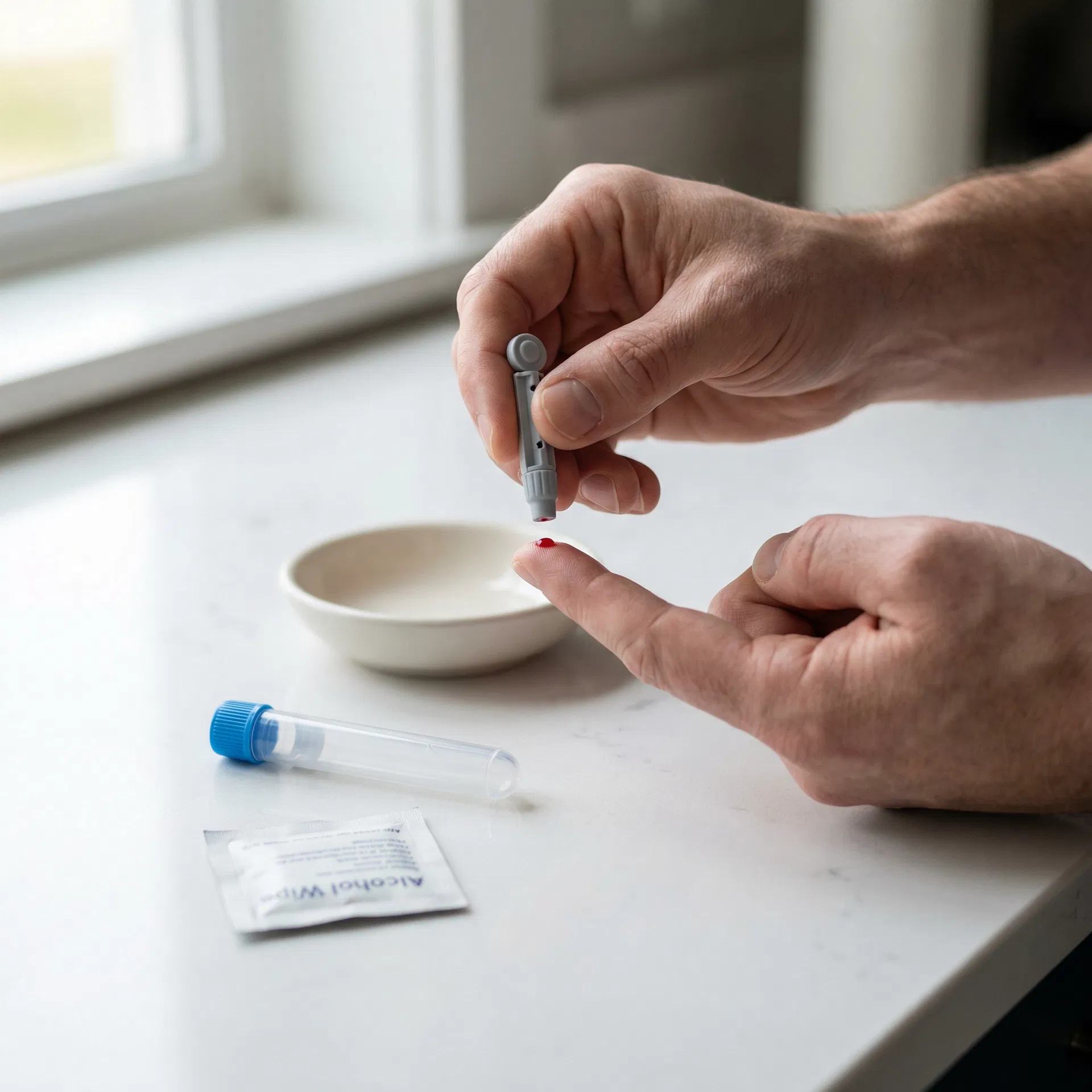
Follow the simple instructions in your kit — whether it's a finger-prick at home or a venous draw at a partner clinic.
 04
04
Insights delivered
Clear, easy-to-understand results sent to you online with actionable health guidance.
Frequently asked questions
This test measures Total Cholesterol, LDL Cholesterol, Non-HDL Cholesterol, HDL Cholesterol, Total Cholesterol : HDL Ratio. Check the full biomarker list on this page for details.
Check Special Instructions on this page. General rule: fast 8-12 hours if cholesterol/glucose/insulin included. Most hormone, vitamin, and antibody tests do not require fasting. Morning collection (7-10am) preferred.
Follow kit instructions. Finger-prick: warm hands, use lancet as directed, fill tube to marked line. Venous: attend phlebotomy with lab form. Post same day, avoid Fridays/bank holidays.
Within the timeframe shown on this page. Notification sent when ready to view online.
You may also be interested in

Essential Blood Test
A 38-biomarker venous blood panel covering cholesterol status, clotting status, diabetes and other key health markers — ideal for a complete general health check across multiple body systems.
Results estimated in 3 working days
38 biomarkers

Core Health Blood Test Kit
A 7-biomarker venous blood panel covering cholesterol status and diabetes — ideal for investigating relevant symptoms or monitoring health.
Results estimated in 3 working days
7 biomarkers

Optimal Health Blood Test Kit
A 37-biomarker venous blood panel covering clotting status, inflammation, iron status and other key health markers — ideal for investigating relevant symptoms or monitoring health.
Results estimated in 2 working days
37 biomarkers

Tiredness and Fatigue Blood Test
A 8-biomarker venous blood panel covering inflammation, iron status, thyroid hormones and vitamins — ideal for investigating ongoing tiredness, low energy, or suspected medical causes.
Results estimated in 3 working days
8 biomarkers