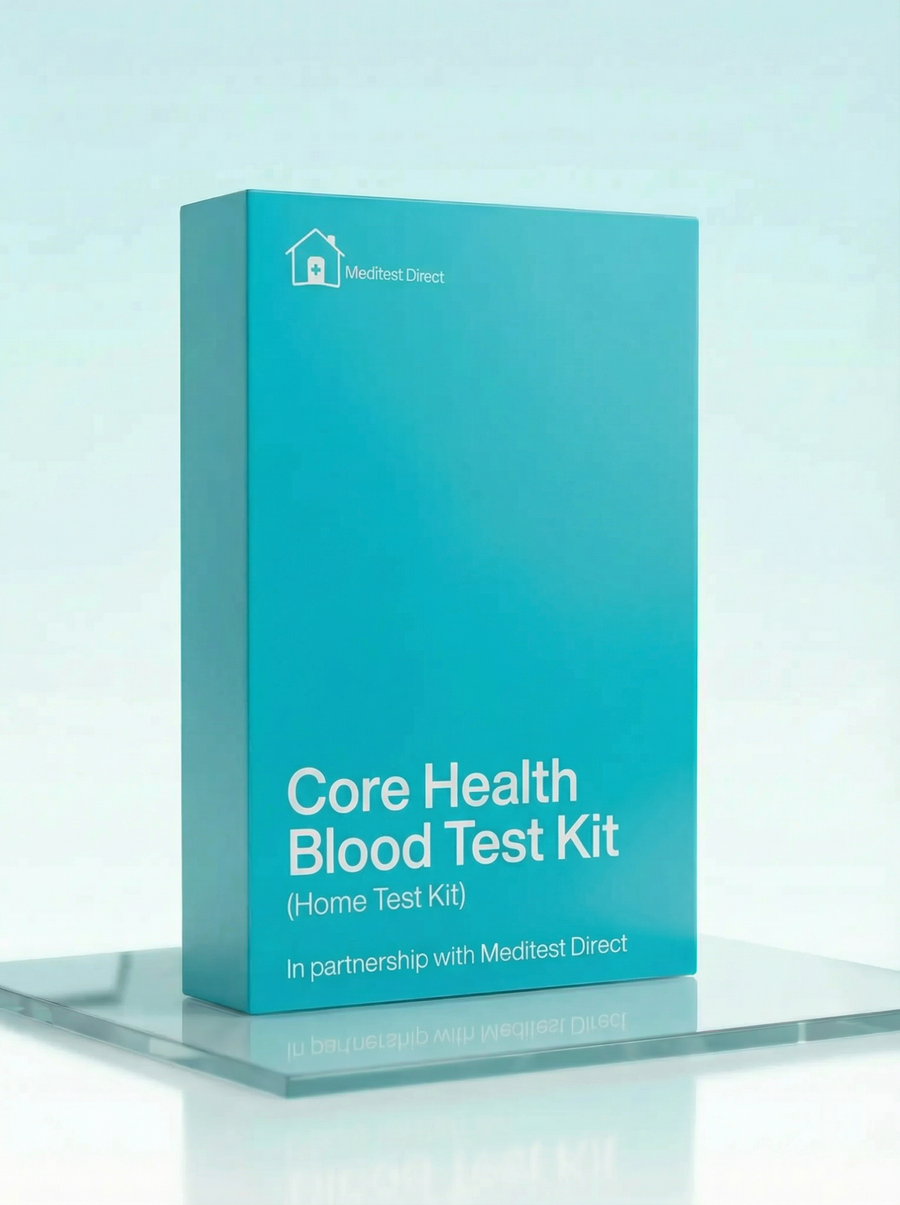
Core Health Blood Test Kit
£55 ✓ In Stock
Your sample goes to a UKAS accredited laboratory meeting ISO 15189 standards.
After you receive your order confirmation email, please reply with your date of birth.
How it works
Your testing journey
From order to results in four simple steps. Full transparency on where each step happens and what it costs.

Receive your kit by post
Dispatched same working day if ordered before 3pm. Royal Mail Tracked delivery, typically 1–3 working days. 90% of kits arrive within 24 hours.

Visit a partner clinic
Book a phlebotomy appointment at one of our 365+ UK partner clinics. Take your kit with you — the phlebotomist will collect your sample using the materials provided.
Phlebotomy fee applies (paid at clinic)
Venous blood draw at a clinic
A trained phlebotomist takes a small blood sample from a vein in your arm using the vacutainers provided in your kit. The appointment takes around 10 minutes.

Return by prepaid envelope
Seal your sample in the biohazard bag provided and drop it in any Royal Mail postbox using the prepaid Tracked 24 envelope. Post Monday–Thursday for best results.
Venous Blood Collection Kit
This kit is sent to you and taken to your chosen clinic. The phlebotomist will collect your sample using the materials provided.
- 1Vacutainer blood collection tubes
- 2Needle and butterfly needle
- 3Tourniquet
- 4Alcohol swab
- 5Cotton wool and gauze
- 6Adhesive plaster
- 7Biohazard specimen bag
- 8Prepaid return envelope (Royal Mail Tracked 24)
- 9Laboratory request form
- 10Instructions for the phlebotomist
Total cholesterol measures all cholesterol circulating in your blood—the combined total of HDL, LDL, and other lipoprotein fractions. Cholesterol is essential for building cell membranes, producing hormones (including testosterone, oestrogen, and cortisol), synthesising vitamin D, and making bile acids for digestion. Your liver manufactures most of your cholesterol, with dietary sources contributing a smaller amount. Total cholesterol alone has significant limitations for assessing cardiovascular risk because it doesn't distinguish between protective HDL and harmful LDL—you could have high total cholesterol driven by beneficial HDL, or 'normal' total cholesterol that masks dangerously low HDL. The complete breakdown provided in this panel gives much more useful information. Results outside the normal range may need a follow-up with your GP.
LDL (low-density lipoprotein) cholesterol is commonly called 'bad cholesterol' because elevated levels are strongly linked to atherosclerosis—the build-up of fatty plaques inside artery walls. LDL particles transport cholesterol from the liver to tissues throughout the body. While necessary, excess LDL can penetrate artery walls and trigger inflammation, leading to plaque formation that narrows arteries and can rupture to cause heart attacks and strokes. LDL is the primary target for cardiovascular risk reduction—lowering LDL consistently reduces heart attack and stroke risk. Targets vary by overall risk, but lower is generally better. Diet modifications (reducing saturated fat, increasing fibre), regular exercise, and maintaining healthy weight can all help lower LDL. Results outside the normal range may need a follow-up with your GP.
Non-HDL cholesterol is calculated by subtracting HDL from total cholesterol. It represents all the potentially atherogenic (artery-clogging) cholesterol—not just LDL, but also VLDL, IDL, and lipoprotein remnants that can all contribute to plaque formation. Many cardiovascular experts consider non-HDL a better risk marker than LDL alone because it captures the full atherogenic burden. This is especially important for people with elevated triglycerides, who often carry significant cholesterol in VLDL particles that LDL testing doesn't capture. Non-HDL also has the practical advantage of remaining accurate regardless of whether you've fasted. The recommended target is below 4.0 mmol/L, with lower targets for those at higher cardiovascular risk. Results outside the normal range may need a follow-up with your GP.
HDL (high-density lipoprotein) cholesterol is called 'good cholesterol' because it helps protect against cardiovascular disease. HDL particles perform 'reverse cholesterol transport'—collecting excess cholesterol from tissues and artery walls and carrying it back to the liver for disposal. This process helps prevent cholesterol from accumulating in arteries. Higher HDL is associated with lower cardiovascular risk—levels above 1.0 mmol/L in men and 1.2 mmol/L in women are generally desirable. Low HDL is an independent risk factor even when LDL is normal. Regular aerobic exercise is one of the most effective ways to raise HDL. Other factors that increase HDL include maintaining healthy weight and not smoking. Factors that decrease HDL include smoking, obesity, sedentary lifestyle, and poorly controlled diabetes. Results outside the normal range may need a follow-up with your GP.
The total cholesterol to HDL ratio is calculated by dividing total cholesterol by HDL cholesterol. This ratio is more informative than total cholesterol alone because it reflects the balance between all cholesterol and protective HDL—indicating whether your cholesterol is predominantly helpful or harmful. A lower ratio is better: below 4 is optimal, 4-6 indicates moderate risk, and above 6 suggests elevated cardiovascular risk. This ratio is used in cardiovascular risk calculators like QRISK (used in UK general practice) to estimate your 10-year risk of heart attack or stroke. Improving this ratio involves either lowering total cholesterol or raising HDL—ideally both. Results outside the normal range may need a follow-up with your GP.
Triglycerides are the main form of fat circulating in your blood. After eating, your body converts excess calories—from fats, carbohydrates, or protein—into triglycerides, which are transported to fat cells for storage and released for energy between meals. Elevated fasting triglycerides indicate you're taking in more calories than you're burning, or that clearance of triglyceride-rich particles is impaired. This is commonly associated with excessive calorie intake (particularly refined carbohydrates and alcohol), obesity, insulin resistance, metabolic syndrome, and type 2 diabetes. Very high triglycerides (above 10 mmol/L) can cause pancreatitis. Moderately elevated triglycerides increase cardiovascular risk because they're linked to small, dense LDL particles and low HDL. Fasting triglycerides below 1.7 mmol/L are desirable. Triglycerides are most affected by recent food intake, so fasting gives the most accurate measurement. Results outside the normal range may need a follow-up with your GP.
HbA1c (glycated haemoglobin) measures the percentage of haemoglobin in your red blood cells that has glucose attached to it. Because red blood cells live for approximately 2-3 months, HbA1c reflects your average blood glucose levels over this period—giving a much more meaningful picture of blood sugar control than a single glucose measurement, which only captures a moment in time. HbA1c is the primary test used for screening for and monitoring diabetes. Normal HbA1c is below 42 mmol/mol (6.0%). A level of 42-47 mmol/mol (6.0-6.4%) indicates prediabetes—increased risk of developing type 2 diabetes. A level of 48 mmol/mol (6.5%) or above indicates diabetes. Prediabetes is an important finding because lifestyle changes at this stage (weight loss, increased physical activity, dietary modifications) can often prevent or delay progression to type 2 diabetes. For people with established diabetes, HbA1c is used to monitor how well blood sugar is controlled—most people with diabetes aim for a target below 48-58 mmol/mol, though individual targets vary. Poorly controlled diabetes (persistently elevated HbA1c) significantly increases the risk of complications including cardiovascular disease (heart attack, stroke), kidney disease (diabetic nephropathy), eye disease (diabetic retinopathy), and nerve damage (neuropathy). HbA1c is not affected by whether you've fasted or what you've eaten recently, making it a convenient marker. Results outside the normal range may need a follow-up with your GP.
This test is for screening and information only — it is not a medical diagnosis or professional advice. Please have your results reviewed by a qualified doctor or healthcare provider who can explain what they mean for your personal health situation. If your results show anything outside the normal range, or if you're worried about your health, see your doctor as soon as you can. Don't change any medications or treatments based on these results alone — always talk to your healthcare provider first.
NO CLINICS, NO QUEUES, NO HASSLE
Four steps to clarity
 01
01
Pick your panel
Browse over 200 clinically designed test kits and choose the one that fits your goals.
 02
02
Kit to your door
Everything you need arrives in discreet packaging with step-by-step instructions inside.
 03
03
Collect your sample
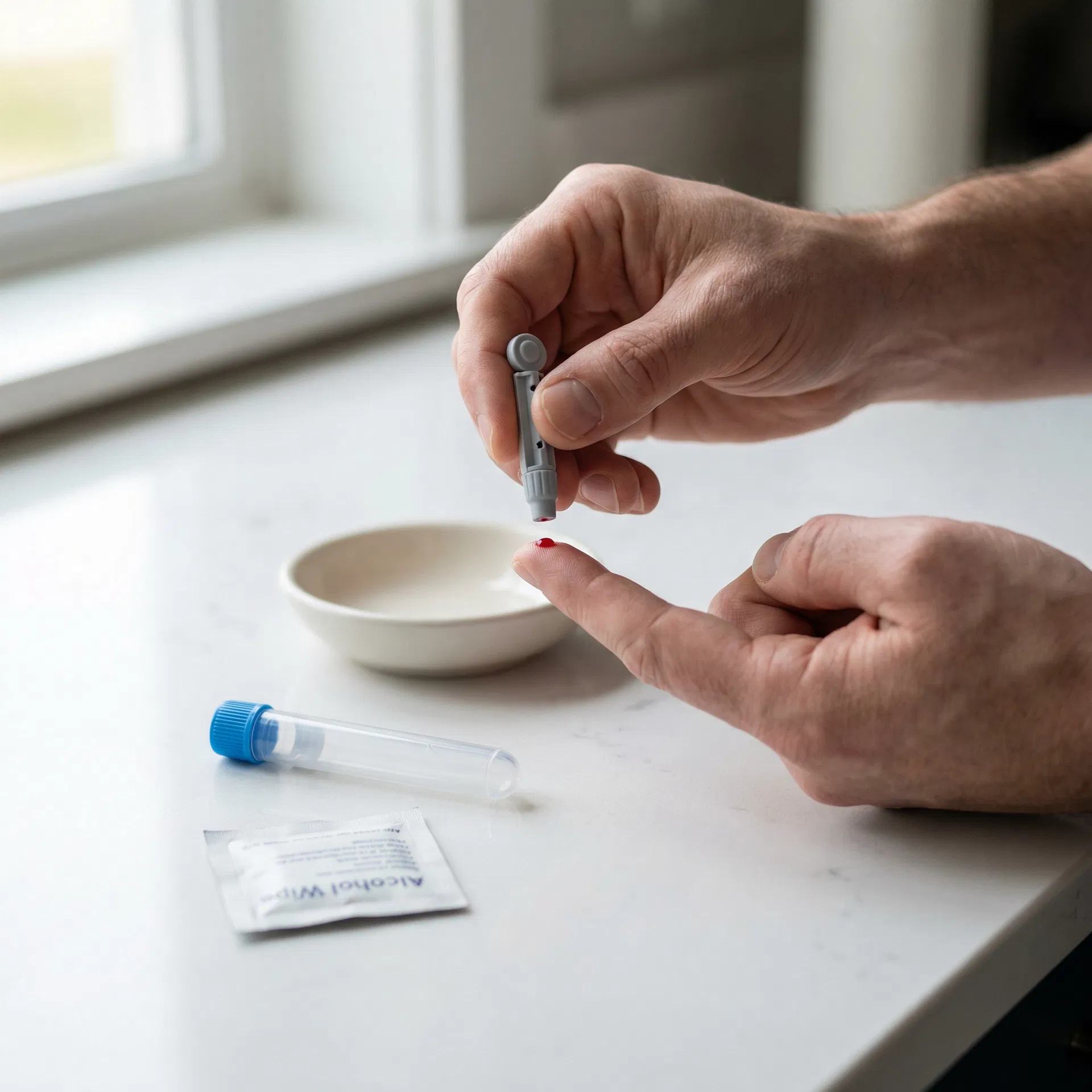
Follow the simple instructions in your kit — whether it's a finger-prick at home or a venous draw at a partner clinic.
 04
04
Insights delivered
Clear, easy-to-understand results sent to you online with actionable health guidance.
Frequently asked questions
This test measures Total Cholesterol, LDL Cholesterol, Non-HDL Cholesterol, HDL Cholesterol, Total Cholesterol : HDL Ratio. Check the full biomarker list on this page for details.
Check Special Instructions on this page. General rule: fast 8-12 hours if cholesterol/glucose/insulin included. Most hormone, vitamin, and antibody tests do not require fasting. Morning collection (7-10am) preferred.
Follow kit instructions. Finger-prick: warm hands, use lancet as directed, fill tube to marked line. Venous: attend phlebotomy with lab form. Post same day, avoid Fridays/bank holidays.
Within the timeframe shown on this page. Notification sent when ready to view online.
You may also be interested in

Essential Blood Test
A 38-biomarker venous blood panel covering cholesterol status, clotting status, diabetes and other key health markers — ideal for a complete general health check across multiple body systems.
Results estimated in 3 working days
38 biomarkers

Health and Lifestyle Blood Test Kit
A 19-biomarker venous blood panel covering cholesterol status, inflammation, iron status and other key health markers — ideal for investigating relevant symptoms or monitoring health.
Results estimated in 3 working days
19 biomarkers

Energy Essentials Blood Test Kit
A 3-biomarker venous blood panel covering thyroid hormones and vitamins — ideal for a complete general health check across multiple body systems.
Results estimated in 2 working days
3 biomarkers

Vitamin D (25-OH) Blood Test Kit
A finger-prick blood test measuring your vitamin D (25-hydroxyvitamin D) level — the essential nutrient for bone health, immune function, and overall wellbeing, commonly deficient in the UK.
Results estimated in 2 working days
1 biomarkers