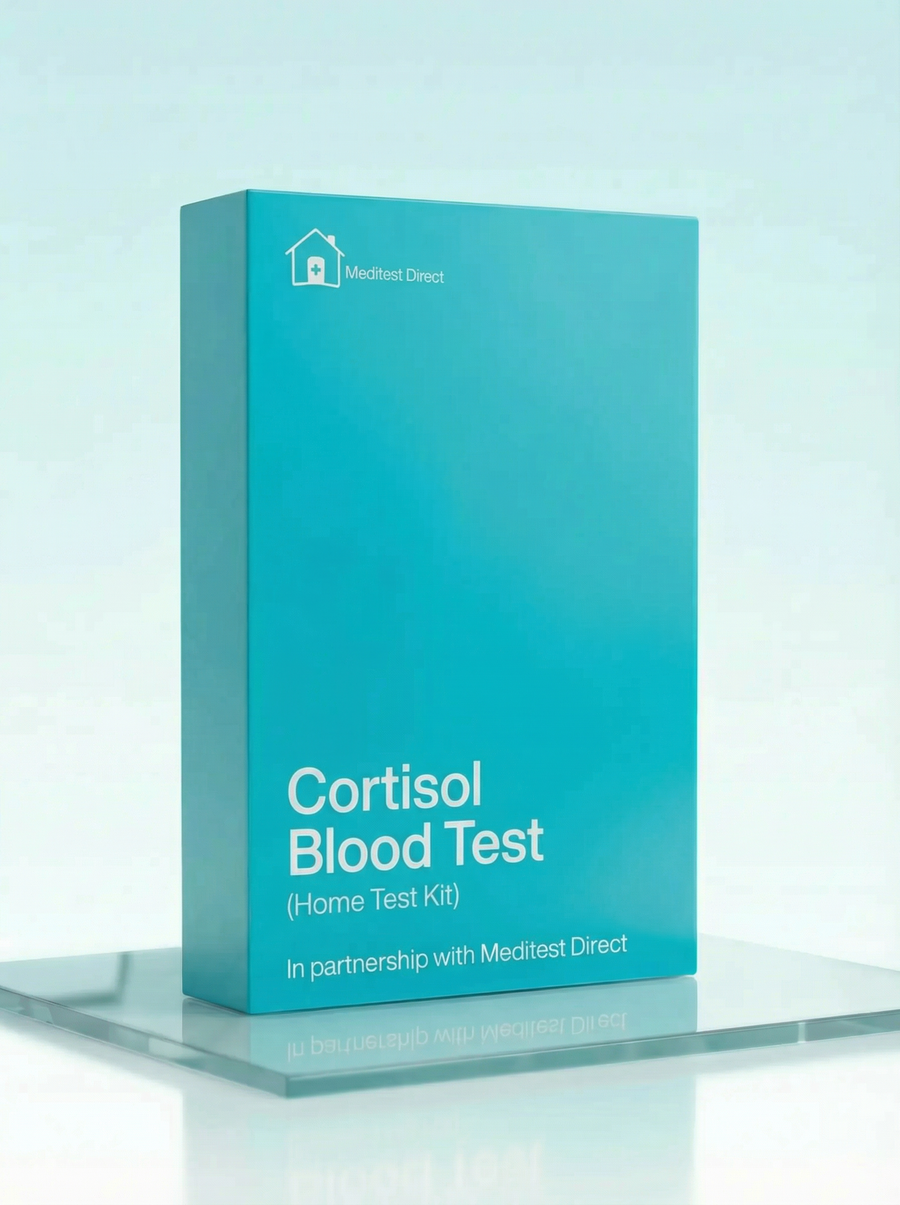
Cortisol Blood Test Kit
£44 ✓ In Stock
Your sample goes to a UKAS accredited laboratory meeting ISO 15189 standards.
After you receive your order confirmation email, please reply with your date of birth.
How it works
Your testing journey
From order to results in four simple steps. Full transparency on where each step happens and what it costs.

Receive your kit by post
Dispatched same working day if ordered before 3pm. Royal Mail Tracked delivery, typically 1–3 working days. 90% of kits arrive within 24 hours.

Visit a partner clinic
Book a phlebotomy appointment at one of our 365+ UK partner clinics. Take your kit with you — the phlebotomist will collect your sample using the materials provided.
Phlebotomy fee applies (paid at clinic)

Multiple samples
This test uses 2 sample types. Instructions for each are included in your kit.

Return by prepaid envelope
Seal your sample in the biohazard bag provided and drop it in any Royal Mail postbox using the prepaid Tracked 24 envelope. Post Monday–Thursday for best results.
Venous Blood Collection Kit
This kit is sent to you and taken to your chosen clinic. The phlebotomist will collect your sample using the materials provided.
- 1Vacutainer blood collection tubes
- 2Needle and butterfly needle
- 3Tourniquet
- 4Alcohol swab
- 5Cotton wool and gauze
- 6Adhesive plaster
- 7Biohazard specimen bag
- 8Prepaid return envelope (Royal Mail Tracked 24)
- 9Laboratory request form
- 10Instructions for the phlebotomist
Saliva Collection Kit
- 1Saliva collection tube with funnel
- 2Biohazard specimen bag
- 3Prepaid return envelope (Royal Mail Tracked 24)
- 4Step-by-step instructions
Cortisol is a steroid hormone produced by the adrenal glands (small glands that sit on top of each kidney) in response to signals from the pituitary gland in the brain, which in turn receives signals from the hypothalamus. This regulatory system is called the hypothalamic-pituitary-adrenal (HPA) axis. Cortisol is often called the 'stress hormone' because its production increases in response to physical or psychological stress, but it actually has many essential functions in the body beyond the stress response. Cortisol helps regulate blood sugar by promoting gluconeogenesis (glucose production) in the liver; it helps control blood pressure; it has powerful anti-inflammatory and immunomodulatory effects; it influences mood and cognitive function; and it helps regulate the sleep-wake cycle. Cortisol follows a pronounced circadian rhythm—levels are highest in the early morning (typically peaking around 6-8am), which helps trigger waking and provides energy for the day ahead. Levels then gradually decline through the day, reaching their lowest point around midnight. This is why timing of collection is so critical for interpretation. A morning cortisol level that falls within the normal reference range generally indicates that the adrenal glands are capable of producing adequate cortisol. A very low morning cortisol (typically below 100 nmol/L) raises concern for adrenal insufficiency and warrants further investigation. A very high morning cortisol may suggest Cushing's syndrome (cortisol excess), though this also requires further testing to confirm. Conditions associated with abnormal cortisol include: Addison's disease (primary adrenal insufficiency) where the adrenal glands are damaged; secondary adrenal insufficiency where the pituitary fails to produce adequate ACTH; Cushing's syndrome caused by tumours, long-term steroid use, or other conditions causing excess cortisol; and chronic stress which can affect cortisol patterns. Women taking oestrogen-containing contraceptives or hormone replacement therapy typically show elevated total cortisol because oestrogen increases cortisol-binding globulin—in these cases, the measured cortisol is higher but the biologically active 'free' cortisol may be normal. Results outside the normal range may need a follow-up with your GP.
This test is for screening and information only — it is not a medical diagnosis or professional advice. Please have your results reviewed by a qualified doctor or healthcare provider who can explain what they mean for your personal health situation. If your results show anything outside the normal range, or if you're worried about your health, see your doctor as soon as you can. Don't change any medications or treatments based on these results alone — always talk to your healthcare provider first.
NO CLINICS, NO QUEUES, NO HASSLE
Four steps to clarity
 01
01
Pick your panel
Browse over 200 clinically designed test kits and choose the one that fits your goals.
 02
02
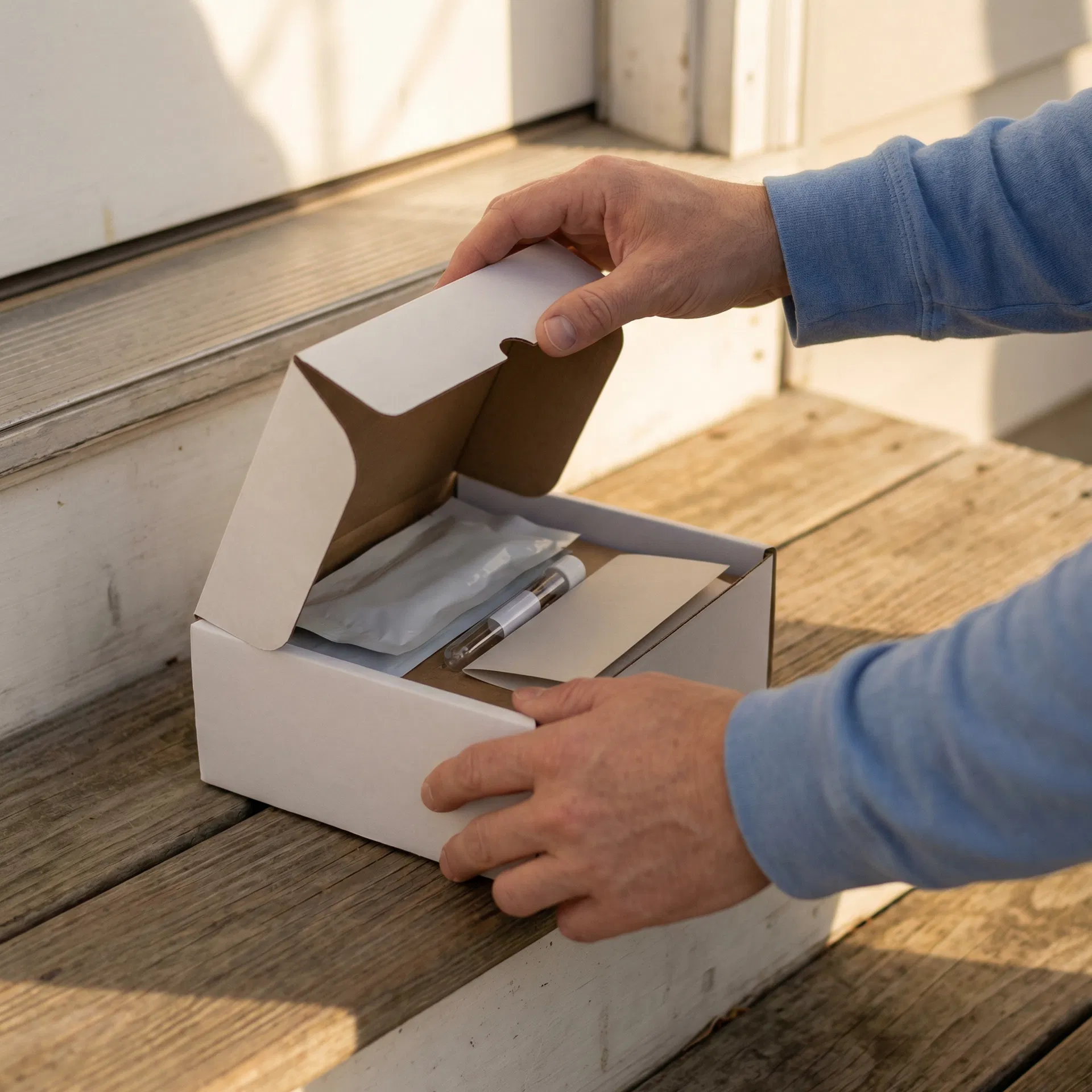
Kit to your door
Everything you need arrives in discreet packaging with step-by-step instructions inside.
 03
03
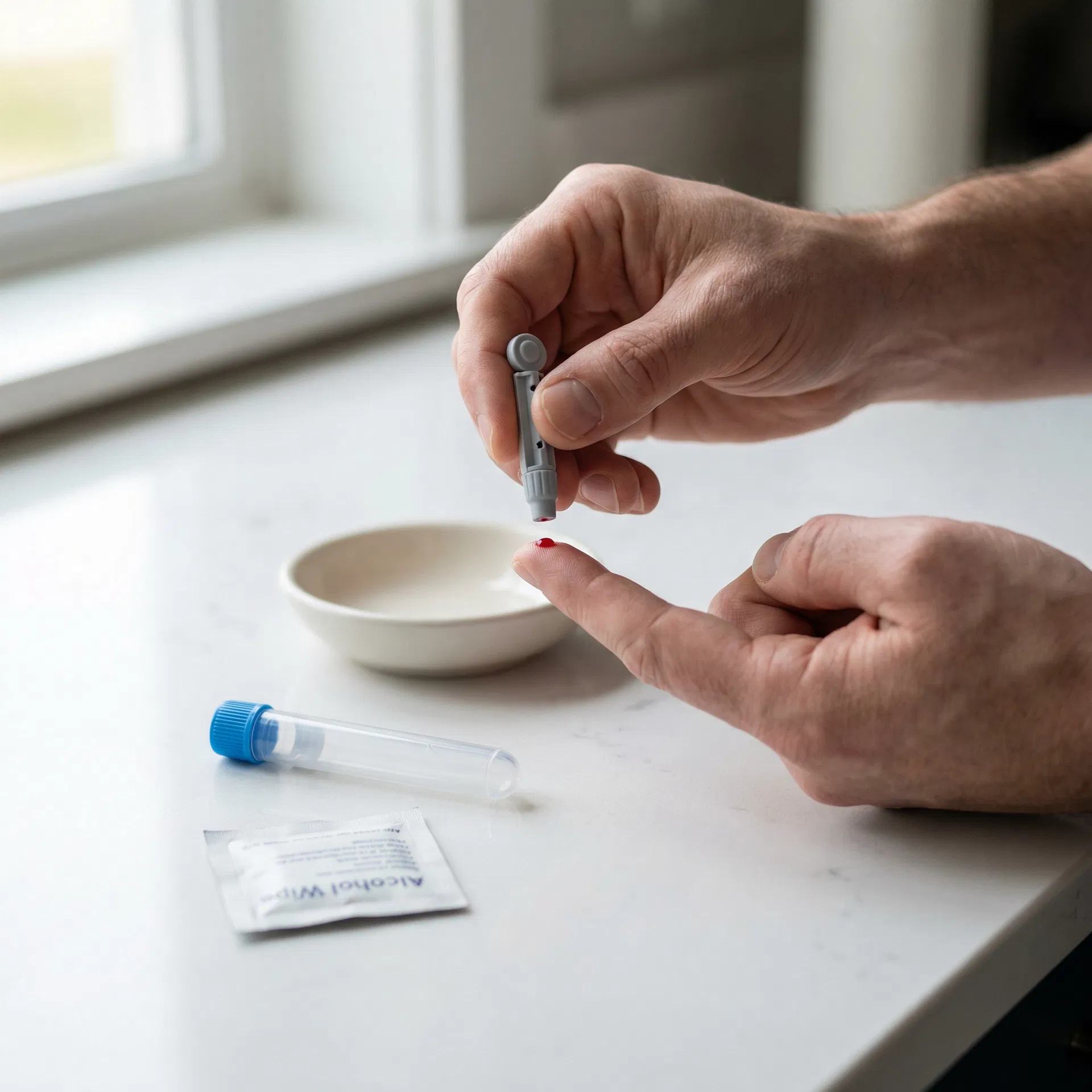
Collect your sample
Follow the simple instructions in your kit — whether it's a finger-prick at home or a venous draw at a partner clinic.
 04
04
Insights delivered
Clear, easy-to-understand results sent to you online with actionable health guidance.
Frequently asked questions
Morning 7-10am when most hormones peak. For female hormone tests, cycle timing also matters — check Special Instructions on this page.
Cortisol is highest in early morning and lowest at midnight. Morning testing (7-9am) captures your peak, which is the standard clinical measurement.
Yes. Acute stress (including anxiety about the test) can temporarily raise cortisol. Collect in a calm state for the most representative baseline.
Not usually required for hormone tests unless the panel also includes cholesterol, glucose, or insulin markers. Check kit instructions.
Yes. Hormonal contraceptives, HRT, testosterone therapy, corticosteroids, and antidepressants can all affect hormone levels. Disclose all medications when discussing results.
You may also be interested in

Advanced Female Hormone Blood Test
A 12-biomarker venous blood panel covering hormones, proteins, thyroid hormones and autoimmunity — ideal for investigating relevant symptoms or monitoring health.
Results estimated in 2 working days
12 biomarkers

Advanced Female Fertility Blood Test Kit
A 12-biomarker venous blood panel covering hormones and proteins — ideal for investigating female fertility and reproductive health.
Results estimated in 2 working days
12 biomarkers

Female Infertility Check Blood test
A 4-biomarker venous blood panel covering female fertility hormones — ideal for investigating female fertility and reproductive health.
Results estimated in 2 working days
4 biomarkers

Ultimate Performance Blood Test Kit
A 56-biomarker venous blood panel covering cholesterol status, diabetes, liver function and other key health markers — ideal for athletes and active people tracking training adaptation, recovery, and performance.
Results estimated in 3 working days
56 biomarkers