
Advanced Molecular Allergy Profile (ISAC Panel)
Biomarkers Tested
112 allergen components (molecular-level IgE profiling)
Results ready within 3 working days
UKAS accredited laboratory, ISO 15189.
How it works
Your testing journey
From order to results in four simple steps. Full transparency on where each step happens and what it costs.

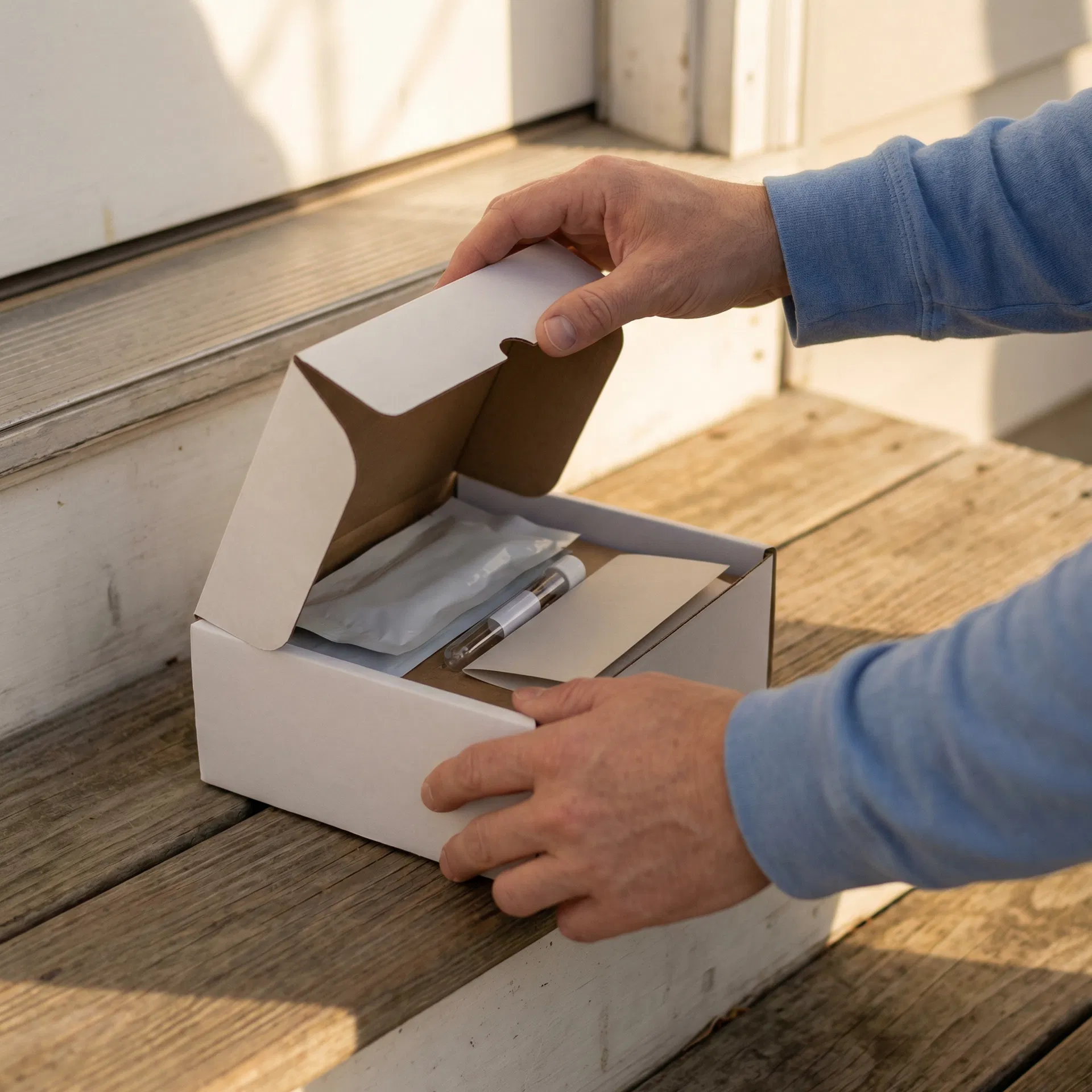
Receive your kit by post
Dispatched same working day if ordered before 3pm. Royal Mail Tracked delivery, typically 1–3 working days. 90% of kits arrive within 24 hours.

Collect at home
Everything you need is in the kit. Collect your sample in the privacy of your own home — no appointment needed, no clinic visit.
Included in kit price
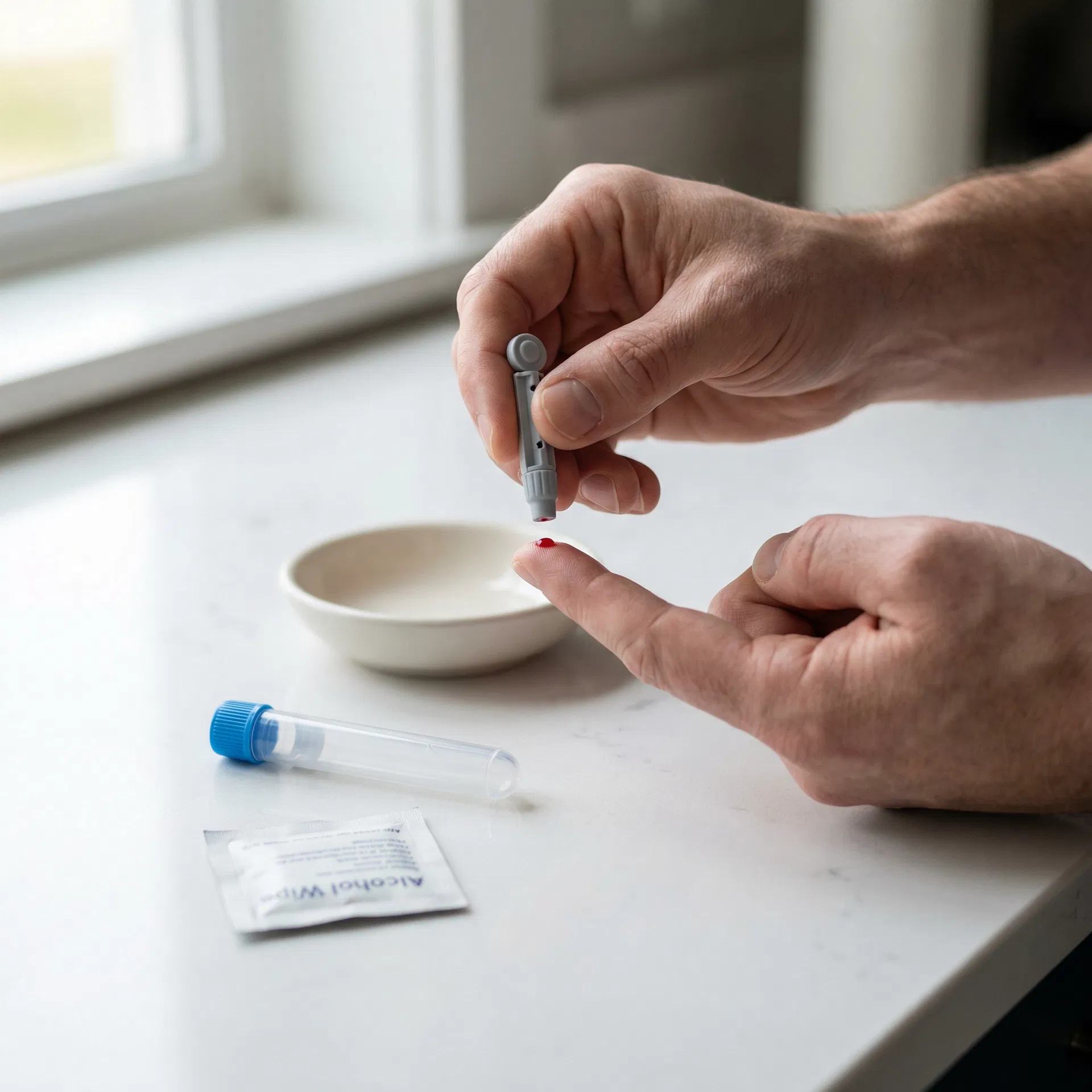
Small finger-prick sample
Use the single-use lancet included in your kit to take a few drops of blood from your fingertip — similar to how diabetics check their blood sugar. Takes about 2 minutes.

Return by prepaid envelope
Seal your sample in the biohazard bag provided and drop it in any Royal Mail postbox using the prepaid Tracked 24 envelope. Post Monday–Thursday for best results.
Molecular Allergy Profile
Component-resolved diagnostics that distinguish true allergies from cross-reactivity, predict reaction severity, and guide immunotherapy decisions.
The Molecular Allergy Profile uses advanced ISAC (Immuno Solid-phase Allergen Chip) technology to analyse your immune response at the molecular component level. Unlike traditional allergy tests that use whole allergen extracts, this test identifies specific allergenic proteins — helping predict the severity of reactions and distinguish true allergies from cross-reactivity.
This test is particularly valuable for people with complex allergy patterns, multiple food sensitivities, or those who need precise information before starting immunotherapy. By identifying exactly which protein components trigger your immune response, you and your healthcare provider can make more informed decisions about allergen avoidance and treatment options.
Component-Resolved
Tests individual allergenic proteins, not just whole extracts
Severity Prediction
Certain components indicate higher risk of severe reactions
Cross-Reactivity
Distinguishes true allergy from pollen-food syndrome
Finger-Prick at Home
No clinic visit required, simple self-collection
Fast Turnaround
Results within 3 working days from our UK lab
Detailed Report
Comprehensive PDF with clinical interpretation guidance
Results in 3 working days
You'll receive a comprehensive PDF report via email showing your IgE response to each allergen component, with interpretation guidance.
Date of birth required
You must provide your date of birth when ordering. This is required for laboratory processing and accurate result interpretation.
Finger-prick collection at home
Using the TDL Tiny blood collection device — no clinic visit needed
- 1 × TDL Tiny blood collection tube (microtainer)
- 2 × Single-use sterile lancets
- 2 × Alcohol wipes
- 1 × Gauze pad
- 1 × Plaster
- 1 × Specimen bag
- 1 × Step-by-step instruction card
- 1 × Prepaid return envelope
The Molecular Allergy Profile tests for specific IgE antibodies to over 110 purified allergen components. These molecular components provide more precise diagnostic information than whole allergen extracts.
Tree Pollen
Bet v 1 (birch), Aln g 1 (alder), Cor a 1 (hazel), Cry j 1 (Japanese cedar), Ole e 1 (olive), Pla a 1/2 (plane tree), and other major tree pollen allergens.
Grass Pollen
Phl p 1, 2, 5, 6, 7, 12 (timothy grass) and related grass pollen components including profilins and polcalcins.
Mites
Der p 1, 2, 10, 23 (house dust mite), Der f 1, 2 (storage mite), and tropomyosin components for accurate mite allergy diagnosis.
Animals
Fel d 1, 2, 4 (cat), Can f 1, 2, 3, 5 (dog), Equ c 1, 3 (horse), and serum albumin cross-reactive markers.
Nuts & Seeds
Ara h 1, 2, 3, 6, 8, 9 (peanut), Cor a 8, 9, 14 (hazelnut), Ana o 3 (cashew), Jug r 1 (walnut) — includes storage proteins linked to severe reactions.
Milk & Egg
Bos d 4, 5, 6, 8 (cow's milk — casein, whey proteins), Gal d 1, 2, 3, 5 (egg white and yolk) for distinguishing heat-stable vs heat-labile allergies.
PR-10 Proteins
Bet v 1-related proteins in apple (Mal d 1), peach (Pru p 1), soya (Gly m 4), celery (Api g 1), carrot (Dau c 1) — indicates pollen-food syndrome.
Lipid Transfer Proteins
Pru p 3 (peach), Ara h 9 (peanut), Cor a 8 (hazelnut), Jug r 3 (walnut) — LTP sensitisation often indicates risk of systemic reactions.
Insect Venoms
Api m 1, 2, 3, 5, 10 (honey bee), Ves v 1, 5 (wasp), Pol d 5 (paper wasp) for accurate sting allergy diagnosis and immunotherapy planning.
Cross-Reactive Markers
CCD markers, tropomyosins, profilins, and serum albumins — helps identify cross-reactivity patterns that may cause false positives on extract testing.
What are allergen components?
Every allergen (like peanut or birch pollen) contains multiple proteins. Some of these proteins cause severe reactions, while others cause only mild symptoms or cross-react with unrelated allergens. Component testing identifies exactly which proteins trigger your immune response.
Why components matter
- Severity prediction: Storage proteins (e.g., Ara h 2 in peanut) indicate higher risk of severe reactions, while PR-10 proteins (e.g., Ara h 8) typically cause only mild oral symptoms
- True allergy vs cross-reactivity: If you're sensitised to birch pollen (Bet v 1), you may test positive to apple, hazelnut, and soya on standard tests — but component testing reveals whether this is true food allergy or just cross-reactivity
- Immunotherapy planning: Knowing your component profile helps allergists select the most appropriate immunotherapy
Example: peanut allergy
Ara h 2 positive: high-risk component — strict avoidance recommended, carry adrenaline.
Ara h 8 positive only: birch-related cross-reactivity — typically causes mild oral symptoms, may tolerate roasted peanuts.
IgE classification levels
Before your test
- No fasting required — you can eat and drink normally before collecting your sample
- Antihistamines: you can continue taking antihistamines — they do not affect IgE blood test results
- Oral steroids: long-term oral steroids may lower IgE levels. Discuss with your doctor if you're on steroid medication
- Timing: there is no specific time of day required for sample collection
Sample collection tips
- Warm your hands under warm water for 2–3 minutes before collection
- Stay hydrated — drink water before collecting your sample
- Use the side of your fingertip rather than the pad
- Allow blood to drip naturally — avoid squeezing too hard
- Collect your sample in the morning if possible and post the same day
Who is this test for?
ALEX² vs ISAC: which test should I choose?
Complete Allergy Screen (ALEX²)
Best for initial screening when you don't know what you're allergic to — tests 295 allergens including whole extracts and components.
Molecular Allergy Profile (ISAC)
Best when you already know your allergies and need precise component-level information to predict severity or plan immunotherapy.
If you're unsure which test is right for you, the Complete Allergy Screen provides broader coverage for initial investigation.
When to seek urgent care instead
Anaphylaxis symptoms (difficulty breathing, throat swelling, rapid heartbeat, dizziness, collapse) — call 999 immediately. If you have a history of severe allergic reactions, discuss testing options with your GP or allergy specialist first. This test is not for diagnosing acute reactions — seek immediate medical attention if you're symptomatic now.
This test measures IgE antibodies to purified allergen components using ISAC microarray technology. Results indicate sensitisation to specific molecular components but should be interpreted alongside your clinical symptoms and medical history.
Component testing provides valuable information about allergy severity risk, but clinical decisions should not be based on test results alone. Food challenges and immunotherapy should only be undertaken under medical supervision.
This test is suitable for refining allergy diagnosis and treatment planning but is not a substitute for clinical allergy assessment. For suspected severe allergies or before making significant dietary changes, we recommend consulting an allergy specialist.
This test does not replace professional medical advice, diagnosis, or treatment. If you have symptoms or concerns about allergies, please consult your GP or an allergy specialist.
Venous Blood Sample: This test requires a venous blood sample taken by a phlebotomist. Phlebotomy charges may apply.
Antihistamines: Not affected by antihistamines. Continue all medications.
No Fasting Required.
Results Interpretation: Due to the complexity of molecular allergy profiling, we recommend discussing your results with an allergy specialist.
You may also be interested in

Allergy Screen (Inhalants and Foods) Blood Test
A comprehensive allergy blood test screening for IgE antibodies to over 40 common food and environmental allergens in a single panel — ideal for identifying triggers behind symptoms like hay fever, asthma, eczema, or unexplained food reactions.
Results estimated in 2 working days
295 biomarkers

Complete Allergy Screen (295 Allergens)
A comprehensive allergy blood test screening 295 allergens across 10 major categories, including both whole allergen extracts and molecular components for enhanced accuracy — our most complete allergy panel.
Results estimated in 3-4 working days
295 biomarkers

Personalised Custom Allergy Blood Test (build your own IGE panel-1 allergen, 5 or 10 allergens)
A personalised allergy blood test where you choose the specific allergens to test — select 1, 5, or 10 from over 300 individual allergens including foods, pollens, animals, moulds, drugs, and more.
Results estimated in 2 working days
Venous collectionNo clinics, no queues, no hassle
Four steps to clarity

Pick your panel
Browse over 200 clinically designed test kits and choose the one that fits your goals.
Kit to your door
Everything you need arrives in discreet packaging with step-by-step instructions inside.
Collect your sample
Follow the simple instructions in your kit - whether it is a finger-prick at home or a venous draw at a partner clinic, your test page will guide you.

Insights delivered
Clear, easy-to-understand results sent to you online with actionable health guidance.