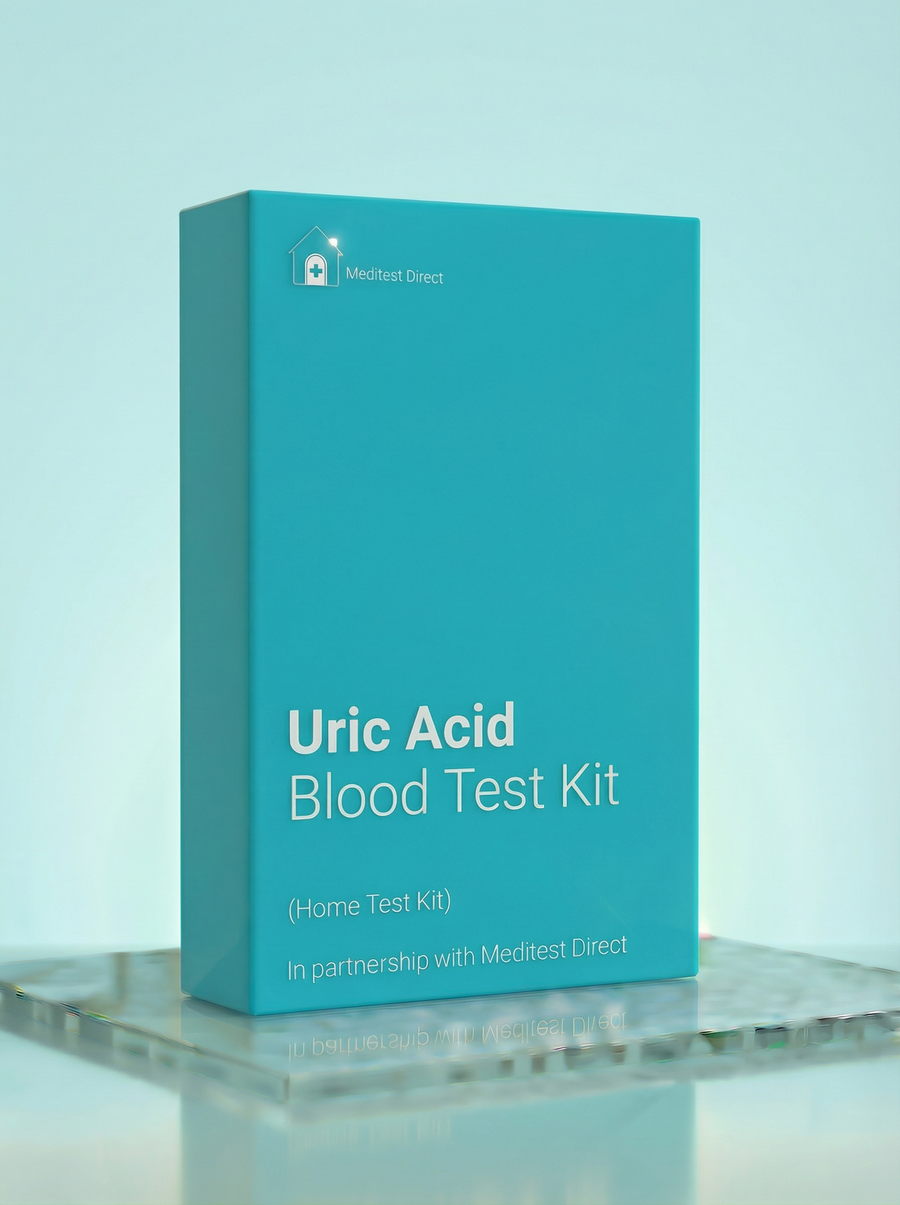
Uric Acid Blood Test Kit
£59 ✓ In Stock
Your sample goes to a UKAS accredited laboratory meeting ISO 15189 standards.
After you receive your order confirmation email, please reply with your date of birth.
How it works
Your testing journey
From order to results in four simple steps. Full transparency on where each step happens and what it costs.

Receive your kit by post
Dispatched same working day if ordered before 3pm. Royal Mail Tracked delivery, typically 1–3 working days. 90% of kits arrive within 24 hours.

Collect at home
Everything you need is in the kit. Collect your sample in the privacy of your own home — no appointment needed, no clinic visit.
Included in kit price
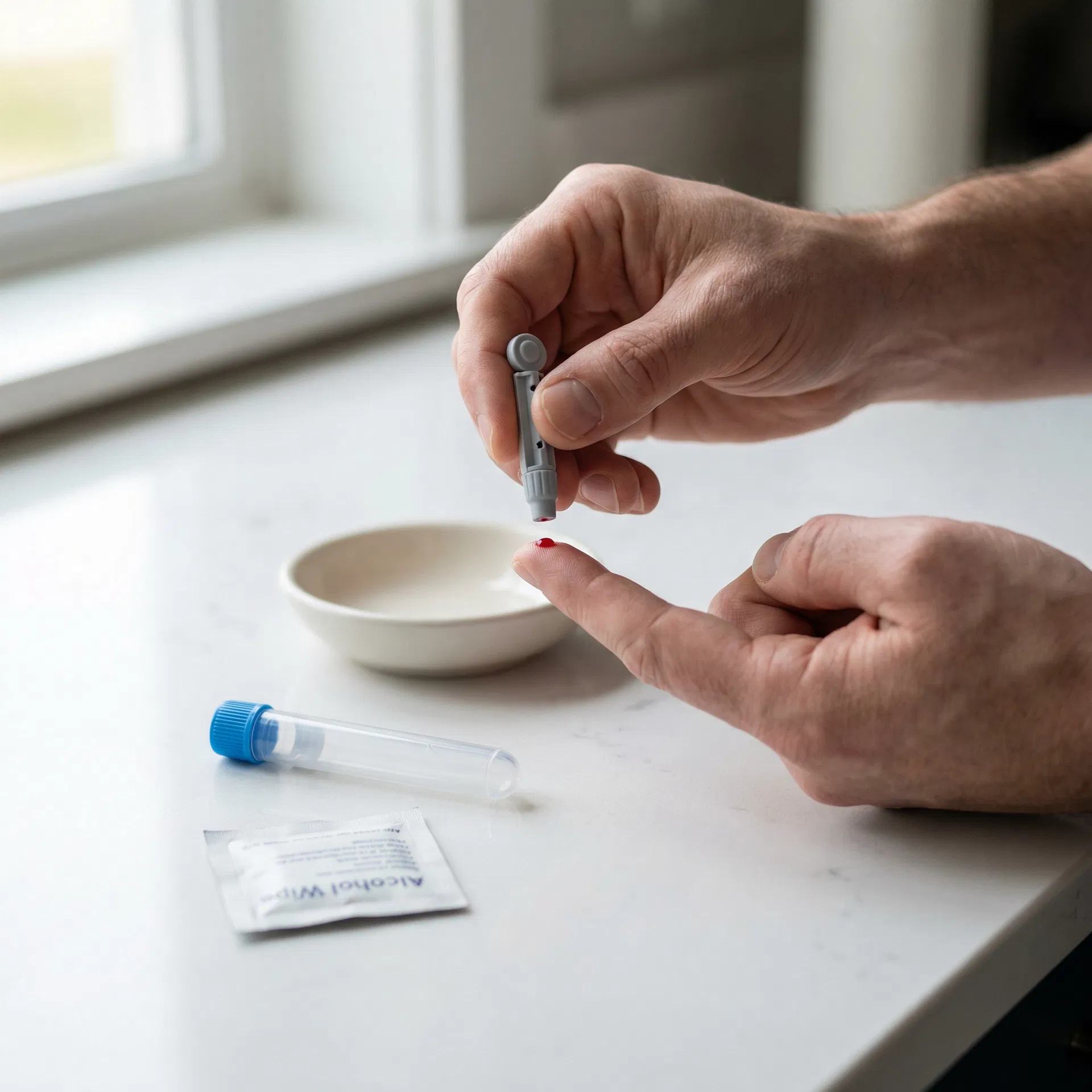
Small finger-prick sample
Use the single-use lancet included in your kit to take a few drops of blood from your fingertip — similar to how diabetics check their blood sugar. Takes about 2 minutes.

Return by prepaid envelope
Seal your sample in the biohazard bag provided and drop it in any Royal Mail postbox using the prepaid Tracked 24 envelope. Post Monday–Thursday for best results.
Home Finger-Prick Blood Collection Kit
- 1Blood collection tube
- 2Single-use lancet device
- 3Sterile gauze pad
- 4Adhesive plaster
- 5Cleansing wipe
- 6Biohazard specimen bag
- 7Prepaid return envelope (Royal Mail Tracked 24)
- 8Step-by-step instructions
Uric acid is a waste product produced when the body breaks down purines—substances found naturally in the body and in certain foods such as red meat, organ meats, shellfish, and alcoholic beverages (especially beer). Most uric acid dissolves in the blood, passes through the kidneys, and leaves the body in urine. When the body produces too much uric acid or the kidneys don't excrete enough, levels can build up in the blood (hyperuricaemia). When uric acid levels are too high, crystals can form and deposit in joints, causing the intensely painful inflammatory arthritis known as gout—most commonly affecting the big toe. High uric acid also increases the risk of kidney stones. Normal ranges typically differ between men and women, with men generally having higher levels. Factors that can elevate uric acid include a purine-rich diet, obesity, kidney disease, certain medications (particularly diuretics), alcohol consumption, and genetic predisposition. Results outside the normal range should be discussed with your GP.
This test is for screening and information only — it is not a medical diagnosis or professional advice. Please have your results reviewed by a qualified doctor or healthcare provider who can explain what they mean for your personal health situation. If your results show anything outside the normal range, or if you're worried about your health, see your doctor as soon as you can. Don't change any medications or treatments based on these results alone — always talk to your healthcare provider first.
NO CLINICS, NO QUEUES, NO HASSLE
Four steps to clarity
 01
01
Pick your panel
Browse over 200 clinically designed test kits and choose the one that fits your goals.
 02
02
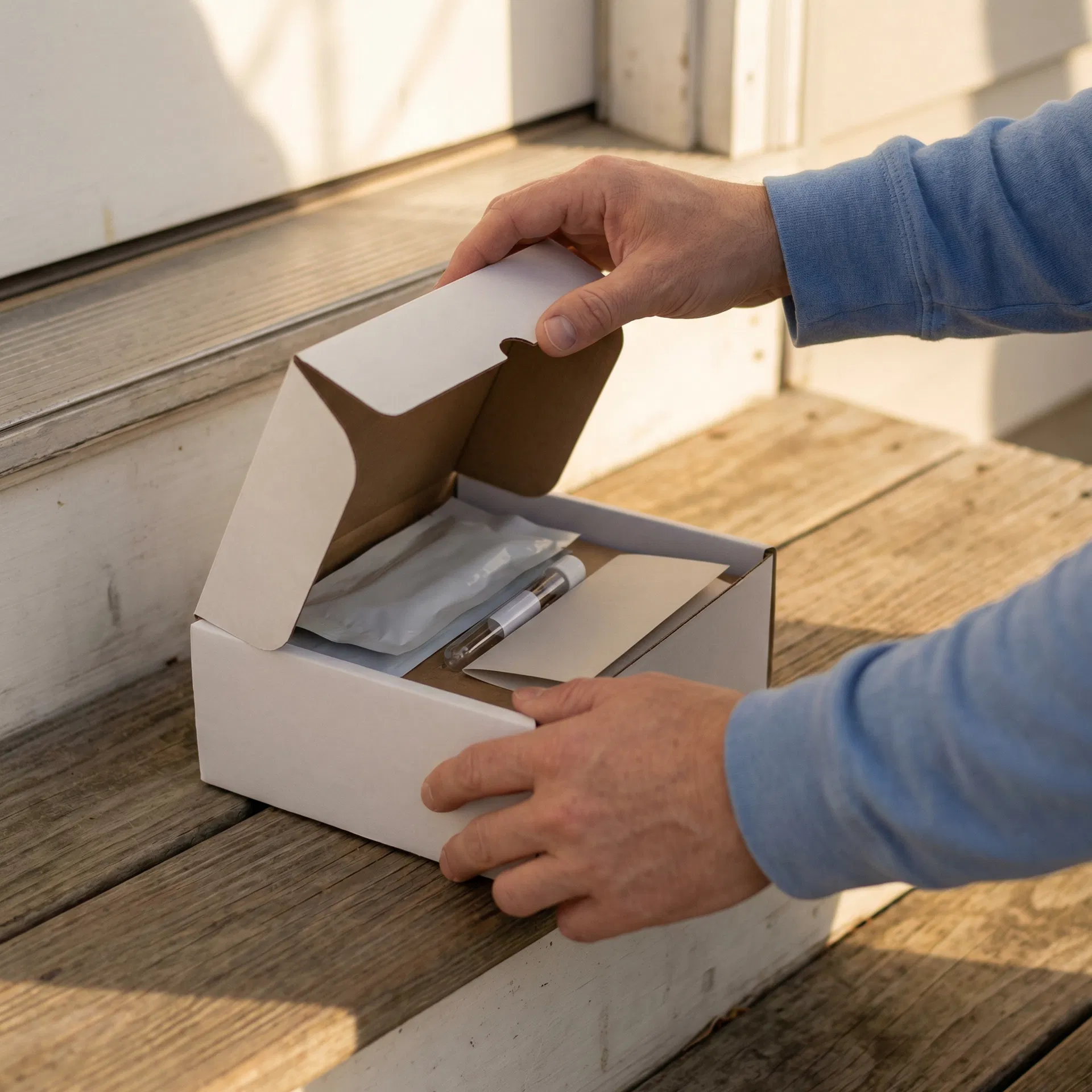
Kit to your door
Everything you need arrives in discreet packaging with step-by-step instructions inside.
 03
03
Collect your sample
Follow the simple instructions in your kit — whether it's a finger-prick at home or a venous draw at a partner clinic.
 04
04
Insights delivered
Clear, easy-to-understand results sent to you online with actionable health guidance.
Frequently asked questions
Elevated uric acid can crystallise in joints causing gout. Normal: below 360 µmol/L (women), 420 µmol/L (men). Treatment target for confirmed gout: below 300 µmol/L.
Uric acid can actually drop during an acute attack. Wait 2+ weeks after an attack fully resolves for the most accurate baseline.
Not strictly required, but avoid alcohol and purine-rich foods (red meat, organ meats, shellfish) for 24 hours before testing.
You may also be interested in

Autoantibodies Profile 2 Blood Test
A 5-biomarker venous blood panel covering autoimmunity — ideal for investigating suspected autoimmune conditions.
Results estimated in 10 working days
5 biomarkers

Autoantibodies Profile 1 Blood Test
A 6-biomarker venous blood panel covering autoimmunity — ideal for investigating suspected autoimmune conditions.
Results estimated in 5 working days
6 biomarkers

Islet Cell Antibodies Blood Test
A single-biomarker venous blood test covering autoimmunity — ideal for investigating suspected autoimmune conditions.
Results estimated in 10 working days
Venous collection
Allergy Screen (Essential Foods) Blood Test
An essential food allergy panel testing for the most common food allergens responsible for IgE-mediated reactions — covering the key foods that account for the majority of food allergies in both children and adults.
Results estimated in 2 working days
9 biomarkers