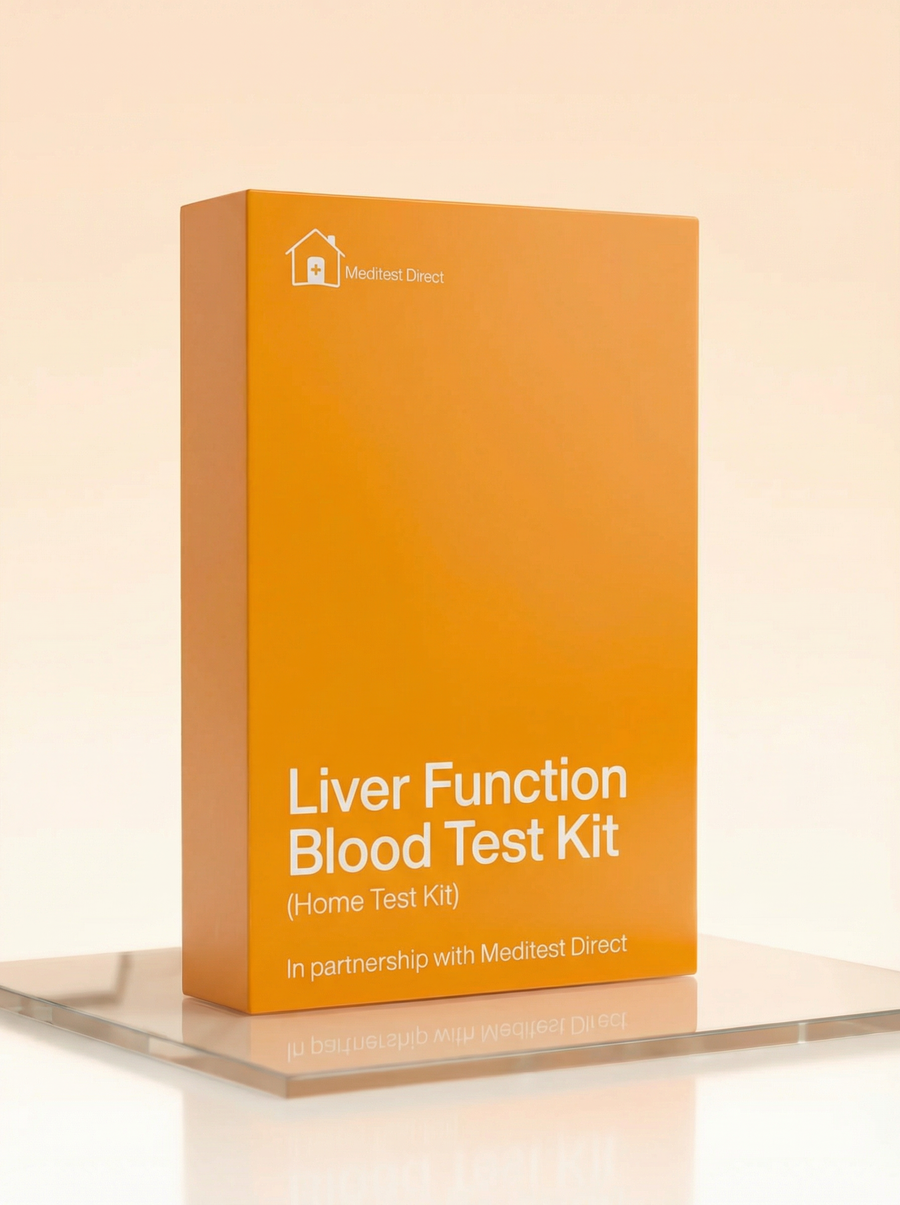
Liver Function Blood Test Kit
£36 ✓ In Stock
Your sample goes to a UKAS accredited laboratory meeting ISO 15189 standards.
After you receive your order confirmation email, please reply with your date of birth.
How it works
Your testing journey
From order to results in four simple steps. Full transparency on where each step happens and what it costs.

Receive your kit by post
Dispatched same working day if ordered before 3pm. Royal Mail Tracked delivery, typically 1–3 working days. 90% of kits arrive within 24 hours.

Visit a partner clinic
Book a phlebotomy appointment at one of our 365+ UK partner clinics. Take your kit with you — the phlebotomist will collect your sample using the materials provided.
Phlebotomy fee applies (paid at clinic)
Venous blood draw at a clinic
A trained phlebotomist takes a small blood sample from a vein in your arm using the vacutainers provided in your kit. The appointment takes around 10 minutes.

Return by prepaid envelope
Seal your sample in the biohazard bag provided and drop it in any Royal Mail postbox using the prepaid Tracked 24 envelope. Post Monday–Thursday for best results.
Venous Blood Collection Kit
This kit is sent to you and taken to your chosen clinic. The phlebotomist will collect your sample using the materials provided.
- 1Vacutainer blood collection tubes
- 2Needle and butterfly needle
- 3Tourniquet
- 4Alcohol swab
- 5Cotton wool and gauze
- 6Adhesive plaster
- 7Biohazard specimen bag
- 8Prepaid return envelope (Royal Mail Tracked 24)
- 9Laboratory request form
- 10Instructions for the phlebotomist
Total protein measures the combined amount of albumin and globulin proteins in your blood. The liver produces most of the body's albumin and many globulins, making total protein a useful indicator of liver synthetic function. These proteins serve vital roles: maintaining fluid balance (keeping fluid inside blood vessels rather than leaking into tissues), transporting hormones, nutrients, and medications throughout the body, supporting immune function (immunoglobulins/antibodies), and facilitating tissue growth and repair. Low total protein can indicate reduced liver function (the liver isn't making enough protein), malnutrition, malabsorption, kidney disease (protein loss in urine), or chronic illness. High total protein can indicate dehydration (concentrated blood), chronic inflammation, or certain blood disorders. Total protein is interpreted alongside the albumin and globulin breakdown for more specific information. Results outside the normal range may need a follow-up with your GP.
Albumin is the most abundant protein in your blood, making up about 50-60% of total plasma protein. It is synthesised exclusively by the liver, making it a key indicator of liver synthetic function. Albumin has a half-life of approximately 20 days, meaning it takes 2-3 weeks of reduced liver function before albumin levels fall—this makes low albumin more indicative of chronic rather than acute liver problems. Albumin performs several essential functions: it maintains oncotic pressure (keeping fluid inside blood vessels and preventing swelling/oedema), transports hormones, fatty acids, bilirubin, medications, and other substances through the bloodstream, and supports tissue growth and healing. Low albumin can indicate chronic liver disease or cirrhosis, kidney disease (nephrotic syndrome—losing albumin in urine), malnutrition or malabsorption, severe inflammation or sepsis, or protein-losing conditions. Dehydration can artificially raise albumin levels. Results outside the normal range may need a follow-up with your GP.
Globulin is an umbrella term for a diverse group of proteins produced by the liver and immune system. Globulins are calculated by subtracting albumin from total protein. This group includes immunoglobulins (antibodies produced by the immune system to fight infection), transport proteins that carry metals like iron and copper, complement proteins involved in immune function, and clotting factors. The liver produces many globulins, while the immune system produces immunoglobulins. Elevated globulin often indicates chronic inflammation, chronic infection, autoimmune disease, or certain blood disorders such as multiple myeloma (which causes very high immunoglobulin levels). In liver disease, as albumin production decreases, the globulin fraction may increase proportionally. Low globulin can indicate immune deficiency, kidney disease, or malnutrition. The albumin to globulin ratio (A/G ratio) can provide additional diagnostic information. Results outside the normal range may need a follow-up with your GP.
Bilirubin is an orange-yellow pigment produced when red blood cells break down at the end of their 120-day lifespan. The haemoglobin from these cells is converted to bilirubin, which is then transported to the liver, processed (conjugated), and excreted in bile into the intestines. Bilirubin gives bile its characteristic colour and is responsible for the yellowish tinge you see in healing bruises. The liver plays a central role in bilirubin metabolism—if the liver isn't processing bilirubin properly, or if there's a blockage preventing its excretion, bilirubin accumulates in the blood. High bilirubin causes jaundice (yellowing of the skin and eyes). Elevated bilirubin can indicate liver disease, bile duct obstruction, or increased red blood cell breakdown (haemolysis). Mildly elevated bilirubin with otherwise normal liver tests is often Gilbert's syndrome, a harmless inherited condition affecting approximately 5% of the population. Results outside the normal range may need a follow-up with your GP.
Alkaline phosphatase (ALP) is an enzyme found in several tissues, with the highest concentrations in the liver, bile ducts, and bone. In the liver, ALP is located on the cell membranes lining the bile ducts (canalicular membrane). When bile flow is obstructed or bile ducts are damaged, ALP synthesis increases and the enzyme is released into the bloodstream. Elevated ALP can indicate cholestasis (impaired bile flow), bile duct obstruction, or liver disease affecting the biliary system. However, because ALP is also abundant in bone, elevated levels can indicate bone disease such as Paget's disease, bone fractures, or bone tumours. Gamma GT (GGT) helps distinguish between liver and bone sources—if both ALP and GGT are elevated, the source is likely liver; if ALP is elevated but GGT is normal, the source is more likely bone. ALP is also naturally higher during pregnancy (placental ALP) and in growing children. Results outside the normal range may need a follow-up with your GP.
Alanine aminotransferase (ALT) is an enzyme found predominantly in the liver, with smaller amounts in heart, muscle, and kidneys. ALT is located inside liver cells (hepatocytes) and is released into the bloodstream when these cells are damaged or die. Because ALT is more specific to the liver than other enzymes, it's considered a reliable marker of hepatocellular (liver cell) injury. Elevated ALT can indicate liver inflammation or damage from various causes including alcohol consumption, viral hepatitis (A, B, or C), fatty liver disease (MASLD/NAFLD), medication toxicity (including paracetamol overdose), autoimmune hepatitis, or other liver conditions. The degree of elevation doesn't always correlate with the severity of liver disease—some serious conditions show only mild elevations, while temporary causes can produce dramatic spikes. ALT is also present in muscle, so very intense exercise can cause mild elevation. If GGT is also elevated alongside ALT, this increases confidence that the source is the liver rather than muscle. Results outside the normal range may need a follow-up with your GP.
Gamma-glutamyl transferase (GGT, also called gamma GT) is a liver enzyme found in the cell membranes of hepatocytes and bile duct cells. GGT is particularly sensitive to alcohol consumption—it's elevated in approximately 75% of chronic heavy drinkers—making it a useful marker for monitoring alcohol-related liver effects. GGT is also elevated in bile duct disease, cholestasis, and liver damage from other causes. Importantly, GGT helps interpret other liver markers: when ALP is elevated, a normal GGT suggests the ALP is coming from bone rather than liver, while elevated GGT confirms a hepatic source. GGT can also be induced (increased production) by certain medications including anticonvulsants, barbiturates, and some herbal supplements, without indicating actual liver damage. Obesity and diabetes are also associated with elevated GGT. Because GGT is very sensitive, it can be elevated when other liver enzymes are normal, making it useful for detecting early or subtle liver stress. Results outside the normal range may need a follow-up with your GP.
This test is for screening and information only — it is not a medical diagnosis or professional advice. Please have your results reviewed by a qualified doctor or healthcare provider who can explain what they mean for your personal health situation. If your results show anything outside the normal range, or if you're worried about your health, see your doctor as soon as you can. Don't change any medications or treatments based on these results alone — always talk to your healthcare provider first.
NO CLINICS, NO QUEUES, NO HASSLE
Four steps to clarity
 01
01
Pick your panel
Browse over 200 clinically designed test kits and choose the one that fits your goals.
 02
02
Kit to your door
Everything you need arrives in discreet packaging with step-by-step instructions inside.
 03
03
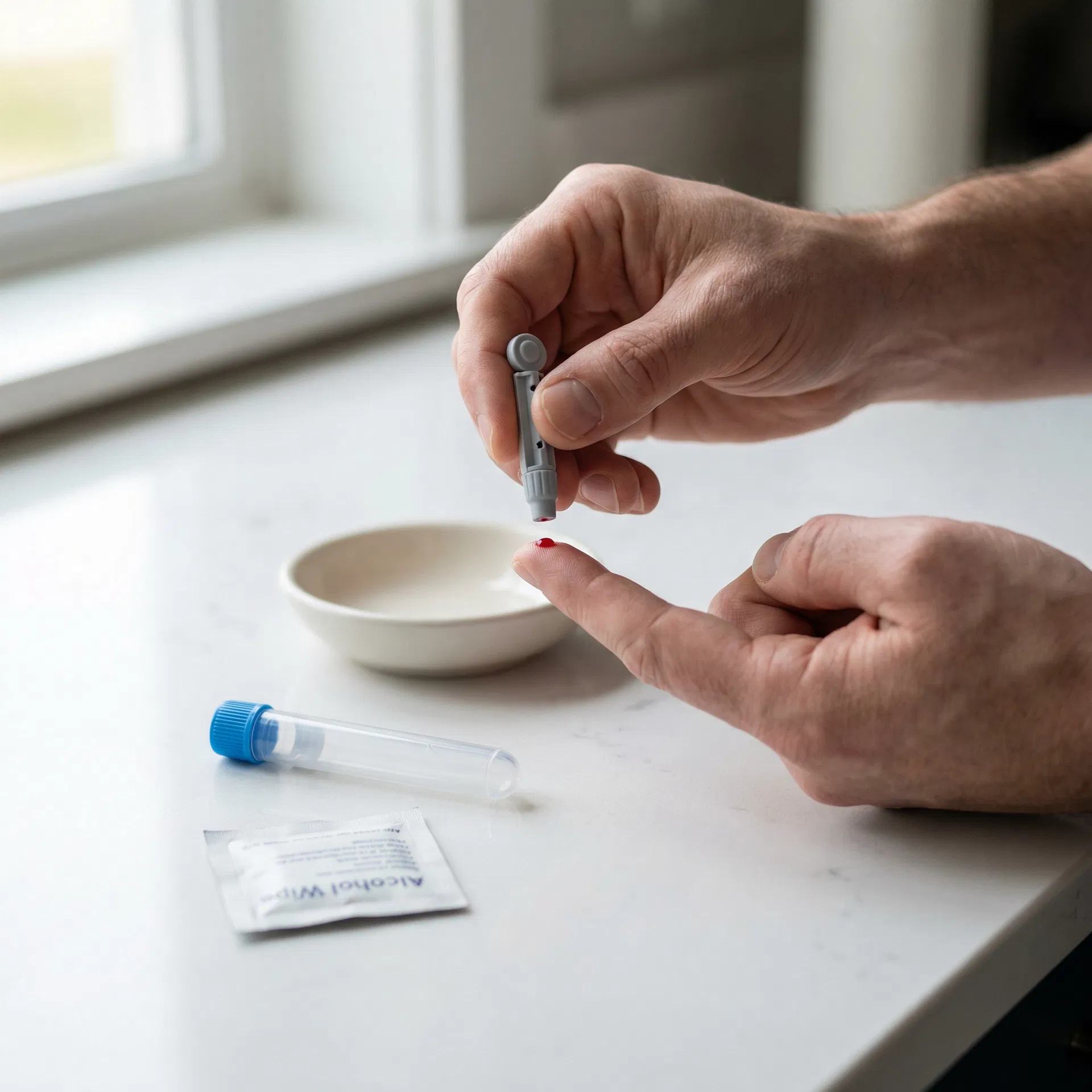
Collect your sample
Follow the simple instructions in your kit — whether it's a finger-prick at home or a venous draw at a partner clinic.
 04
04
Insights delivered
Clear, easy-to-understand results sent to you online with actionable health guidance.
Frequently asked questions
For the most accurate baseline measurement, avoid alcohol for at least 48-72 hours before collecting your sample. Recent alcohol consumption can raise GGT within hours and elevate other liver enzymes (ALT, AST) for several days. If you are specifically testing to assess alcohol-related liver health, follow your normal consumption pattern so the results reflect your actual situation.
Fasting is not usually required for a standalone liver function test. However, if your panel also includes cholesterol, triglycerides, or blood glucose markers, fasting for 8-12 hours is recommended. Check your specific kit instructions. Water is always fine during any fasting period.
This test measures 7 markers across two groups. Liver enzymes (ALT, GGT, ALP, bilirubin) indicate how your liver cells are functioning — raised levels suggest inflammation or damage. Liver proteins (total protein, albumin, globulin) reflect your liver's ability to produce proteins — low albumin can indicate chronic liver disease or poor nutrition. Each marker tells a different part of the story, so they are interpreted together.
A mildly elevated GGT is one of the most common findings in routine blood tests and is not always a cause for concern. GGT can be raised by many factors beyond liver disease, including recent alcohol consumption, certain medications (anticonvulsants, some antibiotics), obesity, type 2 diabetes, and non-alcoholic fatty liver disease. If your other liver markers are normal, a mildly raised GGT on its own is usually not urgent — but it is worth discussing with your GP, especially if persistent.
Yes. Many common medications can temporarily raise liver enzymes, including paracetamol (even at normal doses in some people), statins, antibiotics, antifungals, anti-epileptic drugs, and some herbal supplements. If you are taking regular medication and your liver markers are mildly elevated, this may be medication-related rather than indicating liver disease. Always tell your GP what medications and supplements you take when discussing liver results.
You may also be interested in

Bile Acids (Total) Blood Test
A single-biomarker venous blood test covering liver health — ideal for investigating relevant symptoms or monitoring health.
Results estimated in 9 working days
1 biomarkers

Amylase Home Blood Test
A single-biomarker finger-prick blood,saliva test covering pancreatic enzymes — ideal for investigating relevant symptoms or monitoring health.
Results estimated in 2 working days
Finger-prick collection
Bilirubin (Direct) Blood Test Kit
A single-biomarker venous blood test covering liver health — ideal for investigating relevant symptoms or monitoring health.
Results estimated in 3 working days
1 biomarkers

Allergy Screen (Essential Foods) Blood Test
An essential food allergy panel testing for the most common food allergens responsible for IgE-mediated reactions — covering the key foods that account for the majority of food allergies in both children and adults.
Results estimated in 2 working days
9 biomarkers