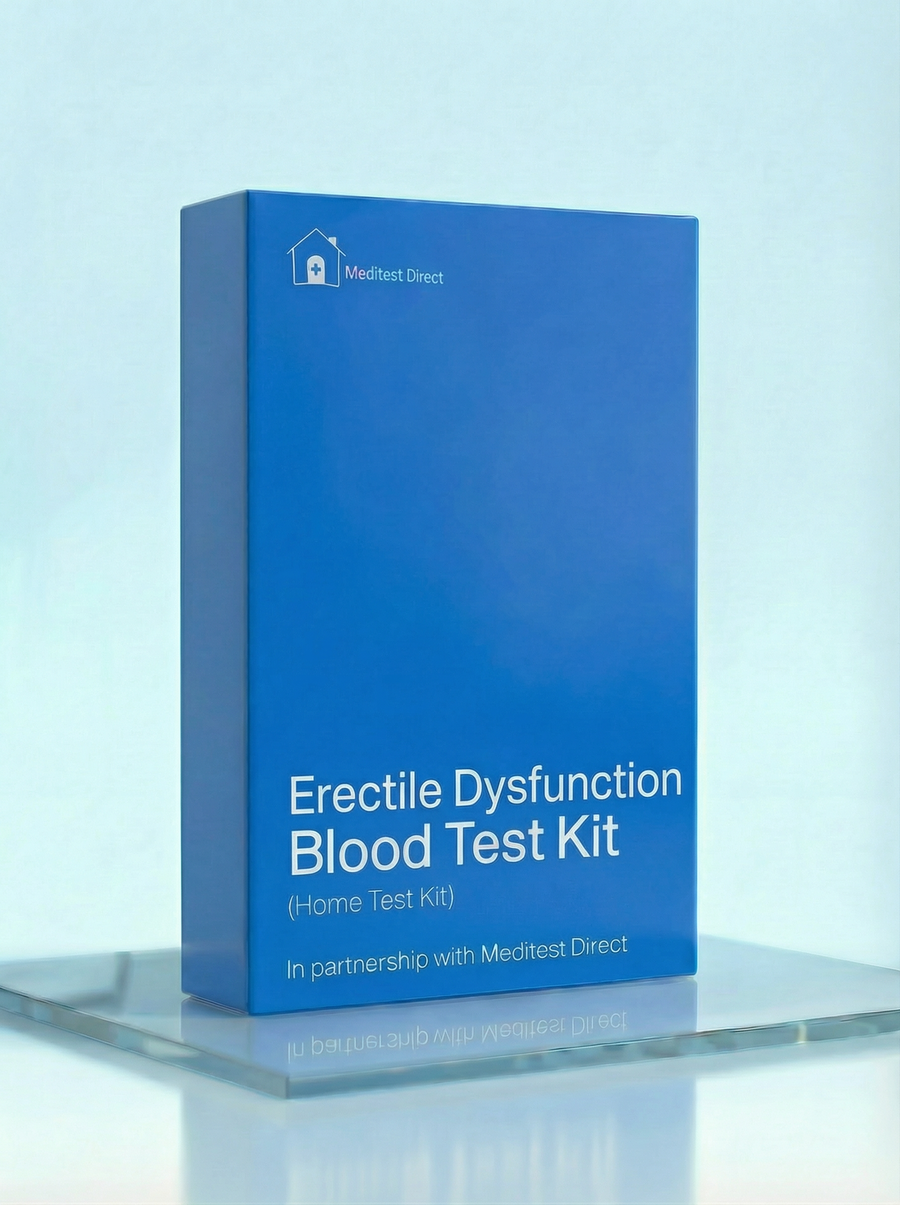
Erectile Dysfunction Blood Test Kit
£85 ✓ In Stock
Your sample goes to a UKAS accredited laboratory meeting ISO 15189 standards.
After you receive your order confirmation email, please reply with your date of birth.
How it works
Your testing journey
From order to results in four simple steps. Full transparency on where each step happens and what it costs.

Receive your kit by post
Dispatched same working day if ordered before 3pm. Royal Mail Tracked delivery, typically 1–3 working days. 90% of kits arrive within 24 hours.

Visit a partner clinic
Book a phlebotomy appointment at one of our 365+ UK partner clinics. Take your kit with you — the phlebotomist will collect your sample using the materials provided.
Phlebotomy fee applies (paid at clinic)
Venous blood draw at a clinic
A trained phlebotomist takes a small blood sample from a vein in your arm using the vacutainers provided in your kit. The appointment takes around 10 minutes.

Return by prepaid envelope
Seal your sample in the biohazard bag provided and drop it in any Royal Mail postbox using the prepaid Tracked 24 envelope. Post Monday–Thursday for best results.
Venous Blood Collection Kit
This kit is sent to you and taken to your chosen clinic. The phlebotomist will collect your sample using the materials provided.
- 1Vacutainer blood collection tubes
- 2Needle and butterfly needle
- 3Tourniquet
- 4Alcohol swab
- 5Cotton wool and gauze
- 6Adhesive plaster
- 7Biohazard specimen bag
- 8Prepaid return envelope (Royal Mail Tracked 24)
- 9Laboratory request form
- 10Instructions for the phlebotomist
Testosterone is the primary male sex hormone, produced mainly by the testes under control of the pituitary gland. It's essential for sexual desire (libido), erectile function, sperm production, muscle mass, bone density, red blood cell production, mood, and energy levels. Testosterone levels naturally decline with age—approximately 1-2% per year after age 30—but some men develop clinically low testosterone (hypogonadism) that causes symptoms. Low testosterone is a common and treatable cause of erectile dysfunction, affecting an estimated 40% of men over 45 to some degree. Symptoms include reduced libido, difficulty achieving or maintaining erections, fatigue, reduced muscle mass, increased body fat, low mood, and poor concentration. However, ED can occur with normal testosterone levels (when vascular or neurological factors are the cause), and some men with low testosterone maintain erectile function. Testosterone should be measured in the morning (6-10am) when levels peak. If low, repeat testing and further investigation are needed before treatment. Results outside the normal range may need a follow-up with your GP.
Prolactin is a hormone produced by the pituitary gland that's primarily known for stimulating milk production in women. In men, prolactin is normally present at low levels and plays a role in reproductive function. However, elevated prolactin (hyperprolactinaemia) in men suppresses the production of GnRH (gonadotropin-releasing hormone), which in turn reduces testosterone production and causes erectile dysfunction, reduced libido, and potentially infertility. Causes of elevated prolactin include pituitary tumours (prolactinomas—usually benign), certain medications (particularly antipsychotics, some antidepressants, and anti-nausea drugs), hypothyroidism, kidney disease, and stress. Even mildly elevated prolactin can contribute to sexual dysfunction. Prolactin levels are affected by recent sleep, stress, nipple stimulation, and sexual activity, so the test should be taken at least one hour after waking, in a non-stressed state, and without recent sexual activity or nipple stimulation. Results outside the normal range may need a follow-up with your GP.
TSH is produced by the pituitary gland to regulate the thyroid gland, which controls metabolism and affects virtually every organ system including sexual function. TSH works as part of a feedback loop—when thyroid hormone levels are low, TSH rises to stimulate the thyroid; when thyroid levels are high, TSH falls. TSH is the most sensitive initial marker of thyroid dysfunction. Both hypothyroidism (underactive thyroid, indicated by high TSH) and hyperthyroidism (overactive thyroid, indicated by low TSH) can cause erectile dysfunction and reduced libido. Hypothyroidism is more common and causes fatigue, weight gain, depression, and reduced sexual interest. Studies suggest that 60-80% of men with hypothyroidism experience some degree of sexual dysfunction. Hyperthyroidism can cause premature ejaculation and, less commonly, ED. Thyroid dysfunction also affects testosterone metabolism and SHBG (sex hormone-binding globulin) levels, further impacting sexual function. Thyroid disorders are readily treatable, and sexual function typically improves with treatment. Results outside the normal range may need a follow-up with your GP.
Total cholesterol measures all cholesterol in your blood. While cholesterol is essential for hormone production (including testosterone), cell membranes, and vitamin D synthesis, elevated levels damage blood vessels over time through atherosclerosis. Erectile dysfunction is fundamentally a vascular condition—achieving and maintaining an erection requires healthy blood flow to the penis. The same arterial disease that causes heart attacks and strokes also impairs erectile function, often years before cardiovascular symptoms appear. In fact, ED is considered an early warning sign of cardiovascular disease. Results outside the normal range may need a follow-up with your GP.
LDL (low-density lipoprotein) cholesterol is often called 'bad cholesterol' because elevated levels drive atherosclerosis—the build-up of fatty plaques in artery walls. LDL particles deposit cholesterol in the arterial lining, triggering inflammation and plaque formation that narrows and stiffens arteries. The penile arteries are smaller than coronary arteries, so they're often affected earlier by the same disease process. Reducing LDL through lifestyle changes and/or medication can improve both cardiovascular health and erectile function. Results outside the normal range may need a follow-up with your GP.
Non-HDL cholesterol is calculated by subtracting protective HDL from total cholesterol, representing all potentially harmful cholesterol particles—LDL plus VLDL and other atherogenic fractions. Many experts consider non-HDL a superior cardiovascular risk marker compared to LDL alone because it captures the full atherogenic burden. Elevated non-HDL cholesterol indicates increased risk of vascular erectile dysfunction. The target is below 4.0 mmol/L, with lower targets for those at higher cardiovascular risk. Results outside the normal range may need a follow-up with your GP.
HDL (high-density lipoprotein) cholesterol is called 'good cholesterol' because it performs reverse cholesterol transport—collecting excess cholesterol from tissues and artery walls and returning it to the liver for disposal. Higher HDL levels are protective against cardiovascular disease and support healthy blood flow, including to the penis. Levels above 1.0 mmol/L are desirable. Regular aerobic exercise and maintaining a healthy weight are effective ways to raise HDL. Smoking significantly lowers HDL and impairs erectile function through multiple mechanisms. Results outside the normal range may need a follow-up with your GP.
The cholesterol: HDL ratio indicates what proportion of your total cholesterol is protective HDL versus potentially harmful LDL and other fractions. A lower ratio indicates a more favourable lipid profile and reduced cardiovascular risk. The ratio is used in cardiovascular risk assessment tools to calculate your overall risk of heart attack or stroke. An ideal ratio is below 4; a ratio above 6 indicates significantly increased cardiovascular risk. Lower ratios support better vascular health and erectile function. Results outside the normal range may need a follow-up with your GP.
Triglycerides are fats that circulate in your blood, providing energy to cells. Elevated triglycerides are associated with cardiovascular disease and are often part of metabolic syndrome—a cluster of conditions including abdominal obesity, high blood pressure, elevated blood sugar, and abnormal cholesterol that significantly increases the risk of both heart disease and erectile dysfunction. High triglycerides often reflect excess calorie intake, high sugar/refined carbohydrate consumption, alcohol, or poorly controlled diabetes. The target is below 1.7 mmol/L. Results outside the normal range may need a follow-up with your GP.
HbA1c measures your average blood glucose control over the past 2-3 months by detecting how much glucose has attached to haemoglobin in your red blood cells. It's the gold standard test for screening for and monitoring diabetes. Diabetes is one of the most significant risk factors for erectile dysfunction—studies suggest that 35-75% of men with diabetes experience ED, often at a younger age than men without diabetes. High blood sugar damages blood vessels (causing atherosclerosis) and nerves (diabetic neuropathy), both of which impair erectile function. The blood vessels supplying the penis are particularly vulnerable. Additionally, diabetes is associated with lower testosterone levels and increased inflammation. Identifying prediabetes (HbA1c 42-47 mmol/mol) gives an opportunity to intervene before full diabetes develops. Normal is below 42 mmol/mol; diabetes is diagnosed at 48 mmol/mol or above. Results outside the normal range may need a follow-up with your GP.
This test is for screening and information only — it is not a medical diagnosis or professional advice. Please have your results reviewed by a qualified doctor or healthcare provider who can explain what they mean for your personal health situation. If your results show anything outside the normal range, or if you're worried about your health, see your doctor as soon as you can. Don't change any medications or treatments based on these results alone — always talk to your healthcare provider first.
NO CLINICS, NO QUEUES, NO HASSLE
Four steps to clarity
 01
01
Pick your panel
Browse over 200 clinically designed test kits and choose the one that fits your goals.
 02
02
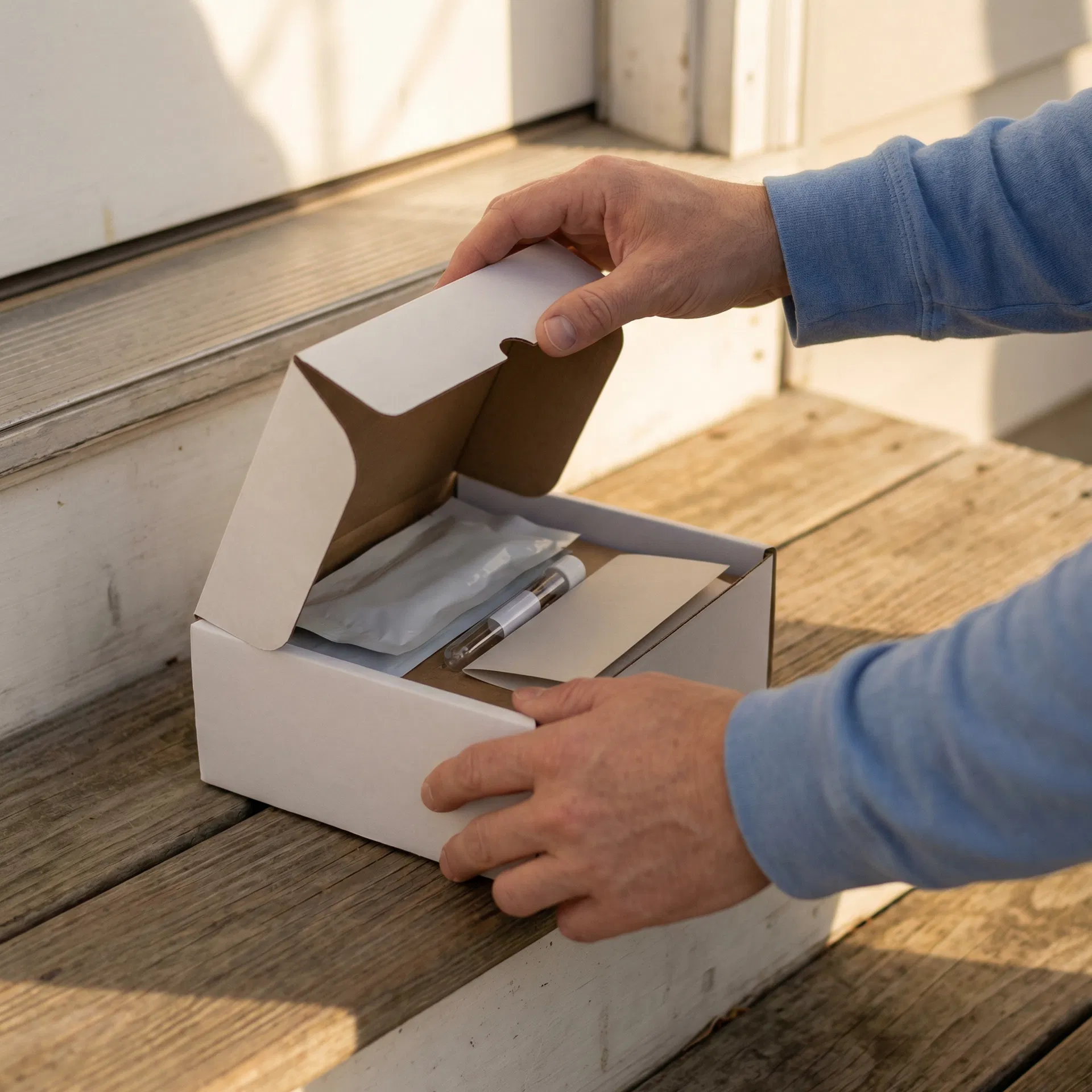
Kit to your door
Everything you need arrives in discreet packaging with step-by-step instructions inside.
 03
03
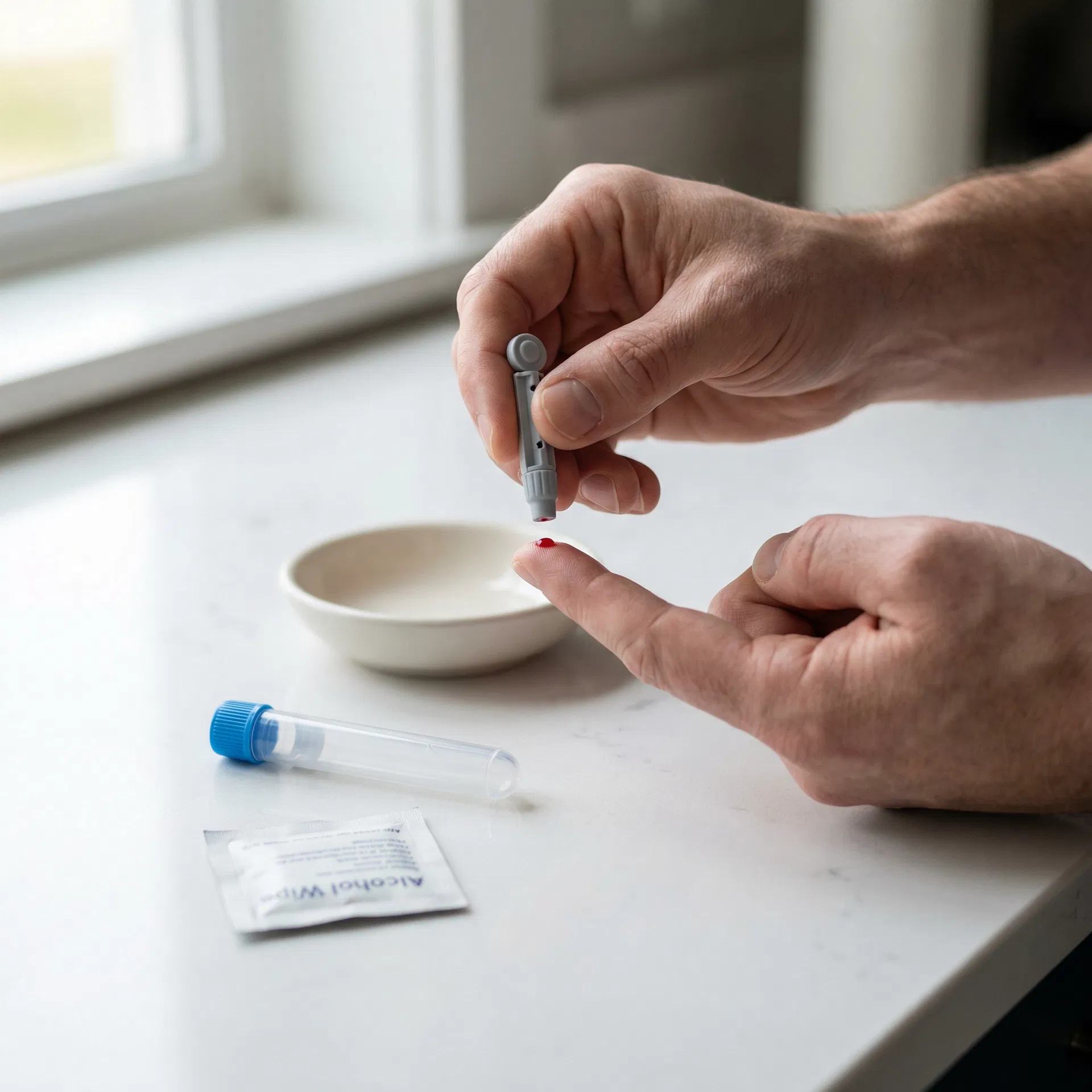
Collect your sample
Follow the simple instructions in your kit — whether it's a finger-prick at home or a venous draw at a partner clinic.
 04
04
Insights delivered
Clear, easy-to-understand results sent to you online with actionable health guidance.
Frequently asked questions
This test measures Total Cholesterol, LDL Cholesterol, Non-HDL Cholesterol, HDL Cholesterol, Total Cholesterol:HDL Ratio. Check the full biomarker list on this page for detailed descriptions.
Check the Special Instructions on this page. General rule: fast 8-12 hours if cholesterol/glucose/insulin included. Most hormone, vitamin, and antibody tests do not require fasting. Morning collection (7-10am) is preferred.
Follow the instructions in your kit. For finger-prick: warm hands, use lancet as directed, fill tube to marked line. For venous: attend a phlebotomy clinic with your lab form. Post same day, avoid Fridays/bank holidays.
Results are typically available within the timeframe shown on this page. You will receive a notification when ready to view online.
You may also be interested in

Advanced Female Hormone Blood Test
A 12-biomarker venous blood panel covering hormones, proteins, thyroid hormones and autoimmunity — ideal for investigating relevant symptoms or monitoring health.
Results estimated in 2 working days
12 biomarkers

Advanced Well Man Blood Test Kit
A 44-biomarker venous blood panel covering cholesterol status, clotting status, diabetes and other key health markers — ideal for comprehensive male health screening across multiple body systems.
Results estimated in 3 working days
44 biomarkers

Advanced TRT (Testosterone Replacement Therapy) Blood Test
A 41-biomarker venous blood panel covering cholesterol status, clotting status, diabetes and other key health markers — ideal for investigating low testosterone, libido, energy, or hormone replacement monitoring.
Results estimated in 2 working days
41 biomarkers

Ultimate Performance Blood Test Kit
A 56-biomarker venous blood panel covering cholesterol status, diabetes, liver function and other key health markers — ideal for athletes and active people tracking training adaptation, recovery, and performance.
Results estimated in 3 working days
56 biomarkers