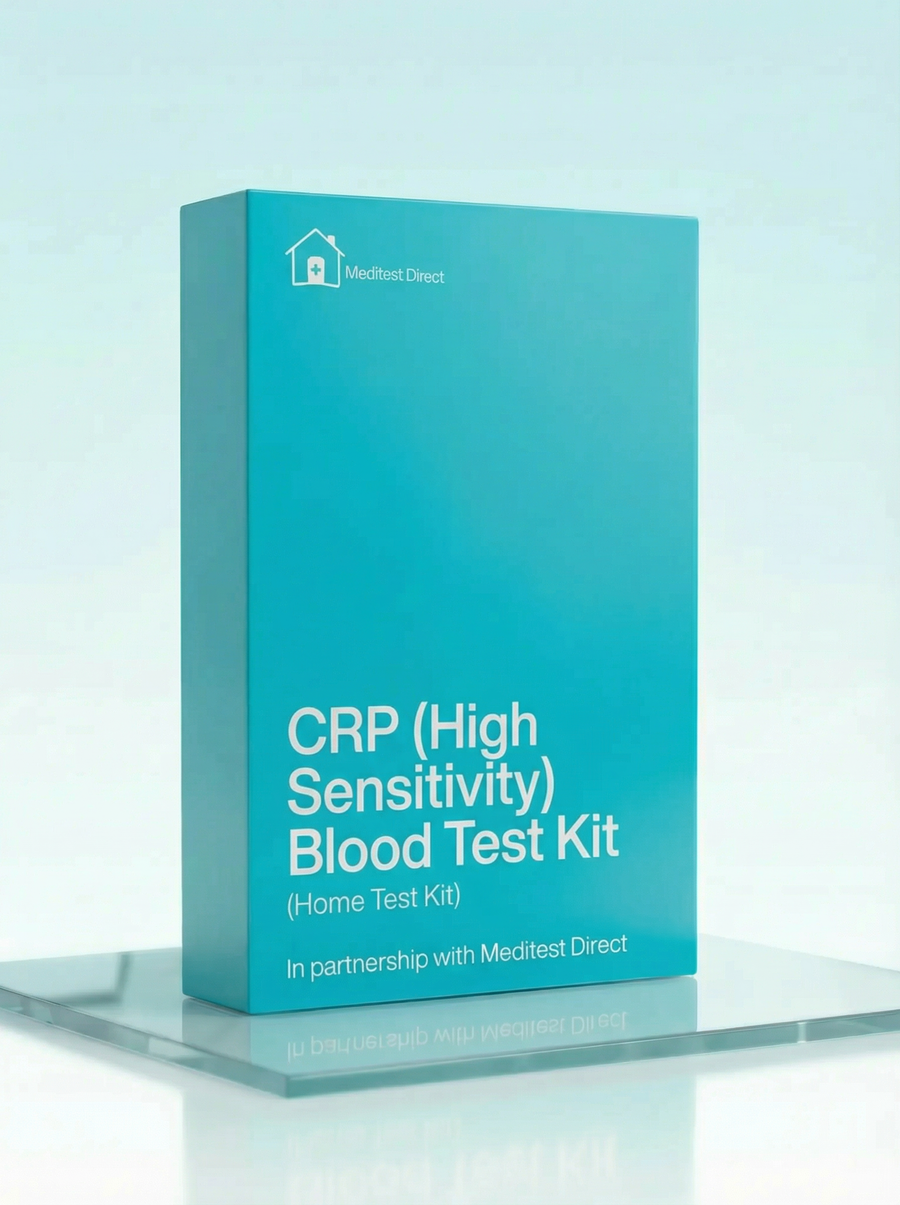
CRP (High Sensitivity) Blood Test Kit
£37 ✓ In Stock
Your sample goes to a UKAS accredited laboratory meeting ISO 15189 standards.
After you receive your order confirmation email, please reply with your date of birth.
How it works
Your testing journey
From order to results in four simple steps. Full transparency on where each step happens and what it costs.

Receive your kit by post
Dispatched same working day if ordered before 3pm. Royal Mail Tracked delivery, typically 1–3 working days. 90% of kits arrive within 24 hours.

Visit a partner clinic
Book a phlebotomy appointment at one of our 365+ UK partner clinics. Take your kit with you — the phlebotomist will collect your sample using the materials provided.
Phlebotomy fee applies (paid at clinic)
Venous blood draw at a clinic
A trained phlebotomist takes a small blood sample from a vein in your arm using the vacutainers provided in your kit. The appointment takes around 10 minutes.

Return by prepaid envelope
Seal your sample in the biohazard bag provided and drop it in any Royal Mail postbox using the prepaid Tracked 24 envelope. Post Monday–Thursday for best results.
Venous Blood Collection Kit
This kit is sent to you and taken to your chosen clinic. The phlebotomist will collect your sample using the materials provided.
- 1Vacutainer blood collection tubes
- 2Needle and butterfly needle
- 3Tourniquet
- 4Alcohol swab
- 5Cotton wool and gauze
- 6Adhesive plaster
- 7Biohazard specimen bag
- 8Prepaid return envelope (Royal Mail Tracked 24)
- 9Laboratory request form
- 10Instructions for the phlebotomist
C-reactive protein (CRP) is an acute-phase protein produced by the liver in response to inflammation anywhere in the body. It's part of the innate immune system and rises rapidly in response to infection, tissue injury, or inflammatory conditions. The high-sensitivity CRP (hs-CRP) assay uses more sensitive measurement techniques than standard CRP tests, allowing detection of very low levels of CRP that indicate chronic, low-grade inflammation. This type of subtle, persistent inflammation—often called 'silent inflammation' because it causes no obvious symptoms—is now understood to play an important role in the development and progression of atherosclerosis (the build-up of fatty plaques in artery walls that underlies most heart attacks and strokes). The link between inflammation and cardiovascular disease is well-established. Atherosclerosis is not simply a matter of cholesterol accumulating in arteries—it's an active inflammatory process. Inflammatory cells infiltrate arterial plaques and contribute to plaque instability, making them more likely to rupture and cause acute events like heart attacks. Studies have consistently shown that people with elevated hs-CRP have increased cardiovascular risk, even when their cholesterol levels are normal. For cardiovascular risk assessment, hs-CRP levels are typically categorised as: less than 1 mg/L indicates lower cardiovascular risk; 1-3 mg/L indicates intermediate risk; and greater than 3 mg/L indicates higher risk. Values above 10 mg/L suggest acute inflammation from infection or other causes rather than chronic low-grade inflammation, and the test should be repeated when well. Several lifestyle factors can help reduce hs-CRP levels: regular physical activity has consistent anti-inflammatory effects; weight loss in overweight individuals reduces inflammation (adipose tissue is a source of inflammatory mediators); a Mediterranean-style diet rich in fruits, vegetables, whole grains, fish, and olive oil has anti-inflammatory properties; stopping smoking reduces inflammation; and moderate alcohol consumption (though excessive alcohol increases inflammation). Statin medications, used primarily to lower cholesterol, also have anti-inflammatory effects and reduce hs-CRP—the JUPITER trial showed that people with elevated hs-CRP but normal LDL cholesterol benefited from statin therapy. Your hs-CRP result should be interpreted alongside other cardiovascular risk factors for a complete picture. Results outside the normal range may need a follow-up with your GP.
This test is for screening and information only — it is not a medical diagnosis or professional advice. Please have your results reviewed by a qualified doctor or healthcare provider who can explain what they mean for your personal health situation. If your results show anything outside the normal range, or if you're worried about your health, see your doctor as soon as you can. Don't change any medications or treatments based on these results alone — always talk to your healthcare provider first.
NO CLINICS, NO QUEUES, NO HASSLE
Four steps to clarity
 01
01
Pick your panel
Browse over 200 clinically designed test kits and choose the one that fits your goals.
 02
02
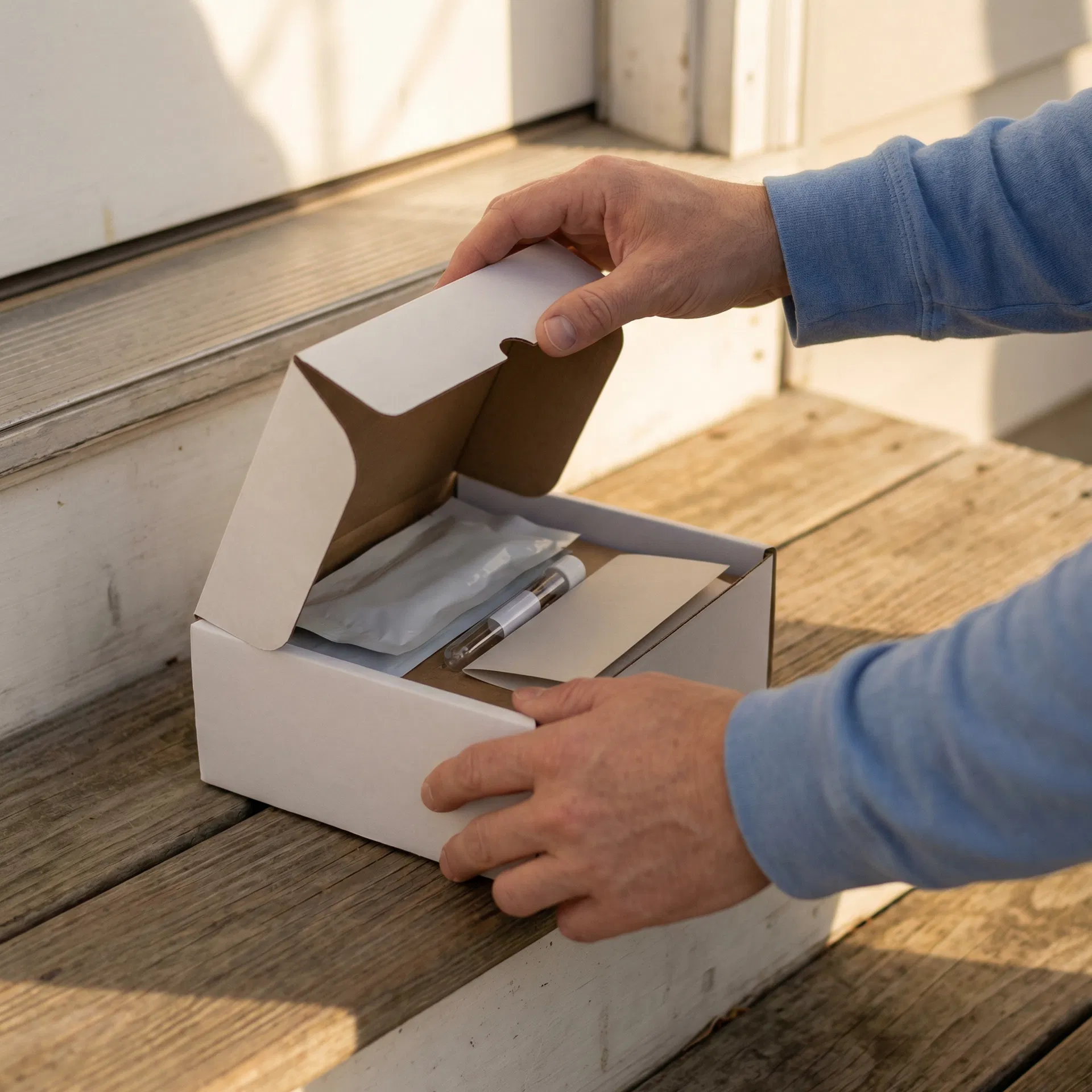
Kit to your door
Everything you need arrives in discreet packaging with step-by-step instructions inside.
 03
03
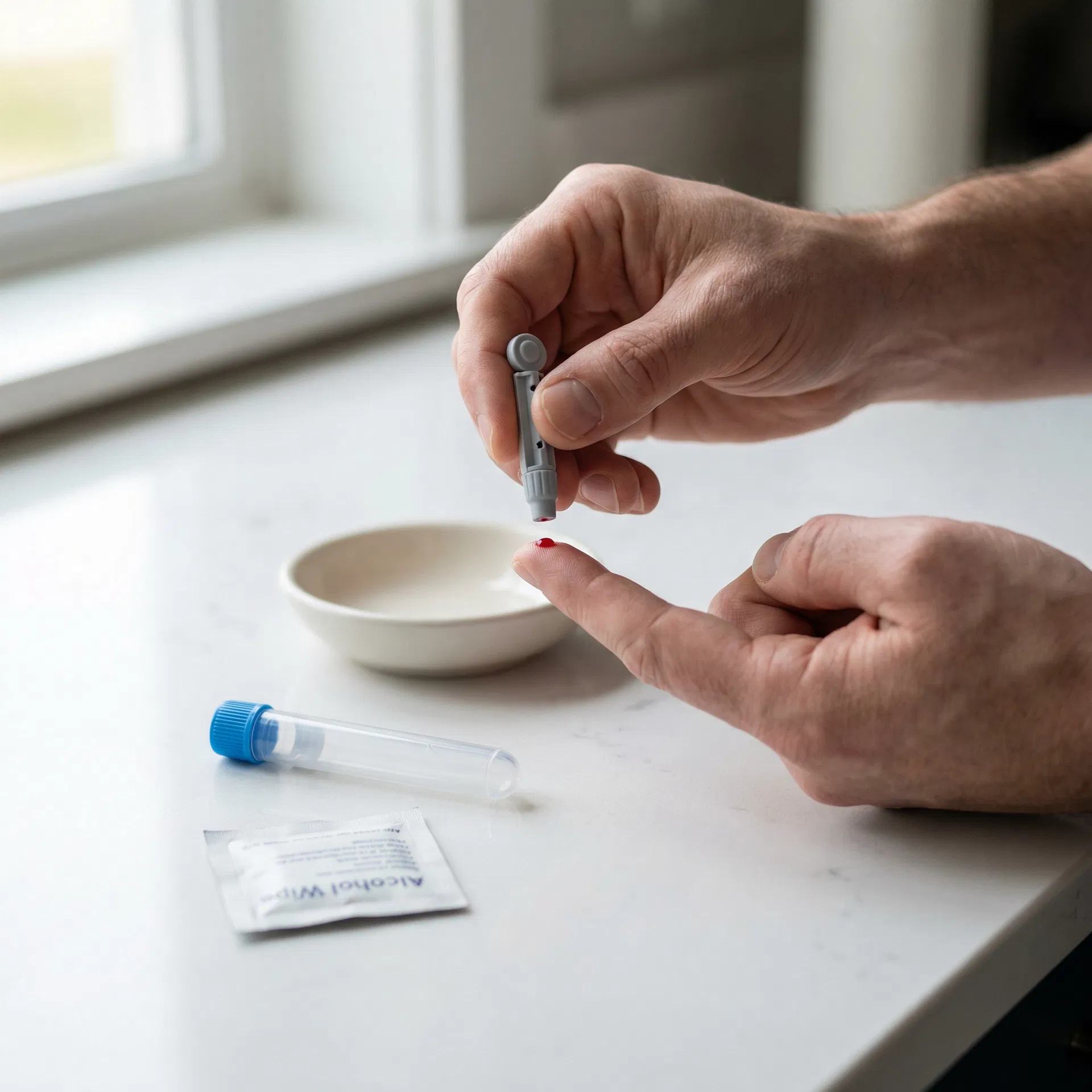
Collect your sample
Follow the simple instructions in your kit — whether it's a finger-prick at home or a venous draw at a partner clinic.
 04
04
Insights delivered
Clear, easy-to-understand results sent to you online with actionable health guidance.
Frequently asked questions
Do not take this test if you currently have a cold, flu, infection, or any acute illness, or if you have had one in the past 2-3 weeks. Also wait at least 2-3 weeks after surgery, significant injury, or dental work. Any of these will dramatically elevate CRP and mask the low-level chronic inflammation this test is designed to detect. Wait until you are fully well for a meaningful baseline result.
Standard CRP tests measure levels in the range of 5-1000+ mg/L, used to detect and monitor significant acute inflammation (infections, autoimmune flares). High-sensitivity CRP (hs-CRP) measures much lower concentrations (0.1-10 mg/L), allowing detection of the subtle chronic low-grade inflammation associated with cardiovascular disease risk. This test uses the high-sensitivity method.
The American Heart Association defines cardiovascular risk categories as: below 1 mg/L (lower risk), 1-3 mg/L (moderate risk), and above 3 mg/L (higher risk). However, hs-CRP is just one component of cardiovascular risk assessment and should be interpreted alongside cholesterol levels, blood pressure, smoking status, family history, and other factors. A single elevated reading should be confirmed with a repeat test 2 weeks later.
Yes, significantly. Obesity, smoking, poor diet, sedentary lifestyle, poor sleep, and chronic stress are all associated with elevated hs-CRP. Weight loss, regular exercise, smoking cessation, and an anti-inflammatory diet (rich in fruits, vegetables, oily fish, and whole grains) have all been shown to reduce hs-CRP levels. Statins also lower CRP independently of their cholesterol-lowering effect.
No. hs-CRP is not affected by recent food intake. You can eat and drink normally before collecting your sample. There is also no specific time of day requirement. The most important preparation factor is ensuring you are well and have not had any recent illness, injury, or surgery.
You may also be interested in

Autoantibodies Profile 2 Blood Test
A 5-biomarker venous blood panel covering autoimmunity — ideal for investigating suspected autoimmune conditions.
Results estimated in 10 working days
5 biomarkers

Autoantibodies Profile 1 Blood Test
A 6-biomarker venous blood panel covering autoimmunity — ideal for investigating suspected autoimmune conditions.
Results estimated in 5 working days
6 biomarkers

Islet Cell Antibodies Blood Test
A single-biomarker venous blood test covering autoimmunity — ideal for investigating suspected autoimmune conditions.
Results estimated in 10 working days
Venous collection
Allergy Screen (Essential Foods) Blood Test
An essential food allergy panel testing for the most common food allergens responsible for IgE-mediated reactions — covering the key foods that account for the majority of food allergies in both children and adults.
Results estimated in 2 working days
9 biomarkers