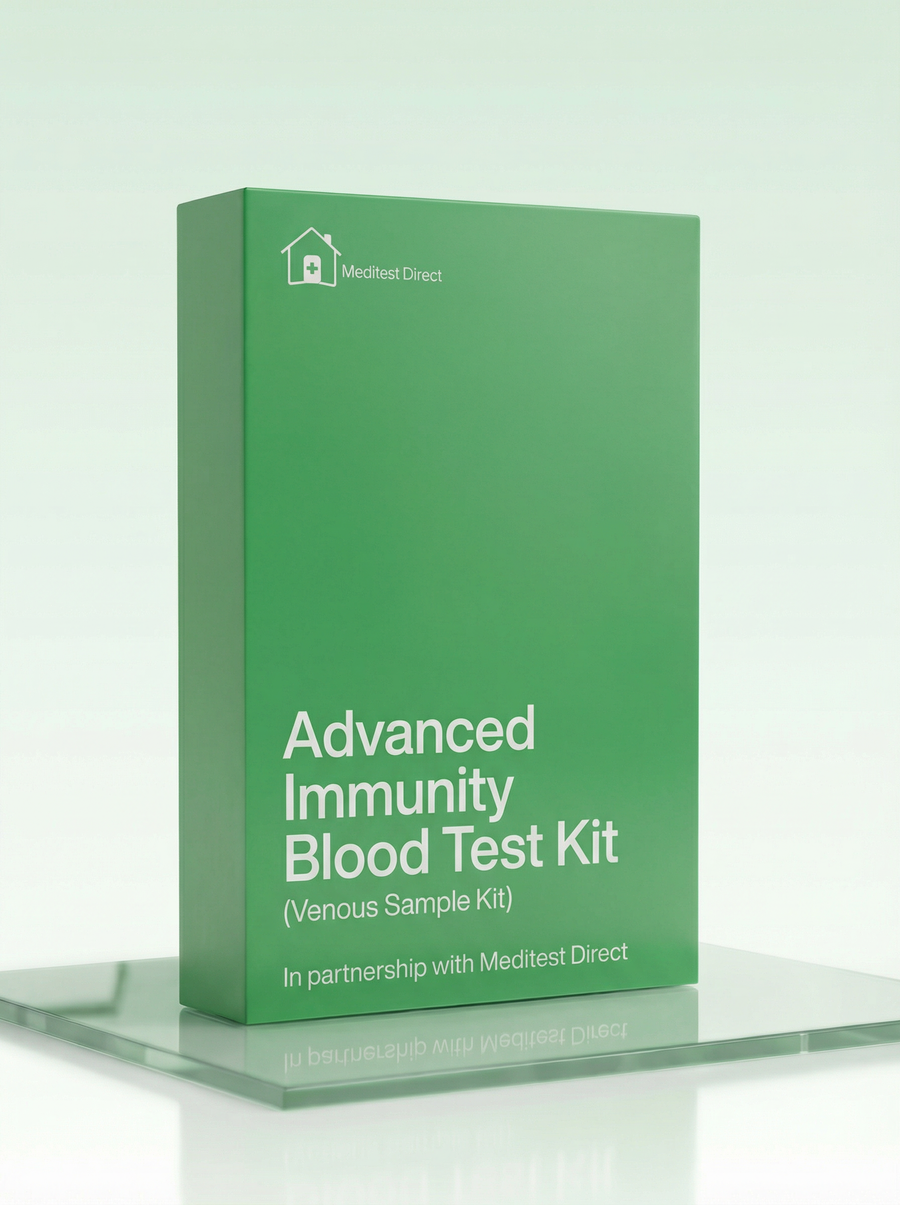
Advanced Immunity Blood Test Kit
£310 ✓ In Stock
Your sample goes to a UKAS accredited laboratory meeting ISO 15189 standards.
After you receive your order confirmation email, please reply with your date of birth.
How it works
Your testing journey
From order to results in four simple steps. Full transparency on where each step happens and what it costs.

Receive your kit by post
Dispatched same working day if ordered before 3pm. Royal Mail Tracked delivery, typically 1–3 working days. 90% of kits arrive within 24 hours.

Visit a partner clinic
Book a phlebotomy appointment at one of our 365+ UK partner clinics. Take your kit with you — the phlebotomist will collect your sample using the materials provided.
Phlebotomy fee applies (paid at clinic)

Multiple samples
This test uses 2 sample types. Instructions for each are included in your kit.

Return by prepaid envelope
Seal your sample in the biohazard bag provided and drop it in any Royal Mail postbox using the prepaid Tracked 24 envelope. Post Monday–Thursday for best results.
Venous Blood Collection Kit
This kit is sent to you and taken to your chosen clinic. The phlebotomist will collect your sample using the materials provided.
- 1Vacutainer blood collection tubes
- 2Needle and butterfly needle
- 3Tourniquet
- 4Alcohol swab
- 5Cotton wool and gauze
- 6Adhesive plaster
- 7Biohazard specimen bag
- 8Prepaid return envelope (Royal Mail Tracked 24)
- 9Laboratory request form
- 10Instructions for the phlebotomist
Saliva Collection Kit
- 1Saliva collection tube with funnel
- 2Biohazard specimen bag
- 3Prepaid return envelope (Royal Mail Tracked 24)
- 4Step-by-step instructions
Hepatitis B surface antibodies (anti-HBs) are produced by your immune system in response to either vaccination or natural infection with hepatitis B. Their presence indicates you're immune to hepatitis B—you're protected from catching it and can't pass it to others. For most people, a level above 10 IU/L indicates adequate immunity. However, if you work in healthcare and perform exposure-prone procedures (EPPs)—surgery, dentistry, or other work where your blood might contact a patient's tissues—you'll need a level above 100 IU/L to be considered immune. If your level is below the threshold, you may need a booster vaccination. Some people don't respond well to the hepatitis B vaccine (non-responders) and may need additional doses or a different vaccination strategy. Results outside the normal range may need a follow-up with your GP.
Hepatitis C antibodies are produced when your immune system encounters the hepatitis C virus (HCV). Unlike hepatitis B, there's no vaccine for hepatitis C—so the presence of antibodies means you've been exposed to the virus at some point. A positive result doesn't necessarily mean you're currently infected; about 20-25% of people clear the virus naturally, but antibodies remain detectable for life. If antibodies are detected, you'll need a follow-up HCV RNA test to check whether you have an active infection. Hepatitis C is transmitted through blood-to-blood contact, most commonly through sharing needles, but also through needlestick injuries, unsterile tattooing/piercing, and rarely through sexual contact. Many people with chronic hepatitis C have no symptoms for years while the virus slowly damages their liver. The good news is that modern antiviral treatments can cure hepatitis C in over 95% of cases. Results outside the normal range may need a follow-up with your GP.
This 4th generation HIV test detects both HIV-1 and HIV-2 antibodies (produced by your immune system) and the p24 antigen (a protein that's part of the virus itself). Including the p24 antigen allows the test to detect infection earlier than antibody-only tests—typically from about 18-45 days after exposure, compared to 3 months for older tests. HIV (Human Immunodeficiency Virus) attacks the immune system, specifically CD4 cells, and without treatment can progress to AIDS. A negative result means no HIV antibodies or antigens were detected—but if you've had a potential exposure in the last 45 days, the test may need repeating after the window period. A positive or reactive result needs confirmatory testing before a diagnosis is made—initial positive results can occasionally be false positives. Modern HIV treatment (antiretroviral therapy) is highly effective, allowing people with HIV to live long, healthy lives and reducing viral load to undetectable levels where the virus cannot be transmitted sexually. Results outside the normal range may need a follow-up with your GP.
Rubella IgG antibodies indicate immunity to rubella (German measles), either from vaccination (typically the MMR vaccine) or from having had the infection in the past. These antibodies remain in your blood for life and protect you against future infection. Rubella immunity is particularly important for women of childbearing age because rubella infection during pregnancy—especially in the first trimester—can cause congenital rubella syndrome, leading to serious birth defects including heart problems, deafness, cataracts, and developmental delays. If you're planning pregnancy and this test shows you're not immune, you should be vaccinated at least one month before trying to conceive. The test reports results as positive (immune), negative (not immune), or equivocal (borderline—immunity is uncertain). If your result is equivocal or negative, vaccination is recommended. Results outside the normal range may need a follow-up with your GP.
Measles IgG antibodies indicate immunity to measles, either from vaccination (MMR vaccine) or natural infection. Measles is one of the most contagious diseases known—it spreads through the air when an infected person coughs or sneezes, and the virus can linger in the air for up to two hours. Before vaccination was widespread, measles caused millions of deaths worldwide. Even today, it can cause serious complications including pneumonia, encephalitis (brain inflammation), and death—particularly in young children, pregnant women, and immunocompromised individuals. A positive result means you're immune and protected. An equivocal result means some antibodies were detected but at uncertain levels—you may or may not be fully protected. A negative result means you're not immune and should consider vaccination, especially if you work in healthcare, travel internationally, or are around young children. Results outside the normal range may need a follow-up with your GP.
Mumps IgG antibodies indicate immunity to mumps, acquired either through vaccination (MMR vaccine) or natural infection. Mumps is a viral infection that classically causes painful swelling of the salivary glands (parotitis), giving the characteristic 'chipmunk cheek' appearance. While often mild in children, mumps can cause more serious complications in adults, including orchitis (testicular inflammation) which can rarely lead to infertility in men, oophoritis (ovarian inflammation) in women, meningitis, encephalitis, and hearing loss. Mumps immunity is particularly important for healthcare workers and those working in schools or universities, where outbreaks can occur. A positive result means you're immune. Equivocal or negative results suggest you may benefit from MMR vaccination—the vaccine protects against measles, mumps, and rubella simultaneously. Results outside the normal range may need a follow-up with your GP.
Varicella zoster virus (VZV) causes two distinct diseases: chickenpox (varicella) on first infection, and shingles (herpes zoster) when the virus reactivates later in life. VZV IgG antibodies indicate you've been infected with the virus at some point and have immune memory against it. Most people in the UK catch chickenpox in childhood—it's highly contagious, spreading through the air and by contact with the rash. After recovery, the virus doesn't leave your body; it lies dormant in nerve cells and can reactivate as shingles, typically decades later when the immune system weakens. A positive VZV IgG result means you've had chickenpox (whether you remember it or not) and are unlikely to catch it again—though you could still develop shingles. Knowing your immunity status is important if you work in healthcare, are planning pregnancy (chickenpox in pregnancy can be severe), or are around immunocompromised individuals who could develop life-threatening complications from the virus. If you're not immune, vaccination is available. Results outside the normal range may need a follow-up with your GP.
This test is for screening and information only — it is not a medical diagnosis or professional advice. Please have your results reviewed by a qualified doctor or healthcare provider who can explain what they mean for your personal health situation. If your results show anything outside the normal range, or if you're worried about your health, see your doctor as soon as you can. Don't change any medications or treatments based on these results alone — always talk to your healthcare provider first.
NO CLINICS, NO QUEUES, NO HASSLE
Four steps to clarity
 01
01
Pick your panel
Browse over 200 clinically designed test kits and choose the one that fits your goals.
 02
02
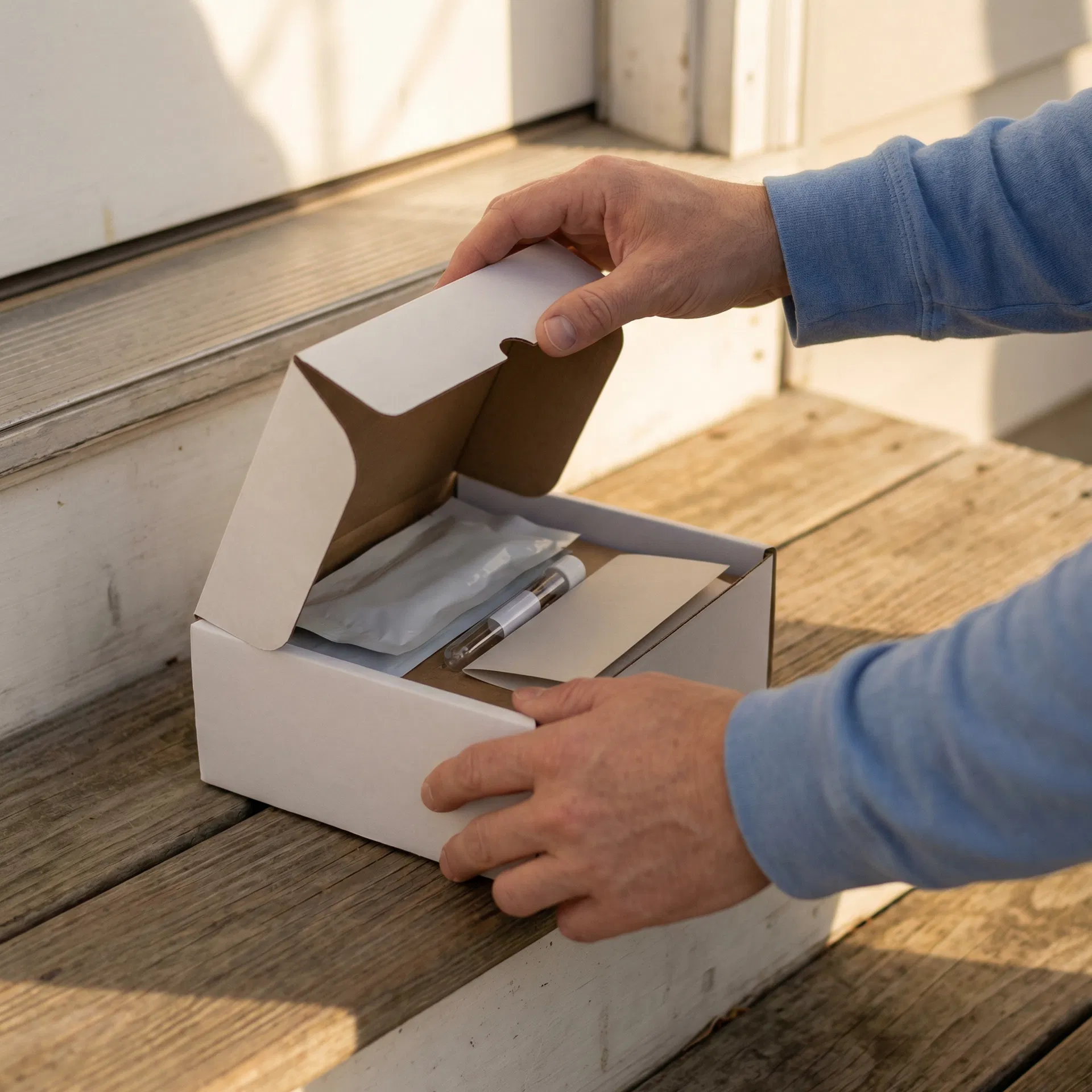
Kit to your door
Everything you need arrives in discreet packaging with step-by-step instructions inside.
 03
03
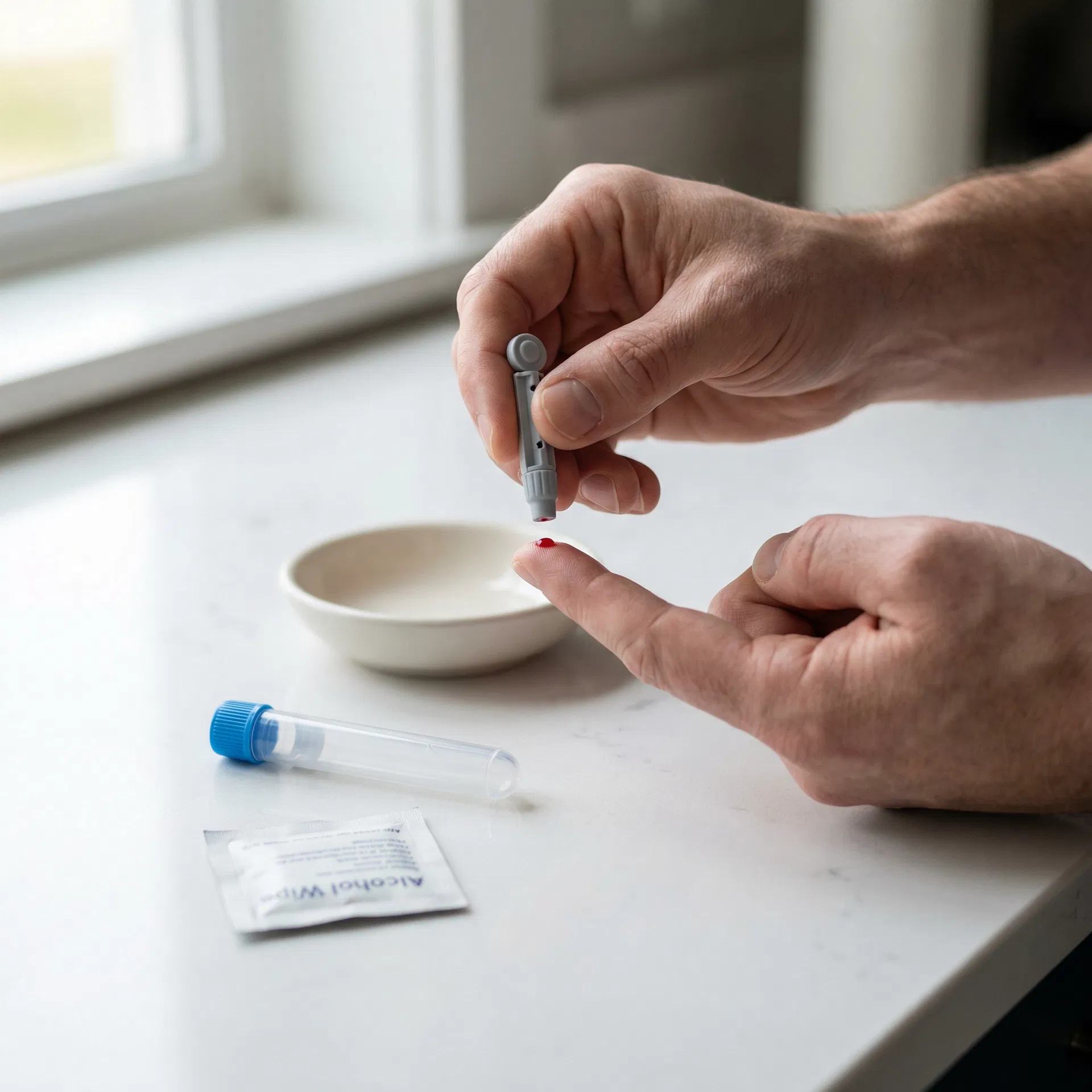
Collect your sample
Follow the simple instructions in your kit — whether it's a finger-prick at home or a venous draw at a partner clinic.
 04
04
Insights delivered
Clear, easy-to-understand results sent to you online with actionable health guidance.
Frequently asked questions
This advanced immunity panel tests multiple markers of immune function simultaneously. The specific markers are listed on this page and typically include immunoglobulins (IgG, IgM, IgA), complement components, and possibly specific infection antibodies.
Immune function testing helps investigate recurrent infections, suspected immunodeficiency, autoimmune conditions, and chronic fatigue. Results help your GP identify whether your immune system is underactive, overactive, or normal.
No. Immune markers are not affected by food.
You may also be interested in

Rubella (German Measles) Acute Infection Status Test (IgM)
A single-biomarker venous blood test covering immunity — ideal for confirming a recent or current rubella infection when symptoms suggest exposure.
Results estimated in 1 working day
1 biomarkers

Rubella (German Measles) Immunity Status Blood Test (IgG)
A single-biomarker venous blood test covering immunity — ideal for women planning pregnancy, healthcare workers, or anyone confirming immunity to German measles.
Results estimated in 1 working day
1 biomarkers

Mumps Acute Infection Status Blood Test (IgM)
A single-biomarker venous blood,saliva test covering immunity — ideal for confirming a recent or current mumps infection during a suspected outbreak.
Results estimated in 1 working day
1 biomarkers

Allergy Screen (Essential Foods) Blood Test
An essential food allergy panel testing for the most common food allergens responsible for IgE-mediated reactions — covering the key foods that account for the majority of food allergies in both children and adults.
Results estimated in 2 working days
9 biomarkers