


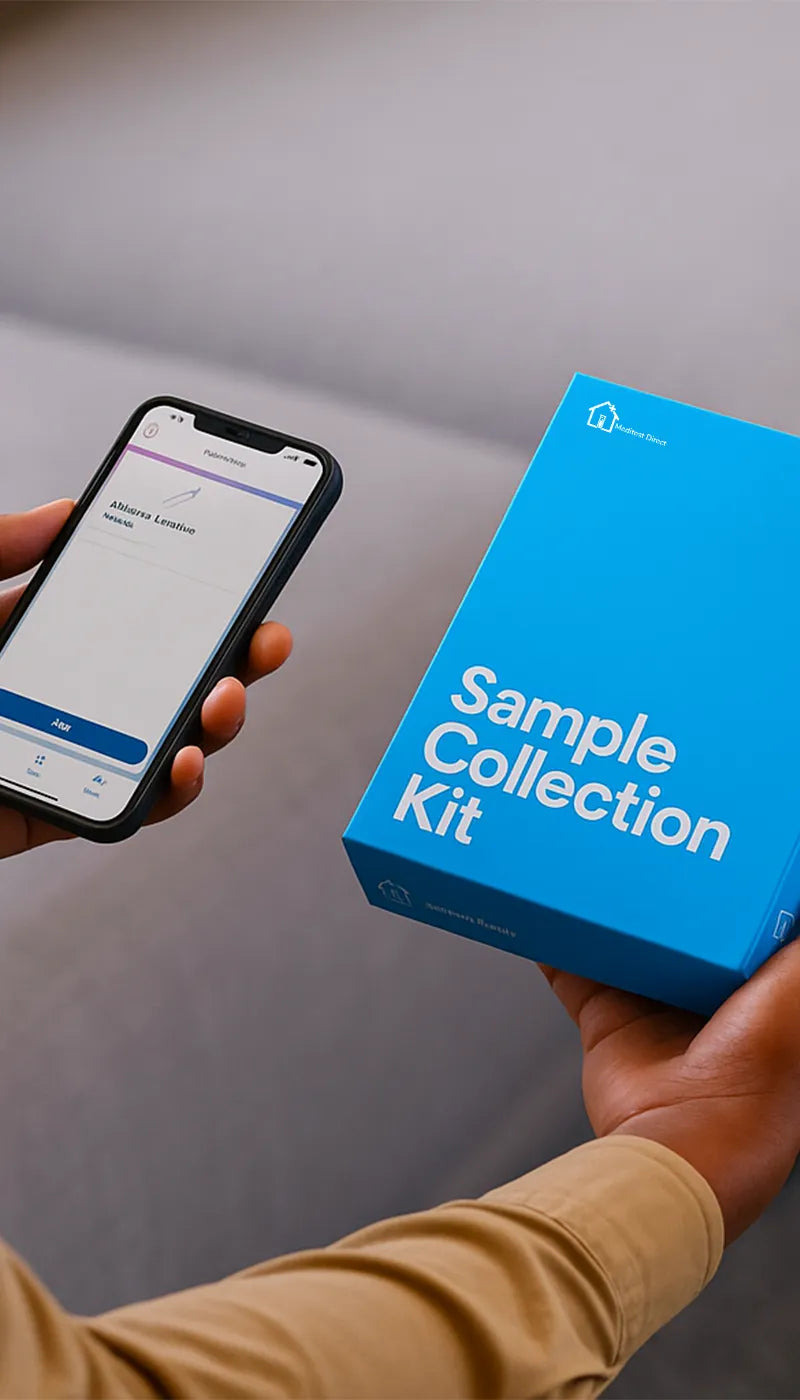
- 1×Blood collection tube
- 2×Single-use lancets
- 2×Alcohol cleansing wipes
- 1×Plaster
- 1×Protective transport bag
- 1×Laboratory Request Form
- 1×Pre-paid Royal Mail Tracked 24 return envelope
- 1×Instructions for use
Skip to product information


Advanced Polycystic Ovary Syndrome (PCOS) Blood Test
£215.00
Description
The Advanced Polycystic Ovary Syndrome (PCOS) Blood Test measures 19 biomarkers covering reproductive hormones, thyroid function, cholesterol, and diabetes risk—giving you a comprehensive picture of the hormonal and metabolic factors that contribute to PCOS. It includes FSH, LH, oestradiol, AMH, testosterone (total and free), prolactin, SHBG, full thyroid panel with antibodies, complete lipid profile, and HbA1c for long-term blood sugar assessment.
A good fit if you're experiencing symptoms that suggest PCOS—irregular or absent periods, excess facial or body hair, acne, difficulty losing weight, or fertility concerns. Also useful if you've already been diagnosed and want to monitor your hormone levels and metabolic health over time, or if you're investigating why your periods have become irregular. The combination of hormone and metabolic markers helps identify which aspects of PCOS are most relevant to you. Results outside the normal range may need a follow-up with your GP.
What's covered in the price: You get the home test kit (finger-prick) and professional lab analysis. Everything you need to collect your sample at home is included—just follow the instructions, post it back in the prepaid envelope, and your results will be ready within 4 working days.
Results ready within 4 working days
Your sample goes to a UKAS accredited laboratory meeting ISO 15189 standards.
Action Required: Once your order confirmation arrives, please reply to the email with your date of birth. This helps us process your order quickly and avoid any delays.
Home Test Kit
This test uses a finger-prick blood sample that you collect yourself at home. Everything you need is included in the kit.
Key Steps:
- Read First: Go through all the instructions before you start. Proper collection technique is essential for accurate results.
- Warm Up: Warm your hands before collecting—this makes blood flow easier and collection quicker.
- Post Promptly: Use the prepaid envelope to return your sample. Post on Monday, Tuesday, or Wednesday to avoid weekend delays in transit.
Timing Your Test: For the most accurate hormone results, collect your sample on days 2-5 of your menstrual cycle (day 1 is the first day of proper bleeding, not spotting). This is when baseline hormone levels are most stable and comparable to reference ranges. If your periods are irregular or absent—which is common with PCOS—you can take the test on any day. Just note when you collected it so your doctor can interpret results in context.
Fasting Requirements: Avoid fatty foods for 8 hours before collecting your sample—this ensures accurate cholesterol and triglyceride results. You don't need to fast completely; water and plain tea or coffee (without milk) are fine.
Biotin Supplements: Stop biotin supplements for 2 days before testing. Biotin (vitamin B7) is found in many hair, skin, and nail supplements and can interfere with hormone assays, potentially giving misleading results. If biotin is prescribed by your doctor, discuss timing with them first.
Thyroid Medication: If you take thyroid medication (levothyroxine, liothyronine), collect your sample before taking your morning dose. Let your doctor know you did this when reviewing results.
Hormonal Contraception: The pill, patch, injection, implant, and hormonal IUDs all affect your hormone levels. If you're on hormonal contraception, your results will reflect the medicated state rather than your natural hormone levels. This is still useful information, but discuss it with your doctor when interpreting results. If you want to see your natural hormone profile, you'd need to stop contraception (use barrier methods) for at least one full cycle before testing—but only do this if appropriate for your situation.
Understanding PCOS Diagnosis: PCOS is diagnosed using the Rotterdam criteria—you need at least 2 of 3 features: irregular or absent periods, clinical or biochemical signs of excess androgens (high testosterone, acne, hirsutism), or polycystic ovaries on ultrasound. Blood tests alone can't diagnose PCOS—they're one part of the picture alongside symptoms and sometimes ultrasound. This test helps identify hormonal patterns consistent with PCOS and screens for the metabolic complications that often accompany it.
Total cholesterol measures all the cholesterol circulating in your blood—both LDL ('bad') and HDL ('good') combined. Cholesterol is a waxy, fat-like substance that your body needs for building cell membranes, making hormones (including oestrogen and testosterone), and producing vitamin D. Your liver makes most of your cholesterol, with some coming from food. Women with PCOS have an increased risk of dyslipidaemia (abnormal cholesterol levels) due to insulin resistance, which affects how your body processes fats. Elevated total cholesterol increases cardiovascular risk, though the breakdown between LDL and HDL matters more than the total number alone. Results outside the normal range may need a follow-up with your GP.
Low-density lipoprotein (LDL) cholesterol is often called 'bad' cholesterol because it carries cholesterol to your arteries, where it can accumulate in the vessel walls and form plaques. Over time, this plaque build-up (atherosclerosis) narrows arteries and increases the risk of heart attack and stroke. Women with PCOS tend to have higher LDL levels than women without PCOS, partly due to insulin resistance and partly due to the hormonal imbalances that affect fat metabolism. Lifestyle factors—diet, exercise, weight management—can significantly improve LDL levels. Results outside the normal range may need a follow-up with your GP.
High-density lipoprotein (HDL) cholesterol is called 'good' cholesterol because it acts as a scavenger, picking up excess cholesterol from your bloodstream and artery walls and transporting it back to your liver for disposal. Higher HDL levels are associated with lower cardiovascular risk. Women with PCOS often have lower HDL than women without the condition, which contributes to their increased cardiovascular risk. Regular physical activity, maintaining a healthy weight, and eating healthy fats (like those in olive oil, nuts, and oily fish) can help raise HDL levels. Results outside the normal range may need a follow-up with your GP.
Non-HDL cholesterol is calculated by subtracting HDL ('good') cholesterol from total cholesterol. It represents all the potentially harmful cholesterol particles in your blood—not just LDL, but also VLDL and other atherogenic particles. Many cardiologists consider non-HDL cholesterol a better predictor of cardiovascular risk than LDL alone, particularly in people with metabolic conditions like PCOS where triglycerides are often elevated. Non-HDL captures the full picture of harmful cholesterol regardless of triglyceride levels. Results outside the normal range may need a follow-up with your GP.
The total cholesterol to HDL ratio is calculated by dividing your total cholesterol by your HDL cholesterol. This ratio provides a quick snapshot of your cardiovascular risk profile—it tells you how much of your total cholesterol is the protective HDL type versus potentially harmful types. A ratio below 4 is considered good; above 6 indicates higher cardiovascular risk. For women with PCOS, this ratio is often elevated due to both lower HDL and higher LDL/triglycerides. Improving this ratio through lifestyle changes (exercise, diet, weight management) can significantly reduce long-term cardiovascular risk. Results outside the normal range may need a follow-up with your GP.
Triglycerides are the most common type of fat in your body, stored in fat cells and released for energy between meals. They come from the food you eat (especially carbohydrates and fats) and are also made by your liver. High triglycerides are strongly associated with insulin resistance—when your cells don't respond well to insulin, your liver produces more triglycerides. Women with PCOS frequently have elevated triglycerides as part of the metabolic syndrome pattern. Very high triglycerides (above 10 mmol/L) can cause pancreatitis, but even moderately elevated levels contribute to cardiovascular risk. Reducing refined carbohydrates and alcohol, exercising regularly, and managing weight are effective strategies for lowering triglycerides. Results outside the normal range may need a follow-up with your GP.
HbA1c measures the percentage of haemoglobin in your red blood cells that has glucose attached to it. Because red blood cells live for about 3 months, HbA1c reflects your average blood sugar levels over that period—it's not affected by what you ate yesterday or whether you fasted before the test. Women with PCOS have a significantly increased risk of developing insulin resistance, prediabetes, and type 2 diabetes—up to 5-10 times higher than women without PCOS. HbA1c below 42 mmol/mol is normal; 42-47 indicates prediabetes (increased risk); 48 or above is diagnostic of diabetes. Early detection allows for lifestyle interventions that can prevent or delay progression to diabetes. Results outside the normal range may need a follow-up with your GP.
FSH is produced by your pituitary gland and is essential for ovarian follicle development. Each month, FSH stimulates a cohort of follicles to grow, with usually one becoming dominant and releasing an egg at ovulation. In PCOS, FSH levels are typically normal or slightly low—it's the relationship between FSH and LH that's abnormal. The classic PCOS pattern shows an elevated LH:FSH ratio (often greater than 2:1 or 3:1), reflecting disrupted signalling between the brain and ovaries. This hormonal imbalance contributes to the failure of follicles to develop properly and ovulate, leading to irregular periods and fertility difficulties. FSH alone isn't diagnostic but helps complete the hormonal picture. Results outside the normal range may need a follow-up with your GP.
LH is produced by your pituitary gland and triggers ovulation—the mid-cycle LH surge causes the dominant follicle to release its egg. LH also stimulates the theca cells in your ovaries to produce androgens (male hormones like testosterone). In PCOS, LH is often elevated, particularly relative to FSH. This elevated LH drives excess androgen production by the ovaries, contributing to symptoms like acne, hirsutism (excess hair growth), and disrupted ovulation. The elevated LH:FSH ratio (typically >2:1) is a characteristic finding in PCOS, though not all women with PCOS show this pattern. Persistently high LH without a proper surge prevents normal ovulation. Results outside the normal range may need a follow-up with your GP.
Oestradiol is the main oestrogen in women of reproductive age, primarily produced by developing ovarian follicles. It regulates the menstrual cycle, develops the uterine lining for potential pregnancy, and maintains bone density, skin health, and cardiovascular function. In a normal cycle, oestradiol rises as follicles develop, peaks just before ovulation, and has a secondary rise in the luteal phase. In PCOS, oestradiol levels are often relatively stable rather than showing normal cyclical variation—this reflects the lack of proper follicle development and ovulation. Chronic oestrogen exposure without the balancing effect of progesterone (which requires ovulation) can increase the risk of endometrial hyperplasia. Results outside the normal range may need a follow-up with your GP.
AMH is produced by the granulosa cells of small developing follicles in your ovaries. It's commonly used as a marker of ovarian reserve (how many eggs you have left), but in PCOS, it has a different significance. Women with PCOS typically have elevated AMH—often 2-4 times normal levels—because they have an increased number of small antral follicles in their ovaries (the 'polycystic' appearance on ultrasound). These follicles produce AMH but fail to develop into mature, ovulating follicles. AMH above 35 pmol/L is increasingly being used as a diagnostic criterion for PCOS in some guidelines. Unlike other hormones, AMH is relatively stable throughout the menstrual cycle and can be measured on any day. Very high AMH can also indicate how severely affected ovarian function is. Results outside the normal range may need a follow-up with your GP.
Testosterone is primarily thought of as a male hormone, but women produce it too—in the ovaries and adrenal glands—and it plays important roles in libido, energy, and maintaining muscle and bone. In PCOS, testosterone is often elevated, causing the androgenic symptoms that many women find distressing: excess facial and body hair (hirsutism), acne, oily skin, and male-pattern hair thinning. The excess testosterone comes mainly from the ovaries, driven by elevated LH, but the adrenal glands can also contribute. Elevated testosterone is one of the Rotterdam criteria for PCOS diagnosis (biochemical hyperandrogenism). Total testosterone measures all testosterone in your blood—both bound and free. Results outside the normal range may need a follow-up with your GP.
Most testosterone in your blood is bound to proteins—SHBG (tightly bound, inactive) and albumin (loosely bound). Only about 1-3% circulates as free testosterone, which is the biologically active form that can enter cells and cause effects. This test calculates free testosterone from total testosterone, SHBG, and albumin. Free testosterone is often more clinically meaningful than total testosterone in PCOS because women with PCOS typically have low SHBG—this means even if total testosterone is only mildly elevated, free testosterone may be significantly elevated. Free testosterone better correlates with symptoms like hirsutism and acne than total testosterone does. Results outside the normal range may need a follow-up with your GP.
Prolactin is produced by your pituitary gland and is best known for stimulating milk production during breastfeeding. However, elevated prolactin outside of pregnancy and breastfeeding (hyperprolactinaemia) can cause symptoms that mimic PCOS—irregular or absent periods, fertility problems, and sometimes even mild hirsutism. Because of this overlap, prolactin is routinely checked when investigating PCOS-like symptoms to rule out hyperprolactinaemia as an alternative diagnosis. Causes of high prolactin include pituitary adenomas (usually benign), certain medications, hypothyroidism, and stress. Prolactin can be mildly elevated in some women with PCOS, but very high levels warrant further investigation. Results outside the normal range may need a follow-up with your GP.
SHBG is a protein produced by your liver that binds sex hormones—particularly testosterone and oestrogen—and controls how much is free and available to your tissues. Low SHBG is a hallmark of PCOS and is closely linked to insulin resistance. When SHBG is low, more testosterone is free and active, even if total testosterone is only mildly elevated—this contributes to hyperandrogenic symptoms like acne and hirsutism. SHBG is suppressed by high insulin levels and androgens, creating a vicious cycle in PCOS. Weight loss and medications that improve insulin sensitivity (like metformin) can help raise SHBG levels. SHBG is also needed to calculate free testosterone accurately. Results outside the normal range may need a follow-up with your GP.
TSH is produced by your pituitary gland and controls how much thyroid hormone your thyroid produces. It works in a feedback loop—when thyroid hormones are low, TSH rises to stimulate the thyroid; when thyroid hormones are high, TSH drops. TSH is the most sensitive marker for thyroid dysfunction. Thyroid disorders are more common in women with PCOS, and thyroid dysfunction can cause symptoms that overlap with PCOS—irregular periods, weight changes, fatigue, hair changes, and fertility problems. Hypothyroidism (underactive thyroid) can also raise prolactin and worsen metabolic parameters. Checking thyroid function is essential when investigating PCOS-like symptoms to ensure there isn't a thyroid component. Results outside the normal range may need a follow-up with your GP.
Free T4 is the unbound, active portion of thyroxine (T4), the main hormone produced by your thyroid gland. T4 acts as a reservoir that gets converted to the more active T3 in your tissues. Measuring Free T4 alongside TSH helps clarify the nature of thyroid dysfunction—for example, high TSH with low Free T4 confirms hypothyroidism (underactive thyroid), while low TSH with high Free T4 indicates hyperthyroidism (overactive thyroid). Free T4 is preferred over total T4 because it's not affected by changes in binding proteins. Results outside the normal range may need a follow-up with your GP.
Free T3 is the unbound, active form of triiodothyronine—the most potent thyroid hormone that directly affects your cells and metabolism. Most T3 is made by converting T4 in tissues throughout your body, rather than being produced directly by the thyroid. T3 regulates metabolic rate, body temperature, heart rate, and energy levels. Measuring Free T3 can reveal conversion problems where T4 is normal but T3 is low, which can occur with chronic illness, stress, or nutrient deficiencies (particularly selenium and zinc). Free T3 helps complete the thyroid picture beyond just TSH and T4. Results outside the normal range may need a follow-up with your GP.
TPO antibodies are produced when your immune system mistakenly targets thyroid peroxidase, an enzyme essential for making thyroid hormones. Elevated TPO antibodies indicate autoimmune thyroid disease—most commonly Hashimoto's thyroiditis, which causes gradual thyroid destruction and hypothyroidism. Autoimmune thyroid disease is more common in women with PCOS than in the general population. Even if your TSH and thyroid hormones are currently normal, positive TPO antibodies mean you're at increased risk of developing hypothyroidism in the future and may benefit from monitoring. TPO antibodies are also associated with higher miscarriage rates in early pregnancy. Results outside the normal range may need a follow-up with your GP.
Medical Disclaimer
This test is for screening and information only—it is not a medical diagnosis or professional advice. Please have your results reviewed by a qualified doctor or healthcare provider who can explain what they mean for your personal health situation.
If your results show anything outside the normal range, or if you're worried about your health, see your doctor as soon as you can. Don't change any medications or treatments based on these results alone—always talk to your healthcare provider first.
Our Collection
Reliable Home Test Kits for Every Need
At MeditestDirect, we offer a wide range of trusted home testing kits from general health and wellness to more specific medical checks. Whether you're monitoring your body or taking control of your health journey, we've got a test that fits. Your results are processed securely and kept completely confidential, giving you peace of mind every step of the way.



Our Collection
Your Health, Your Terms, Fast & Private Testing
With MeditestDirect, you're in control. Choose from a full range of easy-to-use home test kits, all designed to give you accurate results without the wait. From everyday check-ups to targeted health concerns, every test comes with full privacy and secure result delivery—because your health information should stay yours.

Explore Our Most Popular Tests.